
LOVE IN THE DIGITAL AGE
How Social Media Shapes Our Relationships
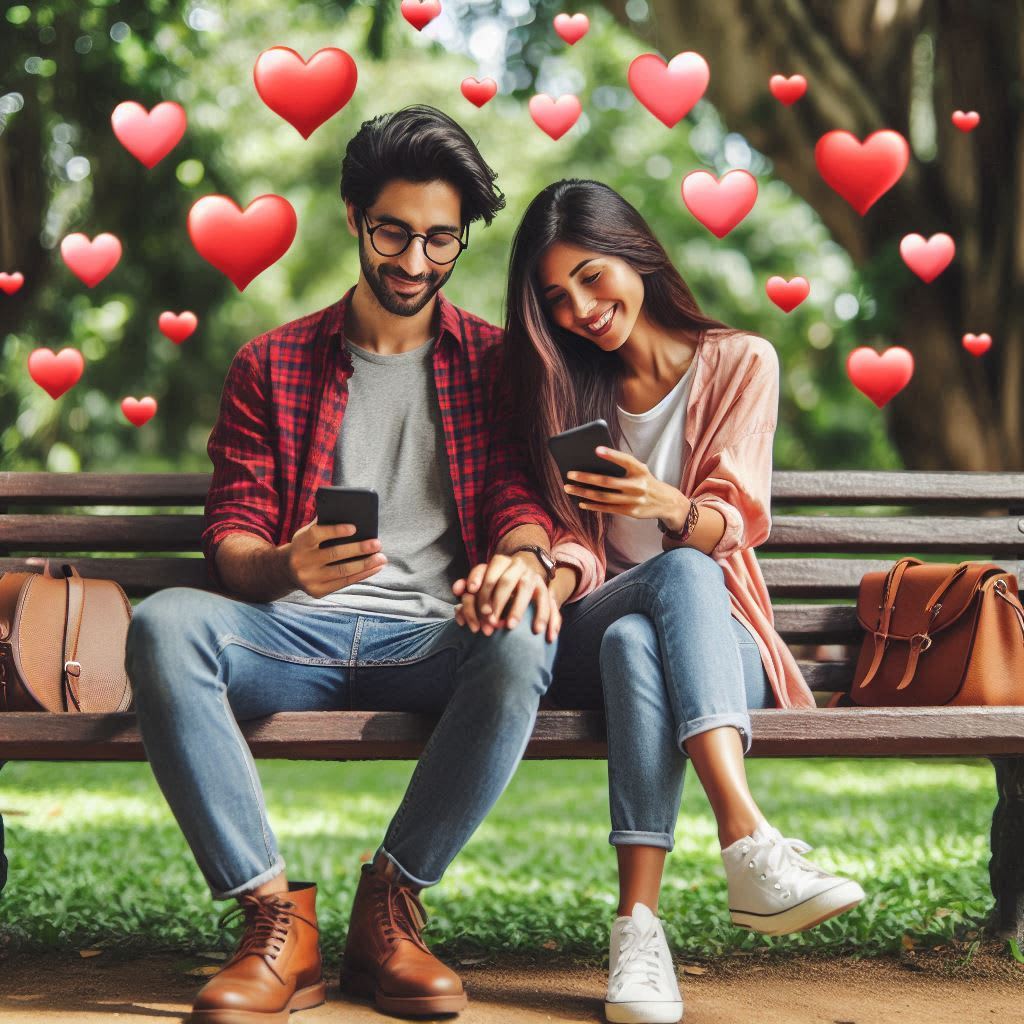
Love and relationships are not developing in today's world face-to-face. Social media, dating apps, and digital methods of communication have completely changed the way we meet, fall in love, and break up. Instagram, Facebook, Twitter, and Snapchat provide a window into other people's lives-and potential romantic interests. They offer new means of meeting, expressing love, and maintaining relationships but also pose unique challenges.
How has the emergence of social media changed love, and what does this really mean for relationships in today's digital era?
Digital Romance on the Rise
No one can ignore the role of technology in modern relationships. In a study carried out and made public by the Pew Research Center, almost 30% of adults in the U.S. have used some sort of dating app or website, with young adults particularly reliant on online means of finding love. Social media enables people to get in touch with others they otherwise may never meet in life, thus expanding the dating pool outside of geographical confines. But as psychologist Jennifer Taitz writes in Love, Lies, and Online Dating, digital platforms provide them with a singular opportunity to represent their better selves. "Social media platforms allow users to thoughtfully curate the images and stories they share and often present an idealized version of their lives," she writes. While that cyber life may attract would-be partners, it raises questions about authenticity in relationships that begin online.
Whereas internet interaction can create the spark of a relationship, it may simultaneously prevent deep emotional intimacy," says Taitz. "Most people curate their online persona, and this misrepresentation itself becomes an obstacle to uniting onliners' personas with real-life behaviors.
The Perception of Perfection
Social media make a highlight reel of peoples' lives: posts about the happiest moments in their lives, major life milestones, and, of course, some of the most filtered pictures one sees. This in turn creates a new challenge for couples in living up to unrealistic standards cultivated by the filtered lives of others.
Many individuals have to deal with images of "perfect" relationships, comparing their romantic experiences to what they see on screens.
It was author and relationship coach Esther Perel who, in her TED Talk, noted how social media fuels our culture of comparison. "We live in a time when our expectations of relationships are sky-high. We want our partner to be our best friend, our confidante, and our passionate lover. And now, thanks to social media, we're constantly comparing our lives to others, which creates even more pressure," Perel says.
This comparison culture is exhausting to anyone who would appreciate the simple joys of a relationship, as many people truly feel their love life does not measure up to all of the glossy, romanticized portrayals they see on social media. The result of this has been a spate of relationship dissatisfaction and FOMO of something better, even in the healthiest of partnerships.
Jealousy and Insecurity
Another negative impact that social media has on relationships is that it engenders jealousy and insecurity. In this aspect, with continuous access to one another's online activities, partners are somewhat anxious or suspicious of whom the other partner interacts with through likes, comments, or messages.
In Reclaiming Conversation: The Power of Talk in a Digital Age, Sherry Turkle talks about how social media fuels these insecurities. "The ability to constantly monitor your partner's online presence-who they're talking to, what they're liking-can breed distrust, even in relationships where there's no basis for suspicion," Turkle writes. This hyper-awareness of a partner's digital interactions can easily devolve into obsessive behaviors: an endless refreshing of a partner's social media pages, interpreting innocuous actions as evidence of cheating.
A 2018 article published in Cyberpsychology, Behavior, and Social Networking reports: "The researchers concluded that as social media use went up, so did feelings of jealousy and relationship dissatisfaction." A surefire way to make these insecurities flare up is how easily one can now access an old flame, connect with new acquaintances, or scroll through profiles of attractive strangers. It will help nurture feelings of inadequacy or paranoia of being cheated on when, in fact, there is no real threat.
Communication Breakdown or Enhancement?
Social media also intervenes in how we communicate with romantic partners. On one hand, it offers myriad ways to stay connected-instant messaging, video calls, and shared content-easier to maintain long-distance relationships or stay in touch throughout the day.
Relationship expert John Gottman, author of The Seven Principles for Making Marriage Work, has emphasized connectedness is key-even if digitally. "Small frequent connections-whether it's a quick text or a 'thinking of you' message-can foster emotional intimacy and build a strong foundation for a relationship," he said.
However, this makes people overly dependent on digital means of communication, creating misunderstanding and emotional distance. Tones, body language, and facial expressions-the nonverbal cues along with meaningful communication-get lost in current text-based interactions. Moreover, it is in the way that digital communication's ease at times replaces deeper conversations face to face.
In her book Alone Together: Why We Expect More from Technology and Less from Each Other, Sherry Turkle raises a red flag about our using digital relationships as a substitute for real ones. "We are sacrificing conversation for mere connection. Technology is taking away our good conversations, the kind in which weazor mean something to each other, in which we pay attention and aren't distracted," she says.
The Pressure to Perform
One of the deepest influences that social media has on relationships is the pressure it puts on persons to perform their relationship in public. Platforms such as Instagram have become stages where couples publish pictures and declarations of love, very often seeking validation through likes and comments. While sharing moments of joy is natural, the compulsion to constantly display a "perfect" relationship insinuates performativity.
As Psychologist Dr. Rachel Sussman tells The New York Times, one reason social media can ramp up the pressure to present a perfect relationship: "We've come to view relationships as another aspect of our personal brand. If we're not posting happy photos with our partner, it can feel like something's wrong-even when, in fact, the relationship is perfectly fine offline," Sussman says. In this way, the public performance of a relationship can become an end unto itself, distorted from any actual relational dynamics between the people involved.
Finding Balance in a Digital World
So, how to navigate love in the digital age without having your relationships suffer on account of social media?
The key to this is balance. Social media indeed can serve as an effective tool in connecting with others, yet boundaries are important, and real-life interaction must be prioritized over digital ones. You can set limits on how much time you spend monitoring a partner's online presence, be cognizant of pressures to compare your relationship to that of others, and focus on open and honest communication in building a strong and genuine partnership.
Dr. Alexandra Solomon, clinical psychologist and professor, provides some practical insights in her book Loving Bravely: She advises all couples to have frank and open discussions regarding their limits about their digital lives. "Every couple must decide on their own what role social media will play in their relationship. It's important to be intentional and not let technology dictate the terms of your relationship."
Relationships in the social media-driven age
Love and relationships are most accessible and complicated in this digital age, while social media has opened up new ways of connecting. It has also brought along challenges such as unrealistic expectations, jealousy, and breakdowns in communication.
Setting the true foundation of a relationship in this digital age requires maintaining real-life contact, setting boundaries in the digital world, and avoiding comparisons to other people's highlight reels on social media. As technology continues to evolve, the relationships that will endure longest will be those that move with and take advantage of the benefits from digital communication yet remain based on genuine, face-to-face intimacy.
About the Creator
Keep reading
More stories from Ukom Ntonghayobase and writers in Humans and other communities.
Soulmates or Settling?
Among the major decisions we make in our lives, choosing a life partner is one of the important ones. How big this decision looms in our minds? do we hold out for a soulmate or make do with somebody who can tick most of the boxes? Movies and fairy tales have led us to believe that somewhere in the world, there is a perfect person who will understand us on every level. But real life usually has much more shades of grey. So, is it worth waiting for that one true soulmate, or should you settle for someone who feels right in most ways? How do you decide?
By Ukom Ntonghayobaseabout a year ago in Humans
Time to change your life.
Is it even possible for you to change your life? A lot of people, more than there should be, are unhappy with their lives. But what are they doing about it? Usually nothing. People talk about how shitty their lives are and want change, but are they not taking the actions to change?
By Jen Phillips3 days ago in Humans
Elizabeth Smart: From Captivity to Courage
The night Elizabeth Smart disappeared did not announce itself with drama. It arrived quietly, the way danger often does. In the early hours of June 5, 2002, while a Salt Lake City home slept, a man entered through an open window. He moved with confidence, not haste. He carried a knife. He went first to a child’s bed.
By Aarsh Malik6 days ago in Humans
Off the Book
It ended like every other stupid idea. Badly, and alone. I’m researching digital confession ethics, he said. A tech ethicist. He gestured at floating data I couldn’t see then pulled out a physical notebook. Actual paper, fountain pen. He held it up like he was showing me scripture.
By Nicky Frankly4 days ago in Fiction




Comments (1)
Well. Well. It's a timely topic. Liked it. If you wish you can subscribe me as well as I did to you 🥰