
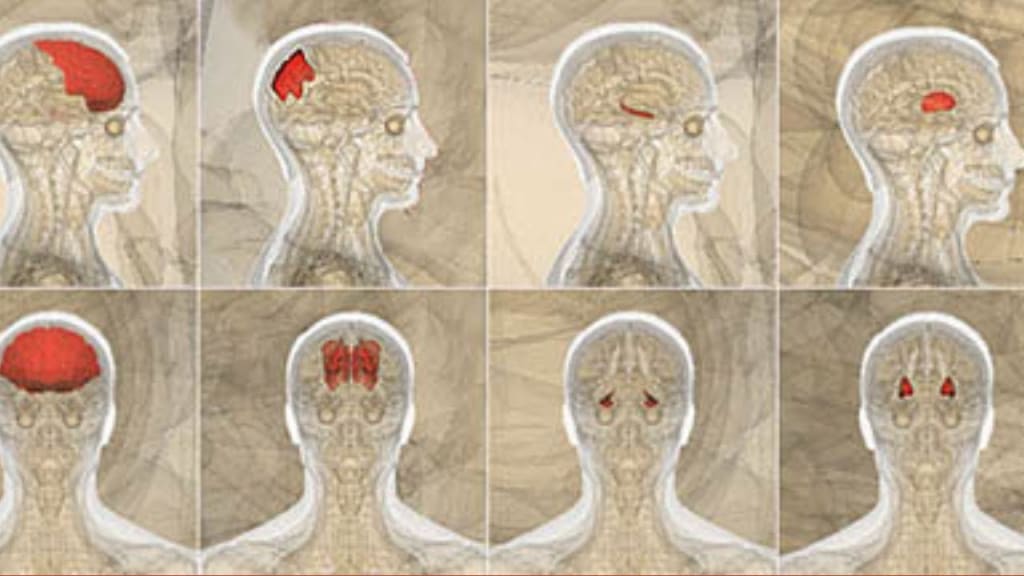
The prevalence of the Internet is changing the way our brains work and this can be attributed to the distractions that connectivity brings. For example, millennials are more forgetful than previous generations. This is thought to be a direct result of the constant distractions that connectivity brings. Additionally, the knowledge that information is readily available online means that we're less likely to form a memory of it. Previous generations would have memorized directions on a map for example. now, there's a reliance on being able to access this GPS app. Additionally, we're becoming more addicted to our smartphones. Constant glances to check for messages mean that we're becoming more and more used to developing a habit of being distracted. Our brains are less used to transitioning into deeper modes of thinking which makes it more difficult to do this when we need to. Research has also shown that the constant flow of information has meant that we are losing cognitive control. This means not only is our ability to control our minds reducing but also our ability to decide what we're thinking about. The more you rely on your phone and an app to provide information, the less you are able to determine what's important to focus on. We are increasingly more concerned with information that's new as opposed to what's actually important. However, technology is clearly affecting the way our brains work and it isn't necessarily a bad thing throughout history inventions have always enabled us to focus better.It’s a challenge that’s familiar to anyone with a smartphone in their pocket who can’t quite remember the year that a favorite album came out or the name of an actor in an old movie. Take out the phone? Or rack the brain?
But that choice is more than a way to test our recollection of trivia. People who lean on a search engine such as Google may get the right answers but they can also end up with a wrong idea of how strong their own memory is, according to a study that Ward published in August. That’s because online search is so seamless and always available that people often don’t have the chance to experience their own failure to remember things, the study found.
The findings are part of a wave of new research in recent years examining the intersection of the internet and human memory. The implications could be far-reaching, including for the spread of political misinformation, Ward said. He cited years of research into how people make decisions, showing that people who are overconfident in their knowledge become more entrenched in their views about politics and science and also can make questionable financial and medical decisions. The tech industry is working to blur the line further. Companies such as Apple and Facebook are exploring glasses and headsets to make it easier for someone to always have a computer in front of their face, while Elon Musk’s company Neuralink is aiming to roll out brain implants for humans after already testing them in monkeys.
The potentially far-reaching consequences aren’t yet known, but research is giving clues into what it means to rely so heavily on the internet to remember.
A study in 2019 found that the spatial memory used for navigating through the world tends to be worse for people who’ve made extensive use of map apps and GPS devices. Multiple studies have examined how memory may be altered by the act of posting on social media, sometimes improving recall and other times inducing forgetfulness. But in reality, “we use much more than our own brains to think and to remember.”
To help with memory, humans have always relied on family, friends and other people as well as external resources like written material,
About the Creator
Keep reading
More stories from writers in Humans and other communities.
Time to change your life.
Is it even possible for you to change your life? A lot of people, more than there should be, are unhappy with their lives. But what are they doing about it? Usually nothing. People talk about how shitty their lives are and want change, but are they not taking the actions to change?
By Jen Phillips3 days ago in Humans
Emotion Is Not a Flaw of the Human Experience: It Is One of Its Greatest Gifts
Emotion Is Not a Flaw of the Human Experience: It Is One of Its Greatest Gifts For centuries, human beings have wrestled with their own emotional lives. We have tried to master them, suppress them, transcend them, or explain them away. Entire philosophies have been built on the suspicion that emotion is a weakness, a distortion, or a threat to reason. Yet the deeper we look—into psychology, spirituality, neuroscience, and the lived experience of the soul—the clearer it becomes that emotion is not a flaw of the human experience. It is one of its greatest gifts. Emotion is the language of the heart, the compass of the soul, the bridge between the seen and the unseen. It is the way the Divine moves through the human form. To feel deeply is not a sign of fragility but of aliveness. It is the evidence that we are connected, responsive, and capable of love.
By Julie O'Hara - Author, Poet and Spiritual Warrior3 days ago in Humans
After the Storm
After the storm of winter snow there sat a small bear by the name Ted, of course. He loves the snow and likes to roll around in it making all sorts of trails and whatever he has a mind to do. He wondered where all the people are, but in a way, he is hoping that they are all snug in the homes maybe drinking hot chocolate-one of his favorite drinks with mini-marshmallows and eating something homemade for he likes this winter wonderland all to himself to romp and play and maybe even catch some fish down by the river.
By Mark Graham5 days ago in Fiction




Comments
There are no comments for this story
Be the first to respond and start the conversation.