


Fitness lifestyle encompasses not only regular physical activity, but also healthy eating habits, stress management, and overall wellness.
Regular physical activity: This includes incorporating strength training, cardio, and flexibility exercises into your routine on a regular basis.
Healthy eating habits: Eating a balanced diet that is rich in fruits, vegetables, whole grains, lean proteins, and healthy fats is essential for maintaining overall health and fitness.
Stress management: Incorporating stress-reducing practices such as meditation, yoga, and deep breathing can help to reduce the negative effects of stress on the body and mind.
Sleep:

Getting enough quality sleep is crucial for recovery, muscle growth, and overall health.
Hydration: Drinking enough water is essential for maintaining proper bodily functions, including muscle and joint function, digestion, and overall energy levels.
Mindfulness: Practice mindfulness by being present in the moment and aware of your thoughts, feelings, and surroundings.
Support system: Surround yourself with people who will encourage and support you on your fitness journey.
Continual learning: Stay informed about the latest research and trends in fitness, health and wellness.
By incorporating these elements into your daily routine, you can maintain a fit and healthy lifestyle that will improve overall well-being and longevity.
TIPS:
Tips for staying motivated to work out at home
The benefits of strength training for overall health
How to create a sustainable workout routine
The importance of self-care and stress management for overall wellness
The benefits of a plant-based diet for fitness and health
How to set and achieve fitness goals
The effects of sleep on workout recovery and performance
The benefits of incorporating yoga into your fitness routine
Tips for staying active during the workday
The importance of hydration for fitness and overall health
Tips for staying motivated to work out at home
Set specific and achievable fitness goals
Create a consistent workout schedule and stick to it
Find a workout buddy, whether it be in person or virtual
Mix up your workout routine to keep it interesting
Use a fitness tracker to track progress and see improvements
Reward yourself for reaching milestones or hitting fitness goals
Incorporate a variety of exercises, such as cardio, strength training, and stretching
Find an online class or workout video that you enjoy and make it a regular part of your routine
Make your workout space comfortable and inviting
Remember the benefits of exercise for mental and physical well-being, and keep that in mind when motivation is low.
The benefits of strength training for overall health

Strength training, also known as resistance training or weightlifting, has many benefits for overall health. Some of the most notable benefits include:
Building muscle mass: Strength training helps to increase muscle mass and tone, which can improve overall body composition.
Improving bone density: Regular strength training can help to increase bone density, reducing the risk of osteoporosis and other bone-related conditions.
Boosting metabolism: Strength training can increase muscle mass, which in turn can boost metabolism and aid in weight loss.
Improving cardiovascular health: Strength training can increase cardiovascular fitness by decreasing resting heart rate, increasing endurance and improving blood pressure.
Enhancing joint function: Strength training can improve joint function by increasing the strength of the muscles and tendons that support the joint, reducing the risk of injury.
Improving balance and flexibility: Strength training can improve balance and flexibility by increasing muscle and joint range of motion.
Reducing stress: Strength training has been shown to reduce stress, anxiety, and depression.
Improving cognitive function: Research suggests that strength training can improve cognitive function and delay the onset of age-related cognitive decline.
It's important to note that strength training should be done regularly and under the guidance of a qualified professional to prevent injury, and also it is not only important for older population but also for people of all ages.
How to create a sustainable workout routine
Creating a sustainable workout routine requires a combination of planning and consistency. Here are a few tips to help you establish a routine that you can stick to:
Start small: Don't try to do too much too soon. Begin with a manageable workout schedule and gradually increase the intensity and duration as you become more comfortable and confident.
Set specific, measurable goals: Set specific, measurable goals for yourself and track your progress. This will help you stay motivated and on track.
Schedule your workouts: Put your workouts on your calendar just like any other important appointment. This will help to ensure that you make time for them.
Vary your routine: Mix up your routine to keep it interesting. Try different types of exercise, such as cardio, strength training, and flexibility work.
Find a workout partner: Having a workout buddy can help to keep you accountable and motivated.
Find activities you enjoy: Make sure you find physical activities that you truly enjoy, it will be more easier to stick to them.
Listen to your body: Make sure to listen to your body and rest when you need to. Overtraining can lead to injury and burnout.
Make it part of your daily routine: Incorporate physical activity into your daily routine, for example, by taking the stairs instead of the elevator, or by going for a walk during lunch breaks.
Reward yourself: Reward yourself for reaching milestones or hitting fitness goals.
By following these tips, you can establish a sustainable workout routine that will help you achieve your fitness goals and improve your overall health and well-being.
Mixing up your workout routine can help to keep it interesting and prevent boredom. Here are a few ways to do that:
Try different types of exercise: Incorporate a variety of exercises, such as cardio, strength training, and flexibility work into your routine. This will not only keep things interesting but will also provide a well-rounded workout.
Change up your environment: Work out at different locations, such as the gym, a park, or at home. This can help to break up the monotony of your routine.
Incorporate new equipment: Try using different equipment such as resistance bands, kettlebells, or a stability ball to add variety to your routine.
Take a class: Sign up for a class, such as yoga, Pilates, or spinning. The structure and guidance of a class can be a great way to switch up your routine.
Try a new sport: Take up a new sport, such as rock climbing, swimming or dancing. This can be a fun way to mix up your routine and learn new skills.
High-Intensity Interval Training (HIIT): High-intensity interval training can be a great way to mix up your workout routine, burn calories and improve your cardiovascular fitness.
Bodyweight exercises:

Bodyweight exercises such as push-ups, squats and lunges can be done anywhere and at any time, adding variety to your routine.
Yoga or Stretching: Yoga and stretching are great ways to improve flexibility and balance, and can provide a much-needed mental break from intense workouts.
By mixing up your workout routine, you can avoid boredom and keep your body challenged, which can help to improve your overall fitness level.
Incorporating a variety of exercises, such as cardio, strength training, and stretching, into your workout routine is essential for overall fitness and well-being.

Cardio: Cardio exercises, such as running, cycling, swimming, and jumping rope, increase your heart rate and improve your cardiovascular fitness. This type of exercise is important for maintaining a healthy heart and lungs.
Strength training: Strength training exercises, such as weightlifting, resistance band work, and bodyweight exercises, help to build muscle and improve overall strength. This type of exercise is important for maintaining bone density, preventing injury, and increasing metabolism.
Stretching: Stretching exercises, such as yoga and Pilates, help to improve flexibility and range of motion. This type of exercise is important for preventing injury and improving postural alignment.
High-Intensity Interval Training (HIIT): High-intensity interval training combines cardio and strength training and can be an efficient way to burn calories and improve cardiovascular fitness.
Balance exercises: Incorporating balance exercises, such as single leg stance, can help to improve balance, proprioception and prevent falls.
Core exercises: Core exercises, such as planks and Russian twists, target the muscles of the abdomen, back, and hips, which can help to improve posture, balance and stability.
It is recommended to have 2-3 days of strength training, 2-3 days of cardio and 2-3 days of stretching or flexibility exercises per week. It's also important to listen to your body and rest when you need to, to avoid overtraining or burnout.
By incorporating a variety of exercises into your routine, you can work towards achieving a well-rounded fitness level and improve overall health and well-being.
About the Creator
Jagadeesh k
Hi, my name is jagadeesh, I am a blogger and fitness freak and have been experence in the field . I am particularly interested in givng tips . Nice to meet you."
Interests >Fitness, >learming.
Keep reading
More stories from Jagadeesh k and writers in Humans and other communities.
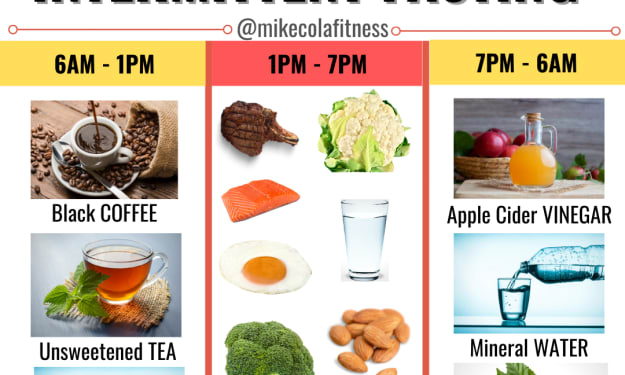
INTERMITTENT FASTING
Intermittent fasting is a pattern of eating where a person alternates periods of eating with periods of not eating. It can take many forms, but some of the most popular include the 16/8 method (fasting for 16 hours and eating within an 8 hour window), the 5:2 diet (eating normally for 5 days and restricting calorie intake for 2 non-consecutive days), and alternate day fasting (eating normally one day and restricting calorie intake the next). Intermittent fasting has been shown to have various health benefits, including weight loss, improved insulin sensitivity, and reduced inflammation, but more research is needed to fully understand its effects and to determine the best ways to use it for specific health conditions.
By Jagadeesh k3 years ago in Humans


Comments
There are no comments for this story
Be the first to respond and start the conversation.