
Ed Miliband rejects £24bn plan to bring power from Morocco to UK
Ed Miliband rejects £24bn plan to bring power from Morocco to UK

**Ed Miliband Rejects £24 Billion UK-Morocco Energy Link in Major Policy Shift**
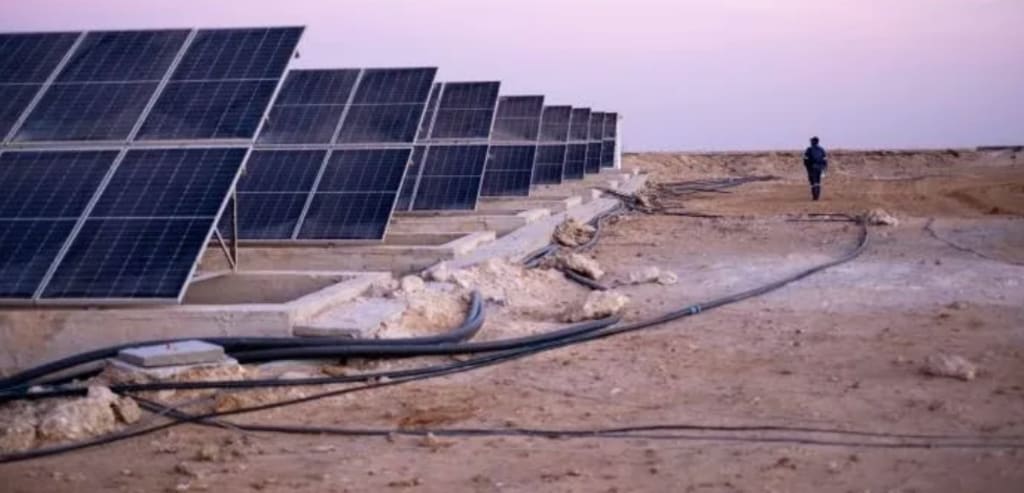
Energy Secretary Ed Miliband has rejected a £24 billion proposal to import renewable electricity from Morocco to the United Kingdom via a record-breaking subsea cable. The ambitious Morocco-UK Power Project, led by British energy firm Xlinks, had aimed to provide up to 8% of Britain’s electricity needs by transporting solar and wind power from the Sahara Desert to the Devon coast.
Announced in 2022, the project envisioned a sprawling renewable energy complex in Morocco consisting of 11.5 gigawatts (GW) of solar and wind power over an area of 1,500 square kilometers. This clean energy would be transmitted through a 3,800 km high-voltage direct current (HVDC) cable—the world’s longest—running undersea from North Africa to the UK. The idea captured headlines as a futuristic solution to Britain’s energy needs.
But this week, Miliband and the Department for Energy Security and Net Zero (DESNZ) determined that the project did not meet the government’s requirements for investment or public subsidy. Rising costs, geopolitical risks, a lack of benefits for the UK supply chain, and the existence of more viable domestic alternatives were the primary impediments. The financial profile of the Xlinks project had become increasingly controversial. While originally estimated at around £16 billion, the final cost approached £24 billion. Xlinks sought a Contract for Difference (CfD) with the government, which would have locked in a fixed power price for 25 years—reportedly in the range of £70 to £80 per megawatt-hour, comparable to that offered to nuclear projects like Hinkley Point C. DESNZ was concerned that taxpayers would bear significant financial risk without clear strategic or economic returns.
Another critical concern was energy security. The power line's unprecedented distance and vulnerability to geopolitical events in North Africa and the Mediterranean were cited by officials as potential threats. Whitehall raised concerns regarding the UK's reliance on a single foreign connection for the majority of its electricity because of the country's growing emphasis on domestic energy resilience. Furthermore, the project’s minimal use of British manufacturing weakened its appeal. Although Xlinks pledged to create a subsea cable factory in Hunterston, Scotland, much of the project’s equipment—especially the cables—was expected to be sourced from overseas, likely Asia. Ministers judged that the project would deliver insufficient domestic economic benefit compared to UK-based renewable schemes.
In announcing the decision, Miliband stated: “Our priority is to build a cleaner, cheaper, and more secure energy future based on homegrown renewables. While innovative, this particular project does not provide the best value for consumers or the UK energy system at this time.”
The rejection has been met with disappointment from Xlinks and its investors, which include Octopus Energy and TotalEnergies. The decision was described as "hugely surprising and deeply disappointing" by Sir Dave Lewis, executive chairman of Xlinks and former CEO of Tesco. Lewis argued that the project had already secured development funding worth more than £100 million and was on track to begin construction before 2030. Lewis indicated that instead of relying on government support, Xlinks may now seek private-sector power purchase agreements (PPAs). He also hinted at possible partnerships with European buyers, noting that countries like Germany have shown interest in cross-border renewable energy links. “If not the UK, then others will step up,” Lewis said.
Not the only green energy project being developed across continents is the Morocco-UK Power Project. Around the Mediterranean, projects like Tunisia-Italy and Egypt-Greece connections are being looked into. These could redefine how Europe sources renewable electricity in the coming decades, especially as the continent seeks to phase out fossil fuels.
For now, however, Miliband’s decision signals a strong commitment to UK-based renewables. By 2030, Labour has promised to quadruple offshore wind, triple solar power, and double onshore wind. The government also aims to create a publicly owned company, Great British Energy, to invest in domestic green projects.
While the Xlinks vision may not be dead, its future remains uncertain. As the UK races toward net-zero emissions, the government's rejection highlights the delicate balance between innovation, energy security, and economic value.
About the Creator
GLOBAL NEWS
World News Updated
Short News upload
Technology News
Keep reading
More stories from GLOBAL NEWS and writers in Humans and other communities.
Starmer faces growing Labour rebellion over welfare cuts
Starmer is confronted with a growing labor revolt over welfare cuts. Labour leader Sir Keir Starmer is facing increasing pressure from within his own party as a growing number of Labour MPs voice opposition to his stance on welfare cuts. Within a few weeks of Labour's historic victory in the general election, the internal rebellion has revealed deep divisions within the party. Starmer's decision to maintain some welfare restrictions imposed by the previous Conservative government, particularly the two-child benefit cap, is at the heart of the dissent. Despite pre-election hopes that a Labour government would reverse the policy—seen by critics as punitive and harmful to low-income families—Starmer has signalled there will be no immediate change.
By GLOBAL NEWS9 months ago in Humans
Why Didn't Anyone Tell Us
Men, move along. This is not for you. This is for the women. I was forty-five when I began menopause. It is pretty young for that to be going on in a woman’s life, but I had undiagnosed PCOS, my entire life. Thank you to all the gynecologists I had seen my entire life. That in itself should encourage women to keep seeking second opinions, especially when you are not getting correct answers or any at all.
By Alexandra Grant5 days ago in Humans
The Perfect Day
Every so often, I'm abruptly reminded of the differences between Neurotypical and Neurodivergent people. At work today, I stuck my head into the back office in an attempt to track down where the Nurse had vanished to, and interrupted a comparisson of what the Psychologist, Exercise Physiologist, and Team Manager's perfect day would look like.
By Natasja Rose2 days ago in Humans


Comments
There are no comments for this story
Be the first to respond and start the conversation.