
Chris McCandless - a tragedy of innocence or the price of freedom?
“Happiness is only real when shared.” - Chris

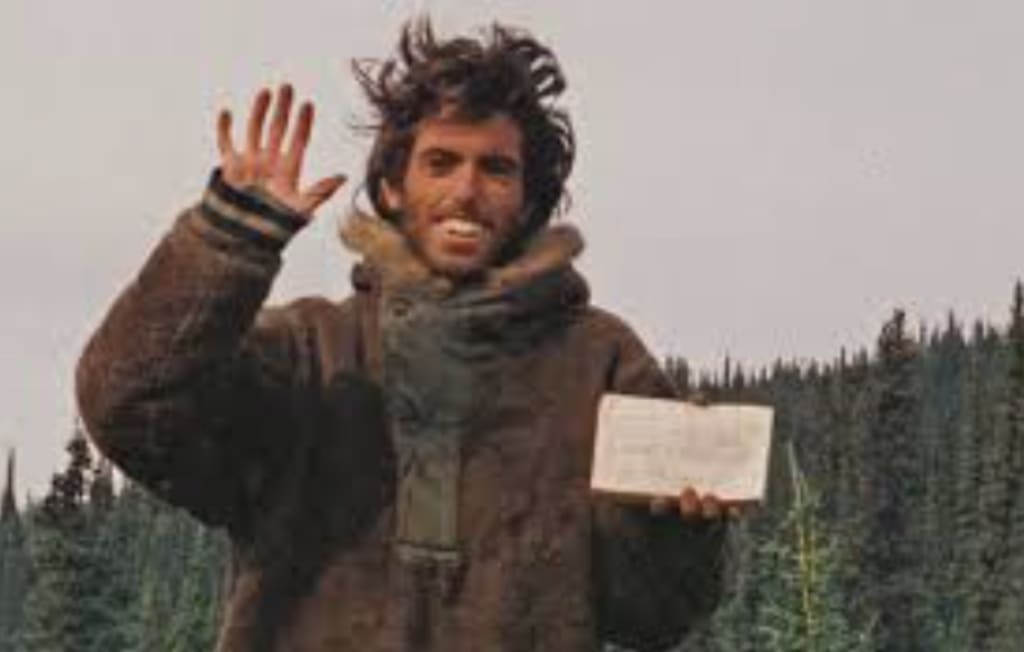
Christopher Johnson McCandless (1968–1992) was an ordinary American student - but with an extraordinary vision of life.
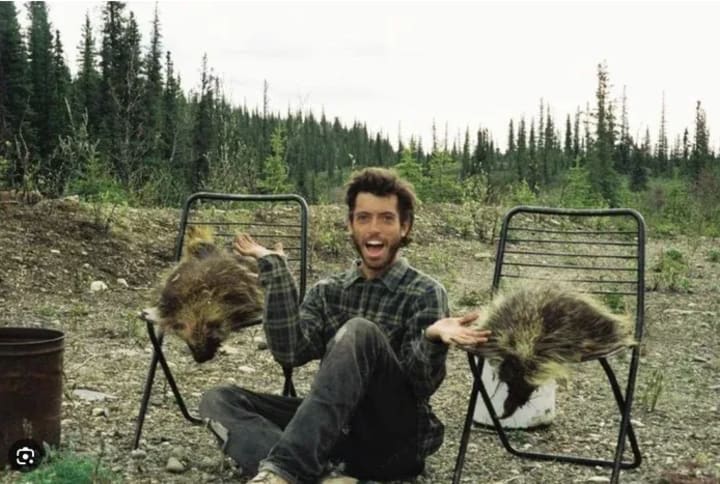
After graduating from university, he renounced money, family, and possessions. He literally burned his bank cards and donated all his savings to charity. Chris wanted to escape falseness, pretentious happiness, the life lived by someone else’s rules. The rush of work, money, and small talk about the future suffocated him. He believed that man was not born for comfort but for truth. He wanted to discover who he truly was when stripped of everything - left alone with himself and with nature.
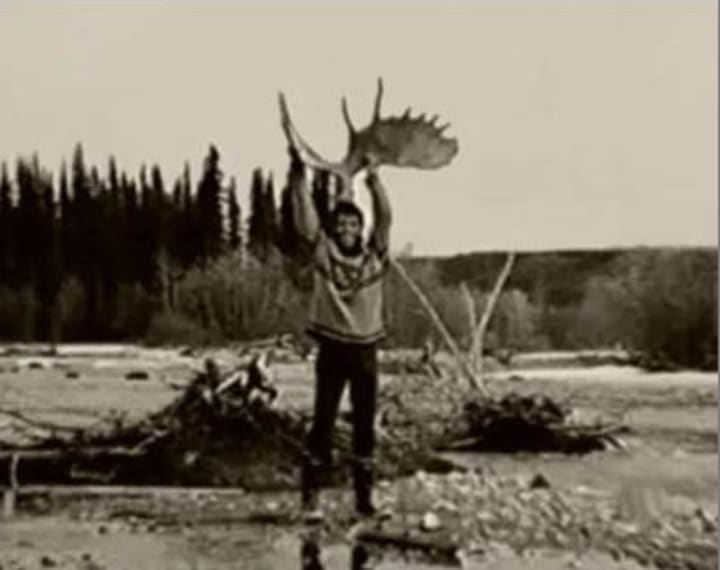
He took the name Alexander Supertramp and spent two years hitchhiking across the United States and Mexico. He lived among the homeless, farmers, hippies, and construction workers. Everyone who met him described him as intelligent, polite, kind - yet distant. He always said he was searching for “true freedom.”
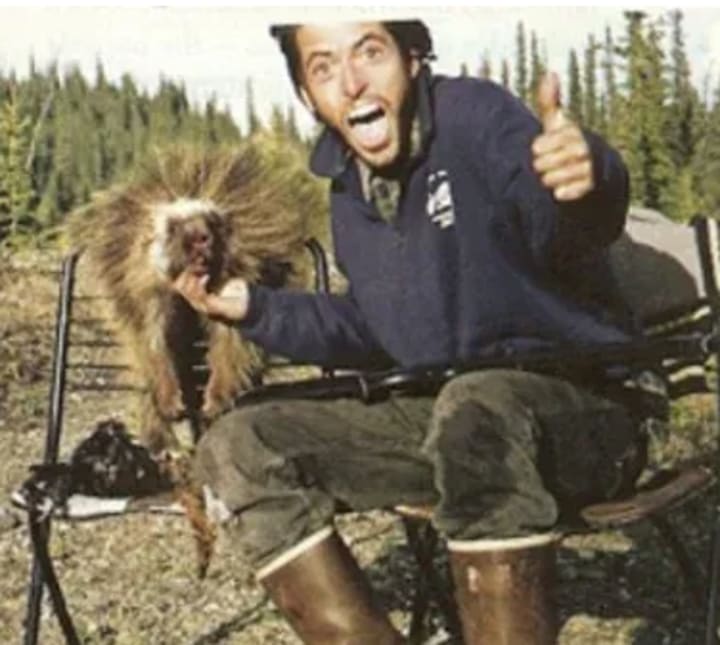
In April 1992, Chris hitchhiked to the town of Healy, Alaska, where a hunter named Jim Gallien dropped him off at the start of the Stampede Trail. After crossing the Teklanika River, Chris ventured deep into the Alaskan wilderness - until he stumbled upon an abandoned bus that would become his final refuge.
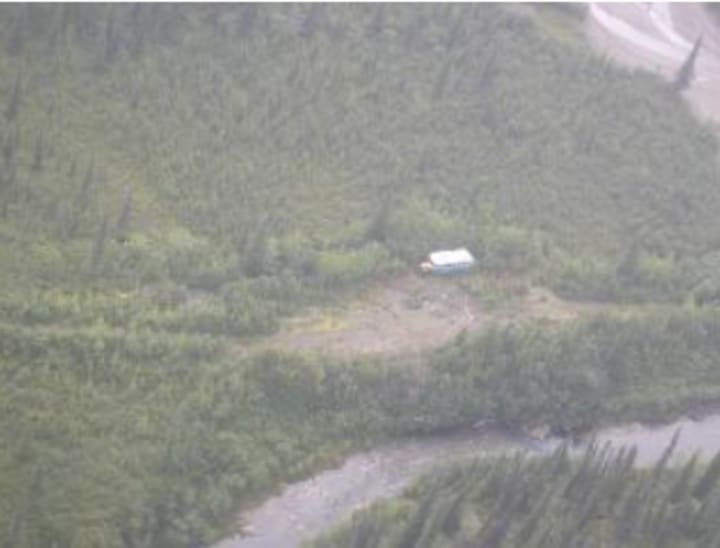
The first weeks in the bus seemed almost idyllic: silence, books, campfires at dusk, and the long-awaited feeling of freedom.
But as time passed, the wilderness began to test him. Rain, cold, hunger - nature itself seemed to challenge the strength of his ideals. And still, Chris held on. He clung to the belief that a pure, authentic life was possible - that a man could be happy even when he had nothing left but his will.
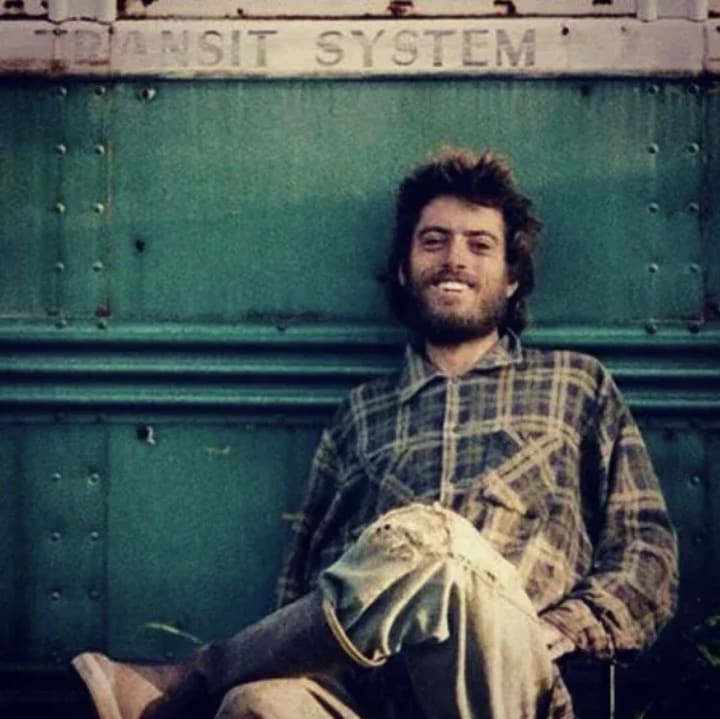
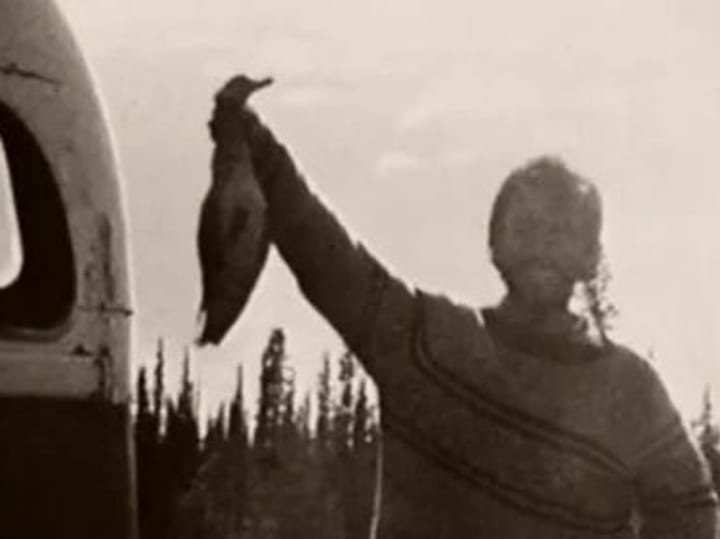
By July–August 1992, Chris wrote that his diet consisted mainly of wild berries - blueberries and lingonberries, roots of the alpine sweetvetch, which he called “wild potato.” Sometimes he caught small animals. He dried roots, boiled them, and lived on what nature offered.
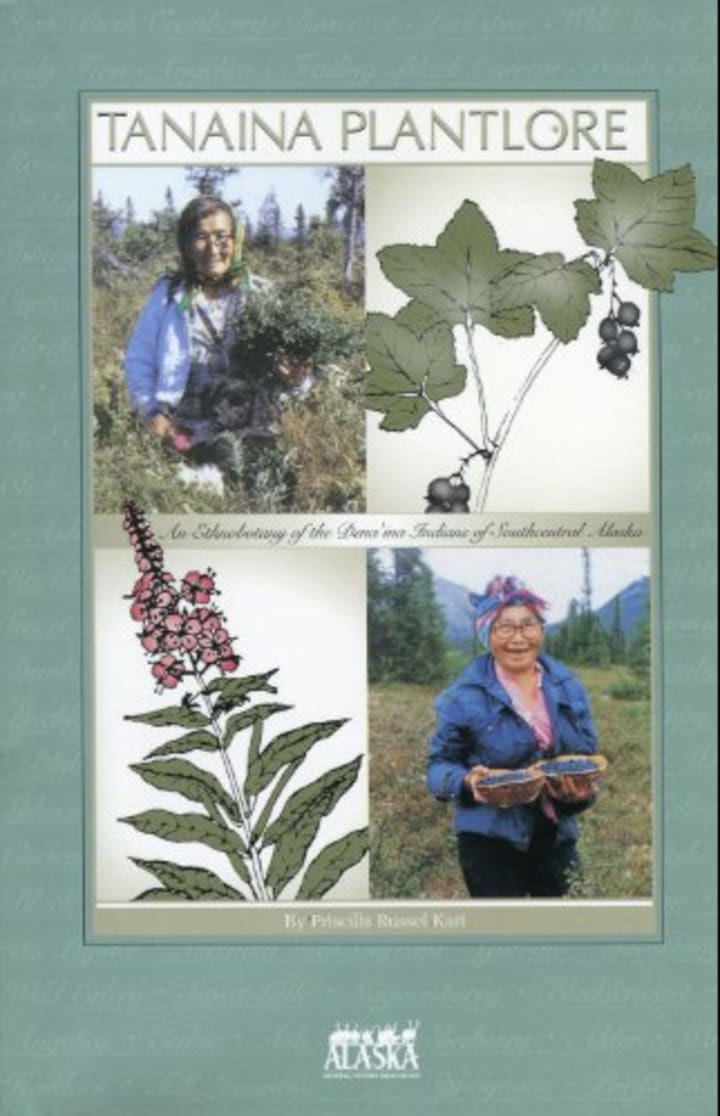
His only guide to plants was “Tanaina Plantlore,” which listed edible roots but said nothing about the plant’s seeds. Not knowing this - and thinking little of it - Chris made a fatal mistake.
When he decided to leave the bus, the river had turned into a raging torrent. He tried to cross but nearly drowned and was forced to return. He was trapped. Without a map, he didn’t know that just a kilometer upstream there was a shallow crossing and a hunter’s cable bridge.
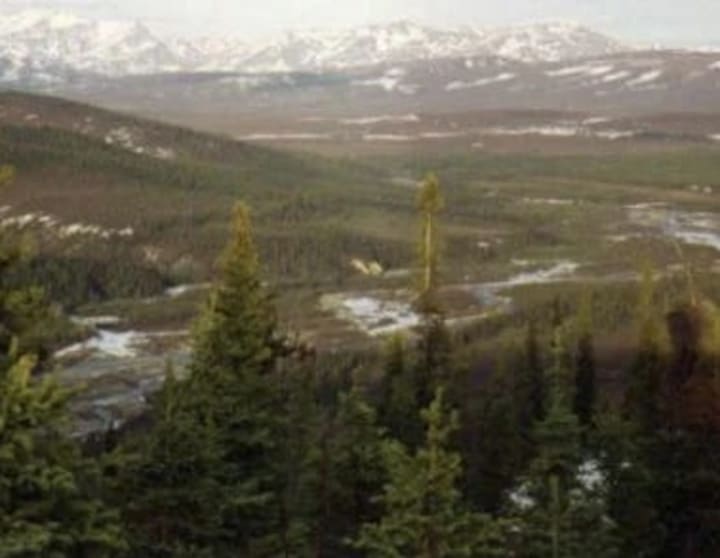
He kept writing - first in full sentences, then shorter, weaker lines. He ate berries, roots, and seeds of the wild potato, unaware that they contained a poison slowly killing his body - and his hope.
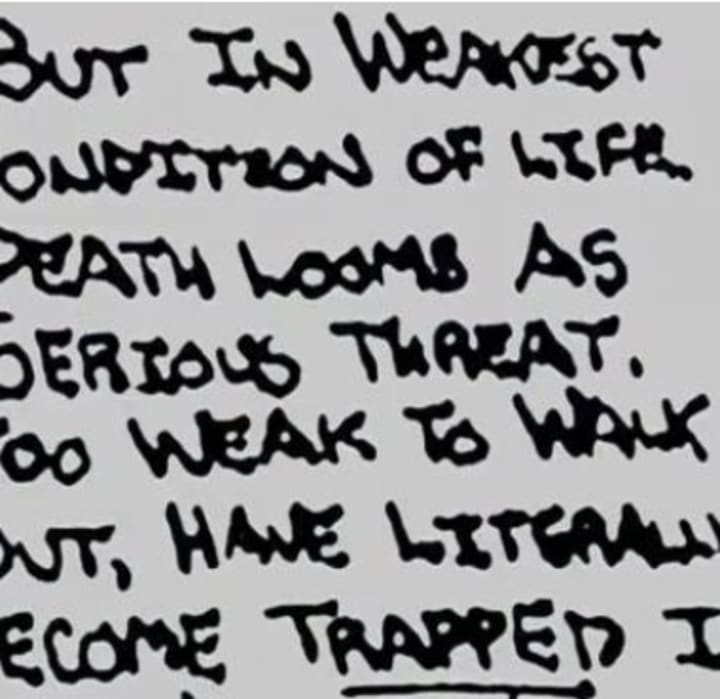
Day by day, his body failed. Food ran out. His legs stopped obeying him. His body wasted away - yet his words still carried a spark of his former faith.
“Beautiful blueberries,” he wrote on Day 107. Even dying, he found beauty in the smallest things.
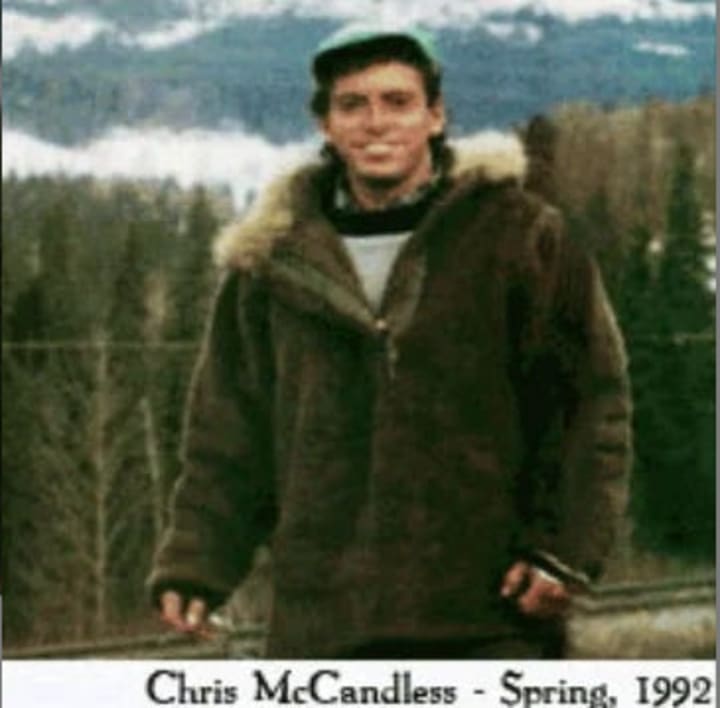
His final journal entries were short, almost voiceless confessions.
“Too weak to walk out. Death is near.”
He knew his time had come. Wrapped in his sleeping bag, under the thin northern light, he wrote his final message:
“I have had a happy life and thank the Lord. Goodbye and may God bless all.”
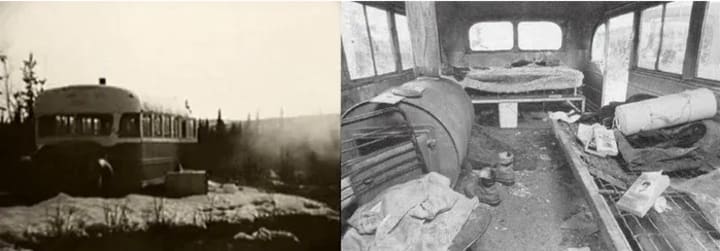
Today, when you look at his journal or the final photograph - his face thin, yet still smiling at the world - you can feel that Chris found what he was seeking. He wanted to know who a person truly is without society, comfort, or rules - and he did. He freed himself from everything but the essence of being human: the need for warmth, for presence, for love.
His journey ended in tragedy — yet within that tragedy lies a revelation:
Happiness does not exist in isolation. It becomes real only when shared. — Chris McCandless
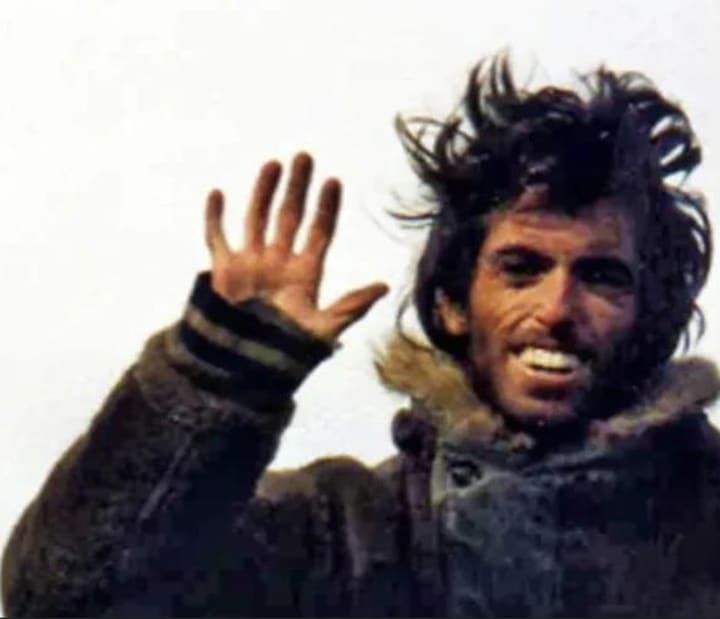
Hunters later found his body in the bus. On the last page of his journal, they read:
“Beautiful blueberries. I am weak, but happy.”
And beside it lay his final note:
“I have had a happy life and thank the Lord. Goodbye and may God bless all.”
____________________________________________________
His story inspired books, films, and countless debates - about courage, innocence, and the fragile line between freedom and folly.
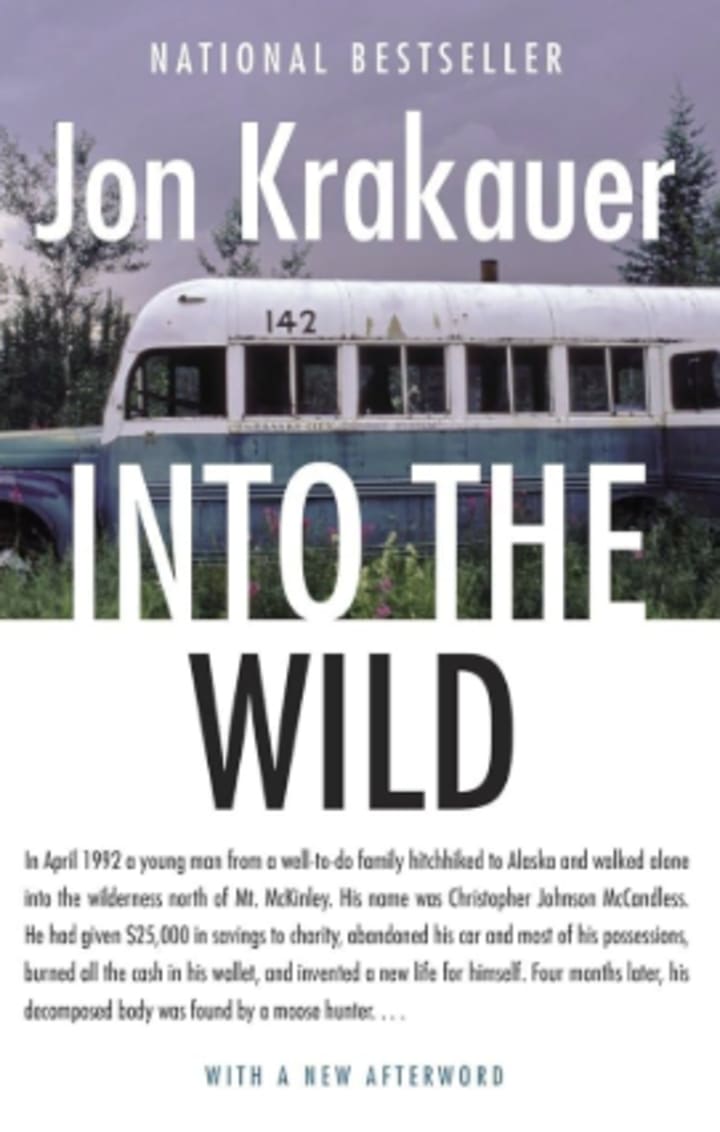
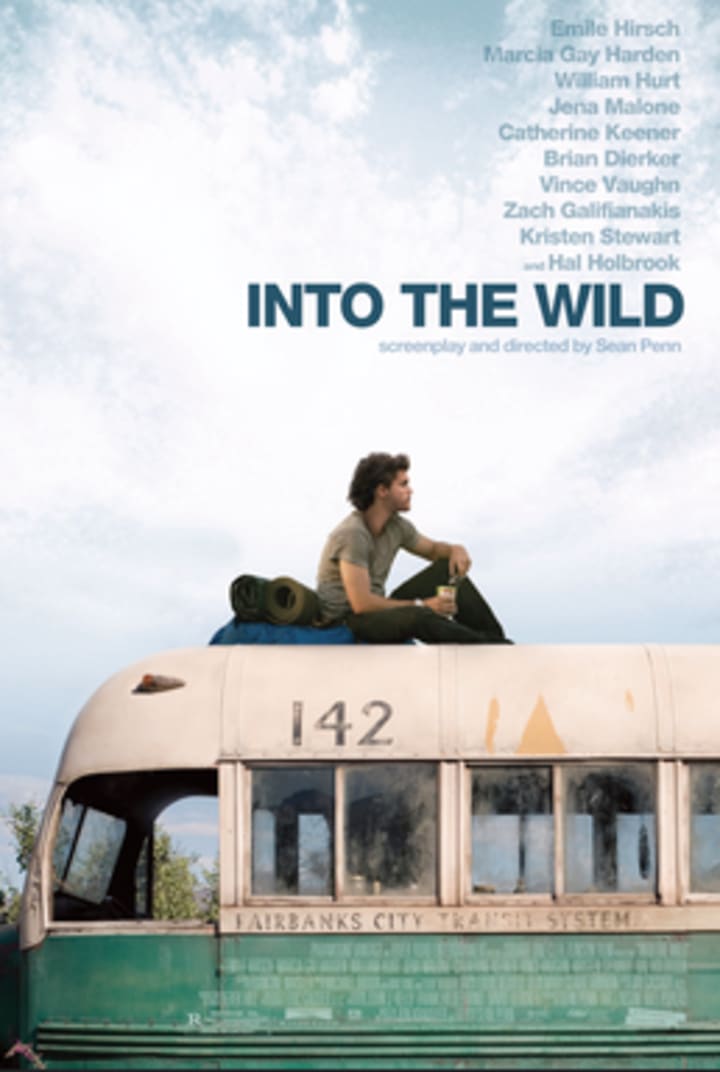
In 2014, Chris’s sister, Carine McCandless, gave a rare interview, answering the public’s most haunting questions.
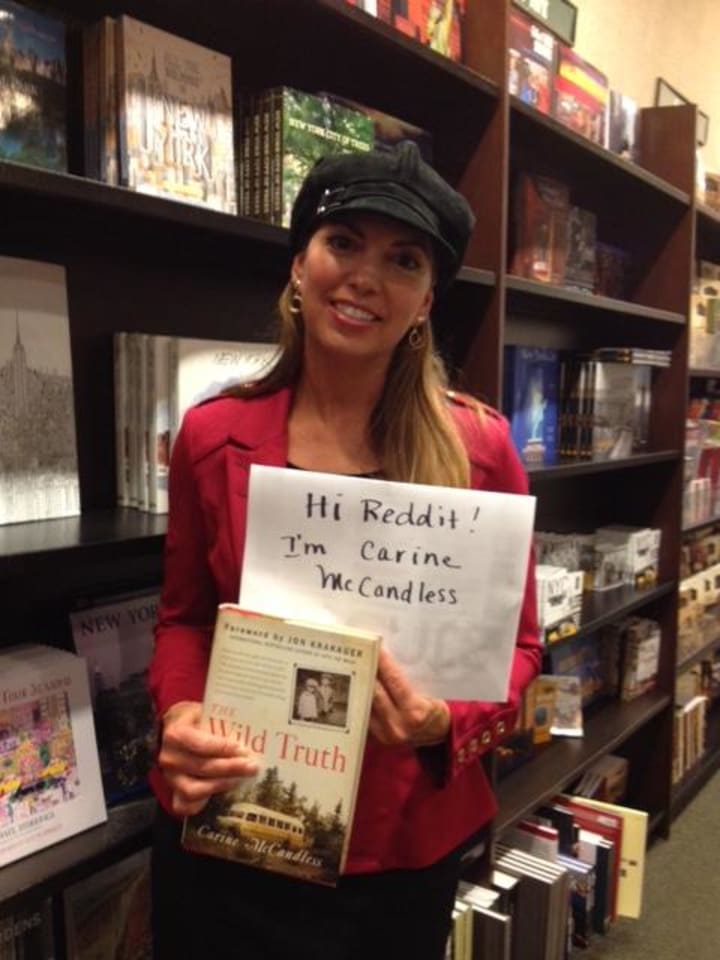
- What has changed over the past 20 years such that you want to reveal the truth about your parents and home life, whereas you did not before? I have taught your brother’s story to many English classes over the years, and we discuss inherent bias in the various sources that tell his story---Into the Wild in its book and movie forms obviously, but also the letters you and your sisters posted on his website, among other articles/blogs, etc. What can I tell my students is your motivation for writing this book now? Thank you for being so accessible. It is wonderful to be able to interact with a story in real time as opposed to something being an untouchable piece of literature.
Great question, and I’m so glad you’re here. Working with students is incredibly rewarding for me because I believe we reach these kids at an age of opportunity, when they are deciding who they want to be and laying that true foundation for who they will become. I wrote this book to honor Chris, who believed that truth was paramount in life and in learning, to share my story and that of my surviving siblings in order to empower others that face tough circumstances, specifically domestic violence. Too many people still suffer in silence, and that’s something I understand…it took me 20 years to write this book, and I’m confident it will help others to find their own voice. Along with that, I’ve been fortunate to witness overwhelming and uplifting reactions from the countless people I’ve offered a new perspective to, and these experiences made me appreciate that I had something important to share. I’m finally ready to share it with as many people as possible.
- Despite the tragic ending, the impression I got from the book was that he wanted to experience true freedom in a way you can’t get from the rat race.
- Despite the dangers, would you suggest this kind of action to someone who wants to experience that kind of freedom?
Each person has to analyze this for themselves. I suggest that people puch themselves outside of their comfort zones, often, yes. The greatest rewards often come from the toughest journeys, this is well known. But I also advise people, if this is going to be a dangerous undertaking that they feel they must do for themselves, that they get proper training, experience. This comes down to self awareness of the person and what they are undertaking.
- Chris was driven to escape. You were not. What do you think the difference was?
He found healing going headstrong away from society. I found healing charging headstrong into society. We had as many differences as we did similarities, but we understood each other better than anyone else ever did.
- What didn’t get into the movie that you would most like for the rest of us to know about Chris?
The answers to the lingering “why” questions that led to misconceptions about the reasons Chris left the way he did, the decisions he made. Not in his defense...just for those that seek inspiration from him to have the facts, know how much he was hurting. The greatest inspiration comes from truth. He taught me that.
- What do you think Chris would say about all the people who admire him and his journey if he were with us today?
- Since you know Chris best, what piece(s) of advice do you think he would give to the world?
I don’t think he would understand what all the fuss is about. He didn’t see himself as remarkable.
Make yourself happy, because only you can. Live your life with pure intent. Live your life honestly.
- How would you say the movie version of him compared to who he really was?
A portrayal of someone is just that, a portrayal. Sean Penn did an excellent job with accuracy as much as that can happen with a dramatization. The entire cast & crew was very sensitive to getting it “right”. It was a powerful experience. Good people. I think it honors Chris well.
- Sorry about your brother... he was a true inspiration and glad to see he led life to the fullest. Are you mad at him for going on the crazy adventure and how it all ended?
No, not at all. It wasn’t about him being selfish. It was about his being very self aware. It wasn’t a crazy adventure. It was exactly what he felt he needed to do to make himself happy, to find peace. That’s the sanest way to live life in my opinion.
- Through the book, Jon pretty much exposes the causes that may helped Chris to think of disappearing, and as we all know cutting the relationship with his parents was the most important one. I haven’t read your book yet but as I’m checking your interviews about the book, it seems that you go really deep on the fact that your parents are guilty for Chris’s death. Why did you want to write your side of the story 20 years after Into the Wild? What’s the impact that you wanted your book to reach?
Listen carefully when you see me on video, and understand there may be misquotes if it’s a print interview. I have never said, I don’t believe, that I blame my parents for Chris’s death. He made his own decisions to place himself into precarious situations. I only hold them accountable for his disappearance. Their behavior is, in large part, what fueled Chris to push himself to such extremes, and why he had to do it alone.
- Just received your book today, and look forward to reading it. I really enjoyed reading Chris’ story and seeing the movie and loved his innocent, altruism. My favorite quote of his was ‘happiness only real if shared’. Did he realize this too late, or was this his essence, his philosophy, through his life?
You will find this answer in the book, I promise. It’s not a short answer :) Thank you for reading it.
About the Creator
Dmitri Solovov
Real lives, real ethics, real emotions.
Keep reading
More stories from Dmitri Solovov and writers in Humans and other communities.
Nasubi. 15 months in a small room, surviving only on prizes won from lotteries.
Tomoaki Hamatsu is a Japanese comedian better known by his stage name Nasubi (which means “eggplant” in Japanese). In the show, his private parts were censored with an eggplant emoji. Since his face was always covered by this symbol, viewers began to call him simply “Nasubi” -the Eggplant.
By Dmitri Solovov3 months ago in Interview
The Devil's Cut
“Comrade, finally you’re awake.” The voice was smooth, sensual. A flickering incandescent bar was all that lit the white, sterile room. All Vladimir remembered was everything going black. He tried to move his arms and found them strapped to the gurney.
By Matthew J. Fromm6 days ago in Fiction



Comments
There are no comments for this story
Be the first to respond and start the conversation.