
Nasubi. 15 months in a small room, surviving only on prizes won from lotteries.
Before reality television became a global phenomenon, one man in Japan unknowingly lived inside its most extreme experiment.


Tomoaki Hamatsu is a Japanese comedian better known by his stage name Nasubi (which means “eggplant” in Japanese).
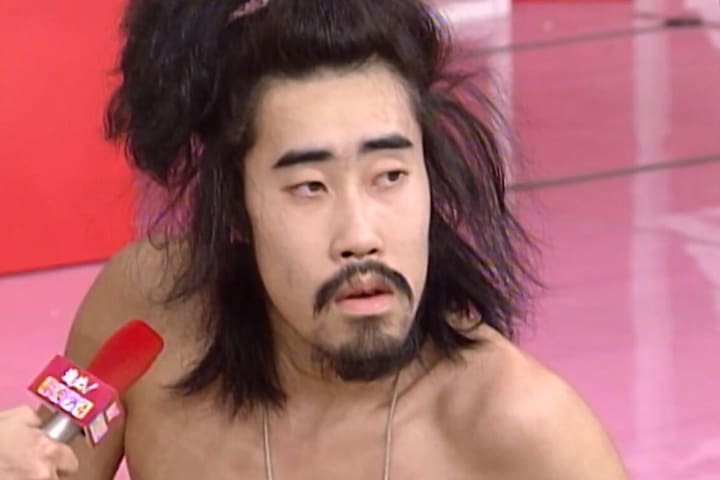
“If you want to live, you’ve got to adapt.”
That was the mindset with which Nasubi joined a Japanese TV show in the late 1990s called “Susunu! Denpa Shōnen.”
“They brought me into a room, told me to take off all my clothes, and left me with a pile of magazines and postcards. “My task was to take part in magazine contests, winning food, clothing, and supplies to survive until the total value of my prizes reached one million yen”.
The concept of the show was to see whether a person could survive solely on prizes won from contests. To “win”, the total value of Nasubi’s prizes had to reach 1 million yen.

The producers locked him in an empty apartment, without any clothes, food, or any contact with the world.
The only thing he was allowed to do was fill out lottery forms to win his own supplies.
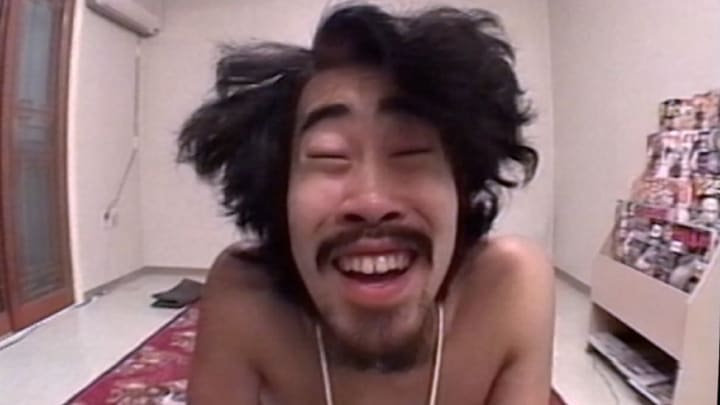
How did it look?
During the first few weeks, he starved — until he managed to win some food. Sadly, most of the times, he won random stuff like women’s underwear, movie tickets, and even a bicycle without a chain.
At one point, he got lucky enough to win a TV— but of course it had no antenna.
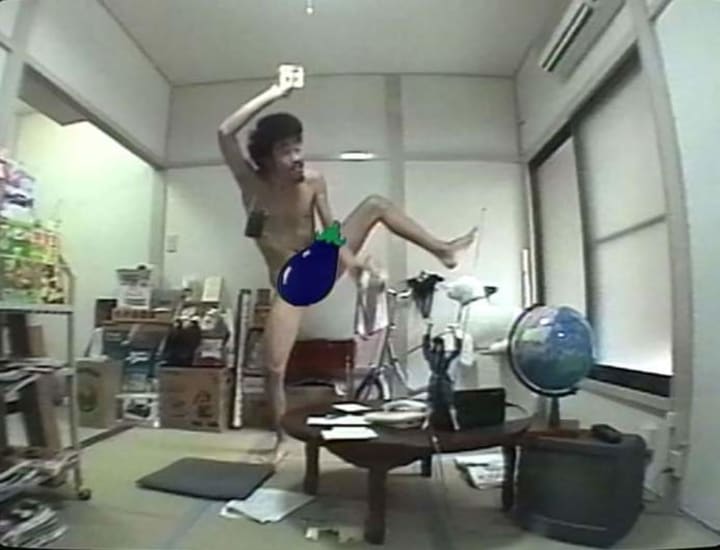
Over time, Nasubi managed to win sweet drinks and even rice. Sadly he had no cookware or any way to cook, so he had to eat rice raw or improvise.
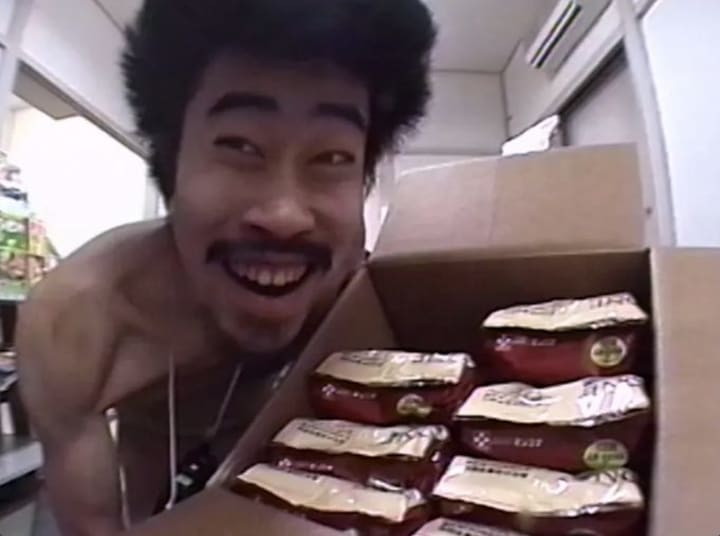
It looked absurd, but these very scenes made the show famous. Nasubi was literally surviving from scratch and viewers watched as he learned to cook, eat, and find joy in small things — like a pack of rice.
It’s worth reminding that he didn’t know the entire show was being broadcast on national television. He spoke to the camera as if it were a diary, believing no one was watching. The producers told him that his footage would be analyzed later as part of an experiment. In reality, his life was shown weekly — and 17 million people across Japan were watching his every move.
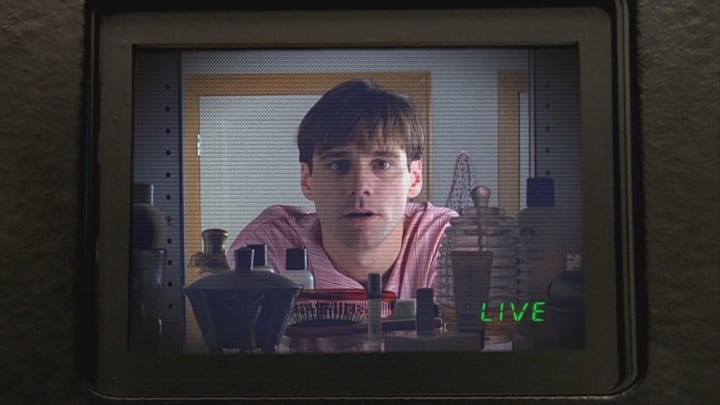
When Nasubi finally won enough prizes, he was given clothes, blindfolded, taken out of the apartment, and told he was free. However, it turned out that this was just another room — and the experiment continued.
This time, he was in South Korea, where he had to repeat the challenge: survive again only on prizes he won, until he could afford a ticket back to Japan.
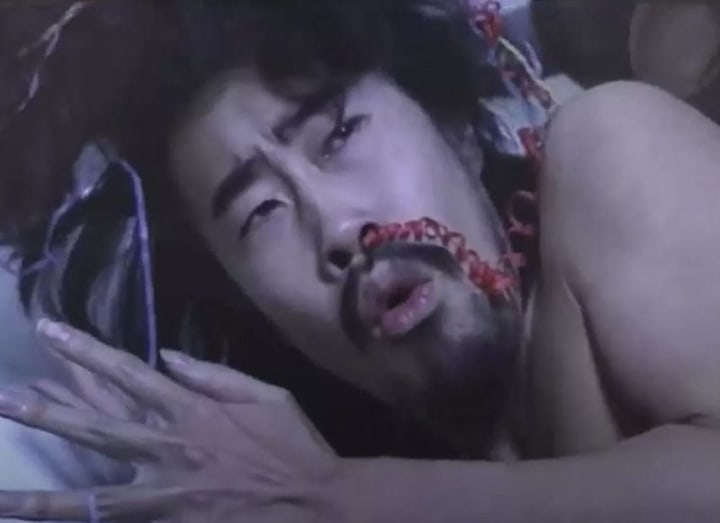
Fifteen months later, the producers blindfolded him again and led him onto a stage. Naked and disoriented, he stood in total darkness — unaware that thousands were waiting beyond the curtain. When it rose, a blinding wave of light and applause hit him all at once.
“I thought this was a scientific experiment. But it turned out I was someone’s entertainment.”
About a year ago, Nasubi gave an interview, answering some of the questions that had long fascinated the public. Here are a few of them:
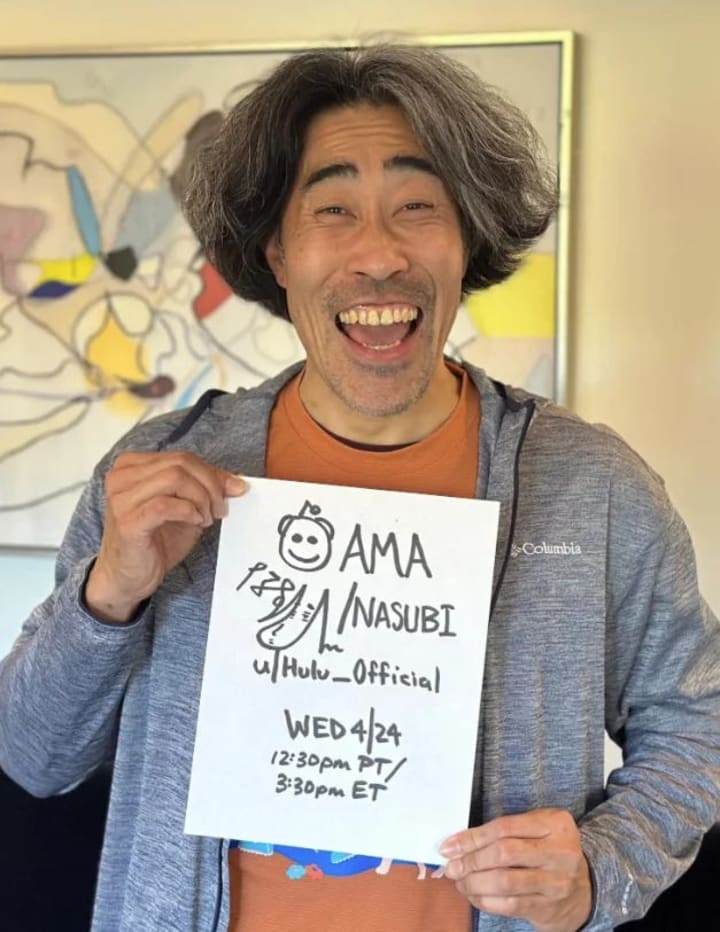
— Were you held against your will? How did you manage to endure for so long? Did you know it would last that long? What kept you going?
I didn’t think that the competition would last that long. The door wasn’t locked, but I was determined to stay with it until the end. You could say it was Yamato Spirit, or Japanese spirt, I would not quit.
— Have you seen The Truman Show? If yes, what did you think of it?
Yes, I saw the film. The only person who really truly understands the feeling of what Truman went through is me. It felt like it was my story. His life was much easier than what I had, but it was a similar situation that everyone was watching both Truman and me, and we had no idea we were being observed.
— How was this filmed and televised without your consent? Did you ever know it was filming? Did you make any money from the airing of these videos?
Of course I didn’t know it was being broadcasted. Back in the early days of reality TV in Japan, they didn’t give contracts to participants, it was an entirely new genre of TV. And my manager did not protect me in the same way that TV stars are protected now. For compensation, I made 10 million yen for 1 year and three months, and that includes the money from the sale of my diaries from the show.
— What sort of contract did you sign beforehand? Your Wikipedia article describes you as a kidnapping victim but it sounds like you did it willingly. Can you clarify?
I was not offered a contract, I won an audition, and wanted to participate and complete the challenge. The option was “do you want to do it,” and I said yes. So I was not forced to do it, I was not kidnapped. I was taken to a secret location and blindfolded, but I wasn’t taken against my will, I decided to participate. It’s hard to explain, but I think that the people who have experienced being locked in confinement, and felt what it’s like to be trapped in those walls, will understand why one chooses to stay instead of leave. My mental state was degrading … instead of changing the environment, it felt safer to stay in the same situation, even though it was uncomfortable.
— Nasubi, how do you feel about the film “Oldboy”, and have you ever thought about using a hammer to get revenge?
I was actually invited to a special screening of Old Boy in 2014 I think, because I had a similar experience with the movie. I couldn’t watch it without tearing up, it made me revisit many of the memories I had from Denpa Shōnen. Instead of revenge, I would like to use that energy for something more positive, like helping people.
— Since the contest, how have things changed for you? The way you live your life? your perspective on social relations between people? faith? Entertainment? Who is your favorite superhero?
For a while it was hard to interact with people. But I did realize that humans cannot live alone, so I did my best to reconnect with people.
My favorite superhero is Gundam, he’s an animated robot, but the show does a good job of expressing human relationships, it’s very emotional. I also make Gundam figures at home, I’ve made so many I can’t count.
— Were there any moments of kindness or support from the crew or viewers that stood out to you during this time?
I didn’t receive any kindness or support from the crew. And since I didn’t know the show was being broadcast to an audience, I didn’t have any connection to the audience to receive that support. After the show was over though, the two emcees that were on Denpa Shōnen, they encouraged me by saying that I did a good job, and I felt like they empathized with me and my situation on the show.
— Do you believe that the use of an eggplant to censor your nudity on the show is the start of the trend of using the eggplant emoji to symbolize a male member?
I didn’t know they were using an eggplant to cover me during production. I also didn’t know I was a bad influence on the eggplant, to be used as an emoji for that purpose! I must say sorry to all eggplants for this. I also didn’t know that the eggplant emoji was used as a symbol for that, we don’t use it that way in Japan. I have learned something new today!
— Have you had any difficulties after the experience? That kind of isolation probably has to mess with someone’s ability to communicate a long time afterwards.
As far as the people who put you in the room (execs, producers, etc), have you ever received any sort of actual apology or compensation and have you felt vindicated since?
I was paid 10 million yen. After a long time, Tsuchiya, the producer, apologized to me. He said he wanted to do something for me, and I think that his participation in the documentary shows he feels remorse.
— Nasubi watching your old videos, was there anyone in production you wanted to beat up or just yell at them for making you so frustrated? I’m asking because in some clips you looked done like I’m going to kill someone kind of done.
I never thought of solving the problem with violence. Because violence doesn’t solve anything. But then, would I want to sue them and punish them by law? The answer would be no, because that would make some people sad and injured, and that was not what I wanted to do. Even if I get hurt, I want to protect people around me.
— Nasubi, I want to first say it’s very brave of you to put yourself out there like this given your earlier nonconsensual exposure to the media.
What was the most unexpected thing that came from your experience of having your life broadcast for 15 months?
Thank you very much for your comment! I never knew that you could win so many prizes from entering contests from magazines! I entered 200–300 postcards on a good day, it cost 50 yen per postcard, so around 70,000 postcards total were sent (give or take). I think the total cost of the postcards was 3.5 million yen, in order to win 1 million in prizes. So I don’t think it’s a good strategy to get rich (laughs).
In 2023, a documentary film was also released about this story.
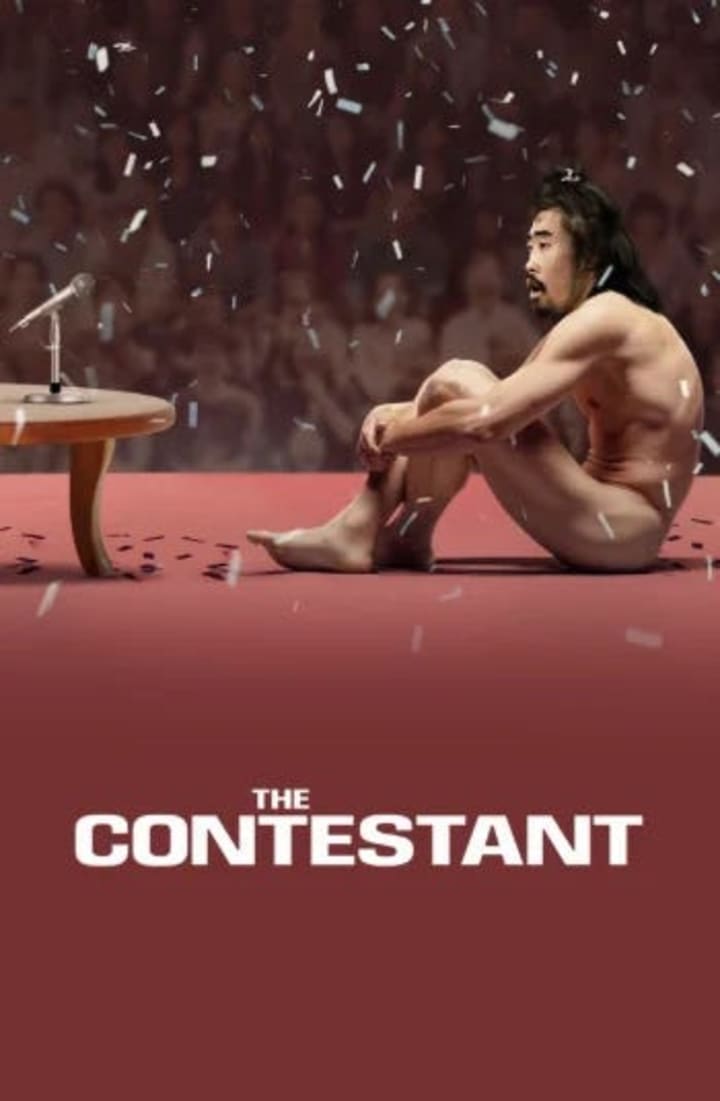
Today, in Japan, his show is remembered as a cultural phenomenon — and a cautionary tale:
- A story about media and manipulation.
- About human resilience.
- About how far entertainment can go in the name of ratings.
About the Creator
Dmitri Solovov
Real lives, real ethics, real emotions.
Keep reading
More stories from Dmitri Solovov and writers in Interview and other communities.
Center Stage with Paul Stewart
*** I'm keen to republish the interviews I did for my series with Vocal creators. It's been a few years and I thought it might be nice to revisit these wonderful conversations. I'll be releasing them one at a time for a few weeks/months.
By Heather Hubler3 days ago in Interview
A Story of Taylor Swift
On a quiet Christmas morning in Reading, Pennsylvania, a young girl sat on the edge of her bed holding a guitar that was nearly as big as she was. Her fingers pressed carefully against the strings as she tried to match the melodies she heard in her head. Her name was Taylor Swift, and even at that young age, she understood something important: music was not just sound—it was a way to tell the truth. Long before stadium lights and chart-topping records, Taylor was learning how to turn feelings into stories.
By Organic Products about 22 hours ago in Interview
The Devil's Cut
“Comrade, finally you’re awake.” The voice was smooth, sensual. A flickering incandescent bar was all that lit the white, sterile room. All Vladimir remembered was everything going black. He tried to move his arms and found them strapped to the gurney.
By Matthew J. Fromm4 days ago in Fiction




Comments
There are no comments for this story
Be the first to respond and start the conversation.