
China Accelerates Budget Spending to Counter Tariff Woes
China Accelerates Budget
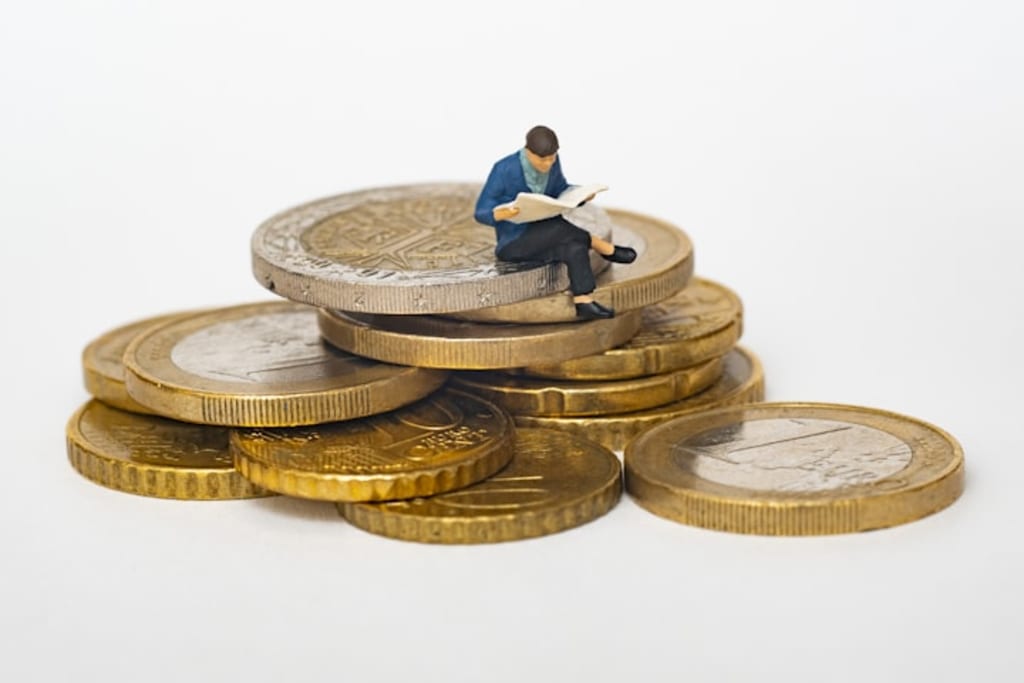
China has unveiled a comprehensive fiscal strategy to mitigate the economic impact of increased tariffs in response to the escalating trade tensions it has been having with the United States. The Chinese government has set a record-high budget deficit target of approximately 4% of its Gross Domestic Product (GDP) for 2025, marking a significant shift from the previous cap of 3%.
Boosting Domestic Consumption
A central component of China's strategy is to invigorate domestic consumption, which has historically lagged behind other economic sectors. To this end, Beijing has introduced a "special action plan" designed to stimulate household spending. This plan includes expanding consumer subsidies by 300 billion yuan ($40 billion), targeting sectors such as electric vehicles, home appliances, and other consumer goods.
Additionally, the government is broadening its home appliance trade-in program to encompass a wider range of products, including microwave ovens, water purifiers, dishwashers, and rice cookers . These measures aim to address the structural issue where household spending accounts for less than 40% of China's GDP, significantly below the global average.
Fiscal Measures and Infrastructure Investment
To support these initiatives, China plans to issue 1.3 trillion yuan ($179 billion) in ultra-long special treasury bonds and allow local governments to issue 4.4 trillion yuan in special-purpose bonds, primarily for infrastructure projects. Furthermore, the central government intends to raise 500 billion yuan to recapitalize major state banks, ensuring liquidity and stability within the financial system.
Economic Outlook and Challenges
Despite these proactive measures, China's economy faces significant challenges. The first quarter of 2025 saw a 5.4% year-on-year growth, driven by a surge in exports as businesses rushed to ship goods ahead of U.S. tariff hikes . However, analysts warn of a potential slowdown due to continued trade tensions, a sluggish property sector, and cautious consumer spending.
In summary, China's accelerated budget spending and targeted fiscal measures represent a concerted effort to counteract the adverse effects of increased tariffs and to pivot the economy towards a more consumption-driven model. The effectiveness of these strategies will be closely monitored as the global economic landscape continues to evolve.
China expanded government spending at the fastest rate for any first quarter since 2022, ramping up support for an economy bracing for foreign demand declines as a trade war with the US intensifies.
The combined expenditure in the general public budget and the government fund account, China’s two main fiscal books, rose to 9.26 trillion yuan ($1.3 trillion) in the first three months, an increase of 5.6% from the same period a year earlier, according to Bloomberg calculations based on data released by the Ministry of Finance on Friday. That was the strongest gain for the first quarter in three years.
The numbers meant nearly 22% of the outlays planned for the full year was spent in the period, faster than 21.6% at the same point last year.
China has to strengthen public spending to shield the economy as surging American tariffs could send its exports into contraction while a years-long housing market downturn and deflation keep consumer and business sentiment weak. Its growth held up in January-March, but economists broadly expect it to slow sharply from the second quarter after the wave of export front-loading passes and benefits from a consumer trade-in program taper off.
Several major banks have downgraded their forecast on China’s expansion this year to 4% or lower, well below the government’s goal of around 5%. Officials are focusing on implementing supportive measures announced at last month’s parliamentary session, though they also said they have ample scope and tools to add stimulus when necessary.
“Fiscal policy will turn from a growth drag last year to a major driver this year, although it should be still insufficient to fully offset the impact of external shocks,” Goldman Sachs Group Inc. economist Lisheng Wang wrote in a Saturday note.
Top leaders will likely strengthen the easing rhetoric in the meetings of the Communist Party’s decision-making Politburo this month and in July, and the National People’s Congress could approve an extra-budget bond issuance quota later this year, he said. The central bank is expected to cut policy rates, lower the amount of reserve lenders must keep in reserve, and buy bonds as the government further accelerates debt issuance and spending of the money raised in coming months, he added.
Faster tax rebate payouts have been cited by some analysts as an option to help offset some squeeze posed by US tariffs on exporters. The payout as a share of exports last month came in at 11%, only up slightly from the level a year earlier, according to Bloomberg calculations based on official data.
The property downturn remained a drag on government income last month, with land sales shrinking 16.5% on year and real estate-related revenues falling 0.1%.
Tax revenue declined on year for a second straight month while the increase in non-tax income almost halved. Local authorities rushed to sell bonds to swap the so-called “hidden debt” onto their books in a program aimed at alleviating their cash strains and reducing excessive fines imposed on businesses, which are a source of non-tax income.
The continued contraction in land sales and tax revenues meant total income under the two major budgets fell 2.6% on year to 6.94 trillion yuan in the first quarter. The gap between government income and spending broadened as a result, with the broad budget deficit soaring 41% on year to 2.3 trillion Yuan.
About the Creator
Keep reading
More stories from writers in Humans and other communities.
Autonomy Is The Real Privilege
Good morning, freedom-seekers! Today we’re gonna be looking at autonomy. A strange word, I know; one many would probably look at blankly and run away from on sight. We’re gonna figure out what it actually means, consider how it’s achieved, and decipher just how deeply most of us are tangled up in dependence without realising it.
By That ‘Freedom’ Guy7 days ago in Humans
The Most Kissed Face in History
The history of medicine is often a sterile chronicle of clinical trials, chemical formulas, and antiseptic laboratories. However, one of the most vital tools in modern emergency medicine—the CPR training manikin—is rooted in a 19th-century Parisian mystery that feels more like a work of Romantic poetry than a medical breakthrough. Every year, millions of students around the globe tilt back the head of a plastic doll to practice life-saving breaths, looking into the serene, frozen features of a woman known as L’Inconnue de la Seine: The Unknown Woman of the Seine.
By Richard Weberabout 14 hours ago in Humans
Affection and Healing for Yourself
During the night of the last quarter moon, I gathered my ritual supplies. I carefully handled the chunk of black tourmaline that would protect me from your overall negative and narcissistic energy. I carefully walked the house with my stick of selenite in hand, asking the universe to cleanse our working space.
By Alisha Wilkins ✒️🦋🖋️7 days ago in Fiction




Comments
There are no comments for this story
Be the first to respond and start the conversation.