
Beneath the Façade: Emotional Deception and the Illusion of Love in University Corridors
How Manipulative Relationships Are Derailing the Lives of Young Women

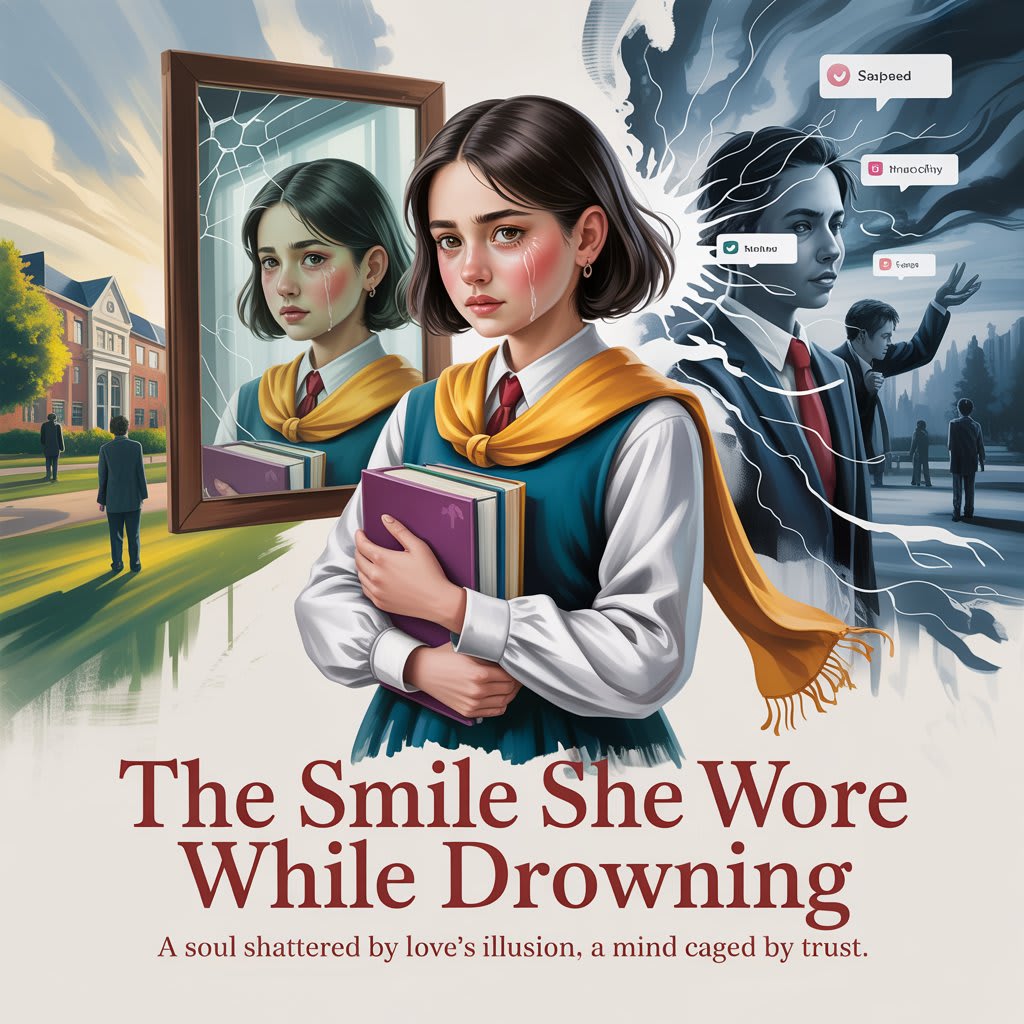
Introduction – A Beautiful Lie
In the blossoming years of university life, where minds are expanding and dreams are taking shape, a parallel story is often unfolding quietly, tragically. It is the story of emotional deception—where the illusion of love is sold not as a promise of companionship, but as a weapon to exploit innocence. With sharpened acting skills and calculated emotions, many young men lure their female peers into relationships that begin with charm and end in desolation. Behind every rose lies a thorn, and in the corridors of many universities, these thorns pierce deeper than most wounds.
---
The Campus Stage – Where Performance Begins
A university campus is a microcosm of society. It is a place of ambition, exploration, and emotional vulnerability. For many young women, it is their first step into a coeducational world, one where interactions with the opposite gender are frequent and, at times, intimate. Amid this environment, the "performers" arrive—young men who see romance not as a journey but as a conquest. These are not lovers; they are illusionists.
Some are easy to spot—boisterous, flirtatious, attention-seeking. But others are masters of manipulation. They blend sincerity with subtle desperation, often masquerading as emotionally intense individuals who, at first glance, seem painfully genuine. They do not chase; they ache. They do not flirt; they confess. And this façade, for many unsuspecting girls, is disarming.
---
The Emotional Extremists – Masters of Manipulation
Unlike the obvious flirt, the emotional extremist presents himself as a "victim of love." He makes it clear that if she refuses, he might shatter. He creates emotional emergencies—threats of self-harm, existential musings, dramatic withdrawals. His every word carries the weight of a romantic martyr. For a compassionate girl, this act can seem heartbreakingly real.
For freshmen and sophomores, still learning to navigate emotional complexities, such theatrics can be overwhelming. These manipulators use fear as bait: "If you don’t accept me, I might do something terrible." The girl, alarmed and guilt-ridden, often concedes—not out of love, but out of a false sense of responsibility.
It’s a psychological game, one where boundaries are blurred and pressure is masked as affection. The manipulator doesn’t seek love; he seeks power—emotional power.
---
The Temporary Paradise – A Sweet but Short-Lived Illusion
Once she is emotionally entangled, a brief honeymoon phase begins. It is a time of secret meetings, digital messages filled with poetic promises, and dreams that feel almost cinematic. The girl, now convinced that she has found someone different—someone "not like the others"—begins to build her world around him.
She believes she is the exception. She has heard stories of betrayal, seen tears on other girls’ faces, but she reassures herself: "My story is different." Her heart, still innocent, cannot fathom deceit beneath such dedication. But the manipulator’s interest was never in building; it was always in consuming.
---
The Exit Strategy – Mission Accomplished
Once he has achieved his emotional or physical goals—once the novelty fades—the manipulator begins his withdrawal. Texts become infrequent. Compliments turn into criticisms. He becomes "busy," "distant," "confused."
Then, like smoke in the wind, he vanishes. And the girl, left with nothing but memories and betrayal, finds herself in a personal hell. Her grades suffer. Her friendships shrink. Her relationship with her family deteriorates. The girl who once came to university with dreams now stares at the ceiling wondering where it all went wrong.
For many, the betrayal isn’t just emotional—it is existential. Her entire perception of trust, love, and self-worth collapses.
---
The Second Coming – When Deceivers Return
Some of these manipulators, after a break, return like seasoned actors revisiting a role. They re-enter with new excuses, fabricated regrets, and honeyed words. "I was scared of commitment," "I didn’t know what I had until I lost you," "You’re the only one I ever loved."
Many girls, still nursing the wound and longing for closure, fall again. They mistake familiarity for redemption. But the second round often hurts more than the first. And those who refuse to take them back are labeled heartless, cold, or “changed.”
But in truth, they are not cold—they are healing.
---
The Social Media Effect – A Silent Cry for Help
Heartbreaks that once stayed locked in journals now spill across social media. Facebook timelines become elegies of betrayal. WhatsApp statuses hint at depression. Instagram posts become mosaics of pain, masked in poetic captions.
For many young women, social media becomes both a coping mechanism and a battlefield. They seek solace in passive posts, hoping the betrayer will notice. Others use it as a subtle warning to peers. But no post, however poetic, can replace real healing.
And often, the manipulator watches from a distance—silent, satisfied, untouched.
---
The Psychological Toll – A Wound That Scars the Soul
The long-term effects of emotional manipulation run deep. It is not just about a broken heart—it is about a shattered identity. The girl begins to question her own worth: Was I not good enough? Was I foolish? Was it all my fault?
This self-doubt seeps into every area of life. Relationships with others become strained. Some girls develop trust issues so severe that even genuine gestures seem suspicious. Their emotional compass, once steady, now spins in uncertainty.
The trauma doesn’t end with graduation. It walks with them into their careers, their marriages, their motherhood. They may smile in photographs, but a corner of their heart remembers the boy who turned love into a lie.
---
Redefining Self-Worth – From Victimhood to Empowerment
But the story need not end in tragedy. With awareness, support, and self-respect, a girl can rise from manipulation with wisdom. She can learn to distinguish between love and lust, between sincerity and performance.
The key is in redefining self-worth—not as something granted by others, but as something owned within. A girl who knows her value is not easily fooled by theatrics. She listens, but questions. She feels, but analyzes. She loves, but wisely.
Universities must also play a role. There must be workshops, awareness campaigns, and mental health support to help young women navigate these emotional terrains. Silence enables abuse; conversation begins healing.
---
A Message to Young Women – Choose Dignity Over Deception
Dear sisters in the corridors of knowledge and growth:
You are not weak for wanting love. You are not foolish for trusting. But know this—true love never manipulates, never pressures, never threatens. It builds, it heals, it elevates.
Do not mistake emotional drama for emotional depth. Do not trade your peace for temporary validation. The boy who says he will die without you will likely forget you within months. But you—if you fall—may lose years of yourself.
Guard your heart, not with walls of coldness, but with the wisdom of discernment. The right man will never rush you, guilt you, or confuse you. He will wait. He will earn your trust. He will never make you cry yourself to sleep.
---
Conclusion – Honor Is a Choice
In a world where manipulation is masked as romance, choosing dignity is an act of rebellion. Let every girl walking into a university remember this: Your beauty is not in how many chase you, but in how deeply you value yourself.
Out of every hundred boys, perhaps two may truly want to build a future. The rest—sadly—are merely passing time. It is your responsibility to decide whether you wish to be remembered as a moment or respected as a destiny.
May every sister, daughter, and friend be protected from wolves in disguise. May Allah preserve their honor, protect them from harmful company, and bless them with righteous, respectful companions.
Ameen.
Writer : Umair Ali Shah Yousafzai
—
About the Creator
Umair Ali Shah
Writer exploring life, truth, and human nature through words. I craft stories, essays, and reflections that aim to inspire, challenge, and connect. Every piece is a step on a shared journey of thought and emotion.
Keep reading
More stories from Umair Ali Shah and writers in Humans and other communities.
A Dream of Dignity and Healing
Introduction: A Dream Bigger Than Self It begins not with wealth, not with power, but with a simple, profound thought: “No one should die just because they are poor.” This dream did not come overnight, nor did it appear in luxury. It was born in the heart of rural Pakistan, in villages where hope is a rare guest and hospitals are often miles away — both in distance and affordability.
By Umair Ali Shah 9 months ago in Humans
A Pachelbel Canon Night
When I was writing my first book, the world around me was asleep, and I was awake in the wonder of the light. Every guidance was in the nuance of the living form. I had a house then and not much else, but I had a room for which to grow and live, and everything else was a beam of light to see by. I lived in prayer, in meditation, and there was no radical transformation. It was more of a sifting and taking it all in.
By Canuck Scriber Lisa Lachapelle25 days ago in Humans
I Simplified My Life. Stress Dropped Fast. Here Is How You Do It.
In today's hyper-connected, relentlessly demanding world, stress has become an unwelcome constant. We juggle careers, families, social lives, and a never-ending stream of information, often feeling overwhelmed and burned out. A few months ago, I found myself at that very breaking point. The constant hum of anxiety had become my normal, and I knew something had to change. That's when I decided to embark on a journey of simplification, and the results have been nothing short of transformative. My stress levels have plummeted, my energy has soared, and I've rediscovered a joy in the everyday that I thought I'd lost.
By Wilson Igbasiabout 10 hours ago in Humans
Wild Card Weekend Recap: What Happens Now?
I think I figured out why I love Wild Card Weekend so much. It's because it's the first playoff anything of the calendar year. The NFL season starts in the fall, and once upon a time, the champion was crowned either on or slightly before New Year's. The evolution of the NFL schedule has resulted in the playoffs starting just into the New Year, and currently, the final week of the season falls on the first weekend of the New Year, with Wild Card Weekend coming a week after that. So yes, chronologically, the NFL's Wild Card Weekend serves as the first playoff anything of the calendar year.
By Clyde E. Dawkins7 days ago in Unbalanced



Comments
There are no comments for this story
Be the first to respond and start the conversation.