
Alexander the Great – Part 2: From Young King to Conqueror of Empires
When Alexander became king of Macedon in 336 BCE, he was only twenty years old. Many rivals believed that his youth and inexperience would make him weak. Instead, those early years of his reign revealed a determined, fearless leader who moved quickly to secure power and begin one of the greatest campaigns in history. Part 2 of Alexander’s story focuses on his rise to full kingship, the consolidation of his authority, and the beginning of his legendary conquests that would change the ancient world forever.

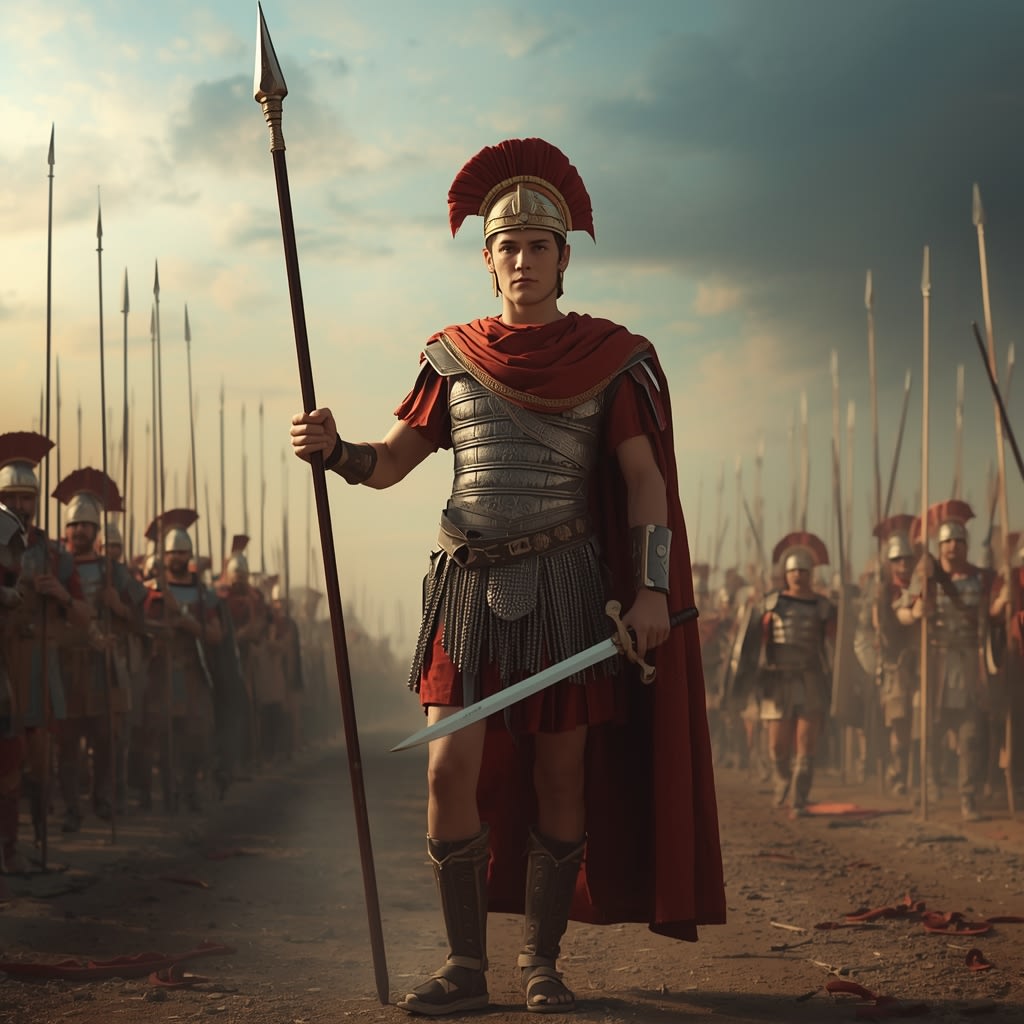
The Assassination of Philip II and a Sudden Rise to Power
Alexander’s path to the throne began dramatically. His father, King Philip II, was assassinated during a royal celebration. The circumstances remain mysterious, but the effect was immediate: a young prince suddenly inherited a powerful yet unstable kingdom. Macedonia had grown strong under Philip’s leadership, but many Greek city-states still resented Macedonian dominance. Some leaders believed that with Philip gone, they could break free from Macedonian control.
Alexander understood that hesitation would invite rebellion. He acted swiftly to secure his throne. Potential rivals within the royal family and among the nobility were neutralized, and loyal generals supported his claim. Within months, Alexander had established himself firmly as king. His first challenge, however, was not foreign conquest—it was maintaining unity at home.
Crushing Rebellion in Greece
As news of Philip’s death spread, several Greek cities began to rebel. Athens and Thebes, in particular, saw an opportunity to challenge Macedonian authority. Alexander responded with speed and force. He marched south with his army and demonstrated that he possessed not only courage but also decisive leadership.
The most significant rebellion occurred in Thebes. When the city rose against Macedonian rule, Alexander surrounded it and demanded surrender. When resistance continued, he ordered a full assault. Thebes was destroyed, and thousands were killed or enslaved. Although harsh, this action sent a clear message to all of Greece: Macedonia remained dominant under Alexander. After this, most Greek states submitted, and Alexander was recognized as the leader of a united Greek force.
This unity was essential. Philip had long planned an invasion of the Persian Empire, and Alexander now intended to fulfill that ambition.
Preparing for the Persian Campaign
The Persian Empire was the largest and wealthiest empire in the world at the time. It controlled vast territories across Asia and had enormous resources. For a young king to challenge such power seemed almost impossible. Yet Alexander possessed several advantages. He inherited a highly trained army, experienced generals, and a clear military strategy from his father.
Before leaving Greece, Alexander secured his northern borders by defeating rebellious tribes in the Balkans. This ensured that Macedonia would remain stable during his absence. He then assembled a force of about 30,000 infantry and 5,000 cavalry—a relatively small army compared to the massive forces of Persia. However, this army was disciplined, well-trained, and loyal.
In 334 BCE, Alexander crossed the Hellespont (modern-day Dardanelles), symbolically entering Asia. According to legend, he threw a spear into the ground and declared it conquered land. This dramatic act marked the beginning of his campaign against Persia.
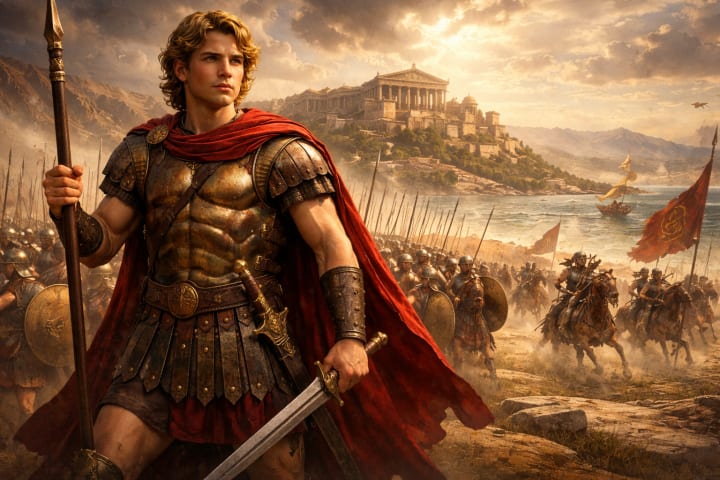
The First Major Victory: Battle of the Granicus
Alexander’s first major battle against Persian forces took place at the Granicus River in Asia Minor. Persian satraps (governors) gathered their armies to stop him before he could advance further. Despite being advised to wait, Alexander chose to attack immediately. He led a cavalry charge across the river, personally engaging in combat.
The battle was intense, but the Macedonian army’s discipline and tactics prevailed. Alexander’s Companion Cavalry broke through the Persian lines, and the enemy retreated. This victory opened the gates of Asia Minor. Many cities surrendered willingly, while others were taken by force. Each victory increased Alexander’s reputation and confidence.
Confrontation with Darius III: The Battle of Issus
As Alexander advanced deeper into Persian territory, King Darius III finally confronted him. The two armies met at the Battle of Issus in 333 BCE. Darius commanded a much larger force, but the narrow battlefield limited his advantage. Alexander used this to his benefit, leading a decisive charge toward Darius himself.
The Persian king fled the battlefield, leaving behind his family and vast treasures. This victory was not just military—it was psychological. With Darius in retreat, many regions began to accept Alexander as their new ruler. The perception of invincibility began to grow around him.
Siege of Tyre and the Egyptian Campaign
Alexander’s path was not always easy. The island city of Tyre resisted his rule, forcing him into a long and difficult siege. To reach the city, he ordered the construction of a massive causeway across the sea. After months of effort, Tyre fell. This demonstrated Alexander’s persistence and engineering skill.
He then moved into Egypt, where he was welcomed as a liberator from Persian rule. The Egyptians crowned him pharaoh. During his stay, he founded the city of Alexandria, which would become one of the most important cultural and intellectual centers of the ancient world.
Alexander also traveled to the oracle of Siwa in the desert, where he was declared the son of a god. This reinforced his belief in divine destiny and strengthened his authority among followers.
Toward the Heart of Persia
By the time Alexander left Egypt, he had secured key territories and built a reputation as an unstoppable force. His next objective was the heart of the Persian Empire. This would lead to the decisive Battle of Gaugamela, where his strategic brilliance would fully reveal itself—but that belongs to the next chapter of his story.
Conclusion
Part 2 of Alexander’s life shows his transformation from a young king facing uncertainty into a confident conqueror challenging the greatest empire of his time. Through swift action, bold decisions, and fearless leadership, he secured his throne, unified Greece, and launched a campaign that would reshape history. His victories at Granicus and Issus, the fall of Tyre, and his rise in Egypt marked the beginning of an unstoppable expansion.
These early campaigns were not just about territory—they built Alexander’s legend. Each success strengthened the belief that he was destined for greatness. As he marched toward the Persian heartland, the world watched a young king become one of history’s most powerful conquerors.
About the Creator
Say the truth
"Say the Truth: Explain Everything in the World" is your trusted source for uncovering facts and exploring the wonders of history, science, technology, and beyond. We simplify complex ideas and reveal truths to inspire curiosity .
Keep reading
More stories from Say the truth and writers in Humans and other communities.
How Fast Could Russia Win a War With Ukraine?
Understanding “Winning” in a Modern War Before discussing speed, we must define what winning means. In modern conflicts, victory can mean very different things: Full territorial control Regime change Military dominance without occupation
By Say the truth about a month ago in Humans
Time to change your life.
Is it even possible for you to change your life? A lot of people, more than there should be, are unhappy with their lives. But what are they doing about it? Usually nothing. People talk about how shitty their lives are and want change, but are they not taking the actions to change?
By Jen Phillips5 days ago in Humans
Melinda Gates and the Courage to Redefine a Life in Public
Melinda Gates has lived much of her life in a spotlight she did not seek, yet she has never let that light define her entirely. To many, her name is tied to wealth, philanthropy, and one of the most famous marriages in the world. But beneath those labels is a woman who has spent decades making careful choices, often quietly, often slowly. Her story is not about sudden change or dramatic gestures. It is about patience, inner conflict, and the courage to evolve while millions are watching. Melinda Gates represents a kind of strength that grows through reflection rather than force. As her public role continues to shift, her journey offers insight into what it means to build a meaningful life while learning, unlearning, and choosing again.
By Muqadas khana day ago in Humans



Comments
There are no comments for this story
Be the first to respond and start the conversation.