
Advances in Neuroscience and Other Biological Discoveries
The brain as a computational apparatus

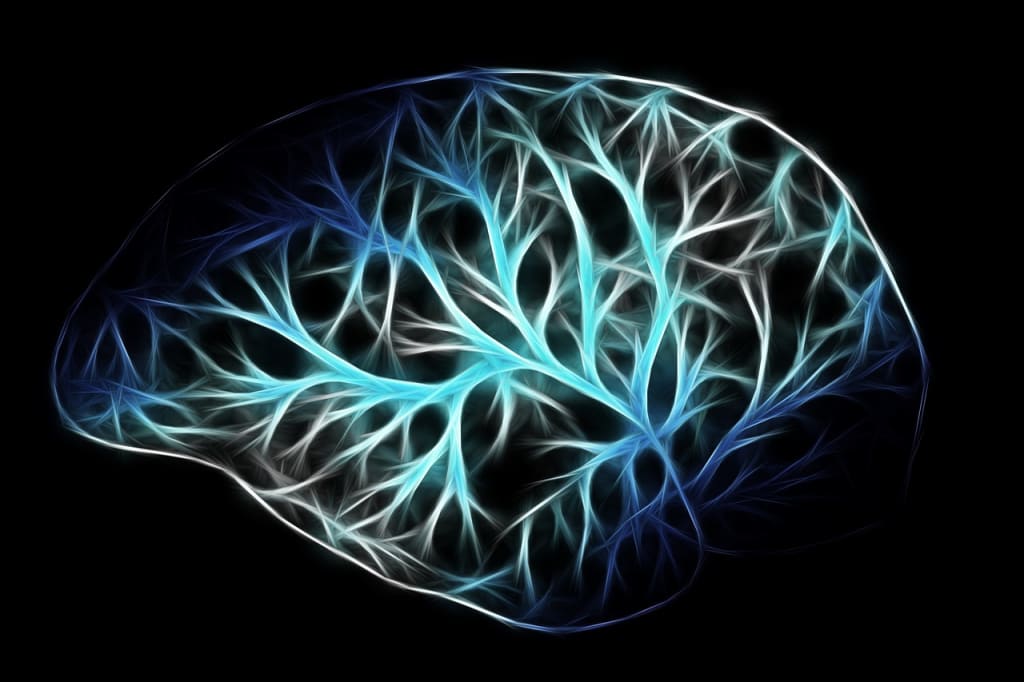
For ages, medical professionals and scientists have endeavored to uncover the enigmas concealed within the human brain. How is it structured? Which regions govern distinct mental faculties, and how are these interconnected to generate our psychological encounters?
Over the last century, neuroscientists have adopted a cartographer's approach, meticulously charting the brain's attributes and operations within clearly defined boundaries. The prefrontal cortex has gained renown as the hub of rationality, while the motor cortex orchestrates and coordinates movement. The somatosensory cortex and parietal lobes oversee our perception of the physical realm. Memories, language, and emotions are processed by the temporal lobes, while the occipital lobe integrates and processes visual data. The cerebellum, meanwhile, executes bodily motor commands. Our perceptions of human nature have shaped these classifications.
As we examine brain components to unravel their functions, scientists typically rely on their preconceived notions of the human mind, some of which can be traced back to Plato. Contemporary studies of traditional cognitive brain functions, such as memory, have unveiled surprising levels of activity overlapping various brain regions, rendering the conventional map and its rigid categories less relevant. The brain's operations do not neatly align with our existing models of the mind. These distinctions are highly subjective, and it might be more effective to explore the brain's organizational principles without being bound by culturally laden classifications that the brain itself does not recognize.
Russell Poldrack is pioneering such an approach. At Stanford University's laboratory, he adopts a computational perspective to comprehend the structural underpinnings of our cognition. By subjecting individuals to an array of diverse psychological tasks that engage various cognitive functions, he compiles extensive data and probes the inherent structure. Poldrack's team employs machine learning to identify neural activity linked to memory recall. However, rather than simply mapping to memory centers, the data corresponds to more comprehensive patterns of activity, some of which lack defined labels. This has revealed that ostensibly similar measures may not gauge the same phenomena. A fundamental reimagining of brain functions appears necessary. In neuroscience, a consensus is emerging that views the brain as a computational apparatus, requiring an understanding of its underlying computations to elucidate psychological functions. The challenge lies in articulating these computations beyond mathematical terms. This prompts the question of whether we can develop brain models that predict its activities while also providing comprehensible explanations to humans.
In the depths of Southeast Asian jungles thrives an exceptional botanical wonder—the Rafflesia Arnoldii. Dubbed the "corpse flower" due to its odor resembling decomposing flesh, it lures pollinating flies. This giant flower's dimensions rival those of a young child and harbor an additional quirk—it's a parasite. Rafflesia extracts some or all of its nourishment and moisture from other plants, often incorporating foreign genetic material, including that of its host, into its genome. One theory posits that parasitic plants pilfer from hosts to bolster their parasitic prowess. Liming Cai is the latest biologist attempting to sequence the intricate genome of Rafflesia. This task has proven arduous due to the genome's profusion of repetitive transposon elements, akin to "jumping genes" that replicate themselves at intervals. While most organisms suppress these elements, Rafflesia does not. These repetitions complicate genome assembly, akin to assembling an identical jigsaw puzzle. This year, with assistance from a bioinformatics team, Cai successfully drafted the genome of a Rafflesia species, yielding findings that exceeded expectations. Notably, the species has shed nearly half its conserved plant genes—an unprecedented revelation. Additionally, around 90% of the genome consists of repeated DNA, such as transposons, a highly unconventional trait. While the rationale remains elusive, these insights could revolutionize our grasp of parasite genomics. As genome sequencing technology advances, we gain the capacity to explore the myriad branches of life's tree and the creative strategies that bend biological norms. Nature's diversity constantly surprises us.
In the early 20th century, sleep captivated the attention of researchers, who utilized the newly devised electroencephalograph (EEG) to measure brain electrical activity. While this approach furnished insights, it fostered a bias—portraying sleep as a neurological phenomenon rooted solely in the brain. However, this perspective began to crack when Swiss scientist Irene Tobler observed that even cockroaches sleep. Over time, it became clear that creatures with simpler brains also sleep, eroding the brain-centric paradigm. A transformative discovery emerged recently with the revelation that hydras, organisms with basic nervous systems instead of brains, also experience sleep. This shift implies that sleep predates the evolution of brains. Yet, if sleep's origin isn't bound to the brain, its purpose raises questions. Increasingly, researchers explore how peripheral tissues influence the brain and vice versa, particularly concerning sleep regulation. The hypothesis suggests that sleep might facilitate solutions in scenarios where the brain cannot self-repair efficiently. During sleep, energy consumption reduces, while the energy utilized supports functions that are challenging to maintain during wakefulness. Hydras' study is part of mounting evidence indicating that sleep initially evolved to regulate metabolism and bolster repair, only later acquiring brain-related roles. The intricate connection between sleep and metabolism emerges as an area of promising exploration.
This trajectory points toward the future.
About the Creator
Jelena Gavrilovic
I have a strong passion for writing narratives on a variety of topics and to bring complex subjects to life. I carefully select each word and craft every sentence like a brushstroke on the canvas of imagination.
Keep reading
More stories from Jelena Gavrilovic and writers in Humans and other communities.
Quantum Physics:
In the realm of modern physics, no discipline is as enigmatic, revolutionary, and fundamentally mind-bending as quantum physics. It is a branch of science that delves into the mysteries of the subatomic world, revealing a reality that challenges our intuitive understanding of the universe. From particles that can be in multiple places at once to the intriguing phenomenon of entanglement, quantum physics takes us on a journey through a realm where the rules of classical physics cease to apply.
By Jelena Gavrilovic2 years ago in Humans
Silver Screen Magic with Mae West
American actress and singer Mae West became a popular film actress during the Great Depression. She started entertaining in vaudeville, then performed on Broadway, and finally went to Hollywood. She signed up with Paramount Pictures and made her debut in the 1932 film “Night After Night.” She also starred in musicals, comedies, and crime dramas. The American Film Institute named her one of the best classic Hollywood actresses.
By Rasma Raisters6 days ago in Geeks


Comments
There are no comments for this story
Be the first to respond and start the conversation.