
Quantum Physics:
Unraveling the Mysteries of the Subatomic World

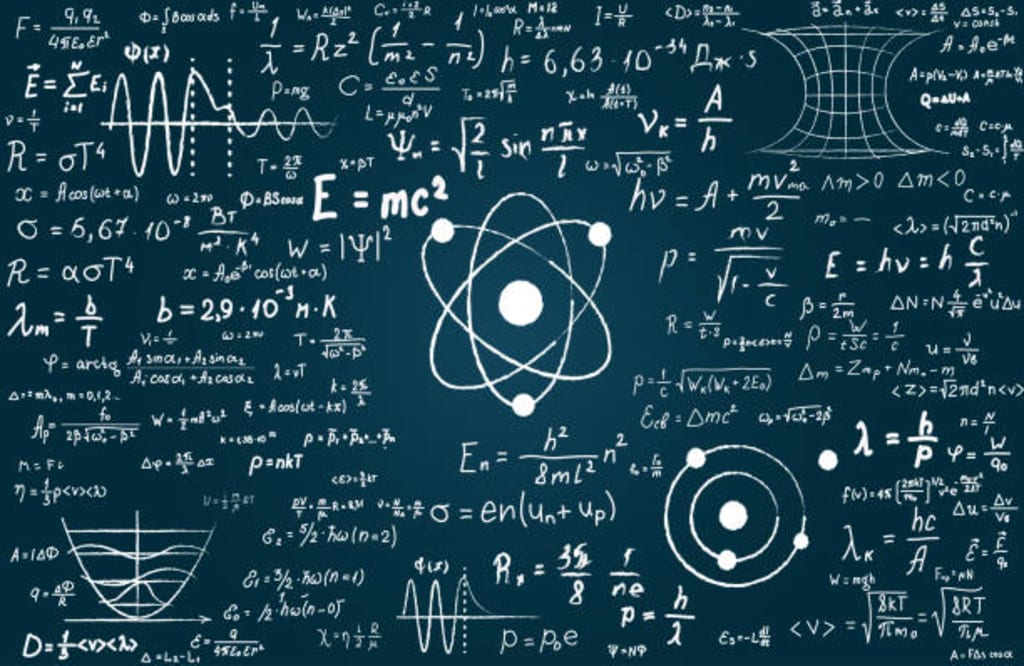
In the realm of modern physics, no discipline is as enigmatic, revolutionary, and fundamentally mind-bending as quantum physics. It is a branch of science that delves into the mysteries of the subatomic world, revealing a reality that challenges our intuitive understanding of the universe. From particles that can be in multiple places at once to the intriguing phenomenon of entanglement, quantum physics takes us on a journey through a realm where the rules of classical physics cease to apply.
At its core, quantum physics is the study of the behavior of matter and energy on the smallest scales imaginable. It emerged in the early 20th century, sparked by the work of visionaries like Max Planck, Albert Einstein, Niels Bohr, and Erwin Schrödinger, among others. These pioneers sought to unravel the perplexing behavior of particles at the atomic and subatomic levels.
One of the central tenets of quantum physics is the wave-particle duality, a concept that challenges our classical notions of particles as distinct, solid entities. According to quantum theory, particles, such as electrons and photons, exhibit both wave-like and particle-like behavior. This duality is exemplified by experiments like the double-slit experiment, where particles can behave as waves, producing interference patterns, or as particles, creating discrete impacts on a screen.
Another groundbreaking concept is Heisenberg's Uncertainty Principle, proposed by Werner Heisenberg in 1927. This principle states that it is fundamentally impossible to know both the exact position and momentum of a particle simultaneously. This inherent uncertainty arises from the wave-like nature of particles, and it has profound implications for our understanding of the microscopic world.
Quantum superposition is yet another baffling phenomenon. It suggests that particles can exist in multiple states or positions at once until they are observed or measured. This implies that before measurement, particles can exist in a state of probability, with various outcomes possible. This concept has given rise to quantum computing, a field that harnesses the computational power of superposition to potentially revolutionize information processing.
Entanglement, famously dubbed by Einstein as "spooky action at a distance," is perhaps the most mysterious aspect of quantum physics. When two or more particles become entangled, their states become correlated in such a way that the measurement of one particle instantaneously determines the state of the other, regardless of the distance separating them. This phenomenon appears to violate the speed-of-light limit imposed by special relativity, challenging our understanding of space and time.
Quantum physics also introduces the notion of quantum states and wave functions, which mathematically describe the probability distributions of a particle's properties. The wave function encapsulates the potential states a particle can occupy, and it evolves over time according to Schrödinger's equation. When a measurement is made, the wave function collapses, yielding a definite value for the observed property.
The application of quantum physics has led to numerous technological breakthroughs. Quantum mechanics underlies the operation of lasers, transistors, and MRI machines, revolutionizing fields from communications to medical imaging. Furthermore, emerging technologies like quantum cryptography and quantum sensing hold promise for secure communication and precise measurement capabilities that surpass classical limits.
Despite its profound successes, quantum physics continues to provoke philosophical debates and elicit new questions. The nature of reality, the role of the observer, and the true meaning of entanglement remain topics of lively discussion among physicists and philosophers alike. Some interpretations of quantum mechanics, such as the Copenhagen interpretation and the many-worlds hypothesis, propose radically different views of the quantum world, further emphasizing the profound and perplexing nature of this field.
In conclusion, quantum physics stands as a pinnacle of human intellectual achievement, reshaping our understanding of reality at its most fundamental level. It challenges our intuitions, pushing the boundaries of what we can conceive and observe. As we continue to probe deeper into the mysteries of the subatomic world, quantum physics promises to unlock new realms of knowledge and potential applications that may reshape the course of technology and science in the 21st century and beyond.
About the Creator
Jelena Gavrilovic
I have a strong passion for writing narratives on a variety of topics and to bring complex subjects to life. I carefully select each word and craft every sentence like a brushstroke on the canvas of imagination.
Keep reading
More stories from Jelena Gavrilovic and writers in Humans and other communities.
Advances in Neuroscience and Other Biological Discoveries
For ages, medical professionals and scientists have endeavored to uncover the enigmas concealed within the human brain. How is it structured? Which regions govern distinct mental faculties, and how are these interconnected to generate our psychological encounters?
By Jelena Gavrilovic2 years ago in Humans
How Do Himalayan Salt Bricks Create Healthier Hospitals?
Himalayan salt bricks are changing how hospitals promote health. Today, medical centers seek simple ways to help patients heal safely. Instead of using advanced technology, some now opt for natural materials, such as salt bricks.
By david smith4 days ago in Humans



Comments
There are no comments for this story
Be the first to respond and start the conversation.