
13-Year-Old Shatters Tetris Record
Willis “Blue Scuti” Gibson reaches the legendary kill screen on NES Tetris, a feat only achieved by AI—until now.

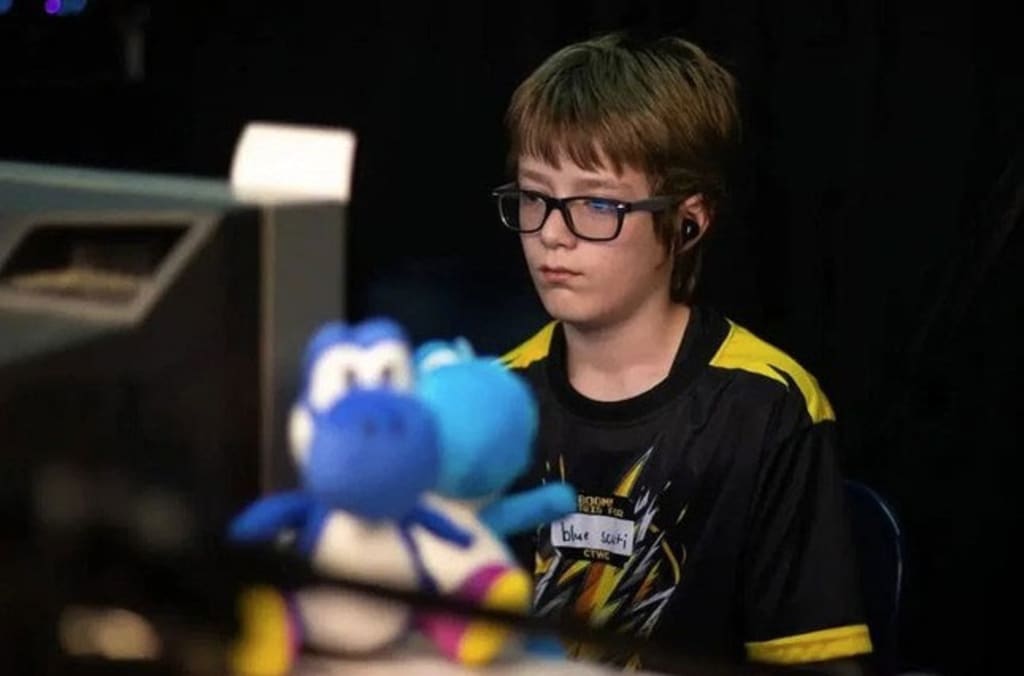
On December 21, 2023, in a quiet bedroom in Stillwater, Oklahoma, a 13-year-old boy leaned back in his chair, hands behind his head, eyes wide in disbelief. The screen in front of him froze. The score read "999999." The game, finally, had nothing more to give.
"Oh my God," Willis Gibson repeated over and over in a video he later uploaded to YouTube on January 2. “I can’t feel my fingers,” he whispered, overwhelmed by adrenaline and awe.
He had just done something no human had ever accomplished: beat the original Nintendo version of Tetris, a game once thought to be impossible for humans to finish. For over three decades, this classic puzzle game has stood as one of the ultimate tests of reflex, strategy, and endurance. And now, a teenager has rewritten its history.
The Game That Refused to End
First released on the Nintendo Entertainment System (NES) in 1989, Tetris was the brainchild of Russian software engineer Alexey Pajitnov. The concept was simple: rotate and place falling blocks—called tetrominoes—to complete horizontal lines and clear the screen. The challenge? The blocks just keep coming. Faster. And faster. And faster.
What made Tetris unique was that it didn’t have a traditional “end.” In theory, a skilled player could continue indefinitely. But in practice, the game became unmanageable around Level 29, a speed barrier dubbed the “human wall”. At that point, the blocks fell so fast that even the most elite players could barely respond. For years, Level 29 was considered the hard ceiling of human capability.
That was until the community decided to push back.
A New Generation, A New Approach
Over the past decade, a new wave of Tetris players began experimenting with alternative techniques. They discovered methods like hypertapping and rolling, where rapid button presses and rhythmic finger movements allowed for faster reactions, bypassing previous speed limitations.
Willis Gibson, known in the competitive gaming world as “Blue Scuti”, was one of these new-generation prodigies. He picked up the game in 2021, when he was just 11, drawn in by its elegant simplicity and addictive challenge.
“I just liked how simple it was,” he said. “But once I saw what others were doing—reaching Level 40, 60, even 100—I wanted to see how far I could go.”
By the end of 2023, he had his answer.
Reaching the Kill Screen
On that fateful December day, Willis didn't just pass the legendary Level 29. He surged through dozens of levels beyond it, pushing the game’s aging code to its breaking point. When he reached Level 157, the game could no longer keep up. The screen locked. No more pieces appeared. It had hit the "kill screen"—a rare crash point previously reached only by artificial intelligence systems.
The original NES Tetris wasn’t designed to handle gameplay that far along. Its programming, limited by 1980s hardware, simply runs out of memory or breaks under the strain. That’s what makes Gibson’s run so groundbreaking—not only did he reach the limit, but he did it faster and more smoothly than the game could handle.
More Than a High Score
To be clear, this wasn’t just about racking up points—although Gibson did hit the game’s maximum score of 999,999. It was about confronting a challenge once thought impossible, and shattering that belief with sheer skill, patience, and persistence.
Throughout the gaming world, news of Gibson’s feat spread like wildfire. Tetris developers, game historians, and esports personalities hailed the achievement as a “milestone in human gameplay.”
“It’s like watching someone run a four-minute mile for the first time,” said one commentator on the Classic Tetris World Championship channel. “Only instead of running, it’s a 13-year-old rolling his fingers across a 1989 controller with superhuman precision.”
From Bedroom to Legend
What makes the story even more remarkable is how unremarkable the setting was. No giant stage, no roaring crowds—just a kid, a controller, and a camera. In the YouTube video, you can hear the familiar click-clack of an NES D-pad, the pixelated drop of tetrominoes, and finally, Gibson’s breathless celebration when the game freezes.
And yet, in that modest setting, something historic happened.
“It feels unreal,” he said in follow-up interviews. “I didn’t expect to do it that day. But once I saw the game glitching, I knew I’d hit the kill screen. I couldn’t believe it.”
A Glimpse Into the Future
Willis Gibson is not just a record-breaker. He’s part of a growing movement that redefines what’s possible in retro gaming. With communities on Discord, Twitch, and YouTube, young players are breathing new life into old titles, using innovation and shared knowledge to overcome limits set decades ago.
And for Tetris, a game that never really ends, Gibson’s accomplishment marks the start of a new chapter. If a 13-year-old can conquer the unthinkable, what might the next frontier be?
Could someone one day stabilize the kill screen? Could programmers patch the original game to see just how far it can go? Or will future challengers set their sights on other classics—Super Mario Bros., Contra, Mega Man—with similar ambitions?
The Simplicity of Genius
Despite his newfound fame, Willis remains humble. He's still a kid from Oklahoma who just happens to be extraordinarily good at one of the most iconic video games ever made. He still plays under his username, Blue Scuti, and still practices regularly—not to break records, but for the love of the game.
In a world obsessed with graphics, storylines, and open-world mechanics, it’s poetic that one of the most inspiring gaming moments in recent memory came from a black screen, blinking blocks, and a teenager with nimble fingers.
Because sometimes, all it takes to make history is a little bit of focus, a lot of practice, and a simple game that never goes out of style.
About the Creator
Eleanor Grace
"Dream big.Start small.Act now."
Keep reading
More stories from Eleanor Grace and writers in Humans and other communities.
When Extremes Meet: The World’s Tallest and Shortest Men Share a Moment in History
On November 13th, in the heart of London, a once-in-a-lifetime meeting took place between two extraordinary individuals who represent the most extreme opposites of human height. The occasion? The 10th annual Guinness World Records Day, a global celebration of human achievement, uniqueness, and the marvels of nature.
By Eleanor Grace9 months ago in Humans
Autonomy Is The Real Privilege
Good morning, freedom-seekers! Today we’re gonna be looking at autonomy. A strange word, I know; one many would probably look at blankly and run away from on sight. We’re gonna figure out what it actually means, consider how it’s achieved, and decipher just how deeply most of us are tangled up in dependence without realising it.
By That ‘Freedom’ Guyabout 8 hours ago in Humans
Unexpected Romantic Getaway
I was talking to a guy I instantly clicked with online for about a month. We had an instant connection. The kind of you see in the movies. If you imagine those old school music videos with two people sitting on the phone all night that was us. We would spend hours talking every single day. We never ran out of topics to talk about or to joke about. Our connection was so light and effortless and it felt right. I even once called him while he was with his grandparents and made an instant connection with them as well.
By Softly Unspokena day ago in Humans
How, Too
Many people wonder how, too. You are not alone, and I am an expert. I will teach you how, too! First, you need to remit a small application fee and fill out an application describing the nature of your financial situation and how often payments will be made, as this will have great bearing on how well I teach you how, too.
By Harper Lewis4 days ago in Fiction




Comments
There are no comments for this story
Be the first to respond and start the conversation.