
We Bury the Dead Review: A Zombie Film About American Guilt and Unfinished Grief
A haunting political zombie film, We Bury the Dead explores grief, American recklessness, and the moral cost of survival after a catastrophic military experiment.

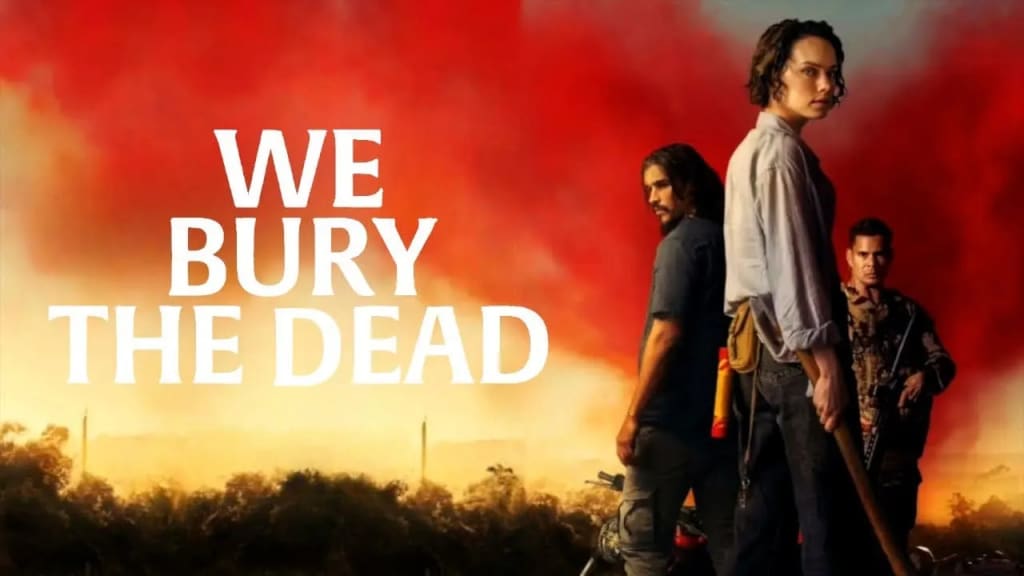
We Bury the Dead
Directed by: Zak Hilditch
Written by: Zak Hilditch
Starring: Daisy Ridley, Brenton Thwaites
Release Date: January 2, 2026
Genre: Horror, Political Thriller, Drama
⭐ Rating: 3.5 out of 5
A Disaster Born of Arrogance, Not Monsters
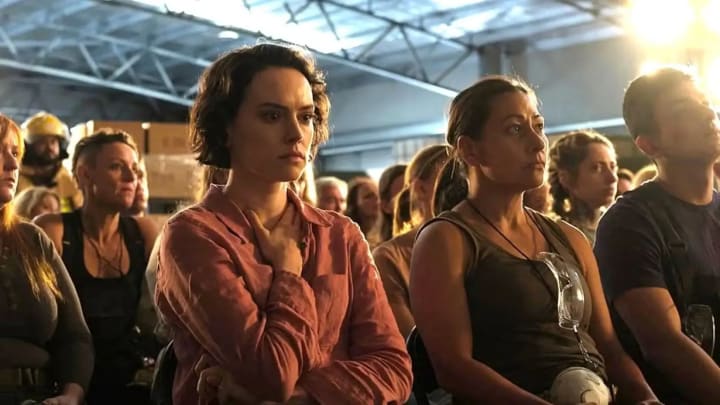
We Bury the Dead opens in the shadow of a catastrophe caused not by monsters or mad scientists, but by bureaucratic arrogance. Off the coast of New Zealand, the American military—serving an equally reckless and incompetent President—detonates an experimental weapon. The blast resembles a nuclear mushroom cloud, but its effects are far stranger. It doesn’t vaporize bodies or dissolve flesh.
Instead, it kills thousands… but not entirely.
The Dead Don’t Stay Dead—And No One Knows Why
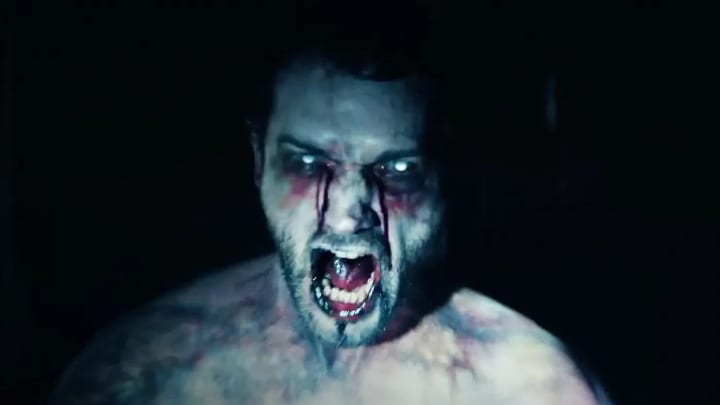
This is where writer-director Zak Hilditch’s film asks for a bit of patience and nuance. The dead don’t stay dead. Hours or days after death, some bodies simply stand up and start walking again. They are unmistakably corpses—rotting flesh, vacant eyes—but they aren’t traditional zombies either.
The implication, chilling in its simplicity, is that the weapon may render victims immediately unconscious, draining the air from their lungs, making them appear dead before something—no one knows what—brings them back.
Grief as a Reason to Enter Hell
News reports of people “waking up” spread, and among those clinging to that sliver of hope is Ava (Daisy Ridley). Her husband was on a business trip to a resort near the blast zone, and if there’s even a chance he’s among the revived, she needs to be close enough to find him.
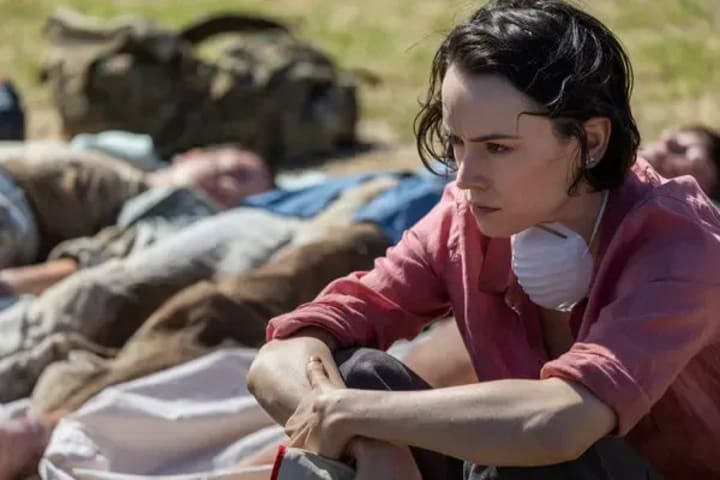
Ava volunteers for the most harrowing job imaginable: locating the dead and giving them proper burials. It’s essential work, grotesque and thankless—but it grants her access to the restricted zone.
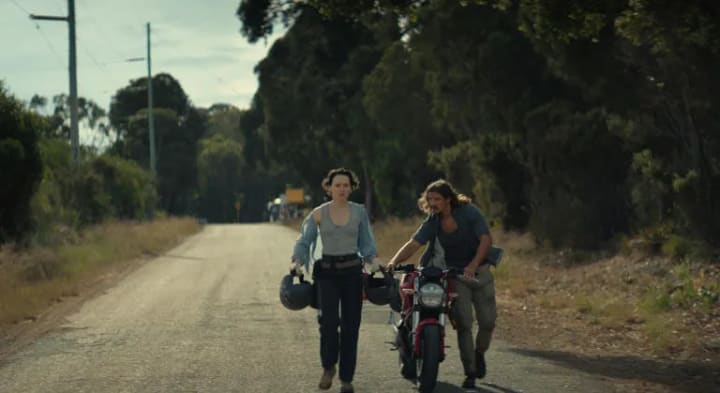
A Road Trip Through Moral Fallout
She’s paired with Clay (Brenton Thwaites), who masks his horror with a grim, almost performative steadiness as they begin the task. Clay tries to normalize the unimaginable, while Ava quickly finds she can barely endure it.
Within a day, she’s ready to abandon the job entirely. She persuades Clay to guide her to the resort, a decision he seems to make partly out of empathy—and partly because he’s discovered a pristine Ducati motorcycle in a dead man’s garage and can’t resist taking it for a ride.
Their journey takes them through landscapes still smoking from the blast, stealing air tanks and masks to survive the poisoned air. Along the way, they encounter the “woken”—the dead who have returned. At first, they seem passive, confused. But as time passes, decay sets in, and agitation follows. Days after death, the revived become something far more dangerous than either Ava or Clay anticipated.
Hilditch gives the film a striking visual progression. The world begins under an oppressively bright sun, shifts into a sandy, scorched-brown wasteland near the blast zone, and then—unexpectedly—becomes almost beautiful at Ava and Clay’s final destination.
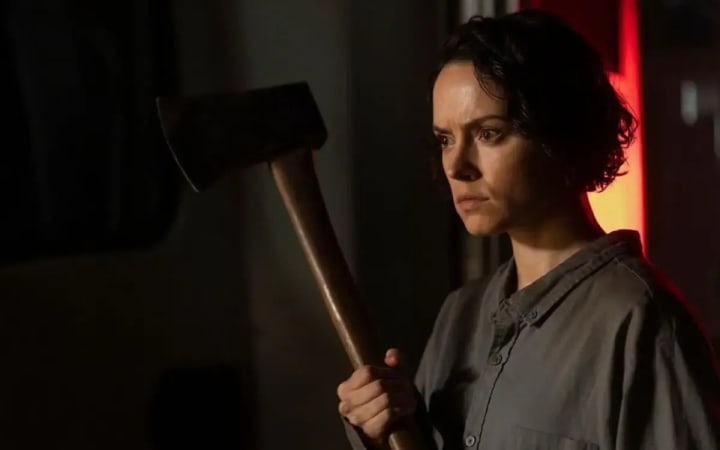
A First Feature That Thrives on Discomfort
Along the way, they encounter a shattered soldier who lost his pregnant wife and her parents in the explosion. Ava, meanwhile, is met with suspicion and open hostility whenever she reveals she’s American. The disaster is the result of an American experiment, and Ava—despite volunteering for the cleanup—becomes a stand-in for that culpability.
We Bury the Dead is Zak Hilditch’s first feature, and while it can feel chaotic, it’s rarely unengaging. He has a strong eye for atmosphere and a confident sense of when to push or pull back on the film’s creep factor. The film isn’t without flaws—character motivations are occasionally held back too long, and the narrative sometimes feels messier than it needs to be—but its unease is deliberate.
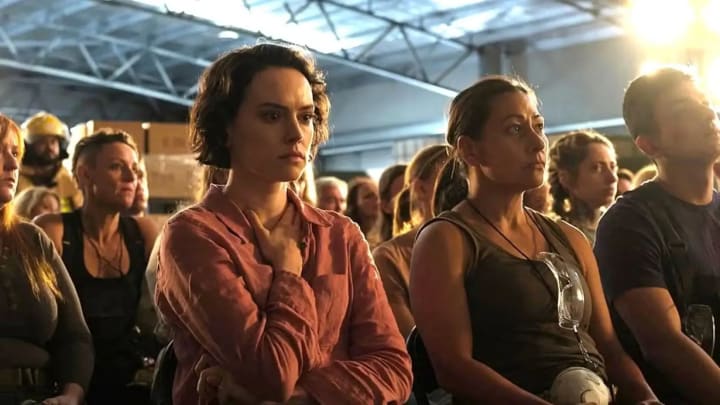
Survival Isn’t the Same as Innocence
What ultimately distinguishes We Bury the Dead is its refusal to treat survival as a victory. Ava’s journey isn’t about heroism or resilience; it’s about proximity to damage—how grief, guilt, and national arrogance seep into the body long after the blast has faded.
The walking dead are horrifying, but they aren’t the film’s true provocation. That belongs to the living: the governments that experiment without consequence, the systems that outsource cleanup to volunteers, and the people left to carry the moral weight of disasters they didn’t create but can’t escape.
In We Bury the Dead, the dead may rise—but it’s the survivors who are forced to live with what can’t be undone.
Tags
Horror · Zombie Movies · Film Reviews · Political Thriller · Indie Films · Daisy Ridley · Post-Apocalyptic · Social Commentary · New Movie Reviews
About the Creator
Sean Patrick
Hello, my name is Sean Patrick He/Him, and I am a film critic and podcast host for the I Hate Critics Movie Review Podcast I am a voting member of the Critics Choice Association, the group behind the annual Critics Choice Awards.
Keep reading
More stories from Sean Patrick and writers in Horror and other communities.
Killing him slowly
There’s an intruder in my house again. He stumbles through the door, wet carrier bags in hand. He’s bought me offerings. I show my appreciation, letting him caress my beautiful body. He wants to touch me. I rub myself against his legs. He sighs, dropping the bags. He can’t resist touching me. Running his hand slowly down my spine, I arch my back towards his caress, let out a low purr. It’s what we both need.
By N J Delmas6 days ago in Horror
For the faint of heart, beware! Hong Kong Fox Spirit Murder Incident
Today, I'm going to talk about the sensational fox spirit murder case that rocked Hong Kong in 1981. During that time, everyone in Hong Kong, from tea restaurants to office buildings, from taxi drivers to neighbors, was talking about this case. At night, when they turned off the lights to sleep, they had to keep a close eye on their children's cribs, afraid that something strange might come knocking at their door. This case was not groundless. The level of strangeness from start to finish was even more terrifying than the fox spirit stories in "Liaozhai".
By Aiden Wang3 days ago in Horror



Comments (1)
Another horror film, eh? It's almost like the humanity's collective conscious is writing its own future.