
The Real Story Of Stalin Note
Cold War Mystery Story

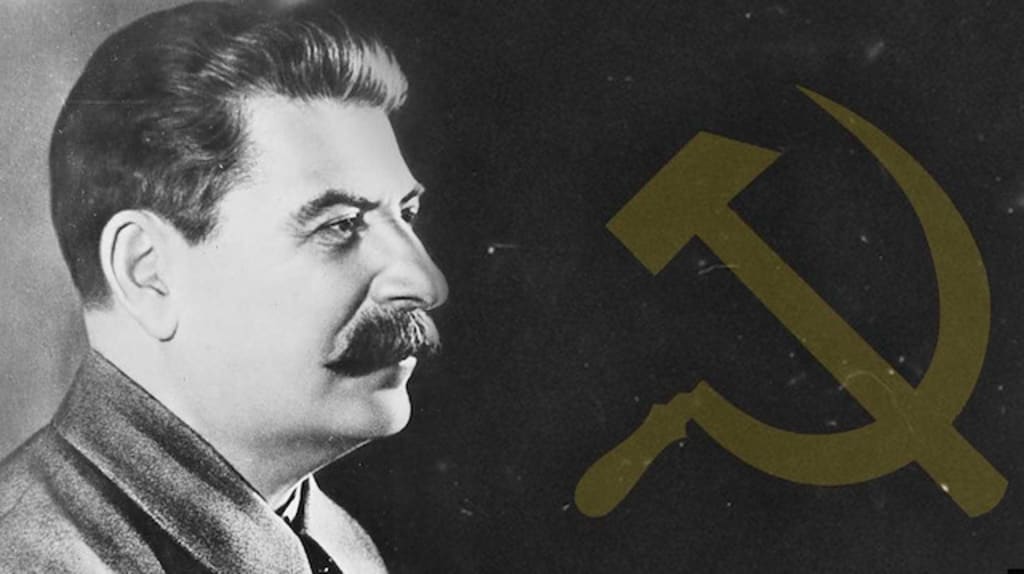
The Stalin Note was an official document sent by the Soviet Union to the three Western occupying powers—the US, UK, and France—proposing a four-power summit to establish a neutral, unified, and independent Germany armed with its own military and a peace treaty. Its issuance on March 10, 1952, occurred at a critical juncture: immediately before West Germany's signature on the German General Treaty and the European Defense Community (EDC) treaty, signifying its assimilation into Western frameworks and near-sovereignty. A series of correspondence ensued throughout the summer of 1952 in response to the idea; however, no meeting took place, and the German division persisted until the years 1989–1990. This article investigates the possibility that this was a Soviet publicity ploy or a real opportunity for reunification that the West and West German Chancellor Konrad Adenauer wasted.
Ohio University doctorate candidate Ruud van Dijk argues that the Stalin Note was a purposeful move inside the Cold War context, rather than a squandered opportunity, by using both pre-1989 Western sources and post-Cold War East Bloc archives. He argues that the argument is more reflective of contemporary German conflicts for identity than of actual historical events.
Unconditional acceptance of the Oder-Neisse line as the eastern border, neutrality, and exclusion from Western alliances like NATO or the EDC were all parts of the Stalin Note's proposal for a united Germany. It seems that Stalin intended to thwart this process, given that he spoke only weeks before West Germany's EDC unification. After it, there was no more diplomatic dialogue, and historians, particularly those in West Germany, are still debating its relevance.
The work of Rolf Steininger, whose 1985 article "Eine Chance zur Wiedervereinigung?" (A Chance for Reunification?) rekindled debate by using newly accessible American and British papers, is a pivotal figure in this topic. According to Steininger, Stalin made a genuine offer, and Adenauer, who was keen on Western integration, obstructed a possible way to reunite by refusing to negotiate. He framed the topic as: "Who is responsible for the continuing split of the country?" and blamed Adenauer for Germany's enduring separation. This approach combines historical research with political advocacy, as pointed out by van Dijk, and it was attractive to a West German audience that was struggling with questions of national identity in the latter years of the Cold War.
Among the critics who find Steininger's perspective lacking in persuasiveness is van Dijk. They contend that he loses his impartiality due to his participation position, which in 1952 included promoting reunification as a feasible and desirable goal. New evidence from Soviet and East German archives post-1989 changes the story drastically, although the controversy heated up in the 1980s due to Western archival releases and the Historikerstreit (historians' disagreement) in Germany about its history.
The controversy about Stalin's motivations persisted before to 1989 due to the lack of comprehensive Soviet evidence. The note's timing and the East German military buildup were two pieces of circumstantial evidence that pointed to a response to Western movements rather than a genuine unity offer. Historians like as Hermann Graml have argued that the goal was not German unity but rather the consolidation of Soviet power over the GDR via a propaganda campaign. There was no evidence to back up Adam Ulam's alternative, which proposed that Stalin may have seen the GDR as disposable in order to prevent a remilitarized West Germany supported by the United States.
Clarity is provided by records that date after 1989, such as the notes taken by Wilhelm Pieck during talks in the Kremlin in 1952 and the Soviet Foreign Ministry files examined by Gerhard Wettig. According to Pieck's notes between April 1 and 7, 1952, Stalin quickly discarded the letter after its rejection by the West and instead ordered a covert military buildup in the GDR. According to what Wettig found, the concept for the memo came from M. Gribanov in 1951 and was later polished by Andrei Gromyko so that it would appeal to West German opinion without really requesting substantive negotiations with the West. Not aiming for unity, Gromyko prioritized evasive language to thwart pledges, with the goal of disrupting West German remilitarization and EDC integration. These records prove that the memo was a Cold War ploy and not a serious proposal; the Soviets had no intention of giving up control of the GDR.
Adenauer opposed discussions between the Western powers, according to Steininger's second pillar. Van Dijk analyzes two crucial points: United States Secretary of State Dean Acheson proposed limited negotiations in late April/early May 1952, following the initial letter, and in March 1952. Adenauer and other Western leaders turned down a summit in March because they were worried it would postpone the signing of the EDC and the General Treaty. The United States and Britain had an early tactical interest in revealing the Soviet Union's dishonesty, but they eventually agreed with Adenauer that the risks were too great to justify the potential rewards.
In an effort to assuage West German concerns and reveal Soviet deception before to EDC ratification, Acheson suggested in April that negotiations be held at the level of the High Commissioner to address the topic of free elections. After giving his initial consent, Adenauer changed his mind on May 3 out of concern that it might delay treaty ratification. According to Steininger, this was a "historical decision" since the West was coerced into submission by Adenauer's veto. Nevertheless, according to van Dijk, who cites Graml and Hermann-Josef Rupieper, the resistance from the British and the French existed before Adenauer's change, and Acheson's suggestion was more of a tactical move than an invitation to engage in substantive discussions. Because the West saw Stalin's offer as a potential disruption, integration rather than unity was their first priority.
The message was aimed at the West German public, promoting solidarity while using unpleasant language (such as the Oder-Neisse border and neutrality). People were wary of Western and Soviet intentions in 1952, but they were much more wary of Moscow. The Soviet Union's aspirations of influencing Germans to change Western policy were dashed when Adenauer's drive for unification with the West maintained majority support.
According to Van Dijk, there was no chance lost with the Stalin Note. The Soviet archives show that this was not a unification plan but rather a propaganda tactic as part of a larger Cold War campaign to oppose Western integration. Free elections and alliance freedom, which were important for the West and Germany, were incompatible with the Soviet objective of retaining control of the GDR. These inconsistencies rendered any attempt at negotiation fruitless.
Instead of historical evidence, van Dijk contends that the ongoing discussion in West Germany is driven by identity concerns, shown by Arnulf Baring's 1982 comment that it would continue to be important until the Germans settle their sovereignty. The "lost opportunity" concept is debunked by fresh research, yet this is reflected in Steininger's advocacy. As an alternative to rehashing a nonexistent opportunity, the article proposes that future studies examine the changes in how Germans saw the partition after 1952.
References
https://en.wikipedia.org/wiki/Stalin_Note
https://www.thehindu.com/children/the-stalin-note-europes-mystery-letter-and-the-unfinished-story-of-german-unification/article68633314.ece
https://www.wilsoncenter.org/publication/the-1952-stalin-note-debate-myth-or-missed-opportunity-for-german-unification




Comments
There are no comments for this story
Be the first to respond and start the conversation.