
The Forgotten Room
I discovered a hidden room in my childhood home, but opening it unleashed something far worse than I ever imagined

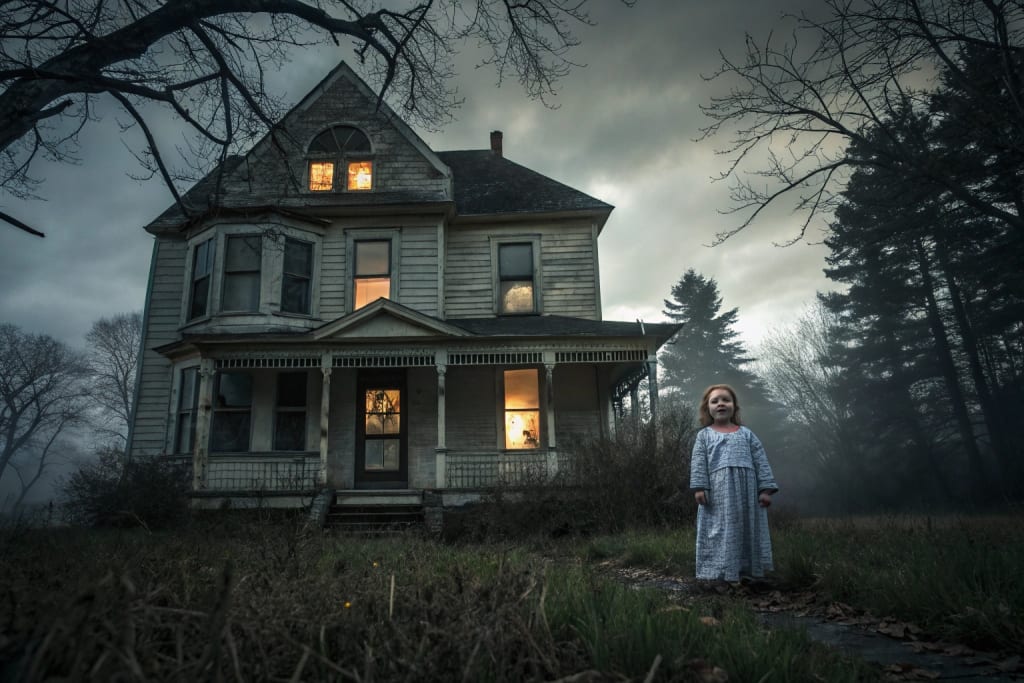
The letter from the estate lawyer arrived three weeks after Mom's funeral. My childhood home in Pinehaven was now officially mine—all 3,800 square feet of fading Victorian glory, complete with sagging porch and creaking floorboards. I hadn't set foot in the place since leaving for college twelve years ago, maintaining only the most perfunctory relationship with Mom through occasional phone calls and obligatory holiday visits at my apartment in the city.
"You should sell it," my girlfriend Elise suggested, watching me stare at the house keys. "Real estate in small towns is booming with all these remote workers fleeing the cities."
She was right, of course. I had no intention of moving back to Pinehaven, where memories lurked around every corner. But something tugged at me—a nagging sense of unfinished business that I couldn't articulate.
"I just need a few days to clean it out," I told her. "There might be some family photos worth keeping."
Three days later, I pulled into the gravel driveway, the late September sun casting long shadows across the overgrown lawn. The house loomed against the darkening sky, its gabled roof and ornate trim silhouetted like something from a Gothic novel. Had it always looked so imposing? In my memories, it was simply home—until it wasn't.
The front door protested with a mournful creak as I pushed it open. The familiar scent of lemon furniture polish and Mom's lavender sachets still lingered, now undercut with mustiness. I flipped on lights as I moved through the first floor, revealing rooms frozen in time. The same floral sofa. The same landscape paintings. The grandfather clock in the hall still ticking away the hours, stubbornly keeping time for no one.
I worked methodically over the next few days, sorting through Mom's belongings. Keep, donate, trash. The process was surprisingly painless, more tedious than traumatic. Mom had lived simply in her final years, her possessions well-organized. By Friday afternoon, I had nearly finished the second floor and was congratulating myself on my efficiency.
Then I found the photographs.
They were tucked in the back of Mom's desk drawer—a stack of Polaroids held together with a brittle rubber band. Most showed me as a child of six or seven, playing in the backyard or opening Christmas presents with forced smiles. But one photo caught my attention. It showed me standing in front of a door I didn't recognize, a small brass key clutched in my hand. I was crying.
I flipped the photo over. On the back, Mom had written in her precise handwriting: "After the incident. August 1997."
The incident. My stomach twisted. I'd spent years in therapy unpacking the summer my father left, the weeks I'd apparently become so distraught that I'd developed an imaginary friend—an "unhealthy coping mechanism," according to Dr. Winters. Mom had always been vague about that period, and eventually, the memories had faded like old newspaper clippings, yellowed and incomplete.
But staring at that photograph sparked something—a faint recollection of a door. A room. A promise.
I spent the next hour searching every corner of the house for the door in the photograph. It wasn't in any of the bedrooms or bathrooms. Not the linen closet or the pantry. By the time I reached the third floor—a space that had primarily been used for storage—frustration had settled between my shoulder blades like a physical weight.
The third floor consisted of one long hallway with a series of doors opening onto small, dusty rooms filled with furniture draped in sheets and boxes labeled in Mom's handwriting. I'd been up here briefly on my first day to confirm there was nothing of immediate importance, but I hadn't examined it closely.
At the end of the hall, partially obscured by an old wardrobe, I noticed a section of wallpaper that didn't quite match the rest—slightly different pattern, slightly different shade. Heart pounding, I pushed the heavy wardrobe aside. Behind it was a door, small and unassuming, with a tarnished brass keyhole.
The door from the photograph.
I tried the handle. Locked. Of course it was locked.
I returned to Mom's desk, digging through drawers until I found her key ring. Among the labeled keys for "Garden Shed" and "Safe Deposit Box" was a small brass key with no label, exactly like the one I held in the Polaroid.
Back on the third floor, the key slid into the lock with surprising ease. It turned with a soft click that somehow seemed to echo in the quiet house. For a moment, I hesitated, a completely irrational fear gripping me. Then, with a nervous laugh at my own melodrama, I turned the handle and pushed.
The door opened onto a child's bedroom, perfectly preserved. Blue walls with glow-in-the-dark stars stuck to the ceiling. A twin bed with a rocket ship comforter. A bookshelf filled with picture books and small toys. My bedroom—not the one I'd actually grown up in on the second floor, but a replica, or perhaps the original. And sitting on the bed was a stuffed rabbit, gray with age, one button eye missing.
"Mr. Whiskers," I whispered, the name coming to me from nowhere.
As I stepped inside, memories crashed over me like a wave. This had been my room when I was very young. Before the move downstairs. Before...
The door slammed shut behind me.
I whirled around, heart racing, but there was no one there. Just the wind, I told myself, though I couldn't remember if any windows had been open. I tried the door. It opened easily, revealing the third-floor hallway. See? Nothing to worry about.
But as I turned back to examine the room, the air seemed to thicken, like wading through invisible syrup. The temperature dropped several degrees. And then I heard it—a soft, sibilant whisper coming from the closet across the room.
"Jaaaacob. You came back."
I froze, my body turning to ice despite the sweat beading on my forehead. That voice. I knew that voice.
The closet door began to open, slowly, inch by inch.
"You promised you'd come back," the voice continued, no longer a whisper but a rasping growl. "You promised we'd be friends forever."
Memories exploded in my mind—not the sanitized version I'd constructed over years of therapy, but the truth. The imaginary friend who wasn't imaginary at all. The things it asked me to do. The day Mom found me in the bathroom with Dad's razor, trying to make a "blood promise" at its request. Mom's horror. The priest she'd called. The hurried relocation to a bedroom downstairs.
The door they'd sealed and never spoken of again.
From the closet emerged a shape—not quite solid, not quite smoke. It had the rough dimensions of a child, but its edges constantly shifted and roiled, as if it couldn't decide on a final form. Where a face should have been was a swirling void, darker than the darkest night.
"Why did you lock me away, Jacob?" it asked, its voice now layered with others—some pleading, some angry, all wrong. "We were going to be together forever. You promised."
I stumbled backward toward the door, my hand groping blindly for the knob. The shape drifted closer.
"I've been so lonely," it said. "But I've been practicing. Learning. Growing stronger."
My fingers closed around the doorknob, but it wouldn't turn. Locked again.
The thing that had once called itself my friend was now between me and the only exit, expanding until it nearly touched the ceiling. From its amorphous center emerged limb-like appendages that reached toward me.
"I don't need you to let me out anymore, Jacob," it said. "You already did that when you opened the door. But I still want to play. I still want my friend."
In desperation, I lunged for the bedside lamp and hurled it through the window. Glass shattered, and cool evening air rushed in. The shape recoiled momentarily from the breeze.
That split second was all I needed. I dived through the broken window onto the sloped roof below, feeling glass slice into my palms. Adrenaline numbing the pain, I scrambled to the edge of the roof and dropped onto the porch overhang, then to the ground, rolling to absorb the impact.
I didn't stop running until I reached my car, fumbling with the keys as I threw myself inside. As I gunned the engine and peeled out of the driveway, I glanced in the rearview mirror.
Standing on the porch of my childhood home was a boy about seven years old, with my face, wearing pajamas I recognized from an old school photo. He waved at me with a too-wide smile that split his face almost literally in two, the skin parting to reveal endless darkness within.
I drove straight to Elise's apartment, shaking and bleeding. She helped clean the cuts on my hands while I tried to explain what had happened, my words tumbling out in a barely coherent stream. To her credit, she didn't immediately suggest I check myself into a psychiatric facility.
"We need to go back," she said finally. "We need to close that door."
"Close it? We need to burn the whole house down!" My voice had risen to a near-shout.
"Jacob," she said calmly, taking my bandaged hands in hers. "If this thing is real—and I'm not saying it isn't—then it's been contained in that room for twenty years. Your mother found a way to trap it. We need to figure out how she did it and do it again."
Three days later, after countless hours of research in occult bookshops and online forums, we returned to Pinehaven. The house looked ordinary in the bright afternoon sunlight—no sign of supernatural activity, no boy with a split face on the porch.
We came prepared. Salt. Sage. Blessed water from a church two towns over, where an elderly priest had listened to my story with far less skepticism than I'd expected. And most importantly, information. Mom's journals, which I'd discovered in a safe deposit box, detailed everything—the entity she'd called "the Whisperer," its attachment to me, and the ritual she'd performed to bind it to that room.
"It feeds on attention," Elise read from the journal as we stood at the end of the third-floor hallway. "The more you fear it, the stronger it becomes. The more you believe in it, the more real it gets."
The door to the forgotten room stood open, swinging gently though there was no breeze. Inside, the room appeared normal—just a dusty, abandoned child's bedroom. No smoky apparition. No doppelgänger with a split face.
But as we approached the threshold, the temperature plummeted. My breath came out in visible puffs.
"It's still here," I whispered.
Elise squeezed my hand. "Remember what your mom wrote. Don't feed it with your fear."
We stepped into the room together. Immediately, the door slammed shut behind us. The bedside lamp—the same one I'd broken days before—flickered on and off. The closet door began to open.
"Jaaaacob," came the familiar whisper. "You brought a friend."
I closed my eyes, focusing on the ritual described in Mom's journal. "You have no power here," I said, my voice surprisingly steady. "You're nothing but a parasite. A leech. And I withdraw my invitation."
The air in the room seemed to vibrate with rage. Books flew from the shelves. The bed lifted several inches off the floor and crashed down again.
"I DO HAVE POWER!" the voice roared, no longer trying to sound childlike. "I AM ANCIENT! I WAS HERE BEFORE YOU WERE BORN!"
Elise had begun tracing symbols on the floor with the salt, her movements precise despite the chaos around us. I continued the incantation from Mom's journal, each word feeling strange yet familiar on my tongue.
"I name you Outsider," I said. "I name you Trespasser. I revoke the welcome given by a child who didn't know better."
The entity fully materialized now—the swirling void taking on a more solid shape, vaguely humanoid but wrong in every proportion. It lunged at me, but couldn't cross the salt line Elise had completed around us.
"You can't trap me again!" it shrieked. "I'm stronger now!"
"You're right," I said, pulling out the final item we'd brought—a small iron box etched with symbols matching those on the floor. "We're not going to trap you."
With a quick motion, I opened the box toward the entity. There was a sound like all the air being sucked from the room, a high-pitched wail that seemed to come from everywhere and nowhere, and then—silence. I snapped the box shut.
We waited, barely breathing, but the room remained still. Normal. Just a dusty old bedroom with faded wallpaper and a sagging mattress.
Elise let out a long, shaky breath. "Did it work?"
Before I could answer, there was a soft knock at the door—not the room door, which remained closed, but the closet door. Three gentle taps.
Elise grabbed my arm. "Don't."
But something compelled me forward. Some deep intuition told me this wasn't the entity, but something else. Someone else.
I opened the closet door slowly.
Inside stood a small boy—not the doppelgänger from the porch, but a child with curly hair and frightened eyes. He couldn't have been more than six.
"Are you here to help me?" he asked in a trembling voice. "The shadow man said no one would ever find me."
My blood ran cold as I recognized him from missing person posters I'd seen around town in my childhood. He'd disappeared in 1996—a year before my "incident."
He wasn't the only one. As police searched the house over the following weeks, they discovered evidence linking the entity—and by extension, my father—to three disappearances spanning a decade. Dark stains beneath the floorboards. Small personal effects tucked into the walls. A journal written in my father's handwriting but filled with thoughts that couldn't possibly have been human.
Mom had never told me the whole truth—that Dad hadn't simply left, but had been possessed, had committed unspeakable acts before she discovered what was happening and performed the first ritual to bind not just the entity, but also the knowledge of what had occurred in our home.
The entity had found another way out through me, a child susceptible to its influence. And when that failed, it simply waited, gathering strength for the day someone would inevitably open the forgotten room.
I sold the house after the investigation concluded. The new owners demolished it and built something modern and bright, with no shadowed corners or hidden spaces. The iron box sits in a vault beneath a church two states away, surrounded by constant prayers and protections.
Sometimes I still wake in the night, certain I can hear a soft whisper calling my name. In those moments, I reach for Elise beside me and remind myself that some doors, once closed, should remain that way forever.
But I can't help wondering about the other doors out there, in other homes, waiting to be discovered. And about the things that wait behind them, patient and hungry, for someone to turn the key.
About the Creator
A S M Rajib Hassan Choudhury
I’m a passionate writer, weaving gripping fiction, personal essays, and eerie horror tales. My stories aim to entertain, inspire, and spark curiosity, connecting with readers through suspenseful, thought-provoking narratives.
Keep reading
More stories from A S M Rajib Hassan Choudhury and writers in Horror and other communities.
The Haunting of Blackthorn Manor
The mansion was abandoned for years, but when I moved in, it felt like someone—something—was still there. I knew what I was getting into—or at least I thought I did. Blackthorn Manor had been the talk of Cedar Hollow for decades. A sprawling Victorian monstrosity perched atop the hill overlooking our small town, its silhouette a jagged tear against the sky. When it went up for auction at a fraction of its worth, I saw opportunity where others saw only decay and whispered legends.
By A S M Rajib Hassan Choudhury10 months ago in Horror
Killing him slowly
There’s an intruder in my house again. He stumbles through the door, wet carrier bags in hand. He’s bought me offerings. I show my appreciation, letting him caress my beautiful body. He wants to touch me. I rub myself against his legs. He sighs, dropping the bags. He can’t resist touching me. Running his hand slowly down my spine, I arch my back towards his caress, let out a low purr. It’s what we both need.
By N J Delmas5 days ago in Horror
For the faint of heart, beware! Hong Kong Fox Spirit Murder Incident
Today, I'm going to talk about the sensational fox spirit murder case that rocked Hong Kong in 1981. During that time, everyone in Hong Kong, from tea restaurants to office buildings, from taxi drivers to neighbors, was talking about this case. At night, when they turned off the lights to sleep, they had to keep a close eye on their children's cribs, afraid that something strange might come knocking at their door. This case was not groundless. The level of strangeness from start to finish was even more terrifying than the fox spirit stories in "Liaozhai".
By Aiden Wang2 days ago in Horror



Comments
There are no comments for this story
Be the first to respond and start the conversation.