
The Haunting of Blackthorn Manor
The mansion was abandoned for years, but when I moved in, it felt like someone—something—was still there.

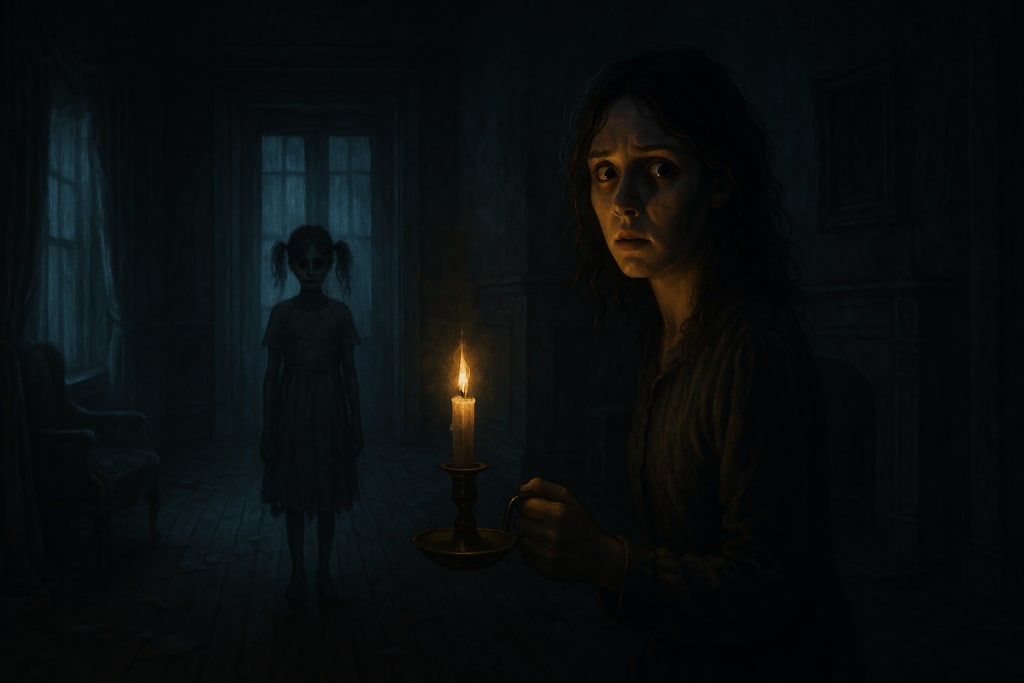
The mansion was abandoned for years, but when I moved in, it felt like someone—something—was still there.
I knew what I was getting into—or at least I thought I did. Blackthorn Manor had been the talk of Cedar Hollow for decades. A sprawling Victorian monstrosity perched atop the hill overlooking our small town, its silhouette a jagged tear against the sky. When it went up for auction at a fraction of its worth, I saw opportunity where others saw only decay and whispered legends.
"You're either brave or foolish," Mrs. Winters told me as she handed over the keys, her arthritic fingers trembling slightly. As the town's oldest realtor, she'd held the listing for thirty years without a single offer. "That place has history, Eleanor. Not all of it kind."
I smiled politely, chalking her warning up to small-town superstition. I was thirty-four, newly divorced, with an inheritance burning a hole in my bank account and a debut novel that needed finishing. Blackthorn Manor offered solitude, inspiration, and a new beginning.
That first night, I blamed the creaks and groans on old wood settling. The second night, when my bedroom door opened on its own, I blamed a draft. By the third night, when I found all the kitchen cabinets wide open after I'd definitely closed them, I was running out of explanations.
"Hello?" I called out on the fourth morning, feeling ridiculous but unable to shake the persistent sense of being watched. "If someone's here, I'm not looking for trouble."
No answer came, but the air seemed to shift, as if in consideration.
Later that day, while unpacking books in the library, I found a small leather-bound journal wedged behind the built-in shelves. The handwriting inside belonged to a woman named Charlotte Blackthorn, dated 1887. Her entries started mundane enough—household accounts, notes about servants, plans for parties—but gradually grew more disturbing.
May 15, 1887 – Thomas has forbidden me from entering the east wing again. He claims it's unsafe after the fire, but I heard voices there last night. A child's laughter. When I confronted him, he struck me for the first time in our marriage. There are secrets in this house that even I, its mistress, am not privy to.
The journal ended abruptly three weeks later. I found myself standing at the entrance to the east wing before I'd even made a conscious decision to investigate. Unlike the rest of the house I'd been restoring, this section remained untouched—wallpaper peeling like dead skin, floorboards warped and blackened from the fire Charlotte had mentioned.
"Charlotte?" I whispered, feeling foolish again. "Is that who's here?"
The temperature plummeted so suddenly I could see my breath cloud before me. A door at the end of the hall—one I could have sworn wasn't there before—swung open with a mournful creak.
Inside was a nursery, perfectly preserved despite the fire damage evident in the hallway. A rocking chair moved gently by the window, though no breeze stirred the heavy velvet curtains.
On the floor lay a porcelain doll, its painted face cracked but still recognizable. As I bent to pick it up, a child's voice whispered near my ear:
"She lied about the fire."
I nearly dropped the doll. "Who lied? Charlotte?"
"Father set it to hide what happened to us."
Us. I looked down at the doll in my hands and noticed dark stains on its dress that hadn't been visible before. Behind me, the rocking chair moved faster.
Over the next week, I pieced together the truth through more hidden journals, newspaper clippings preserved in the attic, and increasingly vivid encounters with the spirits of Blackthorn Manor. Thomas Blackthorn had remarried after his first wife died in childbirth. Charlotte, the second wife, had discovered that Thomas's three children from his first marriage—children the town believed had been sent to boarding school abroad—had actually never left the house.
The fire in the east wing wasn't an accident. It was Thomas's attempt to cover up what Charlotte had discovered: three small skeletons walled up in what had once been a hidden play room, victims of their father's rage during one of his infamous "episodes."
Charlotte had threatened to expose him. She disappeared soon after. The town assumed she'd abandoned her husband. Her body was never found, but I had my suspicions about the bricked-up well in the garden I'd discovered while landscaping.
"I'll help you," I promised the empty room one night, sensing multiple presences around me. "I'll tell your story. All of you."
The air warmed slightly, the oppressive feeling lifting just enough to let me know I'd been heard.
I contacted a historian friend first, then the police. The excavation of the east wing and the garden well made national headlines. Four sets of remains—three children and a woman presumed to be Charlotte—were finally laid to rest with proper ceremonies. Thomas Blackthorn's reputation was posthumously destroyed, his prominent place in local history books revised to reflect his crimes.
Blackthorn Manor is quieter now, though not entirely empty. Sometimes I still hear the faint sound of children's laughter, but it's lighter somehow, playful rather than eerie. Books occasionally relocate themselves in my library. The rocking chair moves when I've had a particularly difficult day writing, as if offering comfort.
They could have moved on, I suppose, now that their story has been told and justice, however delayed, has been served. But I like to think they stay because, for the first time since their deaths, Blackthorn Manor is finally a home—both for them and for me.
Occasionally, when I'm working late in the library, I feel a small, cold hand slip into mine and squeeze gently. And I squeeze back, a reminder that not all hauntings are about terror and tragedy. Sometimes, they're about bearing witness. About remembering. About providing the family that was stolen from them in life.
And in those moments, I know with absolute certainty that moving into Blackthorn Manor was neither brave nor foolish.
It was simply meant to be.
About the Creator
A S M Rajib Hassan Choudhury
I’m a passionate writer, weaving gripping fiction, personal essays, and eerie horror tales. My stories aim to entertain, inspire, and spark curiosity, connecting with readers through suspenseful, thought-provoking narratives.
Keep reading
More stories from A S M Rajib Hassan Choudhury and writers in Horror and other communities.
Killing him slowly
There’s an intruder in my house again. He stumbles through the door, wet carrier bags in hand. He’s bought me offerings. I show my appreciation, letting him caress my beautiful body. He wants to touch me. I rub myself against his legs. He sighs, dropping the bags. He can’t resist touching me. Running his hand slowly down my spine, I arch my back towards his caress, let out a low purr. It’s what we both need.
By N J Delmas5 days ago in Horror
For the faint of heart, beware! Hong Kong Fox Spirit Murder Incident
Today, I'm going to talk about the sensational fox spirit murder case that rocked Hong Kong in 1981. During that time, everyone in Hong Kong, from tea restaurants to office buildings, from taxi drivers to neighbors, was talking about this case. At night, when they turned off the lights to sleep, they had to keep a close eye on their children's cribs, afraid that something strange might come knocking at their door. This case was not groundless. The level of strangeness from start to finish was even more terrifying than the fox spirit stories in "Liaozhai".
By Aiden Wang2 days ago in Horror



Comments
There are no comments for this story
Be the first to respond and start the conversation.