urban legend
Urban legends have captivated us from ancient eras to the modern day; a deep dive into scary lore and 'could be true' tales about Bigfoot, Slender Man, the Suicide Forest and beyond.
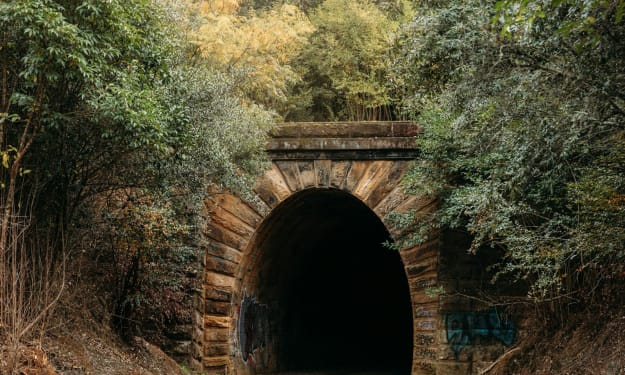
The Haunted History of Picton’s Mushroom Tunnel: Australia’s Portal to the Paranormal
The Spooked History and Ghostly Legends of Picton's Mushroom Tunnel There in the quiet town of Picton, New South Wales, the Mushroom Tunnel sits, the epicenter of Australia's most feared hauntings. The tunnel built in the 19th century has become a ghost hunter's worst nightmare and history enthusiast's ghostly heaven with its sinister history and whispers of ghostly apparitions.
By Kyrol Mojikal8 months ago in Horror
Echoes of Alcatraz
Sixteen-year-old Ryan Carter had watched every ghost-hunting video YouTube had to offer. With a beat-up camera, a flashlight, and more courage than common sense, he decided to become a legend himself. One night, armed with just his backpack and a crowbar, he rowed a stolen kayak across the choppy waters of San Francisco Bay, making his way to the one place every ghost hunter feared and revered—Alcatraz.
By V-Ink Stories8 months ago in Horror
The Exorcist (1973): A Cinematic Masterpiece of Horror
Introduction Few films have left as indelible a mark on the horror genre as The Exorcist (1973). Directed by William Friedkin and based on William Peter Blatty’s 1971 novel of the same name, The Exorcist is widely regarded as one of the greatest and most terrifying horror films ever made. Its shocking imagery, intense performances, and profound exploration of faith and evil have cemented its place in cinematic history. Upon its release, The Exorcist became a cultural phenomenon, sparking controversy, inspiring countless imitations, and leaving audiences traumatized. Even decades later, its power to unsettle remains undiminished. This article delves into the film’s production, themes, impact, and legacy, examining why it continues to haunt viewers to this day. The Origins of The Exorcist William Peter Blatty’s Inspiration The story of The Exorcist was inspired by a real-life 1949 exorcism case involving a young boy (referred to as "Roland Doe" in records). William Peter Blatty, a novelist and screenwriter, came across the story while studying at Georgetown University and was fascinated by the themes of demonic possession and the battle between good and evil. His novel The Exorcist became a bestseller, blending horror with deep philosophical and theological questions. From Page to Screen Blatty adapted his own novel into a screenplay, and Warner Bros. enlisted William Friedkin, fresh off the success of The French Connection (1971), to direct. Friedkin approached the film with a documentary-like realism, insisting on authenticity in performances and special effects. This commitment to realism would contribute to the film’s visceral impact. Production: A Grueling and Controversial Process Casting and Performances Ellen Burstyn as Chris MacNeil – The actress brought emotional depth to the role of a desperate mother. Linda Blair as Regan MacNeil – Only 12 years old during filming, Blair delivered a performance that was both innocent and horrifying. Her physical and psychological transformation remains one of cinema’s most disturbing portrayals. Jason Miller as Father Damien Karras – A struggling priest grappling with faith, Miller’s performance added profound emotional weight. Max von Sydow as Father Lankester Merrin – Though only 44 at the time, von Sydow was aged with makeup to play the veteran exorcist. His presence brought gravitas to the film. Mercedes McCambridge as the Demon’s Voice – Her guttural, otherworldly vocal performance heightened the terror. Challenges on Set The production was plagued by rumors of a "curse," including injuries, fires, and even deaths among crew members. Whether coincidence or superstition, these incidents added to the film’s mystique. Friedkin pushed his actors to extremes: Burstyn suffered a permanent back injury during a violent scene. Blair endured grueling makeup sessions and psychological strain. The infamous "spider-walk" scene (cut from the original release but restored in later versions) required a stunt double to crawl backward down stairs. Groundbreaking Special Effects Special effects artist Dick Smith created some of the most iconic horror imagery: Regan’s spinning head, levitation, and vomit scenes. The grotesque makeup for her possessed state. Practical effects like freezing breath and furniture moving on its own. These effects were revolutionary for their time and remain disturbing even by modern standards. Themes: More Than Just a Horror Film Faith and Doubt At its core, The Exorcist is a story about faith. Father Karras, a psychiatrist and priest, struggles with his belief in God after his mother’s death. His crisis mirrors the film’s central question: How can evil exist in a world governed by a benevolent God? The exorcism becomes not just a battle for Regan’s soul but a test of Karras’s own faith. Science vs. Religion The film contrasts medical and supernatural explanations for Regan’s condition. Doctors initially diagnose her with neurological disorders, but as her condition worsens, science fails to provide answers. The exorcism ritual, though archaic, becomes the only solution—suggesting that some evils lie beyond human comprehension. Innocence Corrupted Regan’s possession represents the ultimate violation of innocence. Her transformation from a sweet child into a profane, violent entity is deeply unsettling, tapping into primal fears about the corruption of youth. Release and Cultural Impact Initial Reception Upon its release on December 26, 1973, The Exorcist became a box office sensation, earning over $441 million worldwide (adjusted for inflation). It was nominated for 10 Academy Awards, including Best Picture—a rarity for a horror film. Audiences reacted viscerally: Reports of fainting, vomiting, and panic attacks in theaters. Religious groups protested, accusing the film of being blasphemous or Satanic. Some theaters provided "barf bags" for viewers. Legacy and Influence The Exorcist reshaped horror cinema: Demonic possession films became a subgenre (The Omen, The Conjuring universe). Foundational for psychological horror—its slow buildup and realism influenced later films like Hereditary and The Babadook. Enduring popularity—multiple re-releases, director’s cuts, and a franchise (sequels, prequels, TV series). Why The Exorcist Still Terrifies Psychological Horror Unlike modern jump-scare-heavy horror, The Exorcist relies on dread and psychological torment. The idea of an unseen, malevolent force violating a child taps into deep-seated fears. Religious Terror For believers (and even non-believers), the film’s depiction of demonic forces challenges the safety of the spiritual world. The exorcism scenes feel like a genuine confrontation with evil. Uncanny Realism Friedkin’s documentary-style direction makes the supernatural events feel plausible. The lack of overt CGI (compared to modern films) enhances the horror. Conclusion More than 50 years after its release, The Exorcist remains the gold standard of horror cinema. Its masterful blend of psychological terror, groundbreaking effects, and profound themes ensures its place in film history. Whether viewed as a terrifying supernatural tale or a deep meditation on faith, The Exorcist continues to shock, disturb, and captivate audiences—proving that true horror never dies. Final Thought The Exorcist isn’t just a movie; it’s an experience. And like all great horror, its true power lies in what it makes us believe—even after the credits roll.
By Silas Blackwood8 months ago in Horror
The Flame That Waited
The goddess Saraswati is said to have once adorned the soil of Rupnagar, according to legends. Within the school that blossomed in her angelic shadow was a girl named Nira, who was born with a voice so ethereal that it made stones cry when she sang. An oil lamp burned every full moon beneath a revered banyan tree at the village's outskirts. According to the villagers, the blessings of the goddess would cease the moment that lamp was extinguished, and a great love that had not yet been realized would start its eternal wait. The same lamp went out during the 1947 monsoon. The following evening, Nira vanished.
By mohima mostarin8 months ago in Horror
The Secret Below
In the fall of 2018, in a sleepy town just outside Asheville, North Carolina, a young couple—Adam and Rachel Morgan—moved into a charming but timeworn two-story house built in the early 1900s. They were drawn in by its creaky character, wraparound porch, and rustic wooden floors. The house had been vacant for two years, owned previously by a reclusive elderly man who died with no next of kin.
By Farhan Rafid8 months ago in Horror
Between Beauty and Brutality: The Haunted History of Norfolk Island
Norfolk Island: A Haunted Legacy of Australia's Dark Past Sitting in the South Pacific, Norfolk Island is a place where haunting and history come together. Once dubbed "Hell in the Pacific" for its brutal penal colonies, the island's violent past has had a lingering effect, rendering it Australia's most haunted locale. With more documented ghosts per square kilometer than any other place in the nation, Norfolk's ghost tales have their roots in centuries of suffering, rebellion, and unresolved issues.
By Kyrol Mojikal8 months ago in Horror
The House of Shadows
It was about 11 PM when Sohan stood alone before the ancient tin-roofed house at the distant conclusion of the town. The moon hung within the sky, showering everything in a cold, pale light. The wind whispered through the tall grass, and the trees encompassing the place creaked as if attempting to caution him. But Sohan wasn't a man to accept in phantom stories.
By MD. zahid pranto8 months ago in Horror
Some people don't believe it, is it true or is it just a mistake in people's minds? Please comment and let me know.
(One Night's Story) The drought has been going on for a long time, the canals have dried up, the trees are drying up all around, people's cows and goats are dying due to lack of grass.... Shiuli's two cows have died, they are suffering from lack of food. Their father used to catch fish in the canal and sell them in the market, but there are no clouds, the canal has dried up. Their house is not near the food at night. The younger brother is crying because of hunger. Shiuli is sitting with her mother in her arms. Sheuli does all the work. The father goes fishing. But because of the lack of clouds for a long time, everything has become chaotic. It is 10 o'clock at night and his father is not coming. The younger brother is crying. A house alone. At the call of Maghrib, Shiuli's father always comes. He never lets them be alone at night. But what happened today? He has not seen his father. Today, suddenly the wind started blowing. Shiuli is sitting near the door. The wind is blowing outside. Shiuli's hair is flying. A beautiful scene has emerged in the light of the hurricane. Suddenly, I saw my father coming from afar, with a market bag in his hand. A smile on his father's face. He brought a big fish. Rice. This is it. Where did my father get the money? I am sitting in the market today feeling sad. I don't know what to do. Then a customer came to me. When the fish was being sold. He used to take fish all the time,,,,, He took a lot of fish, when he saw me he said what's up Mia you can't be seen now,,, I came to the market looking for you but I can't find you anywhere,,,,,,, I asked people who they were but someone said you have given up this business now,,,,,,,, what is the truth you have not given up
By Ratul Shrikh8 months ago in Horror