
You’ve Heard the Ghost Stories—Now See Their Faces: AI Reimagines Japan’s Most Terrifying Myths
Using AI to Visualize the Faces of Japan’s Most Terrifying Folklore Creatures

I. Introduction
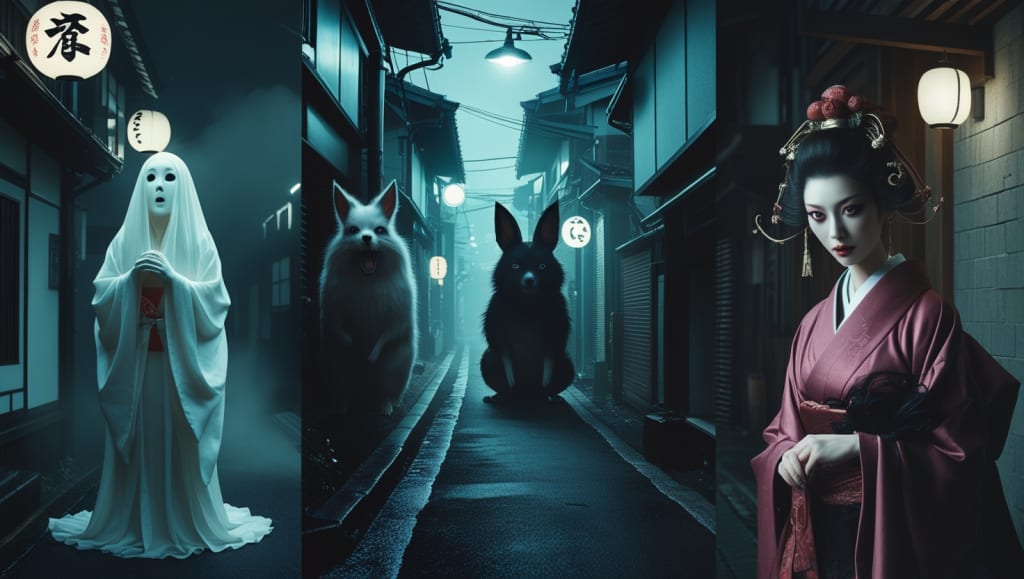
Japan’s horror legends aren’t just spooky tales—they’re the nightmares that birthed generations of fear. Picture the silent drift of a yūrei in a moonlit room, the twisted smile of Kuchisake-onna asking if she’s beautiful, or the silky web of a jorōgumo pulling victims into her lair. For centuries, these monsters have haunted Japanese stories, stage plays, and modern media. But have we ever truly seen them?
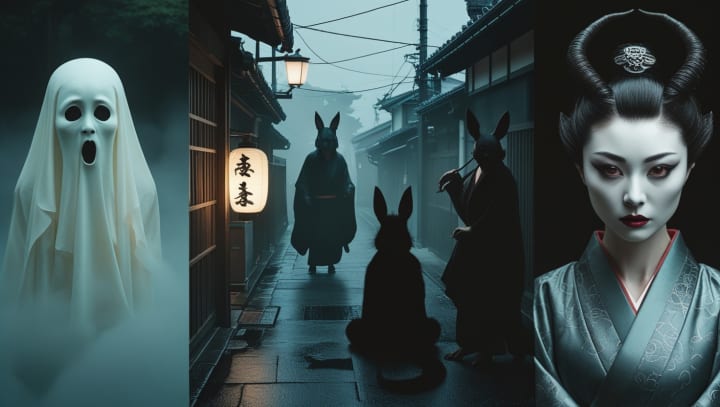
With AI, we now can. What once lived in vague description and ink drawings can now be rendered in haunting, high-definition detail. This isn’t just an art project—it’s a resurrection. In this visual experiment, we use AI to reimagine Japan’s most chilling folklore creatures—not to modernize them, but to give ghostly form to what’s always lived in the shadows. The result? A blend of eerie tradition and surreal beauty, filtered through the lens of cutting-edge technology.
Welcome to a new kind of haunting.!
II. Why These Legends Still Terrify Us
A. Emotional and Cultural Resonance
Japanese horror myths don’t just scare—they scar. These are stories passed through generations, teaching values, warning of dangers, and reflecting society’s hidden fears. The Yūrei isn’t just a ghost; she’s the embodiment of rage and sorrow denied justice. Kuchisake-onna is not only grotesque—she’s a reflection of vanity and punishment. Every yokai, spirit, or cursed being isn’t just a monster—they’re mirrors of morality, trauma, and cultural identity.
B. The Mystery of Their Appearance
What makes them more terrifying is how little we truly know. Many yokai are loosely described, leaving room for imaginations to fill in the blanks—often with horrors far worse than detail could describe. Through centuries, woodblock prints, kabuki masks, and cinema have reimagined these figures. But without a fixed image, their form mutates. Now, AI gives us a chance to render them from fragmented whispers into vivid phantoms—faces we can’t unsee.
III. How AI Can Help Visualize the Unseen
A. AI as a Digital Artist’s Tool
Artificial intelligence, especially text-to-image generators like Midjourney, DALL·E, and Stable Diffusion, have opened the door to speculative folklore art. By feeding these models descriptive prompts and reference images, we can generate iterations of these spirits that feel startlingly real—and chillingly close.
B. Reconstructing Based on Descriptions
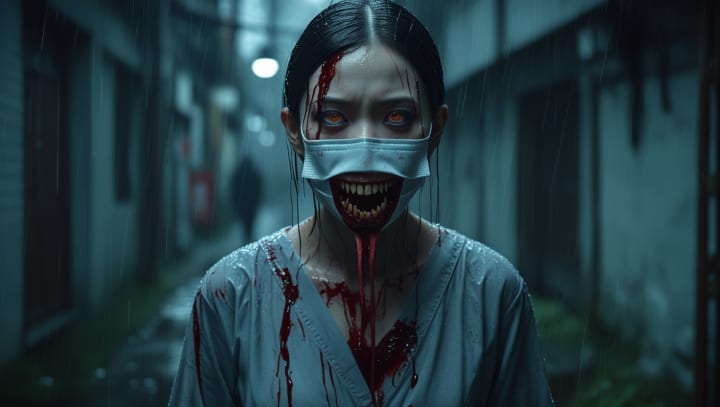
With detailed prompts rooted in historical records, Edo-era texts, and regional tales, we breathe (un)life into ancient horrors. Kuchisake-onna, for instance, described in some accounts as a woman in a red coat with long black hair and a surgical mask hiding her wound, can be reconstructed using AI with disturbingly precise accuracy.
C. Ethical & Cultural Sensitivity
Respect must be the cornerstone. These figures are not Halloween monsters or meme material—they come from a deep well of spiritual and cultural meaning. Every rendering is approached with care, avoiding caricature, and honoring the fears, lessons, and beauty these creatures carry. They are cultural artifacts in spectral form.
IV. Spotlight on AI-Reimagined Horror Figures
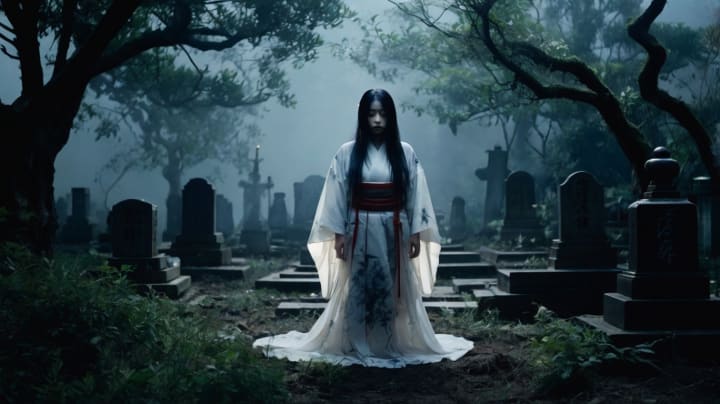
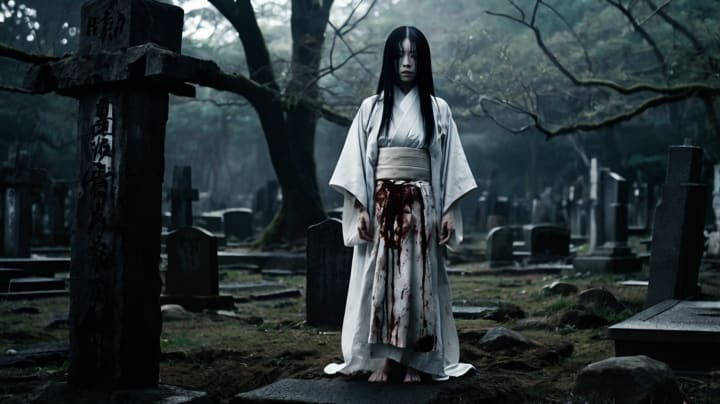
1. Yūrei – The Vengeful Ghost
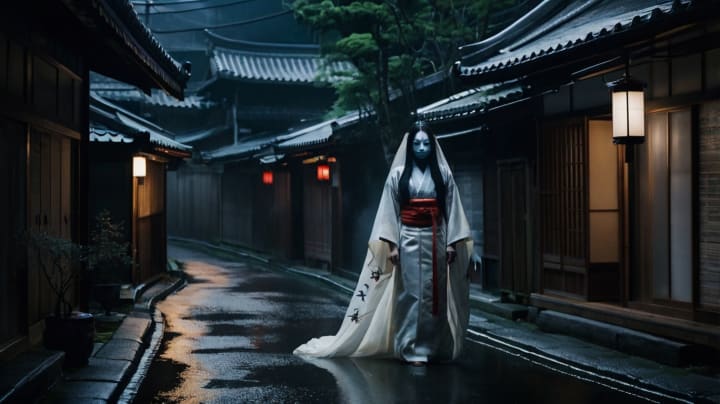
She drifts in white, her feet never touching the ground, hair falling like shadows across her face. The yūrei is sorrow and rage personified, often a woman wronged in life. Our AI image captures this silent agony: pale skin glowing faintly, her gaze locked on something just past the viewer—maybe a memory, maybe revenge.
2. Kuchisake-onna – The Slit-Mouthed Woman
“Am I pretty?” she asks—and if you hesitate, you’re doomed. Born from urban legend and shaped by centuries-old ghost stories, this spirit now wears a modern mask. Our AI version reveals her underneath: an unsettlingly beautiful face torn by a Glasgow smile, her expression vacant yet alert. It’s not just horror—it’s uncanny.
3. Kitsune – The Shapeshifting Fox Spirit
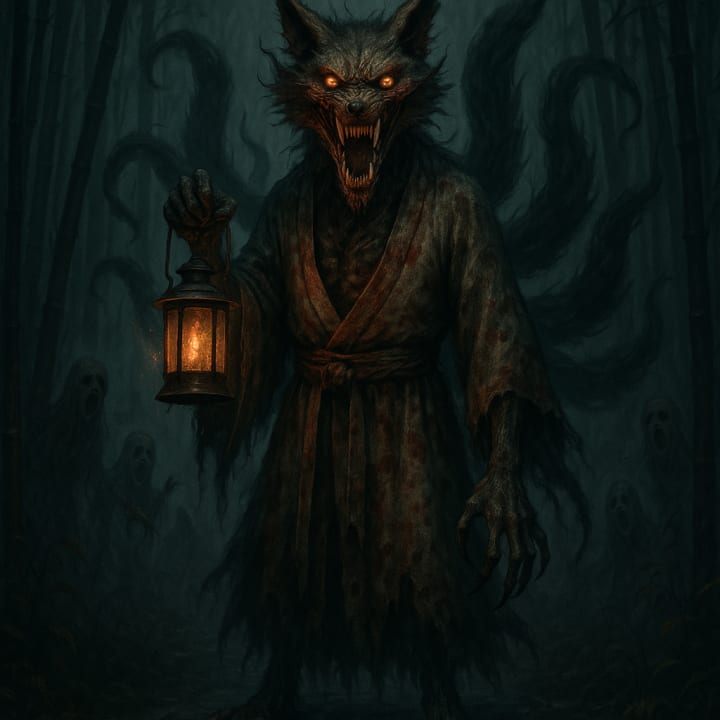
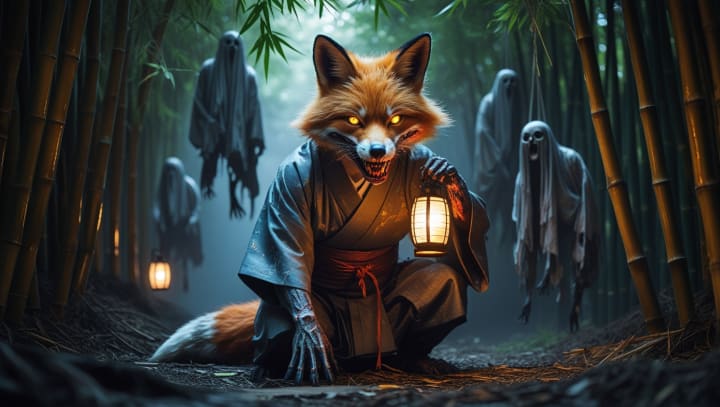
Beautiful women with fox tails, mischievous tricksters, and divine messengers—kitsune are many things. Through AI, we show them mid-shift: delicate features split with glowing eyes, fur merging with silk robes, illusion flickering like heatwaves. Elegant and dangerous.
4. Nurikabe – The Wall Yokai
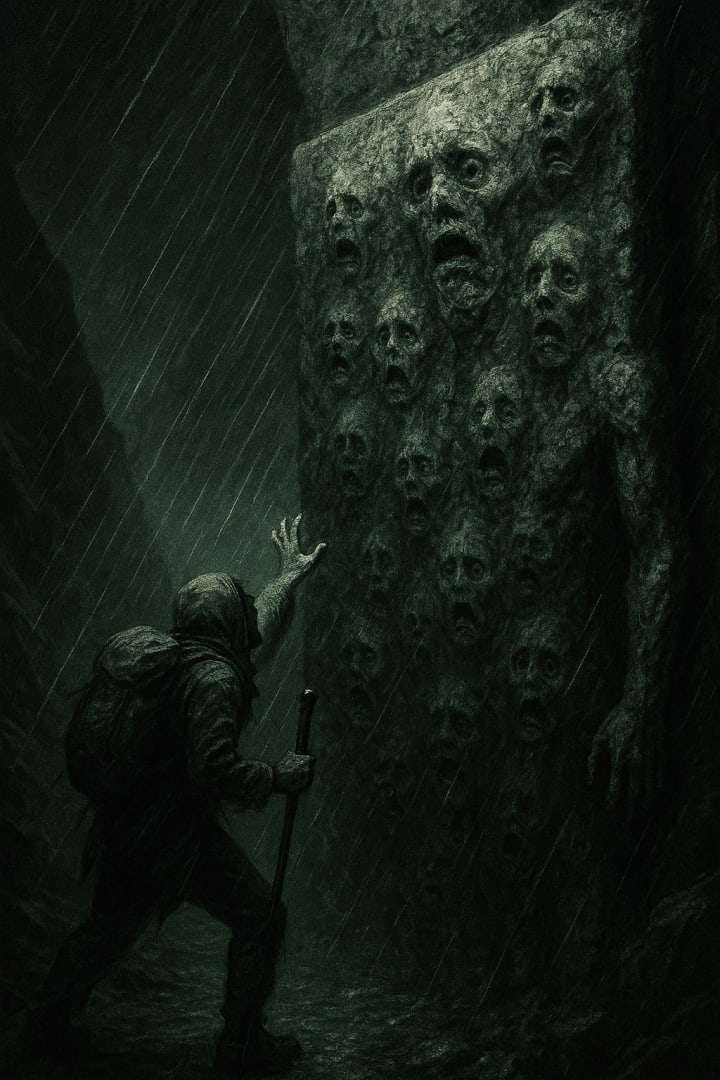
You’re walking home at night. Suddenly, an invisible wall blocks your path. That’s Nurikabe. Our visual translation turns this abstract fear into a tangible nightmare—giant stone slabs rising from the shadows, faces faintly imprinted on their surface, like ancient warnings or souls trapped in concrete.
5. Jorōgumo – The Spider-Woman
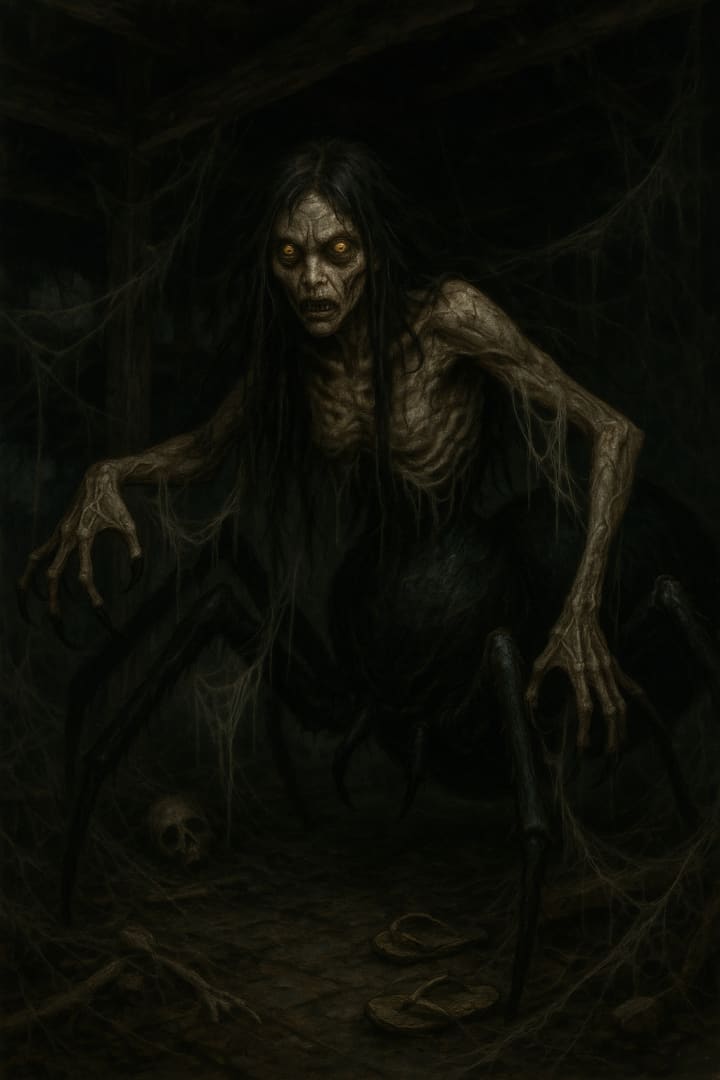
She plays the shamisen and smiles sweetly—then strings you up in silk and venom. Jorōgumo is seduction turned death trap. The AI shows her poised between elegance and monstrosity: half-silken courtesan, half-arachnid predator, weaving webs that shimmer with doom.
V. Behind the AI Art Process
A. Crafting Effective Prompts
The secret is in the spell. To conjure these beings, we blend folklore descriptors with artistic references. For example: "A sorrowful ghost woman with long black hair, white burial kimono, floating in mist, ukiyo-e art style, ethereal glow." Such detail guides the model toward authenticity and emotional weight.
B. Refining the Output
AI gets close—but never perfect. Dozens of images are generated, refined, and sometimes enhanced with manual editing. It’s a loop of collaboration: the machine suggests, we sculpt.
C. Tools Used
We’ve used Midjourney for its surreal stylistic rendering, DALL·E for literal prompt interpretations, Leonardo AI and Stable Diffusion for fine-tuned tweaking. Style tags like “ukiyo-e,” “gothic horror,” and “cinematic realism” help ground the final visuals in tone and time.
VI. The Future of Folklore and AI
A. Preserving Tradition Through New Media
Old myths fade—but not if we give them new vessels. AI images can be displayed in digital museums, educational games, and animated stories, making folklore feel present again, especially for young generations who live online.
B. Interactive Storytelling Possibilities
Imagine an AR ghost hunt where you see yūrei drift past you in your own home. Or a digital storybook that morphs its visuals based on your reactions. AI isn’t just showing the past—it’s making it playable.
C. Balancing Innovation and Respect
This blend of myth and machine must be handled delicately. Collaboration with cultural historians, folklorists, and communities ensures the soul of the story isn’t lost. Innovation should amplify reverence, not replace it.
VII. Conclusion
These spirits were never just characters—they were warnings, whispers, and reflections of the people who feared them. With AI, we’re not taming them—we’re unmasking them. Not every culture needs to be “explained” through tech, but sometimes, technology can help us listen better to the old stories.
And in doing so, we find that the most ancient fears still flicker in our modern light.
About the Creator
Dishmi M
I’m Dishmi, a Dubai-based designer, writer & AI artist. I talk about mental health, tech, and how we survive modern life.
Subscribe for healing advice, human stories & future thoughts!
Reader insights
Outstanding
Excellent work. Looking forward to reading more!
Top insights
Compelling and original writing
Creative use of language & vocab
Easy to read and follow
Well-structured & engaging content
Excellent storytelling
Original narrative & well developed characters
Expert insights and opinions
Arguments were carefully researched and presented
Eye opening
Niche topic & fresh perspectives
Heartfelt and relatable
The story invoked strong personal emotions
Masterful proofreading
Zero grammar & spelling mistakes
On-point and relevant
Writing reflected the title & theme


Comments (1)
Great work! I love this kind of content. horrifying yet fascinating