fiction
Horror fiction that delivers on its promise to scare, startle, frighten and unsettle. These stories are fake, but the shivers down your spine won't be.
10 Horror movies that shaped me
Horror has always been one of those genres that sticks with you—whether you want it to or not. I didn’t grow up watching every scary movie, but the ones I did see left their fingerprints on me in one way or another. Some terrified me, some fascinated me, some made me laugh when I probably shouldn’t have been laughing, and some just showed me how creative and bold horror can be when it wants to.
By Travis Johnson2 months ago in Horror
The Black Dahlia: Unmasking the Perpetual Shadow Over Hollywood
The Hollywood narrative is typically one of dazzling spotlights, star-studded premieres, and dreams realized. Yet, deep within the foundation of this glamour lies a scar—a chilling, unsolved murder that remains the definitive cold case of the 20th century: The Black Dahlia. More than just a crime, it is a cultural touchstone that embodies the darkness lurking beneath the façade of post-war prosperity and optimism in Los Angeles. The Victim: Elizabeth Short and the Pursuit of Stardom The victim at the heart of this enduring mystery was 22-year-old Elizabeth Short. Born in Boston, Massachusetts, she was drawn, like countless others, to California by the irresistible lure of Tinseltown. She was an aspiring actress and model, though her path often saw her working odd jobs or spending time with military men who frequented the region. The moniker "The Black Dahlia" was not given by her killer, but by the sensationalist Los Angeles press. It was a play on the popular 1946 film The Blue Dahlia and Elizabeth’s striking appearance; she favored black attire, often adorned with a flower in her hair. This media nickname was the first step in transforming a tragic murder victim into an eternal, fictionalized enigma. January 15, 1947: The Discovery That Shook a City The horror began on January 15, 1947, when Elizabeth Short’s completely nude and mutilated body was discovered in a vacant lot near 39th Street and Norton Avenue in Leimert Park, Los Angeles. The nature of the discovery was instantly shocking, unlike any crime the city’s police force had ever encountered. The body had been perfectly severed at the waist, divided into two halves. Betty Bersinger, a local resident, initially mistook the corpse for a discarded store mannequin. The meticulous, almost ritualistic, nature of the injuries immediately set this crime apart. Surgical Precision: The dismemberment was performed with expert precision, suggesting the killer possessed significant knowledge of human anatomy, perhaps stemming from medical, surgical, or butchering experience. Exsanguination: The body was completely drained of blood, further suggesting the murder had taken place elsewhere and the killer had gone to great lengths to clean the remains before disposal. The Glasgow Smile: The most visually disturbing injury was the deep lacerations extending from the corners of her mouth across her cheeks, creating a grotesque, permanent grin known today as a "Glasgow Smile." The sheer barbarity and theatrical presentation of the body—posed with arms above the head and legs spread—suggested a killer motivated by extreme malice and a desire to engage with the authorities and the public. The Media Mania and The Killer’s Taunts The Black Dahlia case exploded into a full-blown media spectacle. Los Angeles newspapers, locked in a fierce circulation war, assigned dozens of reporters to the story, often publishing unverified tips, rumors, and graphic details. This relentless, often irresponsible, coverage played directly into the killer's hands. A week after the body’s discovery, the press began receiving chilling communications. The ‘Zodiac-Like’ Challenge: A package containing Elizabeth Short’s birth certificate, photographs, business cards, and an address book was mailed to the Los Angeles Examiner office. These items were meticulously wiped clean with gasoline to remove fingerprints, confirming the killer's cunning and awareness. The Confession Notes: Numerous notes and postcards followed, allegedly from the killer, taunting the police and promising further acts. This pattern of communication, attempting to control the narrative through media interaction, foreshadowed the tactics of later infamous killers like the Zodiac. The sensationalism created a devastating side effect: it generated a flood of false leads, confessions, and tips. Over the course of the investigation, more than 150 individuals confessed to the crime, many driven by a desire for notoriety or mental instability. The deluge of misinformation crippled the investigation's ability to focus on substantive leads. The Suspects: From Eccentric Doctors to Petty Criminals The official LAPD investigation interviewed over 50 "serious" suspects, but the most compelling and enduring theories center around individuals with specific professional backgrounds. Dr. George Hodel: The Enduring Theory The most credible modern theory revolves around Dr. George Hodel, a wealthy and politically connected physician known for his eccentric behavior and ties to the Hollywood elite. The Detective's Son: The most damning evidence came decades later from LAPD homicide detective Steve Hodel, Dr. Hodel’s own son. Steve Hodel dedicated his retirement to investigating his father, convinced he was the killer. The Wiretap: In 1950, police placed a wiretap on Dr. Hodel's residence, the famous Sowden House. Transcripts revealed chilling conversations. On one recording, Hodel is allegedly heard saying, "Supposin' I did kill the Black Dahlia. They couldn't prove it now. They can't talk to my secretary anymore because she's dead." Forensic Links: Steve Hodel’s investigation also established potential links between his father and other unsolved crimes, suggesting a serial pattern. Furthermore, the Sowden House was a short distance from the vacant lot where Elizabeth Short was found. The specific surgical nature of the cuts strongly aligns with a man of medical training. Other Noteworthy Suspects Leslie Dillon: A bellhop and former surgical assistant who wrote crime fiction stories and had detailed knowledge of the case. He was identified by psychologist Marvin Fowler as a potential suspect, though later dismissed after intense interrogation. Orson Welles: The acclaimed filmmaker was briefly considered because of his controversial art installations, which included a bizarre severed-body exhibit that eerily mirrored the Dahlia scene. This was likely a coincidence, but illustrates the reach of the investigation into Hollywood’s inner circles. The Legacy: A Symbol of Unresolved Fear The Black Dahlia case remains officially unsolved. The police ultimately failed to find the crucial evidence—the site where the murder took place, or the definitive connection between Elizabeth Short and her killer. The case file ballooned into thousands of pages, but the trail went cold. Elizabeth Short’s death achieved the perverse fame she sought in life. Her tragedy became immortalized in countless books, films (most notably James Ellroy’s novel and the subsequent film adaptation), and television series. The Black Dahlia is more than a cold case; it is a cultural indictment. It exposed the rot beneath the post-war veneer of Los Angeles, revealing that even in the brightest spotlight, the darkest evils could operate with impunity. The perpetual shadow of the killer, whose identity remains a secret confined to history, continues to loom large, forever staining the golden age of Hollywood with blo
By The Insight Ledger 2 months ago in Horror
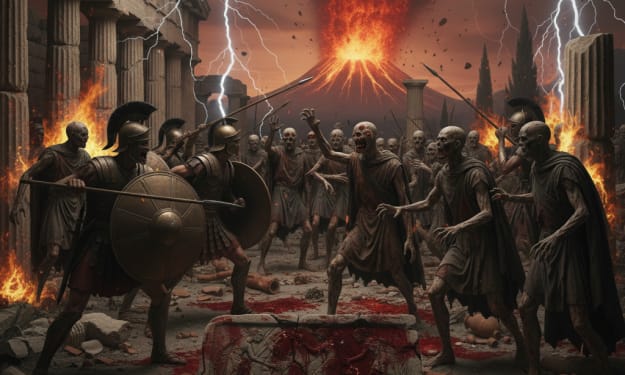
Did Ancient Greeks Fear a Zombie Apocalypse?
When you think of the Ancient Greeks, what springs to mind? Maybe the legendary philosophers like Plato, Socrates, and Aristotle? Perhaps the sweeping myths of Zeus, Mount Olympus, and epic literature such as The Iliad and The Odyssey? What probably doesn't cross your mind are... zombies. But according to researchers, there is compelling evidence suggesting that the Greeks were genuinely afraid their dead might rise from their graves and walk among the living. And they took some pretty smart precautions to stop it.
By Areeba Umair2 months ago in Horror
The Last House on Miller’s Ridge
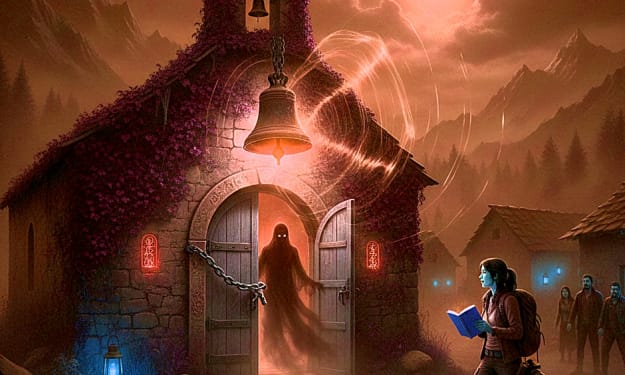
Miller’s Ridge wasn’t the kind of place anyone visited on purpose. It was a forgotten stretch of road outside a quiet town in West Virginia, lined with pines that swayed like tall, whispering giants. Locals said the road had been cursed ever since the coal boom ended, ever since the mines shut down and the people moved away. But one house still stood at the dead end of the road — the last house on Miller’s Ridge — and every kid in town grew up hearing the same warning:
By Iazaz hussain2 months ago in Horror
Trapped in a Loop: When Déjà Vu Becomes a Nightmare
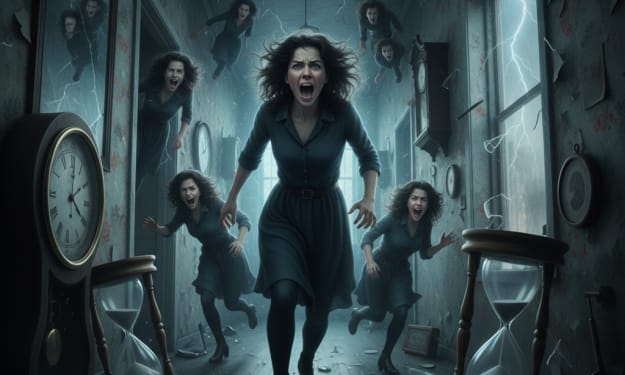
I absolutely loved Star Trek: The Next Generation. Honestly, a lot of the episodes from that series have blended together for me over the years, but there’s one that always stands out: the one where the crew is playing poker, and the U.S.S. Enterprise ends up being destroyed. Luckily (or maybe unluckily?), they were stuck in a time loop. The day kept repeating itself until they finally figured out what was happening and worked out how to keep the ship from exploding.
By Areeba Umair2 months ago in Horror
The Last Light on Willow Creek
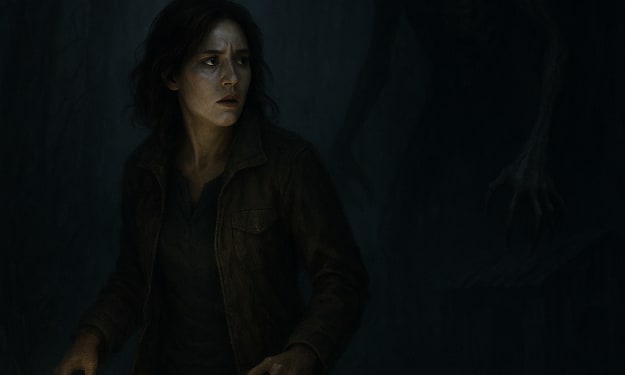
Willow Creek, Montana, didn’t look like the kind of place where nightmares lived. From the highway, it seemed peaceful—mountains in the distance, tall pines swaying like they were whispering to each other, and a narrow gravel road leading to a handful of houses, a diner, and a closed-down mine that everyone pretended didn’t exist.
By Iazaz hussain2 months ago in Horror
Whispers in the Fog
The village of Kharband was known for two things: its endless blankets of thick white fog, and the strange silence that fell after sunset. No matter how loudly children laughed or how far the goats wandered, the moment the sun slipped behind the mountains, the entire valley grew so silent that even the wind dared not whisper.
By Iazaz hussain2 months ago in Horror