
Did Ancient Greeks Fear a Zombie Apocalypse?
Evidence suggests a surprising concern for the rising dead.

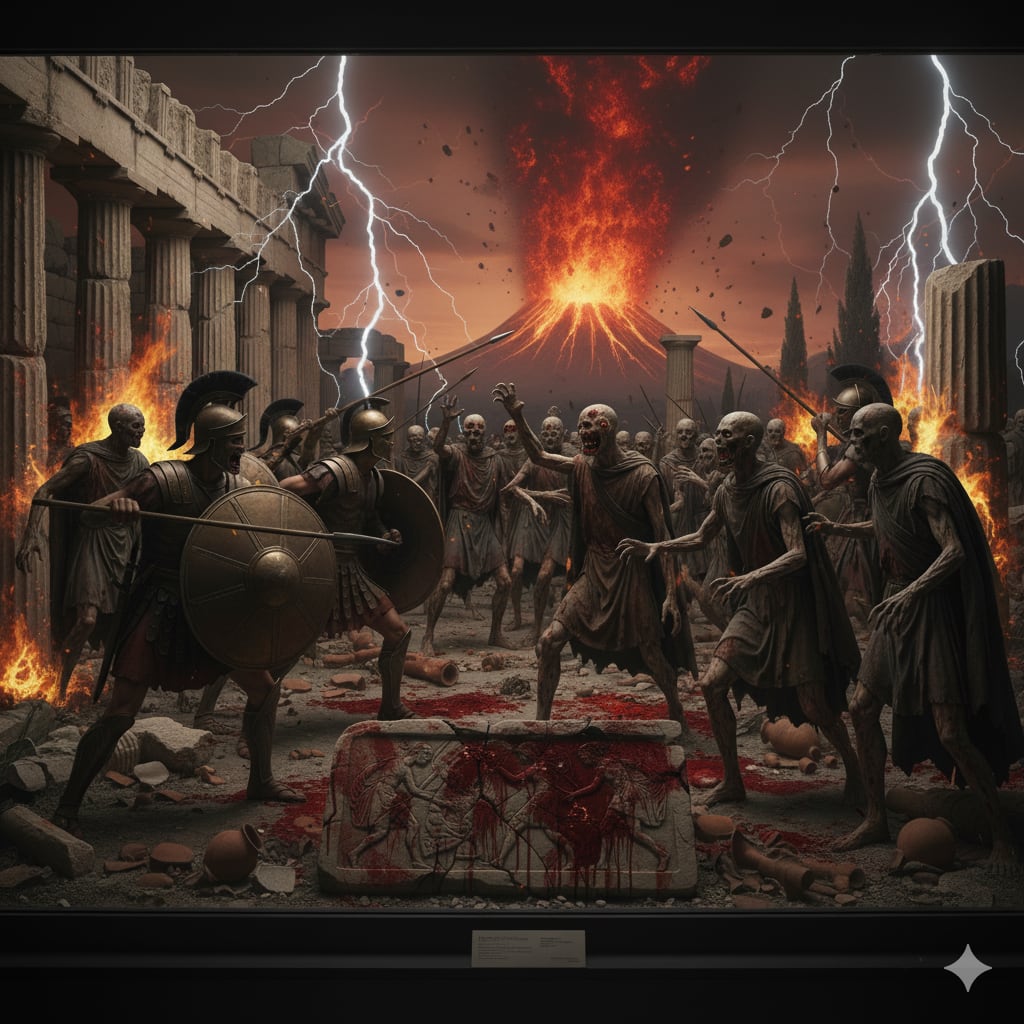
When you think of the Ancient Greeks, what springs to mind? Maybe the legendary philosophers like Plato, Socrates, and Aristotle? Perhaps the sweeping myths of Zeus, Mount Olympus, and epic literature such as The Iliad and The Odyssey? What probably doesn't cross your mind are... zombies. But according to researchers, there is compelling evidence suggesting that the Greeks were genuinely afraid their dead might rise from their graves and walk among the living. And they took some pretty smart precautions to stop it.
Weighing Down the Dead
Archaeological finds paint a clear picture of this fear. Graves have been uncovered where bodies were intentionally weighed down with heavy rocks and fragments of amphora (large storage jars), essentially pinning the deceased into their tombs. Furthermore, ancient documents and records include mentions of "revenants", reanimated corpses that return from the grave to terrorise the living. Dr Carrie Sulosky Weaver, an archaeologist at the University of Pittsburgh, noted that the ancient Greeks provide a fantastic example of a civilisation that wholeheartedly embraced the supernatural.
"The writings of ancient authors give us a glimpse into the minds and beliefs of the Greeks, and it is clear that many members of the society thought that the dead could roam the Earth," Dr Sulosky Weaver explained. The Greeks imagined unsettling scenarios where reanimated corpses rose, prowled the streets, and stalked unsuspecting victims, often seeking retribution denied to them in life. Basically, the Greeks were taking steps to prevent a zombie apocalypse. You have to admit, that's pretty sharp thinking.
The Graves of Sicily
Specific findings truly underscore this burial practice. Archaeologists excavated 2,905 bodies at a cemetery near the ancient town of Himera (Thermae Himeraeae) in southeast Sicily. Two of the tombs contained skeletons buried in very particular ways to keep them trapped.
Tomb 653: This burial contained the remains of a person of unknown sex who appeared to have suffered from serious malnutrition and illness during their life. Crucially, the body had been entirely covered by large, heavy fragments of amphora. Dr Sulosky Weaver believes these heavy pieces were "presumably intended to pin the individual to the grave and prevent it from seeing or rising." It's suspected that because of their illness, people feared they had either been possessed or were already a zombie, leading to this extreme burial method.
Tomb 693: Found at the same site, this burial held the remains of a child aged between 8 and 13 years old. This young individual was buried with five large stones placed directly on top of the body, clearly intended to trap the body in its grave.
Dungeons and Dragons Territory
And here's where things get really wild: archaeologists have discovered tablets inscribed with intricate magic spells, known as "curse tablets" or "defixiones," buried with the dead. These thin sheets of lead or other materials were often rolled up or folded and placed in graves, particularly those of individuals who suffered violent or untimely deaths. The spells, written in ancient Greek, were intended to bind, silence, or otherwise control the spirits of the deceased, preventing them from rising and wreaking havoc among the living. This practice reflects the deep fear and superstition that permeated ancient Greek society regarding the restless dead. The use of magic spells wasn't just a fringe belief; it was a widespread ritual, practised across the Greek world from Athens to Sicily. These spells could invoke powerful underworld deities like Hecate or Persephone to protect the living from malevolent spirits. In some cases, the tablets contained elaborate incantations and symbolic drawings, further enhancing their supernatural potency. The Greeks saw magic as a necessary defence, alongside physical barriers like rocks and amphora shards, to keep potential revenants confined to their graves. Imagine the scene: families and priests performing secretive nighttime rituals at gravesites, whispering incantations and carefully placing these tablets among the burial goods. Their hope was that, combined with the weight of stones or jars, the magic would keep the dead at rest. Fast forward thousands of years, and modern archaeologists, unaware of the ancient fears, excavate these sites, removing both the stones and the magical protections. In a sense, we're undoing the very precautions the Greeks believed would prevent a zombie apocalypse. Now, here's a question to ponder: If you stumbled upon an ancient tablet inscribed with a mysterious spell, would you dare to read it aloud, knowing it was meant to control the dead?
About the Creator
Areeba Umair
Writing stories that blend fiction and history, exploring the past with a touch of imagination.
Keep reading
More stories from Areeba Umair and writers in Horror and other communities.
Trapped in a Loop: When Déjà Vu Becomes a Nightmare
I absolutely loved Star Trek: The Next Generation. Honestly, a lot of the episodes from that series have blended together for me over the years, but there’s one that always stands out: the one where the crew is playing poker, and the U.S.S. Enterprise ends up being destroyed. Luckily (or maybe unluckily?), they were stuck in a time loop. The day kept repeating itself until they finally figured out what was happening and worked out how to keep the ship from exploding.
By Areeba Umair4 months ago in Horror
"Scream 7" (2026): Running out of Fresh Screams
This is the seventh time we’ve had a Ghostface crisis. Scream 7 is the latest edition of the Scream franchise. Sydney Prescott and her family are under attack by another anonymous killer dressed in a Ghostface costume. While having issues with her daughter, Tatum, they run from the bloody murders, trying to determine who is behind it all.
By Marielle Sabbag5 days ago in Horror



Comments
There are no comments for this story
Be the first to respond and start the conversation.