
Ghosts of the Concrete Utopia: The Haunting of Bulgaria’s Buzludzha Monument
From Communist Relic to Paranormal Nexus: Unraveling the Chilling Legends of an Abandoned UFO-Shaped Ruin
The Ghostly Legacy of Buzludzha Monument House, Bulgaria
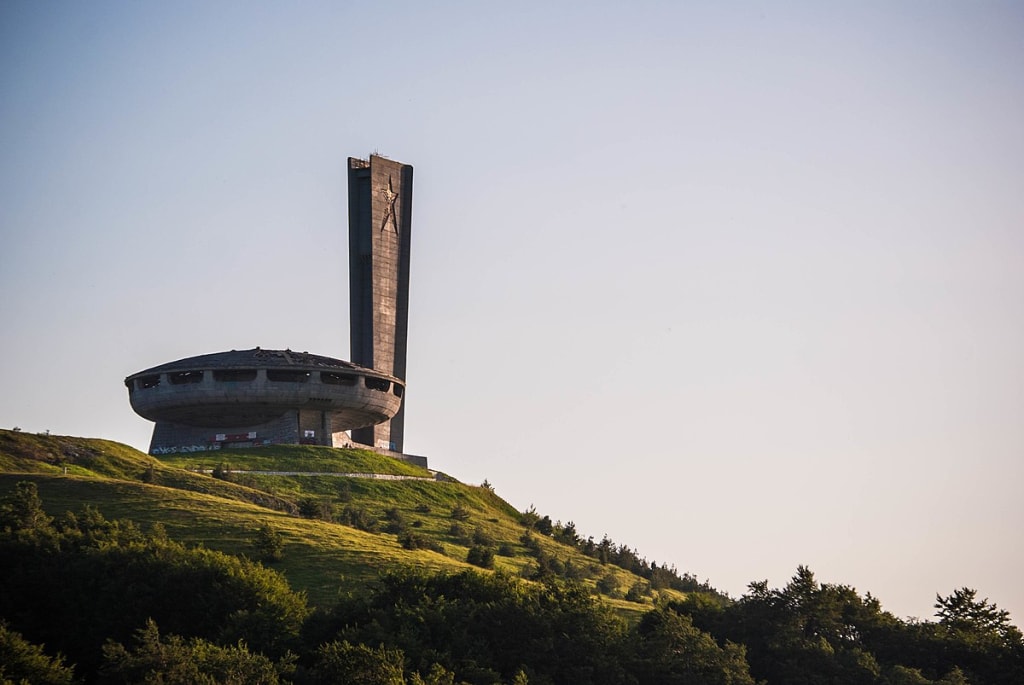
Perched atop a remote peak in the Balkan Range of Bulgaria, the Buzludzha Monument House is a chilling testament to communism and a beacon of ghostly legend. Its history is as tangled as its weathered mosaics, and its supernatural atmosphere has cemented its status as Bulgaria's most haunted destination.
A Monument Born of Ideology
Constructed in 1981 by dictator Todor Zhivkov, Buzludzha was intended to honor Bulgaria's Communist Party. In the shape of a concrete UFO, the Brutalist structure cost 14 million leva (€7 million) and involved 6,000 workers, 70,000 tons of concrete, and a mountain peak leveled using explosives. Its interior had a grand hall adorned with mosaics of Marx, Lenin, and Bulgarian socialist heroes, illuminated under a ceiling dominated by the hammer and sickle. For nearly a decade, it hosted propaganda-laden rituals, summarizing Bulgaria's history in a textbook of communist triumph.
But by 1989, the regime collapsed, and Buzludzha stood abandoned. Looted of copper roof and marble floors, the building decayed into a dystopian ruin. Graffiti like "FORGET YOUR PAST" disfigured its walls, and snow seeped through shattered windows, freezing its socialist murals into ghostly tableaux. Today, stabilization work by the Buzludzha Project Foundation attempts to stabilize the building, but its haunted legend persists.
Shades of a Defunct Utopia
Buzludzha's surreal ambiance also derives from physical decay and Bulgaria's still-painful communist-era trauma. Tourists describe a sharp feeling of terror, as if the former regime's steadfast followers still haunt the ruins.
Echoes of the Past
Each creaking metal and crunching displaced concrete echoes through the building's vaulted corridors. Visitors speak of disembodied voices and phantom footfalls, as if the ghosts of party delegates still parade through the auditorium. One cameraman recounted how the screaming of the wind was converted into "the creaking of the building groaning," a spine-chilling accompaniment. The tower that was previously topped by a red star visible from nearby countries now has a perilous climb up rusty steps, where numerous people claim they feel an invisible presence behind them.
The "Forget Your Past" Curse
A bold red graffiti writing—"Forget Your Past"—terrorizes down the stairs, defying Bulgaria's unsettled past. Locals whisper that the words are something more than graffiti; they're a ghostly admonition. Some visitors speak of sudden shivers or flashbacks to shadowy forms moving beside the inscription, as though the monument itself will not forget.
The Phantom Assembly
In the main hall, over cracked walls with socialist mosaics looming above, explorers describe a sense of oppressiveness. Half-destroyed faces of Marx and Lenin seem to watch intruders. One urban explorer wrote of a shadow dashing across his path, only to discover it was his own—a psychological illusion in a place where "the spine tingles" continuously. Others report seeing ghostly figures of soldiers in uniform or hearing muffled voices of revolutionary songs.
The Haunted Tower
The 70-meter tower, accessible through a rusty ladder, is a hotbed of supernatural activity. Climbers experience icy winds in enclosed spaces and fleeting glimpses of a red star's light, years after its glass shattered. At the top, the hollowness of white fog surrounding the summit is a symbol of communism's broken promises—a "white darkness" that consumes hope.
The Shrine of Lost Souls
Deep in the basement, a somber shrine commemorates two fictional French urbexers allegedly murdered in 2012. Though the story is a work of fiction from a novel, the site—adorned with a wooden cross, dead flowers, and a condolence book—fuels rumors of angry spirits. Visitors make offerings, perpetuating the legend of tragedy that fills Buzludzha's corridors.
A Nation's Unquiet Memory
Buzludzha's haunting is indistinguishable from Bulgaria's strained connection to its communist heritage. The monument itself is an icon of what historian Nikolai Vukov refers to as a "politics of avoidance"—a collective refusal to face the atrocities and ideals of the times. This tension brings life to its ghost stories, as if the unhealed trauma of repression, propaganda, and shattered dreams adheres to the concrete.
And now, as preservationists work to open Buzludzha once again as a "platform for storytelling," the building remains a liminal space—between decay and reconstruction, remembrance and forgetting. Whatever ghosts it may harbor, whether the remnant of ideology or the byproduct of conscience, they ensure that Buzludzha's heritage endures, fixed in time on its windswept crest.
About the Creator
Kyrol Mojikal
"Believe in the magic within you, for you are extraordinary."
Keep reading
More stories from Kyrol Mojikal and writers in Horror and other communities.
Inside Chiajna Monastery: The Truth Behind Romania’s Most Haunted Ruin
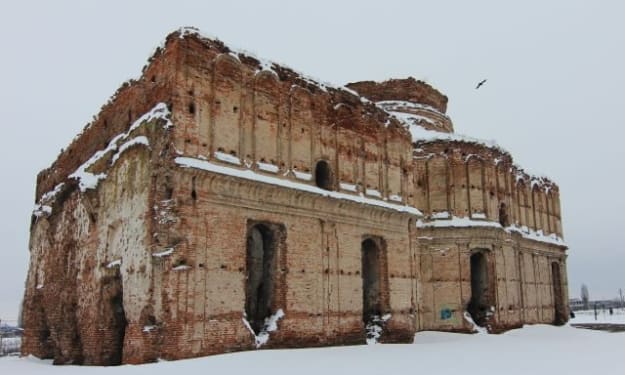
The Haunted History and Paranormal Customs of Romania's Chiajna Monastery Standing at the edge of Bucharest, the remains of Chiajna Monastery loom as a quiet reminder of a tragic, betrayed, and restless history. Constructed in the late 18th century, this neoclassical building was meant to be a foreboding house of prayer, but its history soon became sinister—famous as one of Romania's most haunted sites. Below is the chilling tale of its cursed history and ghostly hauntings that continue to this day.
By Kyrol Mojikal10 months ago in Horror
Silver Screen Magic with Mae West
American actress and singer Mae West became a popular film actress during the Great Depression. She started entertaining in vaudeville, then performed on Broadway, and finally went to Hollywood. She signed up with Paramount Pictures and made her debut in the 1932 film “Night After Night.” She also starred in musicals, comedies, and crime dramas. The American Film Institute named her one of the best classic Hollywood actresses.
By Rasma Raisters6 days ago in Geeks


Comments
There are no comments for this story
Be the first to respond and start the conversation.