
You Probably Hold To The Myth That Eye Patches Were Worn by Pirates
Is this the true explanation for pirates' use of eyepatch?

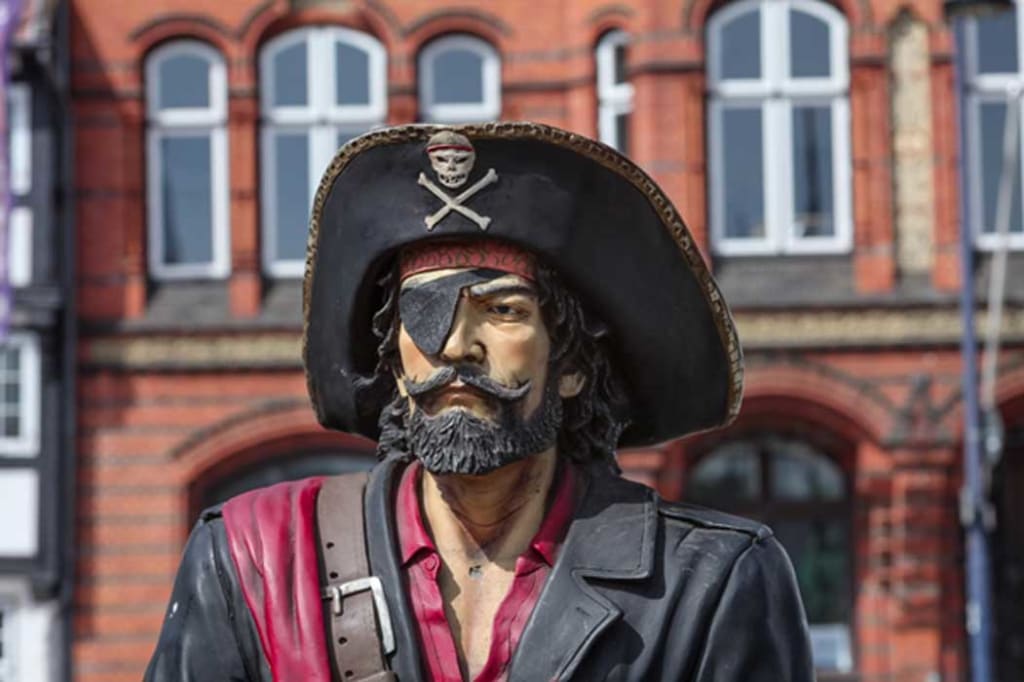
There are several perplexing myths surrounding pirates, like the idea that they all spoke like English farmers and buried their loot for mysterious reasons.
Along with hook hands and parrot companions, one of the most ingrained in popular memory is the fact that they wore eye patches in numbers that were unusual outside of eye injury departments in big cities.
So why are they portrayed in this way? Did pirates have a disproportionately high risk of eye injuries? Has recruitment occurred outside of those eye injury units? Was this a fashion rule that was very strictly enforced?
Unsupported by any historical data, one idea holds that the patch was worn to improve the pirates' field of vision during conflicts rather than treat eye problems. The theory holds that it will take some time for your eyes to become used to the reduced light while entering another ship and traveling below deck.
Pirates who wore eye patches had one eye adapted to the brightness above and the other eye accustomed to the darkness. They could see by simply taking off the patch when they descended below decks.
On the other hand, it's possible that the eye patch was worn below deck by the pirates—perhaps at night while they were up by candlelight—and that it let them see better at night if they had to go back up on deck to engage in combat or other typical pirate activities.
The concept was examined by Mythbusters in a 2007 pirate program. Kari was taken to an ophthalmologist, who studied both of her eyes—one of which had been exposed to bright light and the other had been covered with a patch—to determine how well they could see at night. She was able to see far more quickly in the covered eye than in the one that had been exposed to the intense light because, as you might anticipate, it quickly adjusted to the darkness.
Does the fact that the Mythbusters found the myth to be credible suggest it was truly carried out? Most likely not.
According to Dr. Rebecca Simon, a pirate historian, "There is no proof that pirates wore an eyepatch. "No primary sources from the 17th and 18th centuries contain images, woodcuts, or any mention of them."
The eye patch, like the accents, is more likely the outcome of popular fantasy than historical fact, according to the more plausible explanation.
"Treasure Island by Robert Louis Stevenson is largely responsible for these beliefs. Many other popular culture pirates, including Jack Sparrow, have been modeled after his enemy Long John Silver, Simon said.
These fictitious representations were created by actual pirates, not just any ordinary seafarer.
Simon continued, "The pirate Edward Teach, also known as Blackbeard, is a real-life pirate who has inspired writers like Stevenson because of how outrageous his appearance was at the time (long hair and beard with firecrackers smoking in it during attacks) and his practically theatrical attacks (although he never killed anyone until his final battle).
These early portrayals served as the foundation for modern images of colorfully attired pirates, but the truth was much more somber.
According to Simon, "In general, pirates dressed like any other sailor of the era, albeit their clothing may be in better condition due to stolen clothing from other ships. "Pirate captains and those in positions of authority frequently wore fancy clothing to display their victory in battle."
It's an intriguing argument that eyepatch-wearing pirates protected their dark-adapted eyesight for battles below deck, and it makes sense in terms of how the eye functions. However, this explanation is not found in historical documents, and there is no means to corroborate it archaeologically.
As a result, with the available information, it is impossible to test or verify such a theory. Whatever idea is true, the eyepatch is a crucial component of contemporary pirate lore, and having a rational explanation for why pirates wore them can only enhance it.
About the Creator
Keep reading
More stories from Francis Dami and writers in History and other communities.
Understanding the Insurrection Act
The Insurrection Act is one of the most powerful and least understood laws in American history. Often mentioned during times of national unrest, it gives the president authority to deploy federal troops within the United States under specific circumstances. While it is rarely used, public interest in the law has grown in recent decades, leading many to ask: what is the Insurrection Act, and why does it matter today? What Is the Insurrection Act? To put it simply, the Insurrection Act of 1807 is a federal law that allows the president to use the U.S. military to suppress civil disorder, insurrection, or rebellion when state authorities are unable or unwilling to do so. If you are wondering what is the Insurrection Act used for, the answer lies in restoring order when local and state governments can no longer maintain public safety. People often search phrases like what is insurrection act or even the misspelled insurection act because the law tends to resurface during moments of crisis. Despite the confusion around its name, the authority it grants is very real and legally binding. What Is the Insurrection Act of the U.S.? So, what is the Insurrection Act of the US in legal terms? It is a collection of statutes now codified under Title 10 of the U.S. Code. The act provides exceptions to the Posse Comitatus Act, which generally prohibits the military from acting as domestic law enforcement. Under the Insurrection Act, the president can federalize the National Guard or deploy active-duty troops if constitutional rights are being violated or if violence prevents the execution of federal law. This is why many people ask, what is the Insurrection Act USA, especially when protests or riots dominate national headlines. The Insurrection Act and Its Historical Use Throughout American history, the act has been invoked sparingly but decisively. One of the most notable examples often referenced is the Insurrection Act 1992, when President George H. W. Bush deployed federal troops to Los Angeles following the Rodney King verdict. Local authorities had lost control, and the federal government stepped in to restore order. Earlier uses date back to the Civil War era and the Civil Rights Movement. Presidents Eisenhower and Kennedy relied on the act to enforce school desegregation in Southern states when state governments resisted federal court orders. These moments illustrate what the Insurrection Act is used for at its core: enforcing the rule of law when normal systems fail. Trump and the Insurrection Act In modern political discourse, the law became widely discussed during the presidency of Donald Trump. Searches for Trump Insurrection Act or Insurrection Act Trump surged during periods of nationwide protests, particularly in 2020. Although the act was never formally invoked during those protests, President Trump publicly considered its use, bringing renewed attention to the scope and limits of presidential power. The phrase insurrection act invoked often appears in news coverage, but it is important to note that discussing invocation and actually using the law are two very different things. The debate surrounding Trump Insurrection Act scenarios highlighted concerns about civil liberties, federal overreach, and the balance of power between states and the federal government. What Is the Insurrection Act in Minnesota? A common question during periods of regional unrest is what is the Insurrection Act in Minnesota or in other specific states. Legally, the act does not change from state to state. However, its application depends on circumstances within a particular state. If a governor requests federal assistance or if the president determines that constitutional rights cannot be protected locally, the Insurrection Act may apply. Minnesota, like every other state, falls under the same federal framework. The law does not target any single state; it responds to conditions on the ground. What Is the Insurrection Act Used For Today? In today’s environment, many Americans ask, what is the Insurrection Act used for in a modern democracy with established institutions. Supporters argue it is a necessary safeguard for extreme emergencies. Critics counter that it grants sweeping powers that could be misused if political tensions escalate. Understanding what is the Insurrection Act? requires recognizing that it is both a legal tool and a symbol. Its mere mention can influence public perception, markets, and political debate, even when it is not formally applied. Ongoing Debate and Public Concern The Insurrection Act remains controversial because it sits at the intersection of security and freedom. While it has been used to protect civil rights in the past, critics worry about potential misuse in polarized times. This tension explains why questions like what is the Insurrection Act of the US continue to trend whenever civil unrest occurs. Ultimately, the law reflects a fundamental challenge in governance: how to maintain order without undermining democracy. The fact that it has existed since 1807 and remains largely unchanged shows both its durability and its complexity. Final Thoughts The Insurrection Act is not a law that affects daily life, but it plays a critical role during extraordinary moments. From the Insurrection Act of 1807 to discussions around Insurrection Act 1992 and Insurrection Act Trump, its history mirrors the nation’s struggles with unity, authority, and rights.
By Saboor Brohi 2 days ago in History
From Desert Sands to a Global City
Long before Dubai became a city of glittering skyscrapers and global ambition, it was a quiet settlement shaped by the desert, the sea, and the determination of its people. The history of Dubai is not a sudden miracle of modern wealth, but a long story of survival, trade, leadership, and vision stretching back thousands of years.
By The best writer 5 days ago in History




Comments
There are no comments for this story
Be the first to respond and start the conversation.