
World War II: The Global Conflict That Shaped the Modern World
Unleashing Destruction, Forging New Horizons
Introduction:
World War II was one of the most significant and devastating conflicts in human history, spanning from 1939 to 1945. It involved the majority of the world's nations, polarizing them into two opposing alliances—the Allies and the Axis powers. This article delves into the causes, major events, and consequences of World War II, highlighting its profound impact on geopolitics, society, and the course of history.
Causes and Origins of the War:
Several key factors contributed to the outbreak of World War II. The harsh terms imposed on Germany in the Treaty of Versailles following World War I, along with economic hardships and political instability, created fertile ground for the rise of totalitarian regimes. Adolf Hitler's Nazi Germany, Benito Mussolini's Fascist Italy, and Imperial Japan sought to expand their territories and impose their ideologies. Aggressive expansionism, territorial disputes, and appeasement policies pursued by major powers further escalated tensions and set the stage for the global conflict.
Major Events and Turning Points:
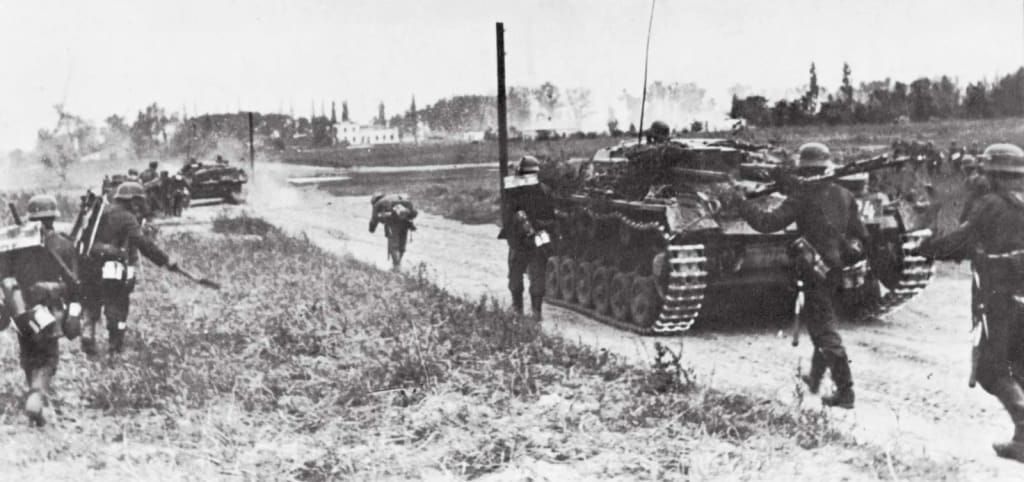
The war can be divided into two main theaters: the European Theater and the Pacific Theater. In September 1939, Germany's invasion of Poland triggered the conflict in Europe, prompting France and Britain to declare war. Over the next six years, numerous significant events unfolded. The Blitzkrieg tactics employed by Germany enabled swift victories in Europe, culminating in the fall of France in 1940. Hitler's failed invasion of the Soviet Union in 1941 marked a crucial turning point. In the Pacific, Japan's surprise attack on Pearl Harbor drew the United States into the war. The subsequent battles of Midway and Guadalcanal shifted the balance in favor of the Allies.
The Holocaust and War Crimes:
One of the most horrifying aspects of World War II was the Holocaust, during which millions of Jews, along with other marginalized groups, were systematically persecuted and murdered by the Nazis. The atrocities committed by the Axis powers extended beyond the Holocaust, with war crimes and human rights abuses prevalent throughout the conflict. The Nuremberg and Tokyo Trials held after the war sought to bring justice to the perpetrators and establish principles for international law and human rights.
Allies and Axis Powers:
The Allied Powers consisted primarily of the United States, the Soviet Union, and the United Kingdom, along with other nations such as Canada, Australia, and China. The Axis Powers, led by Germany, Italy, and Japan, formed a formidable alliance. The conflict witnessed the formation of alliances and coalitions that reshaped the geopolitical landscape and set the stage for the Cold War between the United States and the Soviet Union.
End and Aftermath:
World War II reached its climactic conclusion in 1945. The Allied invasion of Normandy on D-Day in 1944 marked a pivotal turning point in Europe, leading to the liberation of Western Europe from Nazi control. In the Pacific, the dropping of atomic bombs on Hiroshima and Nagasaki forced Japan's surrender. The war resulted in immense loss of life, with an estimated 70-85 million fatalities, including both military personnel and civilians. It also led to the redrawing of national borders, the establishment of new nations, and the emergence of two superpowers—the United States and the Soviet Union.
Legacy and Lessons Learned:
World War II left an indelible mark on the world. It exposed the horrors of totalitarianism, sparked advancements in technology and warfare, and laid the foundation for the establishment of international organizations like the United Nations. The war's aftermath saw efforts to promote global cooperation, prevent future conflicts, and protect human rights. It also served as a stark reminder of the consequences of unchecked aggression and the importance of diplomacy and international cooperation in maintaining peace.
Conclusion:
World War II stands
About the Creator
Keep reading
More stories from shankar sugan and writers in History and other communities.
The Everlasting Essence of Love: Nurturing Connections in a Chaotic World
Introduction: Love, the ethereal emotion that binds humanity, has captivated hearts and minds since time immemorial. From the purest of affections to the most passionate romances, love weaves its magic through the tapestry of our lives. In a world often marked by chaos and uncertainty, love stands as an unwavering force that offers solace, meaning, and profound connections. This article delves into the multifaceted nature of love, its transformative power, and the ways in which it can help us navigate the complexities of existence.
By shankar sugan3 years ago in Marriage
A woman from a vanished female dynasty was discovered buried with 270,000 beads.
In a Copper Age tomb close to Seville, Spain, the Montelirio bead assemblage contains over 270,000 beads that identify the ladies buried there as elites. The discovery is the biggest collection of beads ever
By Francis Dami3 days ago in History
The Prophet of Mercy: How Compassion Transformed Enemies into Believers
In the heart of Arabia, in the ancient city of Makkah, society was built on tribal loyalty, power, and pride. Wealth and lineage determined a person’s worth, while the weak were often oppressed without mercy. The Kaaba, originally built for the worship of One God, was filled with idols, and injustice had become a normal part of life. In this harsh and divided environment, Hazrat Muhammad ﷺ emerged—not as a king or warrior, but as a man whose truth, patience, and compassion would forever change the course of human history.
By The best writer 7 days ago in History



Comments
There are no comments for this story
Be the first to respond and start the conversation.