
World War II (1939–1945)
A Global Struggle for Freedom and Power That Changed the World Forever

World War II was the deadliest and most widespread conflict in human history, lasting from 1939 to 1945. It involved the majority of the world’s nations, divided into two opposing military alliances: the Allies and the Axis powers. This war fundamentally changed the political, social, and economic landscape of the 20th century and set the stage for the modern world order.
The Road to War
The roots of World War II can be traced back to the aftermath of World War I and the Treaty of Versailles in 1919. The treaty imposed harsh penalties and reparations on Germany, creating economic hardship and political instability. The global Great Depression further deepened these problems, creating fertile ground for extremist ideologies.
Adolf Hitler and his Nazi Party rose to power in Germany in 1933, promoting aggressive nationalism, militarism, and anti-Semitism. Meanwhile, Italy under Benito Mussolini and Japan’s militarist government pursued territorial expansion. The failure of the League of Nations to stop these aggressions emboldened the Axis powers.
Outbreak of War
The war officially began on September 1, 1939, when Germany invaded Poland using a blitzkrieg or “lightning war” strategy, overwhelming Polish forces with rapid, coordinated attacks involving tanks, infantry, and aircraft. Britain and France, who had guaranteed Poland’s borders, declared war on Germany two days later.
In the early years, Germany rapidly conquered much of Europe: Denmark, Norway, Belgium, the Netherlands, Luxembourg, and France fell in quick succession. The Battle of Britain in 1940 marked the first major campaign fought entirely by air forces, as the German Luftwaffe attempted to destroy the Royal Air Force to prepare for invasion.
The Expansion of Conflict
In 1941, the war expanded dramatically. Germany broke its non-aggression pact with the Soviet Union and launched Operation Barbarossa, invading Soviet territory in a massive surprise attack. This brutal campaign opened the Eastern Front, which would become the largest and deadliest theater of war.
Meanwhile, Japan sought to dominate Asia and the Pacific. On December 7, 1941, the Japanese attacked the US naval base at Pearl Harbor, prompting the United States to enter the war. This turned the conflict into a truly global war involving battles across Europe, Africa, Asia, and the Pacific.
The Tide Turns
From 1942 to 1943, the Allies began to regain the initiative. Key battles such as the Battle of Stalingrad and the Battle of Midway marked turning points in both Europe and the Pacific. The Soviet Union inflicted a decisive defeat on the Germans at Stalingrad, halting their eastward advance.
In the Pacific, the US Navy destroyed much of the Japanese fleet at Midway, shifting the balance of power. Meanwhile, Allied forces launched campaigns in North Africa and Italy, pushing Axis forces back.
The Final Years
In 1944, the Allies prepared for a major invasion of Western Europe. On June 6, 1944, D-Day, Allied forces landed on the beaches of Normandy, France, beginning the liberation of Western Europe from Nazi occupation. The Soviet Union simultaneously pressed from the east, forcing Germany to fight a two-front war.
Hitler’s regime weakened as Allied forces closed in on Berlin. In April 1945, Soviet troops captured the German capital. Hitler committed suicide, and Germany surrendered unconditionally
About the Creator
Keep reading
More stories from Anwar Jamil and writers in History and other communities.
Top 10 writer in the world
1. William Shakespeare Often called the greatest playwright of all time, William Shakespeare’s works have profoundly influenced English literature and drama. Born in 1564 in England, he authored 39 plays, 154 sonnets, and numerous poems. His masterpieces include Hamlet, Macbeth, Romeo and Juliet, and Othello. Shakespeare’s themes explore human nature, love, power, jealousy, and ambition, resonating across centuries. His inventive use of language and complex characters make his work timeless. Shakespeare’s legacy endures in theater, literature, and everyday language, with countless adaptations worldwide, affirming his title as the Bard of Avon.
By Anwar Jamil8 months ago in History
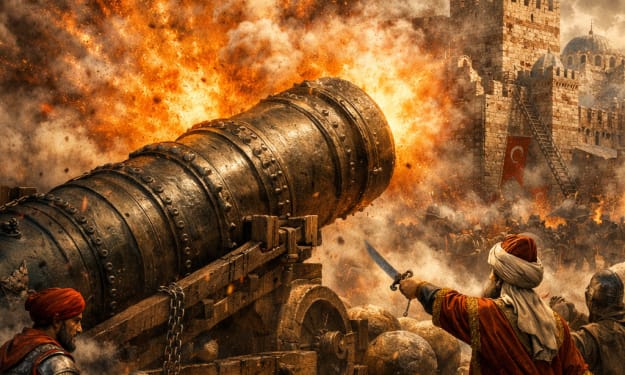
The Ottoman Cannon: How a Single Weapon Turned an Empire into a Superpower
In the annals of military history, few empires owe their early prominence to a single technological innovation as much as the Ottoman Empire. Among these innovations, the development and deployment of massive artillery—especially the formidable cannons—played a pivotal role in transforming the Ottomans into a dominant power spanning three continents. From the siege of Constantinople to the eventual decline of Ottoman influence, the story of their artillery reflects both the empire’s ingenuity and its vulnerabilities.
By Irshad Abbasi a day ago in History



Comments
There are no comments for this story
Be the first to respond and start the conversation.