
Why Was Thailand Never Colonized?
The intelligent way a beautiful country maintained independence.


Countries across Asia have had quite a complicated relationship when it came to European powers throughout colonial times, with France colonizing what is now Laos, Cambodia, and Vietnam. Britain would control present-day India, Pakistan, Sri Lanka, Bangladesh, Malaysia, Myanmar, Singapore, Hong Kong, and Borneo. The Dutch held Indonesia, and after the Spanish left, the Philippines would become a colony of the United States. But one country would stand out, remaining fully independent during colonial times, the country of Thailand. Known as the Kingdom of Siam until 1939, there were many factors that allowed the country to continue its self-governance. One example is simply due to the geographical location of the kingdom. Situated between French Indochina and British-ruled Burma, Siam would serve as a buffer state by default. Frankly, the Europeans were almost glad to have Siam separate the two colonies, as it helped avoid the trouble of border disputes and allowed Siam to steer clear of direct conflict with the Europeans.

Westernization and modernization.
The ruler of Siam at the time, King Chulalongkorn or Rama V, quickly realized the European powerhouses along each border posed a large threat to the autonomy of the country. This led to the king adapting to the Western powers in aspects like fashion, as he often enjoyed being photographed in Western clothing. He would realize the importance of education, specifically education in topography, which the Europeans emphasized as they would refer to maps in order to determine land borders. Rama V would send his sons to the West to receive a traditional European education to appear almost as a Western tributary.

Change would go even further as the country’s entire political system would change from the Mandala system that Siam had used for years before. The Mandala system allowed high levels of sovereignty to rulers in local areas, making power less defined. Rama IV would recognize this problem and put a national army in place, leading to internal unity as well as acquiring more control of the same local rulers. This consolidation of power would greatly benefit Siam in the prevention of Western colonization. Siam’s military would also become surprisingly strong, as they had brought in high-ranking European soldiers to command and train the army. The Siamese also possessed superior knowledge of the terrain and climate along with the skills to use the land to their military advantage.
Paknam Incident.
In 1893, the Siamese and the French had an agreement in which the French were able to move freely through the Paknam islands of Siam, located just south of Bangkok in what is now the Gulf of Thailand. At the time, the French had anchored a gunboat near the French embassy in Bangkok; a second gunboat and an aviso arrived at the mouth of the Chao Phraya River, requesting permission to enter the river and head upstream to rendezvous with the first gunboat as the French were in Bangkok for negotiations. The Siamese would refuse the French, leading to a French Rear Admiral by the name of Edgar Humann completely disregarding the demands given by the Siamese and his own government.

Humann was given the order to stand down as he was informed that the Siamese were heavily armed with six, seven-inch disappearing guns and awaiting combat at the newly built fort of Chulachomklao located on the riverbanks. The Siamese also had five gunboats; two were newly built warships, and the older ships were regular gunboats or river steamers that had been converted to participate in battle. A field of sixteen sea mines had also been laid in addition. The French chose to cross the bar just after sunset on July 13th, 1893, and were towed to action by a small steamer. The objective was to fight past the Siamese; had they been fired upon, the Siamese manned their stations and were on high alert. At approximately 6:30pm, the French had crossed into range of the fort, and the Siamese received orders to fire three warning shots; two were blank, and the third, which was a live round landing just in front of the steamer, was ignored.
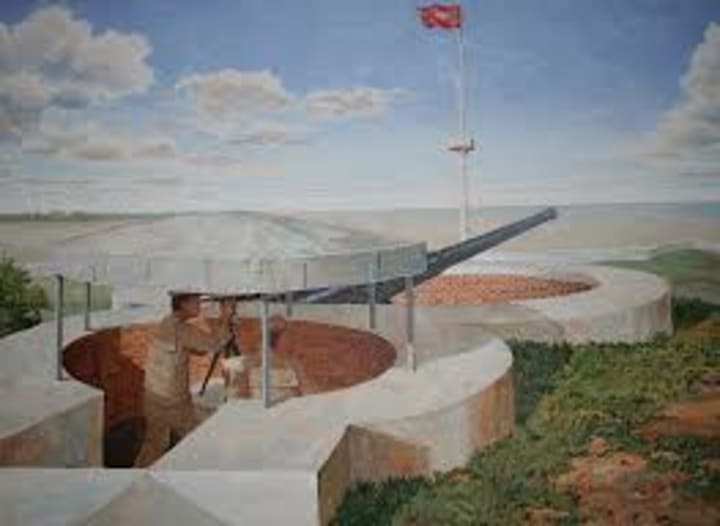
A fourth round would be fired, and gunships would use this as their cue to open fire. By 6:50pm, the aviso would return fire on Fort Chulachomklao as the French gunboat would return fire at the Siamese gunboats. Siam would send a small boat full of explosives to ram the French gunboat, but it would miss the target. Humann would continue to trudge through the line and eventually be successful. The aviso and gunboat would not suffer immediate damage and push forward to Bangkok; the steamer towing the ships would be hit several times with cannon fire and be forced to cut the line and run ashore.

The following morning, the crew was still aboard the steamer; a Siamese boat would be sent to capture the boat and crew aboard. The crew would be sent to a Bangkok prison and were treated quite poorly, according to reports made. The French would send yet another ship to recapture the steamer but were successfully held off by the Siamese. Upon his arrival in Bangkok, Rear Admiral Humann had set up a blockade in the river with guns pointed to the royal palace, leading to a ceasefire being signed on October 3rd, 1893. After the French departed and their ships were clear, they would set up a second blockade in the river. This left a bad taste in the mouths of the British, as it altered one of their most easily accessible trade routes.
Strategic diplomacy.
King Chulalongkorn would befriend some quite powerful allies throughout his time on the throne. Most notably, that of China and Russia, although the relationship with China was more political as it consisted of a multiple-century-old tributary system. This system would entail Siam paying tribute to the eleventh Chinese emperor, Dezon of Quing Siam would also have to acknowledge overlordship in exchange for recognition and protection. The odd system allowed Siam to maintain a timid relationship with China and avoid conflict. That is until King Chulalongkorn would upright refuse to pay tribute, ending relations until post-World War II.
King Chulalongkorn was not only limited to relations in Asia, as he was well mannered and a fluent English speaker, Chulalongkorn would see the respect of many European leaders once his tour across the continent concluded. During his tour, he would arrive in St. Petersburg and be greeted by Tsar Nicholas II, Russia’s final emperor before the revolution of 1917. A photograph of the two would be published in a French newspaper, sparking many questions and widespread curiosity throughout France, England, and other countries in Europe. It was believed that this was a way to display the powerful allies the kingdom possessed, as well as a way to further discourage any thought of colonizing Siam. Relations between the two countries continued for approximately 20 years until they would be put on pause following the revolution. Diplomatic relations would resume in 1941 and continue throughout the USSR, the two countries remain extremely friendly to this day, as Thailand is one of Russia’s closest trade partners.

Independence in WWII.
During WWII, Japan would invade French Indochina and planned to move on to Burma and the Malay peninsula through Thailand’s ports. Japan’s leaders would attempt to contact Thai officials but the Thai Prime Minister was not in Bangkok at the time. Japan would land anyway, members of the Imperial Army would simultaneously enter the country from the east.
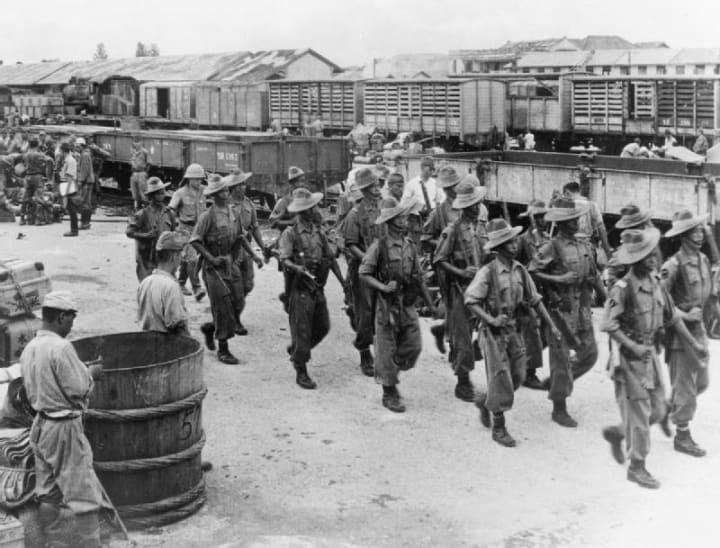
The Thai military would fight back fiercely, but only for a very short period of time. Within hours, Thai officials allowed the Imperial Army to pass through the country. The Japanese would later threaten Thailand by forcing them to join the Axis powers or become a colony. Safe to say, the Thai military joined the Axis powers as it was the only thing stopping a full-scale invasion and occupation of the country.
Conclusion.
Today, the Thai people continue to be extremely patriotic; the current flag, along with the bright yellow flag representing the current king, can be seen flying in the wind and lining almost every road. Their past shows personal hardships among the people, and country-wide hardships that affected the nation as a whole. Siam would remain free of colonial rule but suffered a loss of land, losing what is now Laos during a peace conference on October 3rd, 1893, following the French-Siamese war, or the Paknam incident. The opinion among the Thais shows how independence is a way to preserve culture, beliefs, and age-old traditions within the country.
*Jacob Newson 2025
Resources.
EllesH. “How Did Siam (Thailand) Avoid European Colonization?” New Historian, 8 Jan. 2019, www.newhistorian.com/2019/01/08/how-did-siam-thailand-avoid-european-colonization/?amp=1.
The Globalist. “Thailand: Southeast Asia’s Buffer Country.” The Globalist, 16 Aug. 2022, www.theglobalist.com/thailand-southeast-asias-buffer-country/.
“Home.” – University of Hawaii Manoa Library Website, manoa.hawaii.edu/library/about/news-events/exhibits/colonialism-in-southeast-asia-resistance-negotiation-and-legacies/
“An Overview of Thailand’s Participation in World War 2.” Pacific Atrocities Education, www.pacificatrocities.org/blog/an-overview-of-thailands-participation-in-ww2
“Paknam.” Siam and Scandinavia History, siamscandhistory.blogg.lu.se/tag/paknam/.
About the Creator
Jacob Newson
Canadian. Also found on Medium.
Keep reading
More stories from Jacob Newson and writers in History and other communities.
Forgotten History: The Siege of Jadotville
In the early 1900’s while Europe’s strongest countries were in a scramble to see who could colonize Africa the fastest, Belgium would end up with more than you would expect. The small, linguistically confused country colonized Ruanda-Urundi in 1922-1962 later becoming Rwanda and Burundi, the Lado Enclave from 1884-1910 which is now the Central Equatoria province in South Sudan. The colony of The Belgian Congo lasted from 1908 to 1960 up until the people wanted independence, it would then be known as Republic of the Congo or Leopoldville up until 1964. (For this article I will be shortening the name to “RC.” Or “The RC.”) This would be the beginning of what we know now as the Democratic Republic of the Congo. The RC’s battle for independence would be a long and extremely confusing one. From rebels with black market weapons fighting for control of the mineral rich country’s mines, to the Belgian army beefing up their presence, UN troops from all over the world, and deployment of some of France’s most decorated and seasoned Legionnaires. In this story, I will be digging up information that some wanted to stay hidden and give credit to the men who fought valiantly whether or not they had the means to. This is the story of the Siege of Jadotville.
By Jacob Newson10 months ago in History
T.S. Eliot – The Poet of a Broken World
In the autumn of 1888, in the city of St. Louis, Missouri, a boy named Thomas Stearns Eliot was born into a respectable and thoughtful family. His father was a successful businessman, and his mother, Charlotte, was a teacher and a poet. From an early age, young Thomas—who would later be known to the world simply as T.S. Eliot—grew up surrounded by books, ideas, and quiet discipline. St. Louis, resting beside the Mississippi River, was a city of movement and trade. Yet Eliot was not drawn to noise or crowds. He was a quiet child, often reading alone. He suffered from a double hernia as a boy, which limited his physical activities. While other children played rough games, Eliot stayed indoors, exploring literature and philosophy. In many ways, this isolation shaped his inner world. He learned to observe deeply and to think carefully—qualities that would later define his poetry. As a young man, Eliot attended Harvard University. There, he studied philosophy, literature, and languages. He became fascinated with French poets like Charles Baudelaire and Jules Laforgue. From them, he learned how poetry could express the confusion and complexity of modern life. He also studied ancient texts, Sanskrit, and Eastern philosophy. These influences would later appear in his most famous works. After Harvard, Eliot traveled to Paris to study at the Sorbonne. Europe was changing rapidly. The old traditions were fading, and new ideas were rising. Eliot felt drawn to this shifting world. Eventually, he moved to England in 1914, just as World War I began. It was a time of uncertainty and fear. The war shook Europe to its core, and many people felt that civilization itself was breaking apart. In London, Eliot struggled at first. He worked as a teacher and later as a clerk in a bank. The job was dull and exhausting, but it paid the bills. At the same time, he continued writing poetry in his spare hours. In 1915, he married Vivienne Haigh-Wood. Their marriage was troubled and filled with emotional strain. Vivienne suffered from health problems, and Eliot himself battled anxiety and exhaustion. Their difficult relationship would deeply influence his writing. In 1915, Eliot published “The Love Song of J. Alfred Prufrock.” It was unlike traditional poetry. Instead of heroic themes or romantic beauty, it showed a nervous, uncertain man wandering through a modern city, questioning himself and his life. “Do I dare?” Prufrock repeatedly asks. The poem captured the insecurity of modern individuals—people living in crowded cities yet feeling painfully alone. At first, many readers were confused by Eliot’s style. His poems were fragmented, filled with sudden shifts, cultural references, and broken images. But this was intentional. Eliot believed that modern life itself was fragmented. The old sense of unity and faith had been shattered by industrialization, war, and doubt. Poetry, he felt, should reflect that reality honestly. In 1922, Eliot published his masterpiece: The Waste Land. The poem was written during one of the darkest periods of his life. He was mentally and physically exhausted. His marriage was falling apart. Europe was still recovering from the horrors of World War I. The poem became a portrait of a world spiritually empty and emotionally dry—like a wasteland. The Waste Land is filled with voices, languages, myths, and sudden changes. It moves from ancient legends to modern London streets. It speaks of lost love, broken faith, and the search for meaning. Many readers found it difficult, but they also recognized its power. It perfectly captured the mood of the 20th century—a century marked by conflict and uncertainty. Eliot did not believe that poetry should simply express personal emotion. Instead, he argued that poets should connect the present with the past. He called this idea the “historical sense.” In his essays, especially “Tradition and the Individual Talent,” he explained that a poet must understand and respect literary tradition while also creating something new. This balance made Eliot not only a great poet but also a powerful literary critic. In 1927, Eliot made two life-changing decisions. He became a British citizen, and he converted to Anglican Christianity. His faith became central to his later works. Unlike the despair of The Waste Land, his later poetry showed a deeper spiritual search. In poems like “Ash Wednesday” and later Four Quartets, Eliot explored themes of time, redemption, and divine grace. Four Quartets, written during World War II, is considered by many to be his finest achievement. In these four long poems—“Burnt Norton,” “East Coker,” “The Dry Salvages,” and “Little Gidding”—Eliot meditates on time, memory, suffering, and faith. While the world once again burned in war, Eliot wrote about stillness and spiritual hope. He suggested that even in chaos, there is a deeper order if one learns to listen and reflect. By this time, Eliot was widely respected. In 1948, he was awarded the Nobel Prize in Literature. The award recognized his outstanding contribution to modern poetry and criticism. Yet fame did not change his quiet personality. He remained reserved and serious, often dressed formally, speaking carefully, and living modestly. After years of unhappiness, Vivienne was placed in a mental institution in 1938, where she later died. Eliot rarely spoke publicly about their marriage, but its emotional impact stayed with him. In 1957, at the age of 68, he married Valerie Fletcher, who was much younger than he was. This second marriage brought him peace and happiness in his later years. Throughout his life, Eliot believed that poetry was not merely decoration or entertainment. For him, it was a serious art—one that required discipline, intelligence, and emotional honesty. He once wrote that genuine poetry can communicate before it is understood. That is, even when readers do not fully grasp every reference or symbol, they can still feel its truth. T.S. Eliot died on January 4, 1965, in London. His ashes were buried in East Coker, the English village from which his ancestors had emigrated to America centuries earlier. On his memorial plaque are words from Four Quartets: “In my beginning is my end.” It is a line that reflects his lifelong meditation on time and eternity. Eliot’s legacy remains powerful. He helped shape modern poetry, pushing it away from simple romantic expression toward intellectual depth and emotional complexity. His work challenged readers to think, to question, and to confront the spiritual emptiness of modern life. Yet he also offered hope—that through reflection, faith, and tradition, meaning can be rediscovered. In many ways, T.S. Eliot was a poet of paradox. He was an American who became deeply British. He wrote about despair yet searched for faith. He described fragmentation but longed for unity. His poetry may seem difficult, but beneath its complexity lies a sincere attempt to understand the human condition in a changing world. Today, students across the world still read The Waste Land and Four Quartets. Scholars debate his ideas. Writers study his techniques. But beyond the academic discussions, Eliot’s true achievement lies in this: he gave voice to the anxieties of modern humanity while pointing quietly toward spiritual renewal. From the quiet boy in St. Louis to the Nobel Prize–winning poet in London, T.S. Eliot’s life was a journey through doubt, suffering, intellect, and faith. His words continue to echo through time—reminding us that even in a wasteland, there is the possibility of rain.
By The best writer about 20 hours ago in History
Benjamin Franklin: The Mind That Helped Build a Nation
Benjamin Franklin was not born into greatness; he built it piece by piece with curiosity, discipline, and an unshakable belief in the power of learning. Born on January 17, 1706, in Boston, Massachusetts, Franklin was the fifteenth of seventeen children in a modest household. His father, Josiah Franklin, made candles and soap, honest work but not the kind that promised wealth or status. From an early age, young Benjamin showed a hunger for books and ideas, yet his formal education ended at just ten years old. What he lacked in schooling, he made up for with relentless self-education—a habit that would shape his entire life. Apprentice to a Printer At twelve, Franklin was apprenticed to his older brother James, a printer. The print shop became Benjamin’s classroom. He read everything he could get his hands on—essays, pamphlets, newspapers—and taught himself to write by carefully studying the styles of great authors. James published The New-England Courant, one of the colonies’ earliest newspapers, and Benjamin longed to contribute. Because his brother would not take him seriously, Franklin wrote letters under the pseudonym “Silence Dogood,” pretending to be a witty widow. The letters were published and widely admired. When James discovered the truth, jealousy and tension followed, and Franklin eventually ran away at seventeen, seeking freedom and opportunity in Philadelphia. Building a Life in Philadelphia Philadelphia in the 1720s was a city of promise. Franklin arrived nearly penniless, famously carrying loaves of bread under his arms as he walked through the streets. Yet he possessed something more valuable than money: determination. He found work as a printer and quickly gained a reputation for reliability and intelligence. Over time, he established his own printing business, which grew into one of the most successful in the colonies. Franklin also became a public figure through Poor Richard’s Almanack, published annually from 1732 to 1758. Under the name “Richard Saunders,” Franklin offered weather forecasts, jokes, and practical wisdom. Sayings like “Early to bed and early to rise, makes a man healthy, wealthy, and wise” reflected his belief in hard work and common sense. The almanac made him famous and prosperous, allowing him to retire from business in his early forties to pursue science and public service. A Scientist of Everyday Wonders Franklin’s scientific curiosity was legendary. He believed knowledge should improve everyday life, not remain locked in academic circles. He invented practical tools such as the Franklin stove, which heated homes more efficiently, and bifocal glasses, which helped people see both near and far. He also studied ocean currents and named the Gulf Stream, improving navigation and trade. His most famous scientific experiment involved electricity. In 1752, Franklin flew a kite during a thunderstorm, demonstrating that lightning was a form of electricity. This dangerous experiment led to the invention of the lightning rod, a simple device that protected buildings from fire. Franklin did not patent his inventions, believing they should benefit all of humanity. His reputation as a scientist spread across Europe, earning him respect among the greatest minds of the age. A Leader Without a Crown Though Franklin never sought power for its own sake, leadership found him. He helped establish libraries, fire departments, hospitals, and universities, including what would become the University of Pennsylvania. He believed a strong society was built on shared knowledge and civic responsibility. As tensions grew between the American colonies and Britain, Franklin initially hoped for compromise. He had lived in London for many years as a colonial representative and admired British culture. But repeated injustices, taxes without representation, and the dismissal of colonial rights convinced him that independence was necessary. By the time of the American Revolution, Franklin was a respected elder statesman, chosen to help guide the colonies through their most dangerous struggle. Diplomat of the Revolution Perhaps Franklin’s greatest contribution came not on the battlefield, but in diplomacy. Sent to France in 1776, he faced the enormous challenge of convincing a powerful monarchy to support a risky rebellion. Franklin’s charm, wit, and reputation worked wonders. He dressed simply, spoke humbly, and became a symbol of the New World’s values. French philosophers admired him; common people celebrated him. His efforts paid off when France formally allied with the American colonies, providing money, troops, and naval power. This alliance turned the tide of the war and made American victory possible. Without Franklin’s diplomacy, the Revolution might have failed. Shaping a New Nation After the war, Franklin returned home as a hero. Though elderly and in poor health, he continued to serve. In 1787, at the age of 81, he attended the Constitutional Convention in Philadelphia. While he did not speak often, his words carried great weight. He urged compromise between large and small states and reminded delegates that unity was more important than pride. His calm wisdom helped shape the United States Constitution. Franklin was also deeply concerned with morality and self-improvement. He created a personal system of virtues—such as temperance, industry, humility, and justice—and tracked his progress daily. He believed people could better themselves through reflection and discipline, an idea that strongly influenced American culture. Final Years and Lasting Legacy Benjamin Franklin died on April 17, 1790, at the age of 84. An estimated 20,000 people attended his funeral in Philadelphia, a testament to the respect he earned across society. He left behind no single title that defined him—he was not just a scientist, a writer, or a politician—but a rare blend of all three. Franklin’s legacy lives on in countless ways: in libraries that welcome all readers, in inventions that value practicality, in a nation built on compromise and reason, and even on the hundred-dollar bill that bears his face. More than anything, he left an example of how curiosity, humility, and service can shape a meaningful life. Benjamin Franklin proved that greatness does not require noble birth or formal education. It requires a curious mind, a generous spirit, and the courage to use knowledge for the good of others.
By The best writer 7 days ago in History


Comments
There are no comments for this story
Be the first to respond and start the conversation.