
Why Venezuela's Military Stays Quiet in the Face of U.S. Pressur
The Great Hesitation:

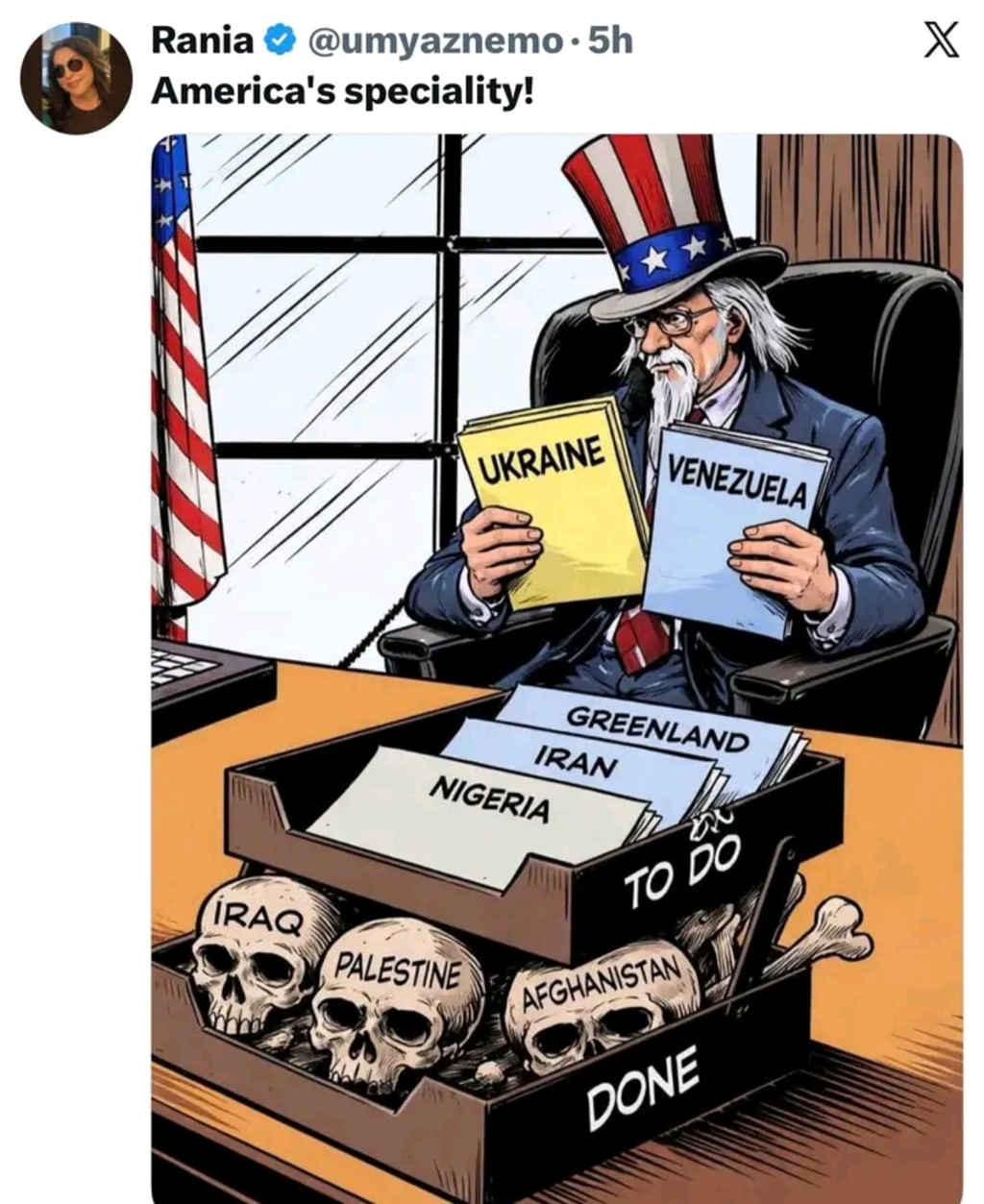
The Great Hesitation: Why Venezuela's Military Stays Quiet in the Face of U.S. Pressur
In the early days of 2026, the world watched with bated breath as geopolitical tensions between Washington and Caracas reached a boiling point. Despite a series of precision strikes and the dramatic capture of Nicolás Maduro on January 3, 2026, a question continues to haunt military analysts and casual observers alike: **Why did the Venezuelan army—the Bolivarian National Armed Forces (FANB)—not launch a full-scale retaliation?**
To understand this silence, we must look beyond simple firepower and dive into the complex web of survival, ideology, and strategic "coup-proofing" that defines the Venezuelan military today.
---
### **1. The "Coup-Proof" Architecture**
The Venezuelan military is not a traditional pyramid; it is a fragmented web. Ever since the 1999 revolution, the command structure was intentionally redesigned to prevent any single general from gaining enough power to lead a revolt or a coordinated response.
* **Proliferation of Generals:** Venezuela famously has more than 2,000 generals and admirals—vastly more than the United States. This "top-heavy" structure ensures that power is diluted.
* **Overlapping Jurisdictions:** Multiple branches (Army, Navy, Air Force, National Guard, and the Bolivarian Militia) often have overlapping duties, creating a system where everyone is watching everyone else.
---
### **2. The "Golden Handcuffs" and the Shadow Economy**
For the top brass in Caracas, loyalty isn't just about politics—it’s about business. Over the last decade, the military was granted control over key sectors of the economy:
* **PDVSA:** The national oil company is largely managed by military figures.
* **Food Distribution:** The military controls the logistics of basic goods.
* **Illicit Networks:** International reports suggest that high-ranking officers (the so-called *Cartel of the Suns*) are deeply embedded in gold mining and other gray-market trades.
In a conflict scenario, a full-scale response would mean the total destruction of these economic interests. For many generals, the "horrible" reality is that a war would cost them their fortunes.
---
### **3. The Strategy of "Asymmetric Silence"**
The FANB knows it cannot win a conventional "tank vs. tank" war against a global superpower. Instead, they employ what experts call **Asymmetric Warfare**.
Instead of a formal military response, the strategy shifts to:
* **The Civilian Shield:** Using the 4-million-strong Bolivarian Militia—civilians with basic training—to blend the military into the population.
* **Survival Over Retaliation:** As seen in recent events, the primary goal of the inner circle is to survive "one more day." A retaliatory strike would invite a total invasion, which the leadership wants to avoid at all costs.
4. The "Ghost" Allies: Russia and China
Venezuela’s silence is also a diplomatic calculation. By not striking back aggressively, Caracas maintains the "moral high ground" in the eyes of its powerful allies.
* **Russia
provides sophisticated hardware (like Sukhoi jets and S-300 missile systems) but emphasizes "sovereignty" and "non-interference."
* **China** holds the majority of Venezuela's debt.
A reckless military response from the FANB could alienate these partners, leaving Venezuela truly alone. By staying quiet, they force the international community to view the U.S. actions as "unilateral aggression," as stated by several world leaders in early 2026.
---
### **5. Fear of Internal Defection**
Perhaps the most "curious" reason for the lack of response is the fear of the rank-and-file. While the generals are wealthy, the common soldiers are suffering from the same hyperinflation as the rest of the country.
The leadership fears that if they order a full-scale mobilization, the soldiers might not pick up their rifles to fight an external enemy—they might use them to finally turn against their own commanders.
### **Conclusion: A Fragile Silence**
The lack of a military response isn't a sign of peace; it’s a sign of a regime that has prioritized **internal control over external defense.** The FANB is a force designed to keep a government in power, not necessarily to win a war against a foreign giant.
As the legal battles begin in New York and the streets of Caracas remain tense, the world waits to see if this silence is the "calm before the storm" or the final whimper of a broken system.
About the Creator
The Catastrophic Aftermath of the Dinosaur-Killing Asteroid
Approximately 66 million years ago, the Earth experienced one of the most dramatic and catastrophic events in its history: a massive asteroid, now identified as the Chicxulub impactor, collided with the planet near what is today the Yucatán Peninsula in Mexico. Measuring roughly 10 kilometers in diameter, this space rock unleashed energy equivalent to billions of atomic bombs, marking the end of the Cretaceous period and triggering a chain of events that wiped out approximately 75% of all species on Earth, including the iconic non-avian dinosaurs.
By Irshad Abbasi a day ago in History



Comments
There are no comments for this story
Be the first to respond and start the conversation.