
Why Putin Eyes Europe Beyond Ukraine
Unraveling the Strategic, Historical, and Ideological Motives Behind Russia’s Broader Ambitions in Europe

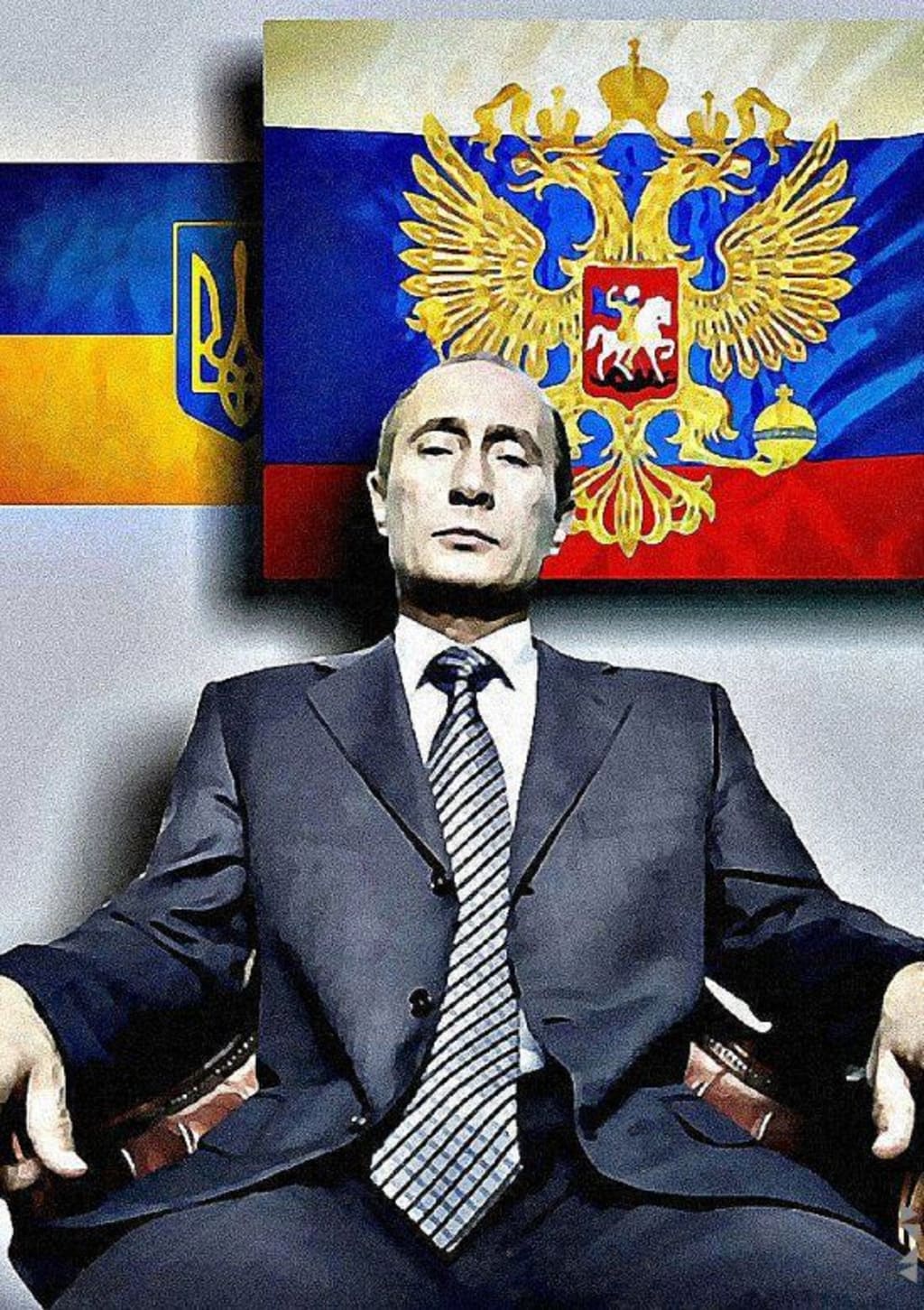
It began not with tanks, but with silence.
In the cold early months of 2025, as the world slowly turned its eyes away from Ukraine—numb from years of footage of ruined cities and displaced families—Vladimir Putin was already staring further west.
The war in Ukraine had not gone as swiftly as he had once hoped. What was meant to be a fast operation to "liberate" territory had turned into a grinding quagmire. But to Putin, Ukraine was never the end—it was the beginning.
In a quiet meeting in Moscow, deep beneath the Kremlin in a fortified war room known only to a select few, Putin stood before a map of Europe. Around him sat generals, cyber chiefs, and political strategists. Red lines stretched from Kaliningrad to Moldova, from the Black Sea to the Baltics.
“This isn’t about Ukraine,” he said coldly. “This is about the collapse of Russian dignity. It is about reversing thirty years of Western humiliation.”
He wasn’t just speaking as a politician. In his mind, he was a man of destiny—chosen to restore what had been lost in 1991 when the Soviet Union collapsed. He saw NATO as an encroaching wolf pack, and Europe as a puppet stage controlled by Washington.
The Western alliance had underestimated him once. He would not give them the chance to do so again.
Putin’s plan was not just military—it was psychological, economic, digital. He would weaken Europe from within before a single missile was launched. Over the past year, Russian disinformation campaigns had intensified. Fake news spread across social media platforms in Germany, France, and Italy, sowing mistrust in governments. Far-right and far-left parties—some unknowingly fueled by Kremlin money—amplified the chaos.
In Eastern Europe, Russian-backed cyberattacks crippled infrastructure—knocking out power grids in Poland, freezing banking systems in the Czech Republic, and hacking military communications in Slovakia. All traceable back to Moscow, but never officially claimed.
Meanwhile, Russia deepened its alliance with rogue states—supplying arms to Serbia in the Balkans, fostering unrest in Bosnia, and reigniting tensions in Kosovo. These were small matches, but Putin knew that with the right pressure, Europe could be engulfed in fire.
Inside the European Union, panic brewed behind closed doors. Intelligence reports revealed increasing Russian troop movements near the Suwałki Gap—the narrow strip between Belarus and Kaliningrad, NATO's most vulnerable corridor. If Russia took it, they could isolate the Baltic states.
In Berlin, the German Chancellor convened an emergency session of NATO. But the alliance was slow, still fractured by internal disputes. Hungary, under an increasingly authoritarian regime sympathetic to Moscow, vetoed strong action. France hesitated, caught between diplomacy and dread. The U.S., exhausted by global commitments, urged restraint—cautious not to provoke escalation.
And that’s exactly what Putin wanted.
Then came Moldova.
In a stunning move, Russian forces—under the guise of “protecting Russian-speaking minorities”—entered Transnistria, the breakaway region of Moldova long under de facto Russian control. Within days, they marched deeper, taking control of key Moldovan cities without a single shot. The Moldovan government fled. The West condemned. Sanctions were announced. But the tanks stayed.
Putin went on air: “We are correcting the historical injustices forced upon us by the collapse of the Soviet Union. Russia is not expanding. Russia is returning home.”
The world watched, paralyzed. Ukraine had been a shock. Moldova, they realized, was a test. Would the West act?
In Lithuania, Latvia, and Estonia, fear rippled through the streets. These nations, small but fiercely independent, had long warned that Putin would not stop with Ukraine. Now, they called for immediate NATO reinforcement.
Poland declared a state of high alert. Germany quietly began rearming. British intelligence reported unusual Russian submarine activity in the North Sea.
And yet—no war declaration came. No full-scale invasion. Putin didn’t need one.
By weaponizing migration, energy, and fear, he was destabilizing Europe in a thousand small ways. Gas prices soared again after mysterious explosions damaged undersea pipelines in the Baltic. Refugees from Moldova poured into Romania and Ukraine. Far-right protests erupted in Paris, sparked by deepfake videos of fabricated “EU betrayal.”
Every crisis pulled Europe closer to the brink—and further from unity.
But not everyone was paralyzed.
In a rare moment of clarity, European leaders gathered in Brussels, speaking not with division, but with one voice. The newly formed “European Defense Alliance”—a more agile force outside NATO bureaucracy—mobilized troops to the Baltics. Cybersecurity was hardened. A coordinated economic blockade against Russian oligarchs was launched with stunning speed. Even neutral countries like Sweden and Switzerland quietly offered covert support.
Putin watched, his poker face unreadable. He had bet that Europe would fracture under pressure. But pressure, it seemed, had forged resolve.
Still, the danger wasn’t over.
This was not a war of guns alone. It was a war of stories, of memory, of fear and pride. To Putin, this was about rewriting the map of Europe—not with borders, but with belief. He sought not just land, but influence, obedience, and the collapse of the Western world order.
And so, as Europe held its breath, the world waited.
Would he cross the line?
Or had he already done so—and the world simply hadn’t noticed?
About the Creator
Hasnain khan
"Exploring the world through words. Join me as I unravel fascinating stories, share insightful perspectives, and dive into the depths of curiosity."
Keep reading
More stories from Hasnain khan and writers in History and other communities.
who is Adolf Hitler
Adolf Hitler was one of the most infamous and influential political leaders of the 20th century. Born on April 20, 1889, in Braunau am Inn, Austria-Hungary (now Austria), Hitler rose from a failed artist and soldier in World War I to become the dictator of Nazi Germany. His leadership led to World War II, the Holocaust, and the deaths of tens of millions of people across Europe. Hitler's actions and ideology left a permanent and tragic mark on world history.
By Hasnain khan9 months ago in History
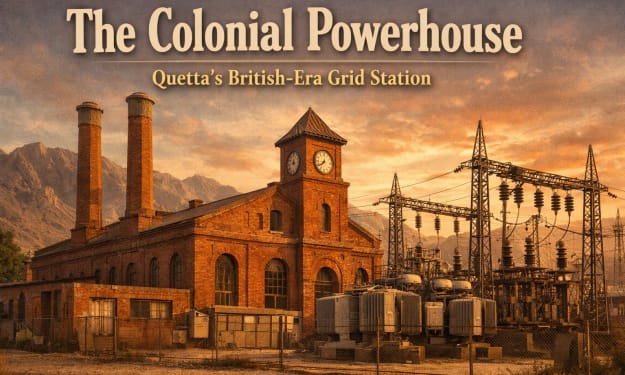
The Colonial Powerhouse: Quetta’s British-Era Grid Station
The city of Quetta, often called the “Fruit Garden of Pakistan,” has a long and fascinating history shaped by trade, culture, and colonial influence. Among the lesser-known historical structures of the city is a British-era grid station that once played a crucial role in supplying electricity to the region. Built during the period of British colonial rule in the Indian subcontinent, this early electrical facility reflects a time when modern infrastructure was beginning to transform cities like Quetta.
By Irshad Abbasi about 8 hours ago in History


Comments
There are no comments for this story
Be the first to respond and start the conversation.