
who is Adolf Hitler
Adolf Hitler: The Rise and Fall of a Dictator Who Shaped 20th Century History"

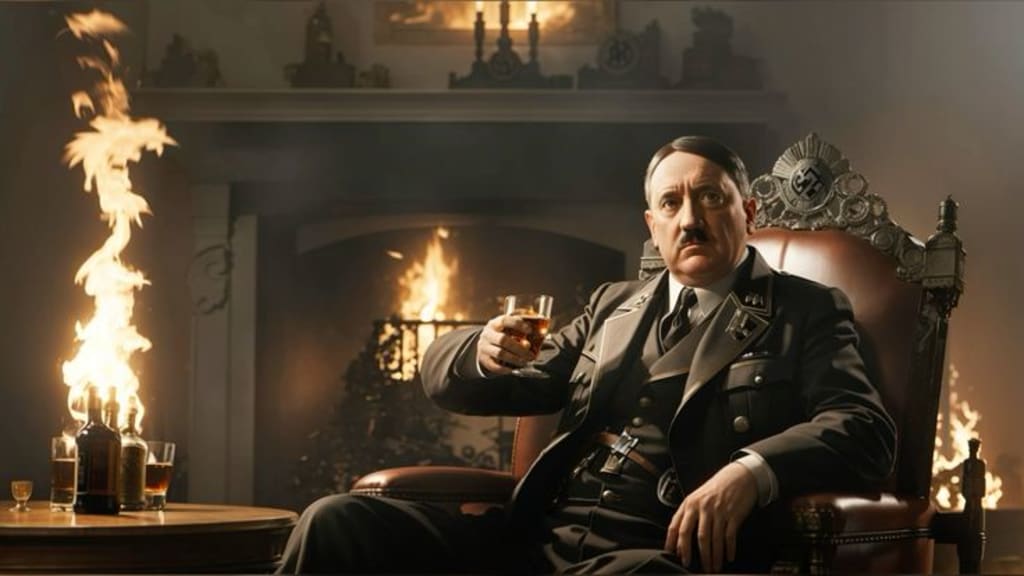
Adolf Hitler was one of the most infamous and influential political leaders of the 20th century. Born on April 20, 1889, in Braunau am Inn, Austria-Hungary (now Austria), Hitler rose from a failed artist and soldier in World War I to become the dictator of Nazi Germany. His leadership led to World War II, the Holocaust, and the deaths of tens of millions of people across Europe. Hitler's actions and ideology left a permanent and tragic mark on world history.
Early Life
Adolf Hitler was born to Alois Hitler and Klara Pölzl. As a child, he was reportedly intelligent but rebellious. He aspired to be an artist and applied to the Academy of Fine Arts Vienna twice but was rejected both times. After the death of his parents, he lived in poverty in Vienna, where he developed many of his political and ideological views, including a deep hatred of Jews and a belief in German nationalism.
In 1913, Hitler moved to Munich, Germany, and when World War I broke out in 1914, he enlisted in the German army. He served with distinction as a messenger and was wounded twice. He was awarded the Iron Cross for bravery. The defeat of Germany in 1918 left Hitler bitter and resentful. Like many others, he believed that Germany had been betrayed from within rather than defeated on the battlefield.
Rise to Power
After the war, Hitler became involved in politics. He joined a small nationalist group called the German Workers’ Party, which would later become the National Socialist German Workers’ Party (NSDAP), better known as the Nazi Party. Hitler quickly became the party’s most powerful speaker and leader, known for his fiery speeches and persuasive propaganda.
In 1923, Hitler and the Nazi Party attempted a failed coup known as the Beer Hall Putsch in Munich. He was arrested and sentenced to five years in prison, although he served only nine months. During his time in prison, he wrote Mein Kampf (“My Struggle”), a book outlining his ideology, including anti-Semitism, Aryan supremacy, anti-communism, and the need for German territorial expansion.
Following his release, Hitler focused on gaining power legally. By the early 1930s, the Nazi Party had become one of the most popular political forces in Germany, taking advantage of the Great Depression, political instability, and widespread dissatisfaction. In 1933, Hitler was appointed Chancellor of Germany. He quickly consolidated power, eliminated political opposition, and in 1934 became Führer, or leader, of Germany.
Dictatorship and World War II
Once in power, Hitler transformed Germany into a totalitarian state. He suppressed all dissent, banned other political parties, and used propaganda and terror to control the population. The Nazi regime promoted a racist ideology that considered Germans (whom they called “Aryans”) superior to other races. Jews, Roma (Gypsies), disabled people, and others were persecuted as “inferior” or “undesirable.”
One of Hitler’s major goals was the expansion of German territory, which he referred to as Lebensraum (“living space”). In 1939, Germany invaded Poland, prompting Britain and France to declare war. This marked the beginning of World War II. Over the next few years, Hitler’s forces conquered much of Europe, including France, the Netherlands, Norway, and parts of the Soviet Union.
Hitler also orchestrated the Holocaust—the systematic, state-sponsored genocide of six million Jews and millions of others, including Slavs, Poles, disabled individuals, LGBTQ+ people, and political dissidents. Concentration camps such as Auschwitz became symbols of Nazi brutality.
Defeat and Death
By 1943, Germany began to lose ground. The Allies, including the United States, the Soviet Union, and the United Kingdom, gradually pushed German forces back. In April 1945, as Soviet troops closed in on Berlin, Hitler took refuge in his underground bunker. On April 30, 1945, he died by suicide alongside his long-time companion, Eva Braun.
Following his death, Germany surrendered unconditionally on May 8, 1945, ending World War II in Europe. Hitler’s regime had caused immense destruction, and his legacy is one of death, war, and genocide.
Legacy
Adolf Hitler remains a central figure in the study of history, politics, and human rights. His rise to power serves as a warning about the dangers of totalitarianism, racism, and unchecked authority. His actions led to the deaths of over 60 million people and changed the course of world history.
To this day, Hitler's name is associated with evil and cruelty. Understanding how he rose to power and what his regime did is essential for ensuring that such atrocities are never repeated.
About the Creator
Hasnain khan
"Exploring the world through words. Join me as I unravel fascinating stories, share insightful perspectives, and dive into the depths of curiosity."
Keep reading
More stories from Hasnain khan and writers in History and other communities.
Russia: The First Country to Acknowledge the New Afghanistan
The fall of Kabul in August 2021 and the return of the Taliban to power in Afghanistan sent shockwaves around the world. While most countries adopted a wait-and-see approach or condemned the regime, Russia stood out by quickly opening channels of communication and showing signs of recognition. Though it stopped short of full diplomatic recognition, Russia became one of the first major powers to engage openly with Afghanistan's new leadership. This move was not merely symbolic—it reflected deeper geopolitical strategy, historical context, and regional priorities.
By Hasnain khan8 months ago in History
The Mongol Storm: When Baghdad Fell and a Civilization Trembled
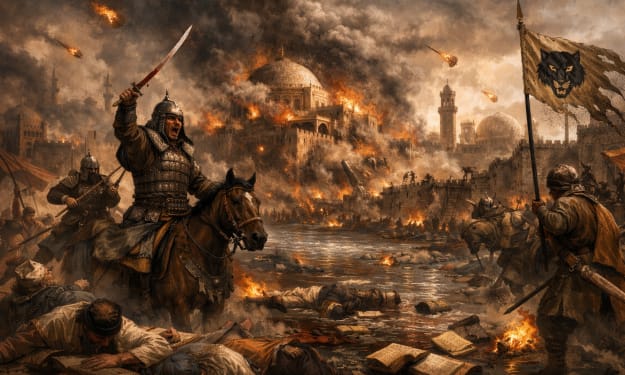
In the winter of 1258, one of the greatest cities on Earth met a catastrophe from which it would never fully recover. Baghdad, once the intellectual and cultural capital of the Islamic world, fell to the armies of Hulagu Khan during the devastating Siege of Baghdad (1258). The invasion marked the end of the powerful Abbasid Caliphate and changed the course of Middle Eastern history forever.
By Irshad Abbasi 5 days ago in History
Worth the Wait: Puerto Viejo, Costa Rica
Beach bumming in a small Caribbean beach town sounded like a perfect way to end our 6-month trip through Mexico and Central America. Or so we thought. The foul, fishy stench of rotten seaweed hit our nostrils as we stepped from the cramped bus and looked out at a rather depressing, empty, and underwhelming black sand beach. It was pouring with rain, and we had to quickly fish out our ponchos. We thought, this couldn’t be it, could it?
By Sh*t Happens - Lost Girl Travel4 days ago in Wander



Comments
There are no comments for this story
Be the first to respond and start the conversation.