
Why Does the United States Want Greenland? Trump, Resources and the New Arctic Power Struggle
Rare Earth Minerals – The Hidden Treasure Beneath Greenland’s Ice Lithium, Uranium, Gold and Oil Reserves
The desire to seize control of the world is not new. Throughout history, various adventurers and conquerors have attempted this, yet none succeeded in conquering the entire globe. Several figures did manage to capture large parts of the world, including Alexander the Great, Genghis Khan, and Sultan Mehmed the Conqueror.
In recent history, a similar attempt was made by Adolf Hitler. However, Hitler’s primary objective was not to conquer the whole world; rather, his main goal was to occupy Eastern Europe and Russian territories in order to create “living space” for the German race.
These days, comparable ambitions seem to be stirring in the heart of President Donald Trump. The real-estate investor within him appears eager to take control of vast territories. After Venezuela, his eyes are now fixed on Greenland—indeed, it would be more accurate to say that his covetous gaze has fallen upon Greenland, the world’s largest island, though not a continent.
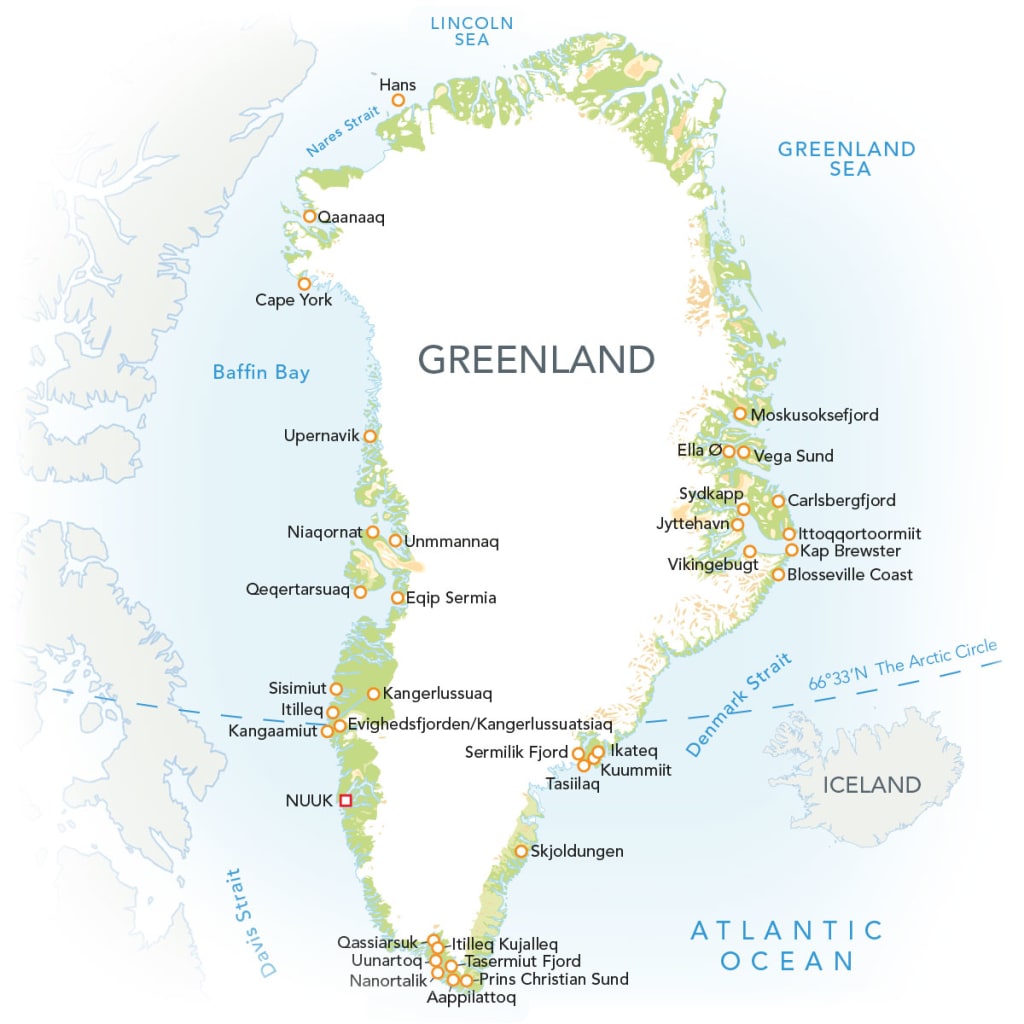
The name Greenland was introduced by Scandinavian settlers. It is a Danish word meaning “land of people.” This autonomous country is part of the Kingdom of Denmark and lies between the Arctic Ocean and the Atlantic Ocean. Its area is 2,166,000 square kilometers, of which 1,755,000 square kilometers—about 81 percent—is covered by ice. Its population is roughly 57,000.
The history of Greenland dates back to 2500 BC, evidence of which still exists in the form of archaeological remains. Over the centuries, beginning in 986 AD, the western coast of Greenland was settled by people from Iceland and Norway. Some of these settlements survived for centuries, while others disappeared in the fifteenth century, possibly due to famine or conflict. In 1721, a major expedition was launched in which Norwegian missionaries and others traveled to Greenland. In July 1931, Norway declared eastern Greenland an uninhabited region and occupied it. Denmark took the case to the International Court in 1933, which ruled against Norway.
During the Second World War, Greenland’s connection with Denmark was severed when Germany occupied Denmark. The United States then assumed responsibility for Greenland’s defense, returning control to Denmark after the war. During the Cold War, the U.S. established military bases in northern Greenland, turning the island into a strategic front between global powers. The minerals hidden beneath the ice, the opening Arctic sea routes, and geopolitical rivalry transformed Greenland from merely a geographic entity into a center of politics and power.
In 1979 Denmark granted Greenland limited autonomy but retained control over defense, foreign affairs, currency, and economic matters. By the late twentieth and early twenty-first centuries, Greenland gained greater self-rule and established a local government, yet it remains part of the Danish realm. This raises the question: what is it about Greenland that makes the United States want to seize it?
First, Donald Trump is not the first U.S. president to show interest in Greenland, though he is arguably the first to speak of capturing it by force. The United States considered purchasing Greenland in 1867 and again in 1946, but these plans never materialized. Even afterward, efforts did not cease, and successive presidents continued attempts to bring Greenland under American control.
From a national security perspective, acquiring Greenland is crucial for the U.S. because growing Russian and Chinese activity in the Arctic could pose a threat. Experts believe that Trump’s interest is also driven by the island’s vast size and symbolic power. Moreover, Greenland holds extraordinary importance in terms of natural resources. It contains uranium, gold, oil, gas, and large deposits of rare earth minerals.
According to the Geological Survey of Denmark and Greenland, the country is rich in rare metals, including seventeen elements used in drones, electric vehicles, and fighter jets—vital for modern technology and defense industries. Greenland also possesses graphite, lithium, and copper reserves amounting to about 0.75 percent of global deposits. Lithium, a key component of batteries, is expected to see its demand increase eightfold by 2040. At present, China dominates the global minerals market, and these reserves could be critical for countries seeking to reduce dependence on China—something the U.S. is already striving to achieve.
By now, the answer should be clear as to why America wants control over Greenland. This is a war over resources and dominance. In earlier eras, grain, livestock, and even women were considered resources; today, the resources are different. Denmark and Europe will not easily allow Greenland to fall into American hands. Denmark is increasing its military presence there, while Germany, France, Sweden, Finland, Norway, Britain, and the Netherlands have sent troops for Denmark’s “Arctic Resilience” military exercises. Under such conditions, the risk of confrontation is growing, and for the first time since World War II, Europe and the U.S. appear to be drifting apart. Retreat on issues like Iran will be hard for Trump, and now Greenland and Denmark are showing resistance.
In the future, the world may be composed of large empires and their client states. What will be our place in such a world? Our elite will need to decide wisely. The United States has historically opposed adventurism, yet this time it seems to have chosen that role itself. Many Americans consider this their right, and those familiar with the concept of “Manifest Destiny” know that this narrative has long been used as propaganda to justify American imperial dominance.
Like earlier adventures, this American gamble will also end no differently—the adventurer will face defeat, and future generations will read about it in the pages of history. But this path is drenched in blood and will undoubtedly reshape the world’s geography. May God protect us all.
Is this conversation helpful so far?
About the Creator
Keep reading
More stories from Hashim Khan and writers in History and other communities.
Who is Bashir Zeb, the head of the banned organization BLA?
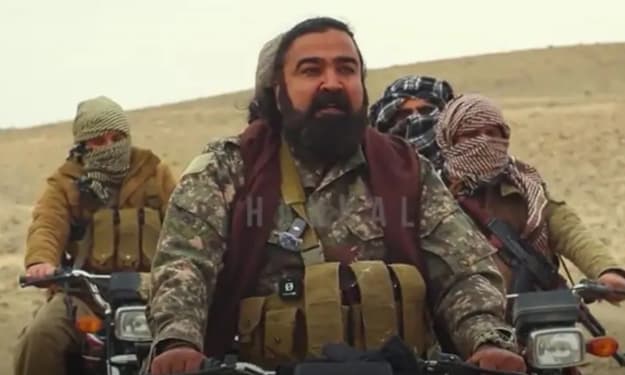
Before the attacks carried out on several cities including Quetta, the capital of Balochistan, the banned separatist organization Baloch Liberation Army (BLA) had released a video. In this picture , armed men can be seen riding three motorcycles at an unidentified deserted location. Only one of the six individuals’ face is visible. According to the banned organization, this person was the head of the BLA, Bashir Zeb, and it was also claimed that Bashir Zeb personally took part in these attacks. The BLA did not clarify where the video was recorded; however, Balochistan Chief Minister Mir Sarfraz Bugti claimed that the video was filmed in Afghanistan. It should be noted that last Saturday armed militants targeted various installations in Quetta, Mastung, Kalat, Nushki, Kharan, Dalbandin, Turbat, Tump, Gwadar, Pasni and several other areas. According to the provincial chief minister, a total of 31 civilians and 17 security personnel were killed in these attacks, while the government claimed that 145 militants were also killed. The banned BLA has been active in Balochistan for more than a decade, but in recent years the scope and intensity of attacks by the organization and its subsidiary group Majeed Brigade have increased. The BLA has been declared a banned organization by both Pakistan and the United States. It is worth recalling that since the attack on the Chinese Consulate in Karachi in November 2018, Bashir Zeb has been wanted by the Government of Pakistan in numerous cases involving attacks carried out by the BLA. These include the planning of the 2020 attack on the Karachi Stock Exchange, the planning of the female suicide bombing targeting Chinese teachers at Karachi University, and the attack on a convoy of Chinese engineers near Karachi Airport. In the airport attack case, a court has already declared him an absconder. However, there was a time when Bashir Zeb was active in student politics on the streets of Quetta. We spoke to journalists and former and current security officials, and also reviewed Bashir Zeb’s own writings and interviews given as chairman of BSO Azad, in order to understand who Bashir Zeb is and how he became part of this organization.
By Hashim Khan 8 days ago in History
Les Wexner
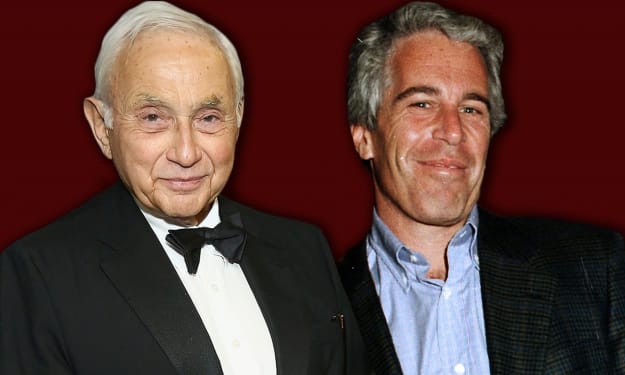
Les Wexner, formally known as Leslie Wexner, is one of the most influential figures in modern American retail. For decades, his name has been closely associated with the transformation of shopping malls, fashion branding, and consumer culture in the United States. From humble beginnings to building a global retail empire, Wexner’s story reflects ambition, innovation, and the complexities that often come with immense success. Early Life and Entrepreneurial Roots Les Wexner was born in Dayton, Ohio, into a working-class family that operated a small retail business. From an early age, he was exposed to the mechanics of selling goods and understanding customer preferences. Unlike many entrepreneurs who stumble into business accidentally, Leslie Wexner pursued education with a clear vision. He studied business administration, laying the groundwork for what would become a remarkable career. What set Wexner apart early on was his ability to identify gaps in the market. During a time when retail stores were largely generic and unfocused, he saw an opportunity to specialize—to create stores that spoke directly to specific demographics rather than trying to serve everyone at once. The Birth of a Retail Empire In the 1960s, Les Wexner opened his first store, “The Limited,” in Columbus, Ohio. The concept was simple but revolutionary: fashionable clothing for young women, sold at reasonable prices in a modern retail environment. The idea resonated immediately. Shoppers felt understood, and sales quickly exceeded expectations. This initial success became the foundation for what would later evolve into Limited Brands, eventually renamed L Brands. Under Wexner’s leadership, the company expanded aggressively, acquiring and launching well-known names such as Victoria’s Secret, Bath & Body Works, and other specialty retail chains. Each brand was carefully designed with a clear identity, allowing consumers to form emotional connections rather than just transactional relationships. Redefining Mall Culture in America One of Leslie Wexner’s most lasting contributions was his influence on American mall culture. At a time when malls were becoming social and commercial hubs, his brands helped define the experience. Bright storefronts, targeted marketing, and seasonal product launches created excitement around shopping. Victoria’s Secret, in particular, became a cultural phenomenon. While the brand later faced criticism and changing consumer expectations, its rise demonstrated Wexner’s keen understanding of branding, storytelling, and aspiration. He didn’t just sell products—he sold an image and a lifestyle. Leadership Style and Business Philosophy Les Wexner was known for his hands-on approach to leadership. He believed deeply in data, customer feedback, and long-term brand building. Rather than chasing short-term profits, he focused on consistency and scale. Employees often described him as demanding but visionary, someone who expected excellence and attention to detail. Another defining trait of Leslie Wexner was patience. He understood that strong brands take time to mature. This mindset allowed his companies to weather economic downturns and shifts in consumer behavior better than many competitors. Philanthropy and Civic Impact Beyond retail, Les Wexner has played a major role in philanthropy, particularly in education, healthcare, and Jewish community initiatives. Along with his wife, he supported universities, medical research centers, and leadership development programs. His contributions helped shape institutions in Ohio and beyond. Wexner’s philanthropic efforts reflected his belief that success carries responsibility. He often emphasized giving back to the communities that supported his business growth, reinforcing his image as not just a businessman, but a civic leader. Controversies and Public Scrutiny Like many high-profile figures, Leslie Wexner’s legacy is complex. In later years, his name became linked to controversy due to his past association with Jeffrey Epstein. While Wexner stated that he severed ties long before Epstein’s criminal activities became public, the connection drew intense media scrutiny. This period marked a turning point in how the public viewed him. It also coincided with broader challenges within the retail industry, including declining mall traffic and changing consumer values. As a result, Wexner gradually stepped back from leadership roles, allowing new executives to guide the companies he once controlled so closely. Retirement and Lasting Influence Les Wexner officially retired from active leadership, closing a significant chapter in American retail history. Even in retirement, his influence remains visible. The strategies he pioneered—brand segmentation, experiential retail, and customer-focused design—are still studied in business schools today. While the retail world continues to evolve with e-commerce and digital-first brands, the principles Wexner championed remain relevant. Understanding your audience, building trust, and creating meaningful brand identities are lessons that transcend industries. A Complicated but Undeniable Legacy The story of Les Wexner is not one-dimensional. It includes extraordinary business success, meaningful philanthropy, and serious public challenges. Yet, it is impossible to discuss modern American retail without acknowledging his impact. Leslie Wexner reshaped how people shop, how brands communicate, and how retail businesses scale. Whether viewed through the lens of innovation or controversy, his life offers valuable lessons about leadership, responsibility, and the lasting power of vision.
By Saboor Brohi 2 days ago in History
The Long Afterlife of Colonialism
Colonialism is often treated as a historical event—something that ended when flags were lowered and independence was declared. But what if colonialism never truly left? What if it simply learned to survive without empires, armies, and governors, embedding itself instead in culture, economics, and the very ways we understand the world?
By Rachid Zidine3 days ago in History

Comments
There are no comments for this story
Be the first to respond and start the conversation.