
Why Do Temples Still Matter? The Enduring Role of Spiritual Spaces in Our Modern Lives
Discover How Temples Like Kamakshi Amman Temple Continue to Inspire and Guide in Today's Fast-Paced World

Introduction: The Timeless Role of Temples in a Modern World
Temples have always been central to the spiritual, cultural, and social fabric of society. They are not just places of worship but also hubs for community interaction, cultural preservation, and emotional well-being. In a world that is increasingly fast-paced, digital, and driven by technology, the question arises:
What role do temples play today? How do these sacred spaces continue to inspire devotion, foster spiritual growth, and contribute to the well-being of individuals in modern times?
By adapting to modern challenges, temples continue to sustain devotion and offer spiritual guidance, acting as beacons of hope in today’s chaotic world.
Temples: A Spiritual Anchor in a Digital World
In today’s digital age, the world is more connected than ever. With smartphones, social media, and instant communication, many people find themselves disconnected from their inner selves. The pressures of modern life—work stress, personal challenges, and information overload—often lead individuals to seek something deeper. Temples offer a sanctuary, a peaceful space for reflection, prayer, and spiritual rejuvenation.
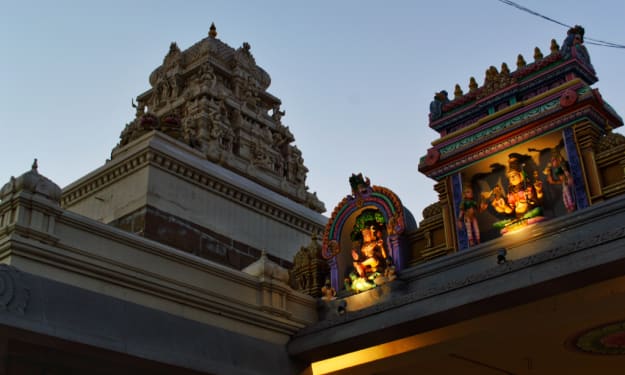
Temples like Kamakshi Amman Temple continue to serve as a spiritual anchor, providing solace and a sense of purpose. Despite technological advancements and societal shifts, these places of worship remain vital for fostering mindfulness and self-reflection. People visit these temples to disconnect from the chaos of everyday life and reconnect with their spiritual roots.
The Role of Temples in Mental and Emotional Well-being
As the world becomes increasingly materialistic, many people are searching for meaning beyond their careers, possessions, and digital lives. Temples have become not only places for religious rituals but also centers for emotional and mental well-being.
- Providing Emotional Support: In times of crisis, grief, or personal struggles, people often turn to temples for emotional healing. At Kamakshi Amman Temple, for example, devotees find comfort in the presence of Goddess Kamakshi, who symbolizes love, compassion, and protection. The act of prayer, meditation, and participating in temple rituals helps individuals cope with life's difficulties and restore emotional balance.
- Fostering a Sense of Belonging: Temples continue to be places where people come together to share common values, strengthening the bonds of community. Festivals and rituals provide a sense of unity, allowing devotees to come together in a spirit of devotion, offering a collective experience of spiritual upliftment.
Preserving Culture and Tradition in a Changing World
While modernity brings rapid changes, temples have adapted by preserving their cultural significance and enriching the lives of future generations. Kamakshi Amman Temple, for example, plays a significant role in preserving Tamil traditions, rituals, and festivals. The rich cultural heritage that the temple upholds, including music, dance, and the arts, serves to pass on time-honored values to younger generations.
- Celebrating Festivals with Modern Twists: The temple’s festivals, such as Chithirai, Navaratri, and Sankadahara Chathurthi, continue to be vibrant celebrations. With the help of technology, temples are now able to live-stream festivals, allowing people across the world to partake in the divine experience. This adaptation helps temples bridge the gap between tradition and modernity while maintaining their cultural importance.
- Engaging the Younger Generation: Many temples now offer educational programs, youth groups, and cultural workshops to engage younger generations. By offering teachings on spirituality, religious practices, and cultural arts, temples help the younger generation connect with their roots and preserve their rich heritage.
Preserving Culture and Tradition in a Changing World
While modernity brings rapid changes, temples have adapted by preserving their cultural significance and enriching the lives of future generations. Kamakshi Amman Temple, for example, plays a significant role in preserving Tamil traditions, rituals, and festivals. The rich cultural heritage that the temple upholds, including music, dance, and the arts, serves to pass on time-honored values to younger generations.
- Celebrating Festivals with Modern Twists: The temple’s festivals, such as Chithirai, Navaratri, and Sankadahara Chathurthi, continue to be vibrant celebrations. With the help of technology, temples are now able to live-stream festivals, allowing people across the world to partake in the divine experience. This adaptation helps temples bridge the gap between tradition and modernity while maintaining their cultural importance.
- Engaging the Younger Generation: Many temples now offer educational programs, youth groups, and cultural workshops to engage younger generations. By offering teachings on spirituality, religious practices, and cultural arts, temples help the younger generation connect with their roots and preserve their rich heritage.
Temples and Social Welfare in Modern Society
In modern times, temples have increasingly embraced their role as centers of social welfare. The evolving role of temples goes beyond spirituality—many are becoming active participants in improving the quality of life for underserved communities.
Kamkashi Amman Temple, for example, is involved in a variety of charitable activities. Whether it’s providing food to the needy, funding education, or organizing medical camps, temples have evolved to meet the needs of society while staying true to their core mission of devotion and service.
These social welfare programs help fulfill the temple’s role in uplifting society and supporting individuals in need. The focus on compassion, service, and charitable outreach continues to be an essential part of temple life, making them vital to the communities they serve.
Conclusion: Temples as Pillars of Devotion and Growth
Temples have withstood the test of time, adapting to modern life while preserving their spiritual essence. Kamakshi Amman Temple, like many others, continues to play a crucial role in sustaining devotion in an ever-evolving world. By providing a sanctuary for peace, fostering cultural traditions, offering emotional and social support, and embracing modern technology, temples remain relevant in the 21st century.
As society continues to evolve, temples will continue to serve as pillars of devotion, spiritual guidance, and community well-being.
In a world full of distractions and challenges, the enduring presence of temples like Kamakshi Amman Temple helps individuals stay connected to their spiritual roots and find meaning in their lives.
About the Creator
Keep reading
More stories from Sri Kamakshi Ambal Temple and writers in History and other communities.
Kanchipuram Sarees: Woven with Devotion at Kamakshi Amman Temple
Introduction: A Unique Bond Between Kanchipuram Sarees and Kamakshi Amman Temple Kanchipuram, a temple town in Tamil Nadu, is renowned for its rich cultural heritage, spiritual significance, and the exquisite craftsmanship of Kanchipuram sarees. These sarees, often referred to as the “Queen of Sarees,” are woven with great skill and devotion by local artisans. Interestingly, the artistry behind these sarees has a strong connection to the sacred Kamakshi Amman Temple. The temple’s divine presence, cultural influence, and the spiritual significance of Goddess Kamakshi have inspired generations of weavers to produce these timeless pieces of art.
By Sri Kamakshi Ambal Temple11 months ago in History
What Would World War III Look Like Today?
What Would World War III Look Like Today? When people imagine World War III, many still picture massive armies, tanks rolling across borders, and cities reduced to rubble by bombs. While traditional warfare would still play a role, a modern world war would look very different from the conflicts of the 20th century. Advances in technology, global interdependence, and new forms of power have changed how wars are fought—and how they affect the world.
By Wings of Time 4 days ago in History
El Chapo
Joaquín “El Chapo” Guzmán and the Sinaloa Cartel Joaquín Archivaldo Guzmán Loera, widely known by his nickname “El Chapo,” is one of the most infamous figures in the history of organized crime. He rose from extreme poverty in rural Mexico to become the leader of the Sinaloa Cartel, an organization that for decades played a central role in international drug trafficking. The story of El Chapo and the Sinaloa Cartel reflects broader issues such as corruption, inequality, weak institutions, and the global demand for illegal drugs.
By jhony aoura day ago in History



Comments
There are no comments for this story
Be the first to respond and start the conversation.