
Why Did Persia Want to Invade Greece? History Revealed!
History of Ancient War

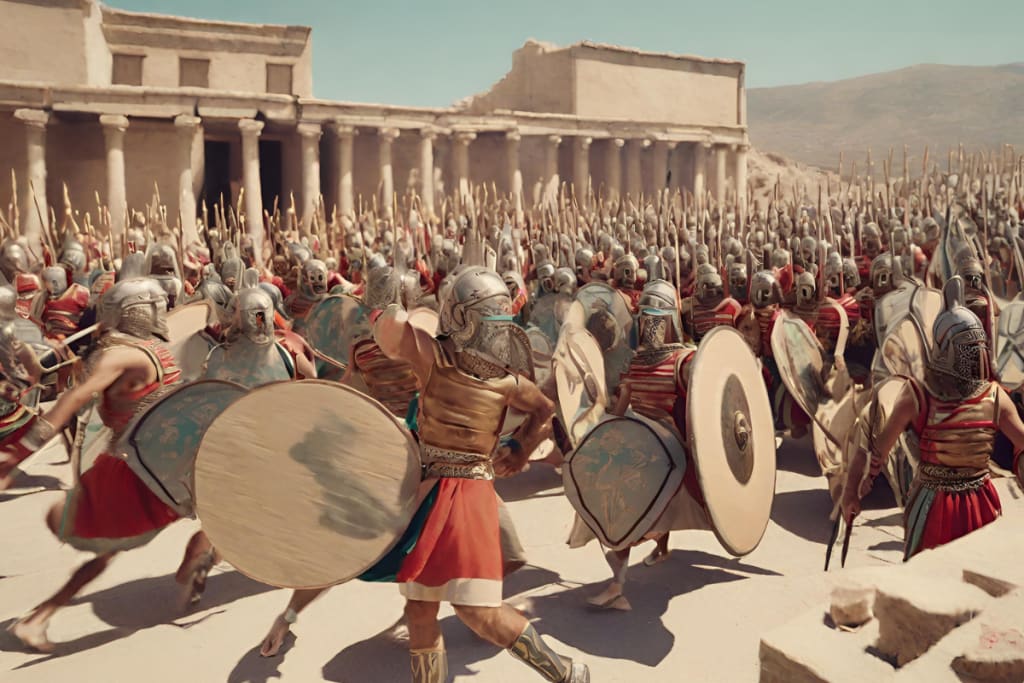
The ancient world witnessed many remarkable events, and one of the most intriguing is the Persian invasion of Greece. This article delves deep into the question, "Why did Persia want to invade Greece?" We will explore the historical backdrop, motivations, and outcomes of this significant chapter in history.
How Did Persia Invade Greece?
There is a chain of sequence to tell the history.
Buildup to the Invasion
The tensions that led to the Persian invasion of Greece began with the Ionian Revolt, a conflict that spanned from 499 to 494 BCE. This rebellion saw Greek city-states in Asia Minor, which were under Persian rule, rise against Persian authority. Although the revolt was eventually quashed by the Persians, it laid the groundwork for future hostilities.
During this period, the Persian Empire, under the rule of King Darius I, was rapidly expanding its territory. One of its objectives was to assert control over the Greek city-states located in Asia Minor. Darius aimed to punish Athens and Eretria for their support of the Ionian Revolt, setting the stage for a larger confrontation with Greece.
The Invasions Unfold
The initial Persian invasion of Greece occurred in 490 BCE. King Darius I dispatched a formidable Persian force, led by his generals, which landed at the Bay of Marathon. In response, the Athenians, forewarned of the impending invasion, gathered their forces under the leadership of Miltiades. The result was the famous Battle of Marathon. Despite being outnumbered, the Athenians emerged victorious, dealing a significant blow to the Persian campaign.
Following their defeat at Marathon, the Persians temporarily withdrew. This victory also gave rise to the renowned "Marathon Run," in which an Athenian messenger ran roughly 26 miles from Marathon to Athens to convey the news of the triumph, inspiring the modern marathon race.
The second, more substantial Persian invasion took place between 480 and 479 BCE, during the reign of Darius I's son, Xerxes. Xerxes was determined to avenge the Persian loss at Marathon and to extend Persian dominion over all of Greece. He spent several years assembling a vast coalition of Persian and allied forces, amassing an estimated million-man army and a formidable navy.
In 480 BCE, Xerxes' forces crossed the Hellespont and entered Greece, progressing through Thrace and Macedonia with minimal opposition. The Greeks, recognizing the imminent threat, formed a coalition led by King Leonidas I of Sparta. They made a valiant stand at the narrow pass of Thermopylae. Although the Greeks fought with great courage, they were eventually betrayed, leading to the fall of Thermopylae.
In response to the Persian advance, the Athenians evacuated their city and sought refuge on the island of Salamis. The Persians subsequently sacked and burned Athens. However, the Greeks, under the strategic brilliance of Themistocles, achieved a decisive naval victory at the Battle of Salamis, turning the tide of the war.
Simultaneously, on land, Greek forces, led by the Spartans, secured a significant victory at the Battle of Plataea in 479 BCE. This marked a turning point in the invasion, prompting the Persians to initiate their retreat from Greece.
Reasons Behind Persian Invasion Over Greece
Persia wanted to invade Greece for a variety of reasons. Some of these reasons include:
Historical Background
To understand Persia's desire to invade Greece, we must first grasp the historical context. The Persian Empire, led by King Darius I and later his son Xerxes, was an expansive superpower in the 5th century BCE. Meanwhile, Greece was a collection of city-states, including Athens and Sparta, each with its own governance and culture.
Expanding Territory
One key motivation for Persia's invasion was its desire to expand its vast empire. Greece, with its city-states, offered a tempting opportunity for territorial expansion. Conquering Greece would solidify Persian dominance in the region.
Revenge for Ionian Revolt
Another significant factor was the Ionian Revolt, in which Greek cities under Persian rule attempted to break free. Persia sought revenge for this rebellion, viewing it as a threat to its authority.
Wealth and Resources
Greece was known for its wealth and valuable resources, making it an attractive target for Persia. The acquisition of Greek riches would undoubtedly strengthen the Persian Empire.
Geopolitical Influence
Controlling Greece would also grant Persia substantial geopolitical influence in the Mediterranean. This strategic advantage was an appealing prospect for the Persian rulers.
FAQs (Frequently Asked Questions)
What sparked the Persian invasion of Greece?
The Persian invasion of Greece was primarily sparked by the desire for territorial expansion, revenge for the Ionian Revolt, the allure of Greek wealth and resources, and the quest for geopolitical influence.
Were there any specific events that triggered the invasion?
While the Ionian Revolt was a significant trigger, the Persian invasion of Greece can be attributed to a series of events and strategic considerations that culminated in a desire for Greek conquest.
How did Greece respond to the Persian invasion?
Greece responded by forming alliances among city-states, most notably the alliance between Athens and Sparta. These alliances played a crucial role in repelling the Persian forces.
Did the Persian invasion of Greece have lasting consequences?
Yes, it did. The Persian invasion of Greece had profound and lasting consequences, including the strengthening of Greek unity, the rise of Athens as a prominent naval power, and the eventual decline of the Persian Empire.
What was the outcome of the Persian invasion of Greece?
The Persian invasion of Greece ultimately ended in the defeat of the Persian forces at the Battle of Plataea in 479 BCE. This marked a significant victory for Greece and halted Persia's expansion in the region.
How did the Persian Empire view Greece after the invasion?
After their defeat, the Persian Empire viewed Greece with caution and refrained from further invasion attempts. This allowed Greece to flourish and develop its cultural and political identity.
Conclusion
The question of why Persia wanted to invade Greece is multifaceted, driven by a combination of factors such as territorial ambitions, revenge, economic gain, and geopolitical interests. This historical event left an indelible mark on both Persian and Greek history, shaping the course of ancient civilizations.
About the Creator
Exotic History
Welcome to Exotic History, where the past comes alive with vibrant stories and intriguing narratives. We are your gateway to a world of captivating historical accounts, adventures, and forgotten tales that span the globe.
Keep reading
More stories from Exotic History and writers in History and other communities.
How Many Kids Did Bob Marley Have? Shocking Answer!
Bob Marley, the legendary reggae icon, left an indelible mark on the world with his music and messages of love, unity, and social justice. While his musical legacy continues to resonate with people around the globe, many are curious about his personal life, particularly when it comes to his family. In this blog post, we'll explore a question that often arises: How many kids did Bob Marley have? Join us as we delve into the fascinating family life of the reggae legend and discover the answers to this intriguing question.
By Exotic History2 years ago in History



Comments
There are no comments for this story
Be the first to respond and start the conversation.