
Why are the youth disappointed even after the fall of the dictatorship?
What Arab Spring brings for the youths of Tunisia?
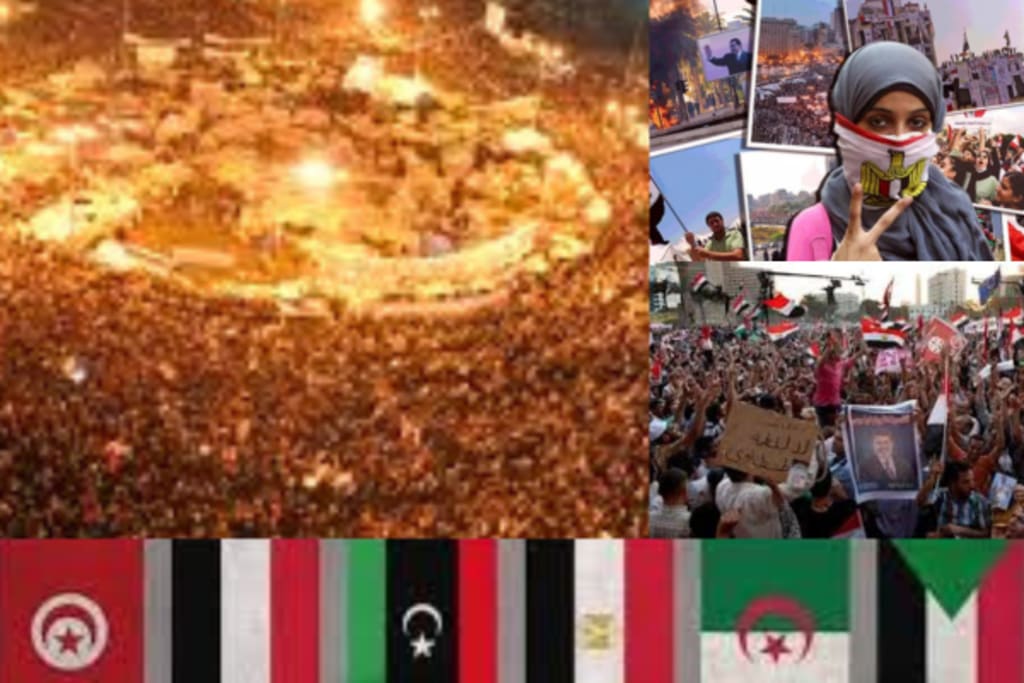
The young society has brought down the dictator in the face of a month of mass movement. It has built a country free of fascists. But what happened to the youth of Tunisia who led the Arab Spring? Unemployment and economic despair among educated youth, the rule of one dictatorship after another... Is the Arab Spring a revolution or an illusion? Watch the full video to find out.
Tunisia—a small country in North Africa. But in 2010, the fire of a movement spread from this country,
which shook the entire Arab world. The name of this movement—**Arab Spring**. It was not just a political uprising, it was the cry of a generation who wanted to say: We are human beings, our lives have value!
In today's discussion, we will find out—
What did the Arab Spring give to the youth of Tunisia? Did they get freedom, or just empty shells of promises?
Protests that burned in fire
It all started in December 2010.
A young man—Mohamed Bouazizi—a hawker, graduated from university, but did not have a job. He went out on the street every day to sell vegetables. The police regularly harassed him, demanded bribes, and abused him. One day, a female police officer took away his cart and insulted him. Helpless Bouazizi went to the government office and demanded justice, but no one listened.
Finally, he set himself on fire in protest. This incident spread instantly. People took to the streets, especially the young generation.
Their demands were-
We want work
We want respect
We want freedom of speech
This fire spread to countries like Egypt, Libya, Syria, Yemen, and Bahrain.
Thus was born the Arab Spring.
The fall of the dictator and the dream of freedom
Tunisia's long-time dictator Zine El Abidine Ben Ali, who had ruled the country for 23 years, fell in just one month.
Tunisians, especially the young, thought - this is the beginning of our new day! After that, a new constitution was written in the country one by one, democratic elections were held, freedom of speech was established, and many political parties were formed one by one.
The young thought that this was the first time we would be able to make our own decisions. This was the first time the state would listen to us.
The hard wall of reality
But the easier it is to dream, the harder it is to live in reality. Unemployment became the biggest problem in Tunisia. Educated young people did not have jobs, prices continued to rise, political parties were busy blaming each other... This is how the new Tunisia of the new young people continued.
According to the World Bank, youth unemployment in Tunisia has exceeded almost 35%. This rate is especially alarming in rural areas. Many young people are desperate and looking for a way to leave the country. They risk their lives to cross to Europe. And every year, countless young people drown in the sea. They say, “We got freedom, but we didn’t get a livelihood.”
A new crisis in the name of democracy
In 2021, the country’s President Kais Saied bypassed the constitution and suspended parliament and centralized all power in his own hands.
Many in Tunisia call it—an old dictatorship with a new face.
Political analysts say—democracy is not just about voting. It is: accountability, transparency, and economic justice, which are largely absent in Tunisia.
Where is the voice of the youth now?
The Arab Spring was a youth uprising, but today many of those young people are turning their backs on politics. They say—we fought, but we got nothing. Nevertheless, a new generation of young people is emerging—who are vocal on social media, who tell their own stories, who know how to break history, and who also want to rebuild it.
Now the question arises, what did the Arab Spring give us?
The answer to this question is not the same. Some say—it gave us freedom of speech. Some say—it was a source of unemployment and despair, while others say—it was an essential shock in history, after which the seeds of future change were sown.
Where do the young people of Tunisia stand today? Will they be able to dream anew? Or will they be trapped in the web of despair? These questions are relevant not only to the young people of Tunisia—but also to many countries of the world. Write in the comments—what do you think?
Was the Arab Spring successful? Or was it just an illusion of a revolution?
About the Creator
How I Learned That Aircraft Structures Are as Critical as Engines
When I first started studying aviation, I believed that engines and avionics defined an aircraft’s reliability. Over time, as I explored aerospace history and manufacturing records, I realized how incomplete that understanding was. Aircraft safety does not depend solely on thrust or navigation systems. It is deeply rooted in structural engineering, certified manufacturing, and the disciplined production of components that passengers never see.
By Beckett Dowhan5 days ago in History
Frames Through Time: Exploring a Love for Classic and Contemporary Film in Modern Culture
Movies hold a powerful place in everyday life. They entertain, teach, and inspire people across generations. Some viewers are drawn to old black-and-white films, while others prefer fast-paced modern movies. Many enjoy both. Classic and contemporary film exploration allows people to experience cinema as a living art form that grows without ever forgetting its roots. Exploring a love for classic and modern film helps viewers see how stories, emotions, and creativity connect across time. Film is a shared language. It crosses age, culture, and borders. When people watch movies from different eras, they discover that human feelings remain the same, even when styles change. This balance between tradition and innovation is what keeps cinema meaningful today.
By Matthew Carluccio3 days ago in History


Comments
There are no comments for this story
Be the first to respond and start the conversation.