
Who was the First Nun? Uncovering the Origins of Female Monasticism
Unveiling the Origins of Female Monasticism: Discover Who the First Nun Was and How She Shaped Religious History

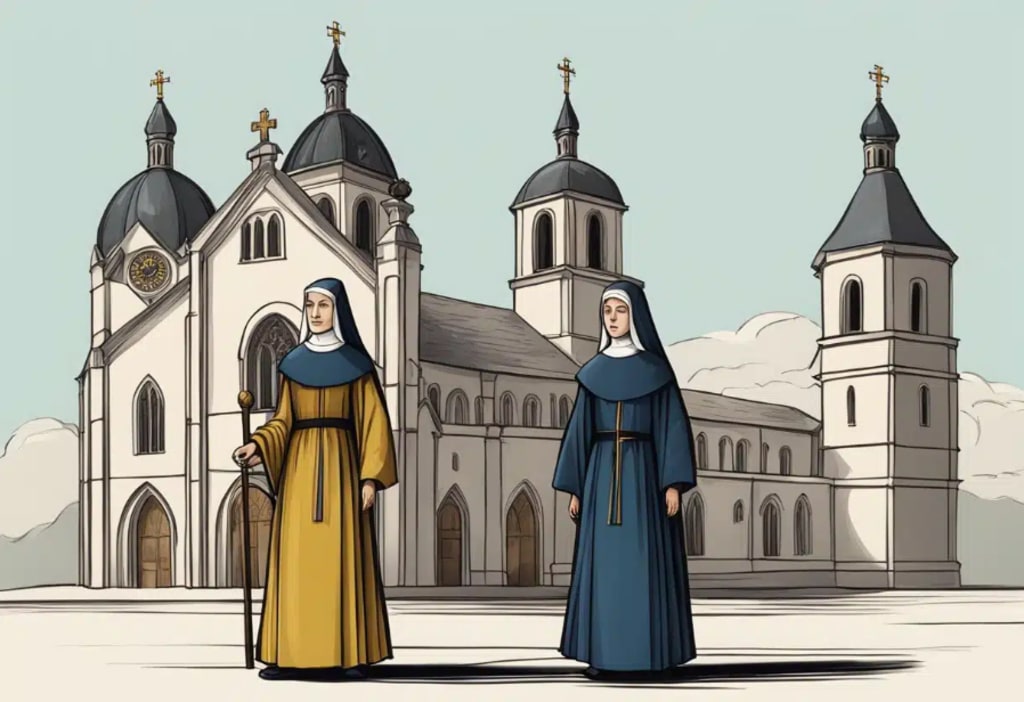
The concept of nuns, women dedicated to a religious life, has been central to many faith traditions for centuries. But have you ever wondered who was the first nun? This question takes us back in time to explore the origins of female monasticism, especially within Christianity. Although religious devotion by women existed in other forms in earlier civilizations, the figure of the first nun is closely tied to the rise of Christianity in the 3rd and 4th centuries.
The Origins of Monastic Life
Monasticism, a lifestyle of religious devotion often isolated from secular society, has its roots in early Christianity. Christian monks, beginning with St. Anthony the Great, retreated into the deserts of Egypt around the 3rd century to dedicate their lives to prayer, fasting, and manual labor. Female monasticism emerged not long after, offering women a way to pursue similar devotion.
Who Was the First Nun?
Many historians consider St. Scholastica to be the first nun in a formal Christian sense. Born around 480 AD, Scholastica was the twin sister of St. Benedict of Nursia, the father of Western monasticism. She founded a convent near Monte Cassino, Italy, following her brother’s Rule of Benedict, which became the standard for Western monastic life.
However, some argue that St. Mary of Egypt, a 4th-century ascetic, could be considered the first nun, as she gave up a sinful life for religious devotion and penance in the deserts of Egypt.
What Led to The Formation of Nuns?
The earliest nuns, or female monastics, sought to escape the societal constraints of marriage and family life, dedicating themselves to religious service. Christianity’s rapid spread in the Roman Empire saw women embracing vows of poverty, chastity, and obedience, much like their male counterparts.
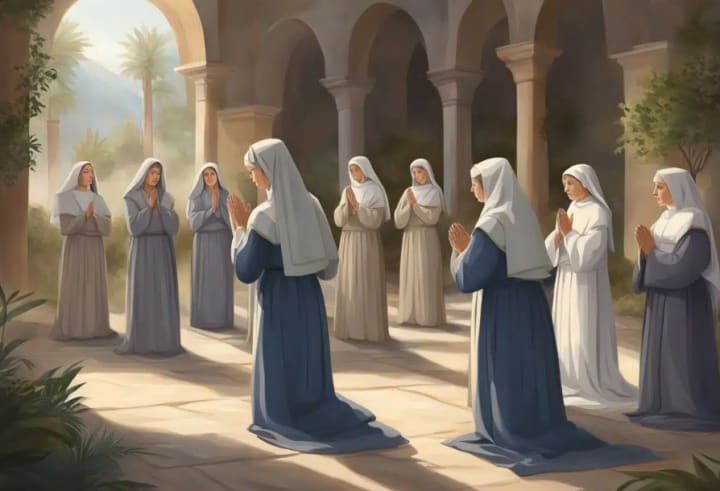
During this time, convents were established as safe havens for these women. These places allowed them to live communally while pursuing their spiritual goals. Over time, this led to the structured communities we now associate with nuns.
The Role of Nuns in Early Christianity
In the early Christian world, nuns played a crucial role in spreading the faith. They ran orphanages, hospitals, and other charitable institutions, often in tandem with male monastic orders. St. Scholastica, for example, organized the first convent of Benedictine nuns, helping women find spiritual fulfillment through a regulated life of devotion.
Another notable figure is St. Macrina the Younger, the sister of prominent theologians St. Basil the Great and St. Gregory of Nyssa, who founded a monastic community for women in the 4th century. She was known for her theological wisdom and spiritual leadership, making her an influential figure in early Christian monasticism.
St. Scholastica: The First Benedictine Nun
St. Scholastica is widely recognized as the first Benedictine nun, following the teachings and the Rule of St. Benedict, her twin brother. Her feast day, celebrated on February 10, commemorates her pivotal role in founding female monasticism in Western Christianity.
According to legend, Scholastica and Benedict would meet once a year to discuss spiritual matters. On one such occasion, Scholastica prayed for a storm to prevent Benedict from leaving, desiring more time for spiritual conversation. Her prayer was answered, showcasing her deep connection to God.
The Legacy of Early Nuns
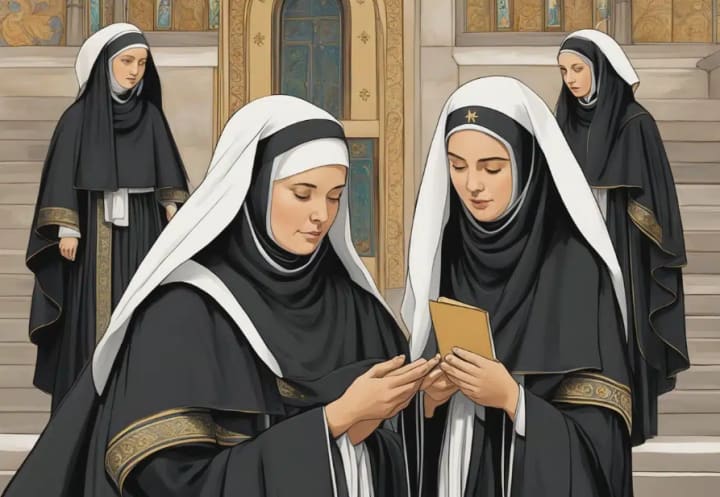
The legacy of the first nuns like St. Scholastica and St. Mary of Egypt paved the way for the spread of female religious communities throughout Europe. By the Middle Ages, convents became vital centers for education, healthcare, and religious instruction. Women who joined these communities sought both spiritual and intellectual fulfillment, some becoming leading figures in Christian theology and mysticism.
Conclusion
While many women throughout history have lived lives of spiritual devotion, figures like St. Scholastica, St. Mary of Egypt, and St. Macrina the Younger are remembered as the pioneering nuns of Christian monasticism. Their dedication not only shaped the role of women in the church but also laid the foundations for countless religious communities across the globe. Today, nuns continue their work of service, prayer, and contemplation, standing on the shoulders of these remarkable women who paved the way.
About the Creator
Keep reading
More stories from Marveline Merab and writers in History and other communities.
The True Story Behind Disney’s Pocahontas: A Historical Analysis
Introduction: The Real Pocahontas Contrary to the romanticized portrayal in Disney's animated film, the real story of Pocahontas is far from a fairy tale. Born Matoaka and later known as Amonute, Pocahontas's life was marked by tragedy rather than romance. She was one of the early Missing and Murdered Indigenous Women (MMIW), whose story has been overshadowed by myths and misrepresentations.
By Marveline Merababout a year ago in History
Nanchang: A Modern Symbol of China’s Naval Power
In recent years, the world has closely watched the rapid modernization of the Chinese People’s Liberation Army Navy (PLA Navy). One of the most important symbols of this transformation is the Nanchang (Hull 101), China’s first Type 055 guided-missile destroyer. Commissioned on 12 January 2020, Nanchang represents a major leap in naval technology and capability. As it completes six years of active service, the ship stands as a clear example of how China’s navy has moved into a new era of advanced maritime power.
By sehzeen fatima7 days ago in History
Where the Pulse Ends
© 2026 Sai Marie Johnson The humidity in the city didn’t just hang; it leaned. It was a thick, stagnant soup of diesel exhaust, ozone, and the metallic tang of blood that drifted from the "Compliance Zones." Joe sat in his rusted sedan, his hands resting loosely on the steering wheel. He wasn't gripping it. He wasn't angry. Anger was a chemical spike, a biological inefficiency. Joe was simply... focused.
By Sai Marie Johnson3 days ago in History
Ludacris and Nelly draw backlash over bookings at MAGA-coded music festival
Ludacris and Nelly headlining a mostly right-wing event is good for them. It’s also great for the genre of hip hop. The two rap veterans have showcased their talents on other stages. Why can’t they perform for mostly MAGA folks and grab that bag?
By Skyler Saunders5 days ago in Beat




Comments (1)
Fascinating subject matter.