
Whispers of the Unseen: The Enigmatic World of Jinn in Arabic Culture
From Ancient Deserts to Modern Minds: The Timeless Allure of the Jinn in Arab Folklore and Faith
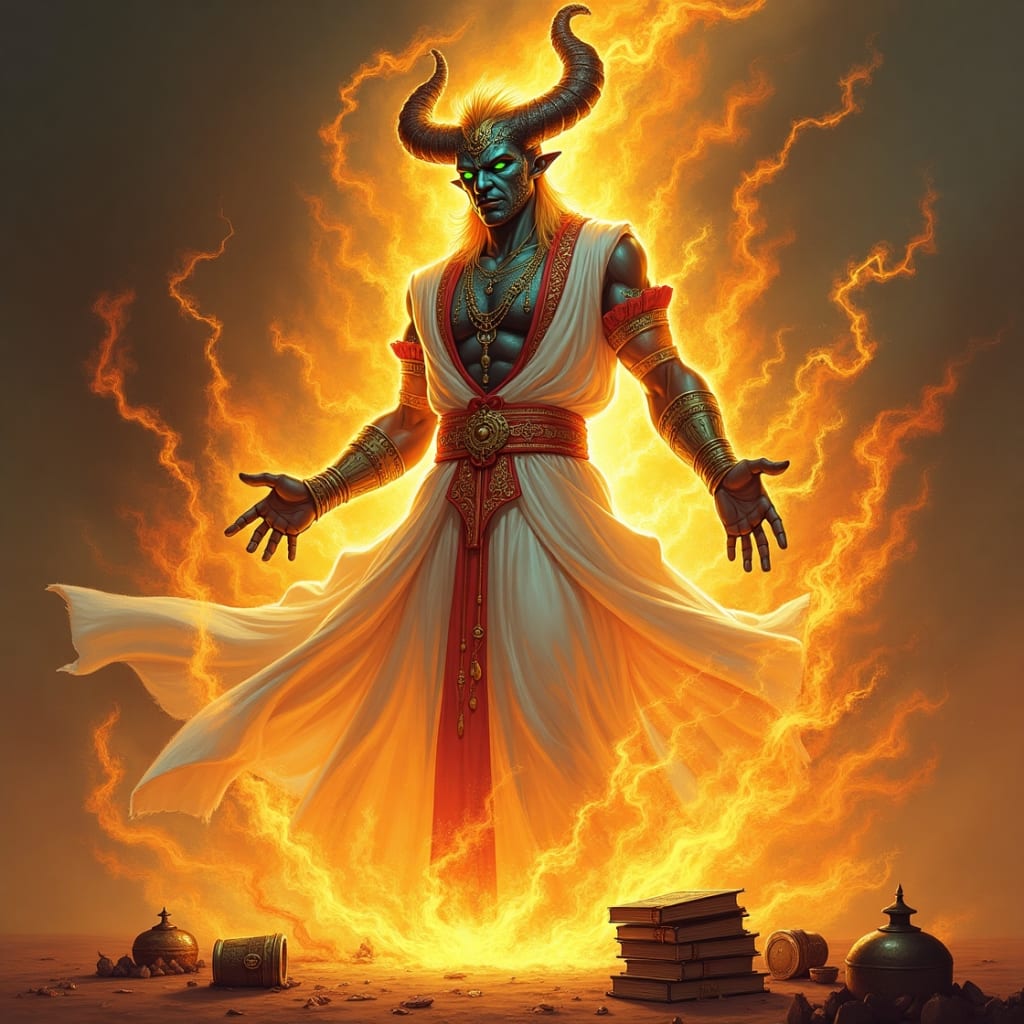
In the heart of the Arabian desert, where the golden sands stretch endlessly and the stars illuminate the night sky, there exists a world unseen by human eyes. This is the realm of the Jinn, mysterious beings woven into the fabric of Arabic culture, folklore, and religion. Their stories, passed down through generations, are as vast and intricate as the desert itself. To understand the Jinn is to delve into a world where the lines between reality and myth blur, and where the unseen forces of nature and the supernatural coexist.
Origins of the Jinn: Creatures of Fire and Smoke
According to Islamic tradition, the Jinn were created by Allah from a "smokeless flame of fire" long before humans were fashioned from clay. Unlike angels, who are made of light and are bound to obey Allah's commands, the Jinn possess free will. They can choose to be good or evil, believers or disbelievers. This duality makes them both fascinating and fearsome.
The Quran mentions the Jinn in several verses, most notably in Surah AlJinn, where they are described as beings who inhabit the earth and interact with humans in ways that are often mysterious and unpredictable. They are said to live in parallel to humanity, sharing the same world but remaining largely invisible.
The Many Faces of the Jinn
In Arabic folklore, the Jinn are not a monolithic entity but a diverse group with distinct personalities, abilities, and roles. Some are benevolent, offering protection and wisdom to those who earn their favor. Others are malevolent, causing harm and chaos to those who cross their path.
1. The Marid: Known as the most powerful type of Jinn, the Marid are often associated with water and the oceans. They are said to be rebellious and difficult to control, but they can grant immense power to those who manage to summon them.
2. The Ifrit: These Jinn are notorious for their cunning and malevolence. They are often depicted as fiery spirits that thrive on chaos and destruction. In some tales, they are bound to serve sorcerers who can command them.
3. The Ghoul: A shapeshifting Jinn that lurks in deserts and graveyards, the Ghoul preys on travelers and feeds on the dead. Its ability to mimic human voices and appearances makes it one of the most feared Jinn.
4. The Sila: These Jinn are often portrayed as guardians of nature. They are neither entirely good nor evil but are deeply connected to the earth and its creatures.
Jinn in Everyday Life: Beliefs and Practices
The belief in Jinn is deeply ingrained in Arabic culture, influencing daily life, traditions, and even language. Many people take precautions to avoid attracting the attention of malevolent Jinn. For example, it is common to say "Bismillah" (In the name of Allah) before entering a dark room or starting a meal, as it is believed to ward off evil spirits.
In some rural areas, people avoid building homes on land believed to be inhabited by Jinn. If someone falls ill or experiences unexplained misfortune, it is often attributed to the influence of Jinn. In such cases, a Raqui (a spiritual healer) may be called upon to perform rituals or recite Quranic verses to drive away the malevolent spirits.
Jinn in Literature and Art
The Jinn have long been a source of inspiration for Arabic literature and art. One of the most famous literary works featuring Jinn is "One Thousand and One Nights" (Arabian Nights). In these tales, Jinn are often depicted as powerful beings who can grant wishes or exact revenge. The story of Aladdin and the Magic Lamp is a prime example, where a Jinn (or Genie) plays a central role in the protagonist's journey.
In modern Arabic literature, the Jinn continue to captivate readers. Authors like Naguib Mahfouz and Taha Hussein have explored the theme of Jinn in their works, blending folklore with contemporary issues.
Jinn and Religion: A Complex Relationship
In Islam, the Jinn are considered part of Allah's creation, and their existence is acknowledged in the Quran. However, their role is often misunderstood. While some view them as purely mythical, others see them as real beings with the potential to influence human lives.
The Quran tells the story of Iblis, a Jinn who refused to bow to Adam and was cast out of paradise. Iblis, also known as Shaytan (Satan), is considered the leader of the evil Jinn and the ultimate deceiver of humanity. This story serves as a reminder of the constant struggle between good and evil, both within and outside the human realm.
Encounters with the Jinn: Tales from the Desert
The desert, with its vast emptiness and eerie silence, is often seen as the domain of the Jinn. Many Bedouin tribes have stories of encounters with these mysterious beings. One such tale tells of a traveler who lost his way in the desert and was guided to safety by a Jinn in the form of a glowing light. Another story warns of a Jinn who lures travelers into the depths of the desert, never to be seen again.
These stories, while often dismissed as mere folklore, reflect the deep connection between the Arab people and their environment. The desert, with its harsh beauty and hidden dangers, is a fitting metaphor for the Jinn—both aweinspiring and terrifying.
The Jinn in Modern Times
In today's world, the belief in Jinn persists, albeit in different forms. While some view them as relics of a bygone era, others continue to see them as a living reality. In some parts of the Arab world, Jinn are blamed for everything from mental illness to technological malfunctions.
At the same time, the Jinn have found a place in popular culture. They appear in movies, TV shows, and video games, often as fantastical creatures with magical powers. While these portrayals may lack the depth and nuance of traditional folklore, they keep the legend of the Jinn alive for new generations.
Conclusion: The Enduring Mystery of the Jinn
The Jinn are more than just mythical creatures; they are a reflection of the human imagination and the mysteries of the natural world. Whether seen as benevolent guides, malevolent tricksters, or something in between, they continue to captivate and intrigue. In the whispers of the wind, the rustling of the trees, and the shadows of the night, the Jinn remain everpresent, a testament to the enduring power of storytelling and the unseen forces that shape our world.
This story explores the rich and enigmatic world of the Jinn, blending folklore, religion, and cultural practices to create a vivid tapestry of their role in Arabic culture.
About the Creator
Reader insights
Nice work
Very well written. Keep up the good work!
Top insight
Heartfelt and relatable
The story invoked strong personal emotions
Keep reading
More stories from Mosap Homa and writers in History and other communities.
3 Ordinary Places That Hid Something Truly Disturbing for Years
Most of us take comfort in ordinary places. Schools feel safe. Homes feel familiar. Workplaces feel predictable. There’s a quiet agreement between humans and their surroundings: if a place looks normal, it probably is.
By Enoch Saginia day ago in History
Stanislav Kondrashov’s Oligarch Series: Renaissance Merchants and Their Support for the Arts
In his *Oligarch Series*, **Stanislav Kondrashov** examines how wealth has shaped political, economic, and cultural systems across history. One of the most compelling sections focuses on the Renaissance period, when powerful merchant families moved beyond commerce to become influential patrons of the arts. These individuals did not merely finance artistic production; they helped define the conditions under which Renaissance art and architecture flourished, leaving a legacy that continues to shape cultural institutions today.
By Stanislav Kondrashov4 days ago in History




Comments
There are no comments for this story
Be the first to respond and start the conversation.