
Where to See the Lyrid Meteor Shower 2025:
A Complete Guide with Top Viewing Tips

Where to See the Lyrid Meteor Shower 2025:
A Complete Guide with Top Viewing Tips
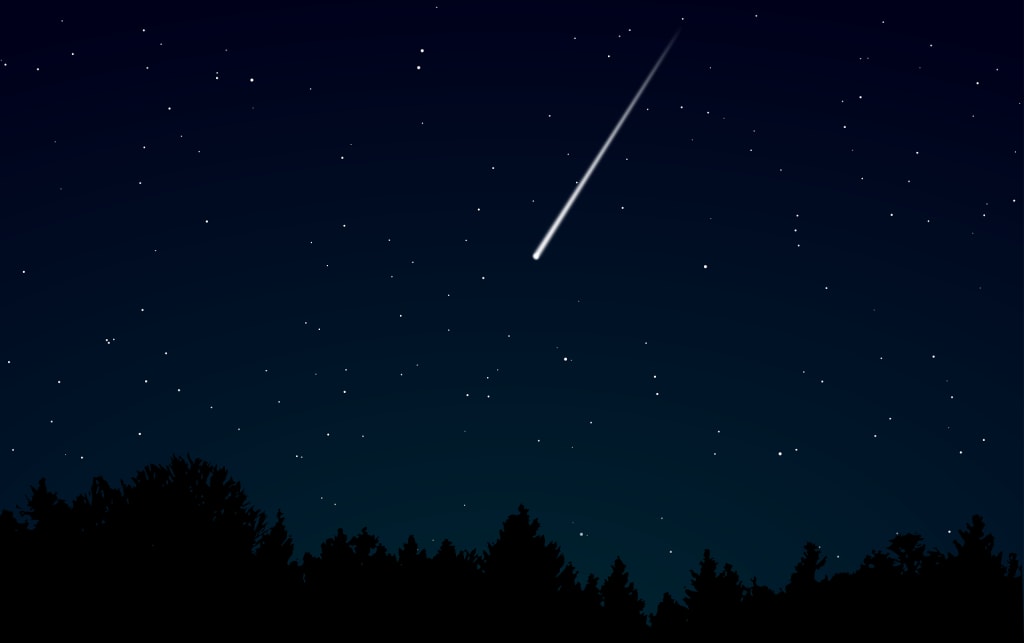
Every year in April, stargazers around the world turn their eyes toward the night sky to witness one of nature's oldest and most enchanting spectacles — the Lyrid meteor shower. With records dating back over 2,700 years, the Lyrids are among the oldest known meteor showers. In 2025, this dazzling event will grace our skies from April 15 to April 29, with peak activity expected on the night of April 22 through the early morning of April 23.
This guide covers everything you need to know to fully enjoy the Lyrid meteor shower — from the best times and places to watch, to viewing tips, fun facts, and essential gear for a magical night under the stars.
When to Watch the Lyrid Meteor Shower in 2025
The Lyrid meteor shower will be visible for nearly two weeks, but it reaches its most active period — or peak — on April 22 night to April 23 pre-dawn. During this window, skywatchers can expect to see 10 to 20 meteors per hour, depending on sky conditions and light pollution. Occasionally, meteor rates can surge dramatically, with "outbursts" producing up to 100 meteors per hour — although this is rare and unpredictable.
Active Dates: April 15 to April 29, 2025
Peak Time: April 22 (after midnight) to early morning of April 23
Best Viewing Hours: Between 2:00 AM and 4:00 AM, when the radiant point is highest in the sky and the surroundings are darkest.
Make sure to check the moon phase as well. In 2025, the moon will be in a waning crescent phase, meaning its light will be minimal — perfect for observing faint meteors in a dark sky.
Where to Watch the Lyrids in Bangladesh
For the best viewing experience, it's essential to escape urban areas where city lights obscure the stars. Here are a few top destinations in Bangladesh where you can enjoy an unobstructed view of the night sky:
Sajek Valley (Rangamati): This elevated hill area is far from city lights and offers crystal-clear skies. The clean air and open surroundings make it ideal for stargazing.
Saint Martin’s Island: Being a remote island, Saint Martin’s provides a panoramic oceanic view with almost zero light pollution. It’s a favorite among astrophotographers.
Sundarbans Forest Area: The natural wilderness and limited infrastructure result in incredibly dark skies, perfect for spotting even the faintest meteors.
Kuakata Sea Beach: Known for its wide, open horizon, Kuakata is a great place to witness meteors streak across the entire sky from east to west.
Pro tip: If you can’t travel far, try finding a local rural area or hilltop close to your city where streetlights are minimal and the sky is open.
How to Prepare for the Best Meteor Shower Experience
Watching a meteor shower doesn’t require expensive equipment, but a little preparation can enhance your experience. Here’s how to make the most of it:
Skip the telescope: Meteor showers are best enjoyed with the naked eye because meteors move quickly and across wide areas of the sky.
Let your eyes adjust: It takes about 15–30 minutes for your eyes to fully adapt to the darkness. Avoid looking at your phone or any bright lights.
Bring a blanket or reclining chair: You’ll be looking up for a long time, so make yourself comfortable.
Look toward the northeast: The radiant point of the Lyrids is near the constellation Lyra, which rises in the northeast around midnight. Still, meteors can appear from any direction.
Check the weather forecast: Cloud cover can ruin the view. Choose a clear night for your meteor-watching plan.
Fun and Fascinating Facts About the Lyrids
Ancient history: The Lyrids were first observed in 687 BCE by Chinese astronomers, making it one of the oldest recorded meteor showers.
Comet connection: These meteors are fragments of Comet C/1861 G1 (Thatcher), a long-period comet that takes about 415 years to orbit the Sun.
High speed: Lyrid meteors zip through the atmosphere at a speed of 49 km/s (about 110,000 mph), often producing bright, long trails.
Occasional fireballs: Some Lyrids can become so bright they’re classified as fireballs — intense, glowing meteors that light up the entire sky.
No fixed rate: Unlike the Perseids or Geminids, the Lyrids don’t always follow a consistent pattern. Some years are more active than others.
Enhance Your Experience with Astronomy Apps
There are several free and paid apps available that can help you locate constellations and track meteor activity:
Sky Map (Google): Use your phone to identify stars and planets by pointing at the sky.
Stellarium: A powerful stargazing app that shows the real-time position of celestial objects.
Star Walk 2: Offers a guided experience with detailed meteor shower info and star tracking.
These tools are especially helpful for beginners who want to locate Lyra or just learn more about the night sky while waiting for meteors.
Conclusion: A Night to Remember
The Lyrid meteor shower is more than just a celestial show — it's a reminder of how small we are in the vast universe and how beautiful our natural world can be. In 2025, with favorable conditions and minimal moonlight, this could be one of the best years to experience the Lyrids in recent memory.
Whether you're an amateur astronomer or simply looking for a peaceful night under the stars, the Lyrid meteor shower is worth staying up for. Grab a blanket, invite your loved ones, and find a dark, quiet spot. Let the sky light up your night — and maybe even inspire your dreams.
Let me know if you'd like this article turned into a YouTube script, blog post layout, or a social media reel caption!
Thank You.
About the Creator
Mamunur Rashid
I love writing stories, and I also love learning about scientific and technological history.
Keep reading
More stories from Mamunur Rashid and writers in History and other communities.
New Analysis Casts Doubt on 'Biosignatures' Found on Planet K2-18b
New Analysis Casts Doubt on 'Biosignatures' Found on Planet K2-18b Introduction The quest to discover life beyond Earth has taken humanity on an exhilarating journey through the cosmos. Among the myriad of exoplanets identified, K2-18b has emerged as a particularly intriguing candidate. Located approximately 124 light-years away in the constellation Leo, this exoplanet has captivated scientists and the public alike with the potential detection of biosignature gases in its atmosphere. However, recent analyses have cast doubt on these findings, prompting a reevaluation of what we know about this distant world.
By Mamunur Rashid9 months ago in History
The Epic of 1917
Before discussing the cannons of Mărăști, one must understand the deplorable state of the country at the beginning of 1917. Following the disastrous campaign of 1916, two-thirds of Romanian territory, including Bucharest, was under German and Austro-Hungarian occupation. The Government, the Royal Family, and the remnants of the army had retreated to Moldavia.Moldavia had become a vast refugee camp. Famine, the biting cold, and typhus were ravaging the population, killing more people than the enemy's bullets. However, amidst this apocalyptic landscape, a miracle occurred: the reorganization of the army. Under the guidance of the French Military Mission led by General Henri Berthelot, the Romanian soldier was rearmed, trained in modern warfare tactics, and, most importantly, restored to his dignity. King Ferdinand’s promises regarding land reform and universal suffrage transformed peasants into soldiers ready for the ultimate sacrifice.
By alin butuc6 days ago in History
The Amber Room: History, Glory, and the Greatest Lost Treasure of Europe
Origins of the Amber Room The story of the Amber Room begins in Prussia (modern-day Germany) in the early 1700s. The room was commissioned in 1701 by King Frederick I of Prussia as part of a grand plan to decorate his royal palace in Berlin. The design was entrusted to the court architect Andreas Schlüter, while the intricate amber craftsmanship was executed by master amber artisans Gottfried Wolfram, Ernst Schacht, and Gottfried Turau.
By Say the truth 2 days ago in History
TUS NUA - ch 49
TUS NUA – ch 49 New Beginnings – Mia and Midnight (*)(*)(*) As Mia spoke on the phone to Ali’s sister, Ellen, Finola slipped quietly away and walked to the stream behind Tus Nua. Carefully, she put a block on her family so no one could know what she was about to do.
By Margaret Brennan5 days ago in Fiction




Comments
There are no comments for this story
Be the first to respond and start the conversation.