
Where the Wheat Still Grows
Lantern light and violets

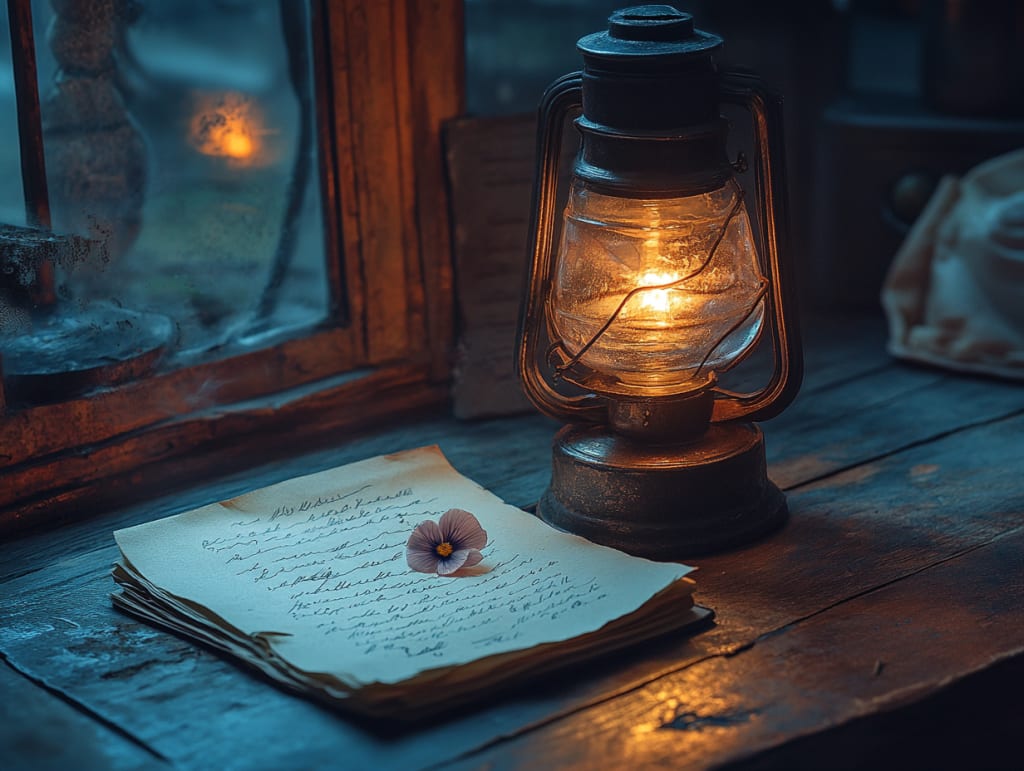
April 14, 1864
Farmstead near Winchester, Virginia
My Dearest Margaret,
I write to you in the dim light of early morning, before the sun has stretched its arms over the hills. The fields are quiet, save for the rustle of the wheat that has begun to green again after the long winter. It is a comfort to me, this steady cycle of the earth, though I find no such certainty in the affairs of men.
Yesterday, a rider brought word that the army has moved closer. I know you will worry, but I tell you now, there is no cause for fear. They have taken horses, but not my plow, and as long as a man has his land, he can bear the rest. I have hidden what I could, tucked away grain and tools where no soldier will think to look.
Margaret, I miss the way you stand at the door in the evening, your hands folded in that quiet way of yours. I miss the way you turn, just so, when I call your name. The house is not the same without you. The boards creak louder, the walls feel thinner. I find myself speaking aloud sometimes, as if you might answer from the next room.
I will not ask you to come home before it is safe, but know that every day I long for it. When I lie down at night, I press my palm flat against the pillow where your head used to rest, as if somehow, it might still hold the warmth of you.
Do not let your father work you too hard. I know he will try. Tell him I will pay for every stitch of cloth and every morsel of food you have taken, though you and I both know I would rather give my last dollar to see you eat than to any man in uniform.
I send this with James, who travels north for supplies. He will wait for your reply, but if you have no words, send only a pressed violet. I will understand.
Yours always,
Daniel
April 28, 1864
Baltimore, Maryland
My Daniel,
Your letter arrived in the middle of a rainstorm, slipped beneath the door by a boy who looked half-drowned. I dried it by the fire before I dared open it, and when I did, the scent of the farm—of hay and earth and all that I love—rose from the paper.
Do not tell me not to worry. I have seen what war does to the land, to the men who work it. I wake in the night, heart pounding, thinking of you. Sometimes I dream I am home again, standing at the edge of the field, watching you walk toward me. I can see the dust rise at your feet. I can hear the lowing of the cattle. Then I wake, and the city presses in around me like a hand closing over my throat.
My father will not hear of me returning until this is over. He says no woman should set foot in Virginia until the fighting is done, though I know what he means is that he will not lose another child to it. But Daniel, I am not afraid. If I could slip away unnoticed, I would be on my way before morning.
James asked me for an answer, and so I give you this: I love you. I love you in the way the river bends toward the sea, in the way the sun leans toward the wheat, pulling it up, making it golden. I love you as I did when we first met, when I stole away from Sunday service to walk with you past the old stone mill.
I send this with a violet tucked inside, but not because I have no words. Let it remind you of the path that leads home.
Margaret
May 20, 1864
Farmstead near Winchester, Virginia
Margaret,
I received your letter two nights ago, read it by lantern light until the wick burned low. The violet you sent has dried and curled at the edges, but I keep it in my pocket, running my fingers over it when the house is too quiet.
The army came again. This time they wanted more than horses. They took what they pleased and left ruin in their wake. I have patched what I could, but the barn is gone, and the cattle that remained have been scattered. I could search for them, but truth be told, I have little strength left for chasing ghosts.
James will not return to Baltimore for some time. He says the roads are watched too closely. I do not know when this will reach you, but if it does, know that I am well enough. I spend my days in the fields as best I can, trying to coax something from the ground that has seen too much death.
I think of you, of that day at the old stone mill. You wore blue, the ribbon in your hair coming loose in the wind. If I close my eyes, I can still see the way you laughed when you caught me staring.
Margaret, if the roads were open, if I could, I would come to you. I would sit with you in the quiet of the evening, watching the lamplight flicker against the walls. I would press my palm to yours and remind you of the days before the war, before the world turned on its head.
But for now, I am here, and you are there. Hold onto that violet, as I hold onto mine.
Daniel
June 4, 1864
Baltimore, Maryland
Daniel,
There is no easy way to say this.
James has returned. He did not bring your letter, only his hat in his hands and sorrow on his face. He said the words I cannot write, the words I will not let live on this page. I will not believe them.
I will wait.
I will wait until the roads are clear. I will wait until the earth turns soft again. I will walk the path past the stone mill, wearing blue, and if you are there, I will know you have come home.
If you are not, I will still wait.
Margaret
About the Creator
Diane Foster
I’m a professional writer, proofreader, and all-round online entrepreneur, UK. I’m married to a rock star who had his long-awaited liver transplant in August 2025.
When not working, you’ll find me with a glass of wine, immersed in poetry.
Keep reading
More stories from Diane Foster and writers in History and other communities.
The Girl Who Pointed
They no longer speak my name aloud in the village, not in the way they once did when the court echoed with my words, when they said I was brave and pure, a child with the clarity of angels. Back then, it rang: "Jennet Device, stand forward. Tell the truth, for the Lord watches and the guilty must not escape judgment." And so I stood. I was nine years old. I stood, I spoke, and I told them everything they wanted to hear. God forgive me, I gave them exactly that.
By Diane Foster8 months ago in History
Why August Wilson’s Joe Turner’s Come and Gone Feels Urgent on Today’s Broadway Stage by NWO Sparrow
Why August Wilson’s vision of identity and movement resonates in today’s political climate by NWO Sparrow Joe Turner’s Come and Gone returns with urgency, reflection, and cultural weight
By NWO SPARROWabout 16 hours ago in History
World War I
The morning fog lay thick over the trenches of northern France, clinging to the earth as if it too feared what was about to happen. Private Thomas Hale pulled his coat tighter around himself, though it did little to stop the cold from seeping into his bones. He had been in the trenches for six months, yet the damp smell of mud, smoke, and fear still felt unfamiliar, like a nightmare he could not wake from.
By Maavia tahir5 days ago in History


Comments (2)
Oh so very beautiful, and sad. The best of them end in tragedy...Why.
Oh, so very sad