
What Was The Silk Road? Ancient Secrets of East-West Trade Revealed
The Silk Road Saga: Threads of History and Exchange
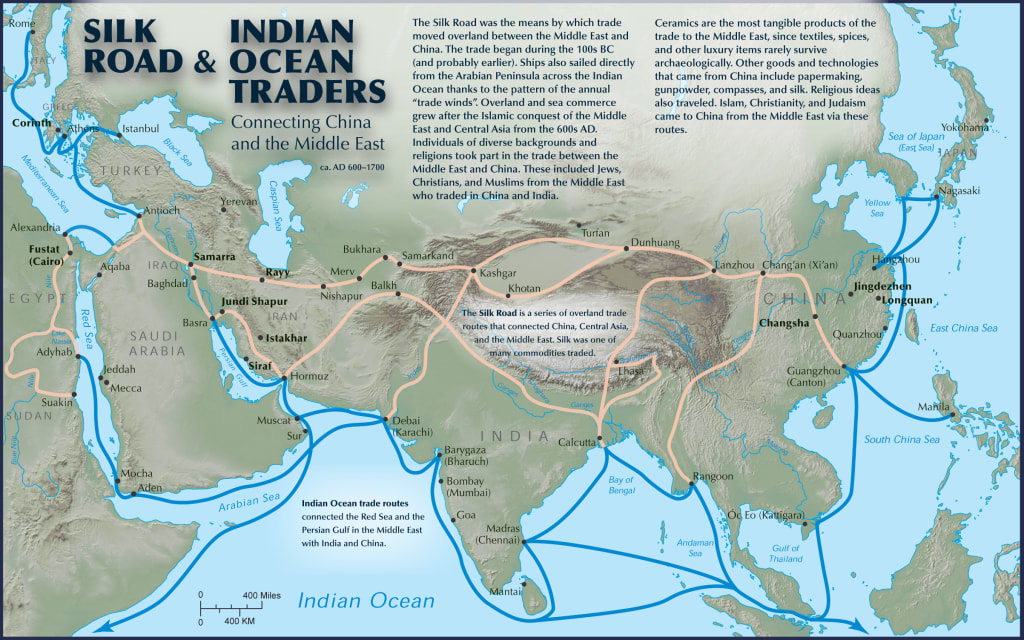
The Silk Road was one of history’s greatest trade networks. It stretched an incredible 6,437 kilometers across Asia and thrived for more than 1,500 years. This wasn’t just a single path — it was an intricate web of routes that helped shape human civilization.
This massive network thrived from 206 B.C.E. to 220 C.E. and reached its peak during 618 to 907 C.E. The earliest evidence of silk trading dates back to around 500 B.C.E. in Central Asia. These routes made trade easier and sparked an amazing cultural exchange between regions. Chinese silk makers kept their production methods secret. Today, about 10 million people in China carry on this tradition and produce nearly half of the world’s raw silk.
Let’s get into the fascinating history of these ancient trade routes. We’ll discover the precious goods that merchants carried across continents and see how this network transformed commerce, culture, and created smooth connections between East and West.
Origins of the Ancient Silk Road
A remarkable network of trade routes came to life through imperial ambition and geographic innovation. The story begins in 138 BCE when the Han Dynasty started exploring westward22.
Early Trade Between East and West
The Persian Royal Road paved the way for the first trade connections and later became a major artery of the Silk Road23. These 2000-year-old routes ran from Susa in north Persia to the Mediterranean Sea. The routes had innovative postal stations with fresh horses ready to deliver messages quickly23. The Romans, Parthians, and Kushans played active roles in these early trading networks22.
Han Dynasty’s Role in Establishing Routes
Emperor Wu of Han turned these scattered pathways into a well-connected network. He sent his emissary Zhang Qian westward in 138 BCE, which changed the course of trade history22. The Xiongnu captured and imprisoned Zhang Qian for thirteen years. After his escape and return to China, he gave an explanation of western territories that proved invaluable3. The emperor launched another mission in 119 BCE and built the first routes from China to Central Asia3.
Key Geographic Challenges and Solutions
The network faced tough geographic obstacles across Eurasia. The routes covered:
- Mountain ranges storing vital snow and glaciers
- Big stretches of desert that needed careful water management
- Rolling grasslands where nomadic communities lived
- River valleys that supported agricultural settlements24
Ancient traders came up with clever solutions to these challenges. They built the innovative karez system of underground channels that moved mountain snowmelt dozens of kilometers into barren deserts24. Merchants planned their trips around seasonal changes and set up rest stops near water sources24.
The routes’ geography needed careful planning since travelers could only move between locations where water was available and terrain was accessible24. Strong points appeared along valleys between steep mountains. These points controlled both communication and access to water sources24. Pre-modern traders showed amazing resilience as they overcame these environmental challenges24.
The Golden Age of Silk Road Trade
Four powerful empires dominated the Eurasian landmass during the first century BCE. Their control created new opportunities to trade and exchange cultures4.
Peak Trading Periods (50 BCE-250 CE)
The Silk Road trade reached its greatest heights between 50 BCE and 250 CE. This golden age began when the Han Chinese reached out to their European neighbors in the first century BCE5. Augustus’s rise to power in Rome happened during this time. His reign ended a century of civil war and brought peace that boosted trade significantly5.
Major Trading Cities and Hubs
The trade network’s backbone consisted of strategically placed trading posts. These remarkable cities stood along the routes:
- Chang’an (modern Xi’an) — A bustling metropolis with over a million people and two main markets6
- Dunhuang — A vital commercial and military center6
- Samarkand — Ibn Battuta praised it in 1333 as “one of the greatest and finest of cities”7
- Merv — The world’s largest city at its peak with over 500,000 people7
Role of Different Empires
The golden age of trade took shape under four major empires. China’s Han dynasty exported precious goods, especially silk. This commodity became so valuable that people used it as currency between 300 and 1000 CE4. The Kushan Empire built strong relationships with Romans, Parthians, Chinese, Indians, and steppe nomads8.
The Parthian Empire grew rich from controlling transit trade and maintaining a powerful cavalry9. Roman involvement in trade expanded after Emperor Trajan brought the Nabateans into his empire in 105 CE. This move strengthened Rome’s grip on the western routes9.
Trade brought changes way beyond the reach and influence of commerce. People exchanged technologies, medicine, plants, music, and fashion freely between East and West4. Merchants carried goods in both directions. Ammonium chloride, paper, silver, gold, and glassware moved east. Bronze mirrors, metal goods, and paper traveled west4. More than 100 ships sailed to India yearly during the first and second centuries. They carried Mediterranean goods and returned with exotic treasures9.
What Was Traded on the Silk Road?
Trade along the ancient routes included much more than just silk. Merchants transported an amazing variety of goods that transformed civilizations across continents.
Precious Commodities and Luxury Goods
Silk remained the most prized commodity because it was lightweight and valuable10. Chinese merchants traded this precious fabric for quality horses from the Mongolian steppes and Tibetan plateau11.
Beyond silk, traders transported:
- Jade from ancient Iranian Kingdom of Khotan11
- Glassware from Rome, found in burial mounds across China, Korea, and Thailand11
- Precious metals including gold, silver, and copper from Central Asia12
- Furs from Siberian trappers, especially fox, sable, mink, and beaver pelts11
- Technology and Innovation Exchange
Paper production, a Chinese invention from the 2nd century BC, reached Samarkand by the 8th century13. This revolutionary technology spread westward through Egypt and North Africa, until it finally reached Spain13.
Water management systems showed the technological collaboration between Ancient Egyptians, Romans, and Sasanians10. The development of sophisticated irrigation proved vital for agricultural advancement in Central Asia’s arid regions10.
Cultural and Religious Items
Religious artifacts and texts moved extensively between diverse communities and promoted spiritual exchange. Buddhist merchants built temples along their routes, while Christian traders created shrines to maintain their faith during long trips14.
Musical instruments bridged cultural boundaries and enriched artistic traditions. Persian reed instruments, such as the mizmar, shaped the development of European oboes and clarinets2. Indian string instruments and Persian lutes made their way to Japan, and these remain preserved in the 8th-century Shôsôin collection2.
Agricultural knowledge spread naturally, bringing new crops to different regions. China received grapes and cucumbers, while western regions gained access to rice, pears, and roses10. These exchanges changed dietary habits and farming practices across continents completely.
Metalworking techniques flourished under various civilizations. The Sogdians brought chain mail armor to China in the 7th century CE10. Nomadic peoples of the Eurasian Steppe shared their expertise in crafting precious jewelry and incorporated animal motifs into their designs10.
Maritime Silk Routes
Maritime trade routes played a vital role in the ancient silk network that stretched across the oceans from East Asia to Europe. These sea paths started to thrive by the 2nd century BCE and maintained their importance until the 15th century CE15.
Development of Sea Trading Networks
Southeast Asian Austronesian sailors pioneered the maritime network with their long-distance ocean trading vessels15. The routes first connected the Mediterranean basin and India during the Roman Era. Between the 1st and 6th centuries, these paths grew substantially16. Ships made their way between the Red Sea and India by following summer monsoon winds, which created vital trading connections.
Persian and Arab traders with their dhows made the network more sophisticated. Tamil merchants dominated the Arabian Sea routes during this time15. Ships could carry more cargo than land caravans, which made these maritime paths increasingly valuable. The main route extended from Guangzhou through Southeast Asia and the Indian Ocean to Alexandria by the 9th century16.
Major Ports and Trading Posts
Several ports became thriving trading hubs:
- Quanzhou — One of China’s largest eastern ports during Song dynasty
- Zanzibar — A wealthy center for goods exchange
- Muscat — Major hub for Arabian Peninsula trade
- Goa — Significant Indian trading post
- Alexandria — Primary Mediterranean connection point3
Quanzhou welcomed sailors and merchants from various cultures at its peak. The city became one of the four major Chinese ports under the Tang dynasty (618–907 AD)17. This growth led to its status as eastern China’s largest port during the Song dynasty.
Challenges of Ocean Travel
Maritime routes offered greater cargo capacity, but sailors faced unique dangers. Better sailing technology and ship-building knowledge helped create safer sea travel throughout the Middle Ages3. The lack of drinking water posed one of the biggest threats to sailors. This led to ports being built at strategic locations for resupply3.
Weather patterns had a big impact on navigation, as seen in the Indian Ocean. Merchants planned their trips around monsoon winds. They traveled from the Red Sea to India in summer with southwestern winds and returned in winter18. Pirates remained a constant threat, as their attention was drawn to valuable cargo moving across these maritime routes3.
Decline of the Ancient Trade Networks
Political fragmentation spelled doom for the ancient trade network. The bustling routes faced many challenges that ended up causing their downfall.
Impact of Political Changes
The Ottoman Empire’s decision to close trade with China in 1453 hit the ancient network hard19. We closed the gaps between East and West, which broke down trading patterns that had lasted for centuries. Merchants couldn’t travel safely anymore because of the political chaos along the routes1.
The Mongol Empire’s collapse took away the protection that traders had enjoyed1. Small warring kingdoms popped up and made the East-West highway dangerous, which drove people away from these areas20. The Ottoman Empire’s rise threw off the delicate power balance that existed along these paths1.
Rise of Maritime Alternatives
Sea routes became a better option than land-based trade. Merchants switched to ocean paths because they were a great way to get several benefits:
- They spent less on protection and faced fewer risks
- Ships could carry more goods
- Travel times were more reliable
- They could reach producers in the Far East directly21
China grew into the world’s biggest economic powerhouse by the late 15th century, with over 100 million people20. The old Silk Road trade gave way to new methods as Europe took control of trade in the nineteenth century21.
Legacy in Modern Commerce
The ancient network’s influence reaches way beyond its time. These routes altered the map of trade and cultural connections between West and East19. These paths are the foundations of human civilization19.
Modern projects carry on this legacy. New infrastructure connects regions that were once cut off, much like the ancient network’s role in promoting international trade. The Silk Road’s effect on world history runs deep, whatever its decline. It made the exchange of goods, ideas, and culture between East and West easier, which led to new technologies, religions, and artistic styles1.
Trade changed when sailors found ways to deal directly with producers in the Far East21. This shift reshaped the modern global trading system and changed everything from transportation networks to cultural exchange patterns. The ancient network’s slow decline paved the way for modern global commerce, showing how trade routes change and grow as political and technological scenes shift.
Conclusion
Ancient trade networks have shaped human civilization in ways we see today. The Silk Road proves how commerce can connect distant lands and bring different cultures together. Of course, its effects went way beyond the reach and influence of silk and spices trade. These routes helped spread technologies, religions, and ideas that altered the map of societies across continents.
The traditional Silk Road lost its prominence as political landscapes changed and sea routes emerged, but its legacy continues. China’s Belt and Road Initiative now follows these ancient paths, while online commerce builds new bridges between East and West. The core principles that made the Silk Road a soaring win — mutual benefit, cultural exchange, and breakthroughs — still matter in today’s global marketplace.
The Silk Road’s story shows us human ingenuity and adaptation at work. Traders conquered massive geographic challenges, created complex trading systems, and built cultural connections that lasted centuries. Their journey proves that trade routes don’t just move goods — they bring people together, spread knowledge, and create understanding between different civilizations.
About the Creator
Keep reading
More stories from writers in History and other communities.
Cabin Fever Because of Snow, Sleet, and Freezing Rain That Turned to Icy Roads
What Is Cabin Fever? The short answer is that cabin fever is restlessness from being in a confined area. Cabin fever is the distressing irritability or restlessness experienced when a person or group is stuck at an isolated location or in confined quarters for an extended time. Research shows that prolonged cold, gray skies, and being stuck indoors can trigger mood shifts similar to “winter blues.”
By Margaret Minnicks3 days ago in Humans



Comments (1)
Nice work! Good job