
THE KING WHO TRADED HIS SHADOW FOR POWER
Aruan The Uncrowned

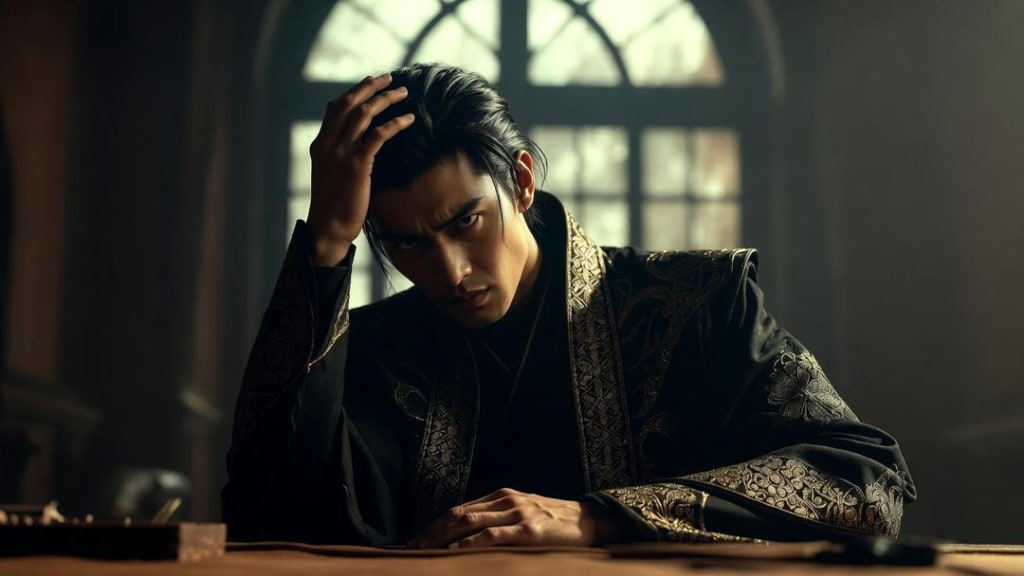
In the age before calendars were trusted and names still carried weight, there lived a king called Aruan the Uncrowned—so named because the people never truly believed he deserved the throne he sat on.
Aruan inherited the kingdom of Velis not through conquest or wisdom, but through absence. His elder brothers died in a winter plague. His father followed them into the earth a year later. One morning, Aruan woke as king, and the crown felt heavier than iron.
Velis was a fragile land. Its borders were thin as breath, its neighbors restless. The council whispered that Aruan was too soft, too uncertain. Rebellions flared like sparks in dry grass. Each night, Aruan lay awake, staring at the torchlight dancing on the walls, watching his own shadow stretch and tremble like a frightened thing.
It was during one of those nights that the man without a shadow appeared.
He arrived without footsteps, standing where Aruan’s shadow should have been. His face was pale, smooth, ageless, and his eyes reflected no light.
“I hear you are tired of being weak,” the man said.
Aruan reached for his sword, but his hand shook.
“I can give you what you lack,” the man continued. “Strength. Command. Fear.”
“And the price?” Aruan asked.
The man smiled. “Only what follows you everywhere.”
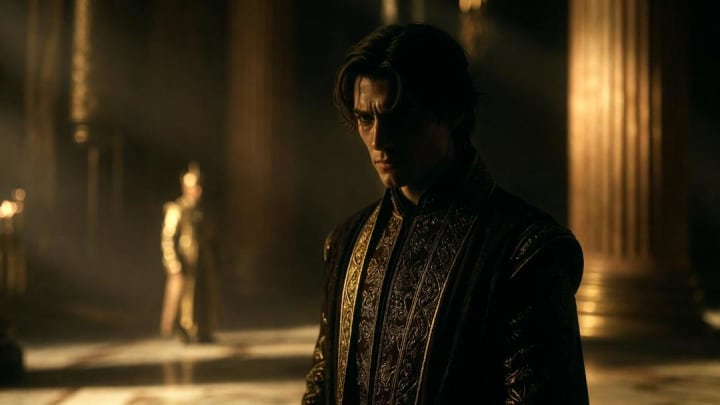
Aruan understood before the words were spoken.
“My shadow?” he whispered.
“It is not merely darkness,” the man said. “It is a doubt. Mercy. The part of you that hesitates.”
The offer burned in Aruan’s chest. He thought of the council’s laughter behind closed doors. Of the borders bleeding land. Of the crown that never fit.
“Take it,” he said.
The torches dimmed. Aruan felt something tear away from him—not flesh, but weight. When the light returned, his shadow was gone.
And so was his fear.
The change was immediate.
Aruan’s voice carried across the courtyards without effort. Soldiers straightened when he passed. Rebels knelt before the battle began. He spoke, and men obeyed—not out of loyalty, but certainty. Velis expanded its borders. Enemies vanished. The council fell silent.
The people called him Aruan the Great.
But something else followed.
Animals would not come near him. Children cried when he entered a room. Mirrors reflected his face, but never quite correctly, as if something was missing behind his eyes.
At night, his chambers were too still. No flicker of movement followed him on the walls. No darkness reminded him he was human.
Years passed. Velis became an empire.
One evening, Aruan stood alone on the highest balcony, watching the sun sink behind the mountains. As the light faded, he noticed something new on the stone floor.
A thin line of darkness.
His shadow had returned.
But it was not attached to him.
It stood upright, facing him.
“You’ve grown powerful,” the shadow said, wearing his voice. “More than you asked for.”
“What do you want?” Aruan demanded.
“To be whole again,” the shadow replied. “But there is a balance to such things.”
Aruan felt something unfamiliar crawl into his chest.
Fear.
The shadow stepped closer. “You ruled without mercy. You conquered without thought. Power without restraint always returns its debt.”
“What is the price?” Aruan asked, his voice small again.
The shadow smiled. “Your kingdom.”
The next morning, the sun rose on a leaderless empire.
Aruan was gone. So was the man without a shadow. In the throne room, the crown lay untouched. The empire fractured. Borders fell. History erased the name Aruan the Great, remembering only a warning.
They say that in Velis, at sunset, you can sometimes see a shadow standing alone—waiting for someone desperate enough to trade themselves for power.
And if you look closely, you’ll notice something missing where it stands.
It has no king to follow.
About the Creator
creator
Focus...
The Greatest Lost Treasures of History: A Deeper Exploration
1. The Gold of the Inca Empire The Inca Empire, which flourished in South America from the 13th to the 16th century, was one of the richest civilizations in the ancient world. For the Incas, gold was not merely wealth—it was sacred. They believed gold to be the “sweat of the Sun God Inti”, while silver was the “tears of the Moon.”
By Say the truth 6 days ago in History
The Net Worth of the Golden River: Measuring the Value of History’s Greatest Myth
So what is the net worth of the Golden River? While it cannot be calculated like a bank account or a gold reserve, its value can be estimated through economic loss, potential mineral wealth, cultural impact, and historical influence. When all these dimensions are considered, the Golden River may be worth more than any physical treasure ever discovered.
By Say the truth a day ago in History


Comments (1)
Yeah yeah think I have heard about this story but I think that’s not how it ended