
What is the history of Buddhist robes?The evolution of Buddhist clothing: dung sweeping robe
What are the three robes in Buddhism?

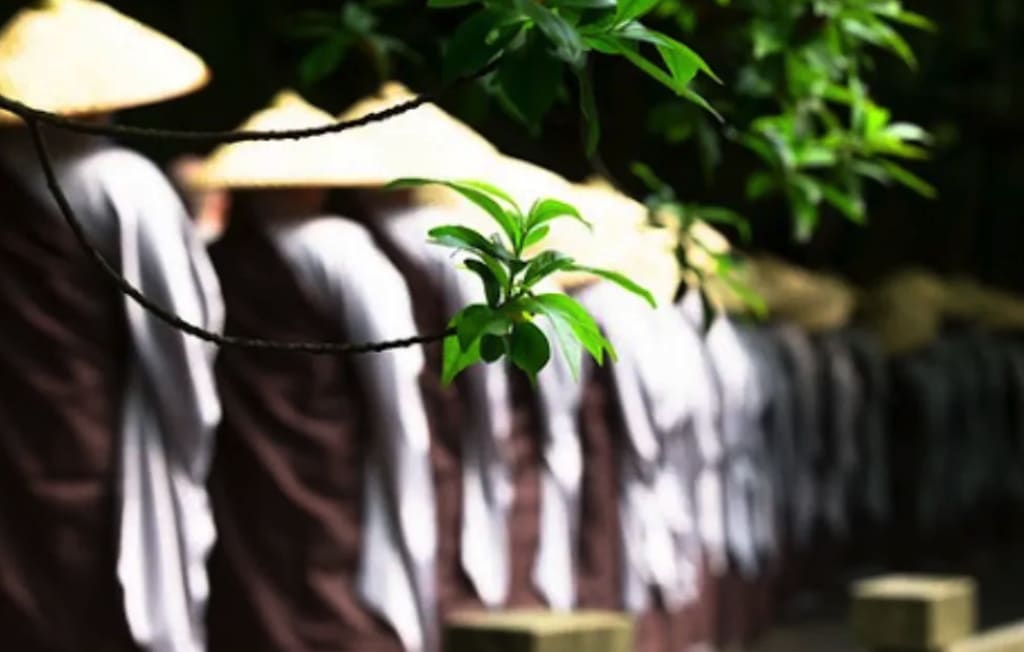
Hello everyone. Today, we will start by telling you about “From India to China — The Evolution of Buddhist Clothing.” Before discussing it, we can recall the monks we see now. What do they dress like? Generally speaking, the monks who impress us most dress like the Tang Monk in “Journey to the West” and wear cassocks, right? So, did early Buddhists dress like this? We’re going to study it.
Since we study the evolution of Buddhist clothing, we have to trace its origins. Buddhism originated in India and later spread to China. Therefore, we have to look at the beginning of Indian Buddhism, the era of Sakyamuni Buddha. How are the early monks dressed? The early monks in India mainly wore dung-sweeping clothes. What are dung-sweeping clothes? In other words, monks pick up the clothes and unwanted rags that others throw away. For example, the fabric is quite good in some areas of discarded clothes. You can cut it, sew it with some rags and rags, re-dye it, and wear it on your body. This kind of clothes is called Shit sweeps clothes. To put it bluntly, it is to pick up the rags and rags that others don’t want, sew them, and dye them before wearing them.
So we call clothes like this a dung sweeping garment. Why did early monks wear dung-sweeping clothes? The dung-sweeping garment is not unique to Buddhism. Monks’ wearing of dung-sweeping garments is related to the Indian social environment at that time. The Indian society at the time of Gautama Buddha had such a characteristic: many people practiced asceticism. The so-called asceticism meant torturing their bodies in various ways and causing their bodies to suffer. Why do so many people practice asceticism? In India at that time, some practitioners believed that they could achieve liberation only by torturing their bodies and practicing asceticism. This was their idea at the time.
So, many people who practiced asceticism wore dung-sweeping clothes at that time. In other words, these dung-sweeping clothes were not unique to Buddhism at the time of Sakyamuni Buddha. Other people also wore it, and those who practiced asceticism also wore it. Wear. We can call those who practice asceticism heretics. The so-called heretics are non-Buddhists. We call people who believe in other religions heretics. They achieved spiritual liberation through ascetic practices. They all wore dung-sweeping clothes, so Buddhists at that time also wore dung-sweeping clothes.
There are also different types of manure sweepers. For example, there is such a record in the book “Five-Five Rules.” He divided dung-sweeping robes into ten categories. “Five-Five Rules” is a Buddhist book. What ten categories did he divide dung-sweeping clothes into? For example, what do the old clothes the king discarded when he accepted the throne mean? That means the king is newly crowned, right? When the king newly ascends the throne, he may no longer need the clothes he wore before, so he gives up and throws them away.
Therefore, monks picked up these clothes and gave him a makeover and wear them. This is one of the dung-sweeping clothes. Then the second one is the tomb-like clothes. The tomb-like clothes mean that the clothes that are unwanted by others in the tomb are thrown next to the tomb, so pick them up and wear them. The third one is called the tomb-covering garment. The tomb-covering garment and the tomb-covering garment may be similar. The tomb-covering garment can be understood literally. It may be clothes thrown away by others and then covered in the tomb. Monks also wear such clothes. Please pick it up and wear it. The fourth type is called alley clothes, meaning that the rags of clothes others don’t want are thrown into the streets and can then be picked up and worn. The fifth one is the old clothes discarded by newly married girls. When a girl gets married, she may no longer need her previous clothes, so she throws them away. In some places, these clothes are better. A monk can pick it up, modify it, sew it, and wear it. The sixth one is for women to wear modest clothes when they get married. The seventh one is for maternity clothes. Maternity clothes are when a woman gives birth. Her clothes may be contaminated by blood. If you don’t need this kind of clothes, throw them away. If possible, pick it up, modify it, wash it, and wear it.
The eighth one is the cow chew clothes that the cows have chewed. The ninth is rat-bitten clothes, clothes that rats have bitten. The tenth fire-burning clothes may have been burned by fire, but they can be because some clothes have been burned by fire; if they are ned by fire, perhaps they are not entirely burned. Is that suitable? There are still some remaining rags that can be sewn and embroidered to wear. These are the ten types of dung sweeping clothes recorded in the “Law of Five Points.” When the dung-sweeping clothes are put together, what do they look like when worn? We can take a look at the photo below.
This photo shows a monk. The clothes he wears can be called dung-sweeping clothes. They are sewn together with various rags. This is the dung-sweeping clothes.
The ten types of dung sweepers we just introduced are recorded in the “Five-Five Rules.” There is also a book called “Four-Fun Rules” in Buddhism. The ten types of dung sweepers are also recorded in the “Four-Fun Rules.” The ten types of dung sweeping clothes recorded in the “Four-Fun Rhythm” are generally similar to those recorded in the “Five-Fun Rhythm.” The difference is that, for example, in the “Four-Fun Rhythm,” it is said that one of the ten kinds of dung sweeping clothes is one.
Clothing is called returning clothes. What is returning clothes? The so-called trading clothes are the materials used to wrap the dead body. The clothes are called trading clothes, and monks can also use them to wear them. In addition to the records of dung sweeping clothes in “Five-Five Rhythm” and “Four-Fun Rhythm,” there is also “Ten Chanting Rhythm.” The Buddhist classic “Ten Chanting Rhythm” also has records about dung sweeping clothes. Of course, in “Ten Chanting Rhythm,” four kinds of dung-sweeping clothes are recorded in “Recitation of the Vinaya.” So among these four kinds of dung-sweeping clothes, for example, if you say one is called Chuyi, what does Chuyi mean? It is also the kind of cloth used to wrap corpses. Some of the fabric may not be used up and is left behind. Then, it is given to monks and monks.
Such clothes are called coming-out clothes. In short, these clothes are clothes that everyone does not want or dislike. These clothes have been thrown away, and monks pick them up and wear them. These are called dung sweeping clothes.
So why do monks have to wear dung-sweeping clothes? Can’t you wear some nice clothes? Wearing dung-sweeping clothes has many benefits, as recorded in Buddhist scriptures. What are the benefits? There are two most important benefits. The first is to subdue the arrogance in your heart. We all have arrogance in our hearts, so Buddhism says that each of us has five poisons. The five poisons are greed, anger, ignorance, pride, and doubt.
These are the five poisons, among which pride is arrogance. You’re wearing a dung-sweeping suit, like a beggar. Wearing a manure-sweeping suit can subdue the arrogance in you, which is a benefit. What’s another benefit? Subdue the greed in your heart. Wearing good clothes can easily trigger greed in people’s hearts. We know that many people love to wear nice clothes, right? He keeps buying new clothes, which are enough to wear, but he buys more and keeps buying. This is greed. So Buddhist monks wear dung-sweeping garments and don’t compare with anyone, right? He subdued the greed in his heart. Okay, we’ll stop here today; thank you all for listening.
About the Creator
Nobel Peace Prize
The Nobel Peace Prize has stood as one of the world’s most recognized honors. Awarded annually in Oslo, it is meant to celebrate individuals or organizations that have made significant contributions toward peace, diplomacy, and humanitarian progress. While its mission appears straightforward, the Nobel Peace Prize has never been free from debate. In recent years, conversations surrounding global politics—particularly discussions about the Trump Nobel Peace Prize—have brought renewed attention to how peace is defined, measured, and rewarded in the modern era. The Origins and Meaning of the Nobel Peace Prize The Nobel Peace Prize was established by Alfred Nobel, the Swedish inventor best known for creating dynamite. In his final will, Nobel directed that a portion of his wealth be used to recognize efforts that foster peace among nations, reduce standing armies, or promote diplomacy and cooperation. Since its first award in 1901, the prize has honored activists, diplomats, organizations, and world leaders whose actions shaped international dialogue. Unlike other Nobel categories, the peace prize is awarded by a Norwegian committee rather than a Swedish institution. This distinction reflects Nobel’s desire to separate the prize from national interests and focus instead on global responsibility. Over time, the definition of “peace” has expanded. Early recipients were often disarmament advocates or mediators. More recent laureates have included human rights defenders, climate activists, and international organizations working in conflict zones. Politics and the Nobel Peace Prize Despite its humanitarian ideals, the Nobel Peace Prize has always intersected with politics. Recognizing peace efforts often means evaluating political leadership, international negotiations, and long-term consequences—none of which are easy to measure in real time. Some awards have been widely celebrated, while others sparked controversy. Critics often argue that certain laureates were honored prematurely, before the lasting results of their actions became clear. Supporters counter that the prize is meant to encourage peace efforts, not merely reward completed achievements. This tension has made the Nobel Peace Prize a reflection of global priorities at any given moment, rather than a simple historical judgment. Donald Trump and Nobel Peace Prize Discussions Few modern political figures have generated as much debate in connection with the Nobel Peace Prize as Donald Trump. During and after his presidency, conversations about a potential Trump Nobel Prize emerged repeatedly, particularly among supporters who pointed to his role in diplomatic initiatives. The phrase Trump Nobel Peace Prize gained traction following agreements and negotiations in regions long marked by conflict. Advocates argued that these diplomatic efforts aligned with Alfred Nobel’s vision of reducing international tension through dialogue rather than force. At the same time, critics questioned whether these actions met the broader ethical and humanitarian standards traditionally associated with the award. They pointed to domestic divisions, foreign policy controversies, and unresolved global conflicts as reasons for skepticism. This divide highlights a core challenge of the Nobel Peace Prize: peace is rarely absolute, and political leadership is often complex and contradictory. Trump Nobel Peace Prize 2026: Speculation and Context As global politics continue to evolve, speculation around a Trump Nobel Peace Prize 2026 has appeared in media discussions and public commentary. It is important to note that nominations for the Nobel Peace Prize are confidential for decades, and speculation does not confirm consideration or selection. However, the mere discussion of Trump Nobel Peace Prize 2026 reflects how the award has become part of broader cultural and political conversations. Supporters view such recognition as validation of diplomatic achievements, while critics see the speculation as politicizing an institution meant to rise above partisan debate. This dynamic is not unique to Trump. Many past leaders, from various ideological backgrounds, were debated heavily before or after receiving the prize. The Nobel Peace Prize often mirrors global disagreements rather than resolving them. How the Nobel Committee Makes Its Decision Each year, hundreds of nominations are submitted by qualified individuals, including academics, lawmakers, and previous laureates. The Nobel Committee evaluates these nominations through research, expert consultation, and internal debate. The process considers intent, impact, and long-term significance. However, because peace efforts often unfold over years or decades, the committee must make decisions without full historical clarity. This reality explains why some awards age gracefully while others remain controversial. The committee rarely responds directly to public pressure or online campaigns. Media attention, including discussions around a Trump Nobel, does not guarantee influence over the final decision. The Broader Impact of the Nobel Peace Prize Beyond individual recipients, the Nobel Peace Prize plays a symbolic role. It brings global attention to issues that might otherwise be ignored, from humanitarian crises to fragile peace processes. Even controversial nominations can spark meaningful debate about what peace truly means in the modern world. The prize also raises questions about accountability. When leaders are considered for such recognition, the public is encouraged to examine policies, outcomes, and moral responsibility more closely. In this sense, discussions surrounding the Trump Nobel Peace Prize are not just about one individual. They reflect deeper conversations about diplomacy, leadership, and the evolving standards by which peace is judged. Conclusion: A Prize That Reflects the World The Nobel Peace Prize remains one of the most influential and debated honors in global society. Its power lies not only in recognizing peace efforts but also in challenging the world to think critically about conflict, cooperation, and responsibility. Whether discussions involve historic activists or modern political figures like those associated with Trump Nobel Peace Prize 2026 speculation, the award continues to reflect the complexities of international relations. Peace is rarely simple, and neither is the process of honoring it. Ultimately, the Nobel Peace Prize serves as a reminder that striving for peace is an ongoing journey—one shaped by ideals, actions, and the difficult choices that define human history.
By Saboor Brohi 5 days ago in History
The History of America — A Nation Forged by Struggle and Change
Long before the name “America” existed, the vast lands of North America were home to millions of Indigenous peoples. These societies—such as the Navajo, Iroquois, Cherokee, Apache, and many others—developed rich cultures, languages, and systems of governance. They farmed, hunted, traded, and built complex communities deeply connected to the land. For thousands of years, these civilizations thrived, long before European ships ever crossed the Atlantic.
By The best writer 3 days ago in History
Smart phones, Humans and Aliens.
WARNING. I will be tapping into one of your favorite creative tensions: The absurdity of humans worshipping their glowing rectangles as if they were tiny oracles. There’s something deliciously poetic about that contradiction, and it lends itself beautifully to an instructive proviso.
By Novel Allen5 days ago in Poets



Comments
There are no comments for this story
Be the first to respond and start the conversation.