
What if the Roman Empire NEVER FELL.
Roman Empire
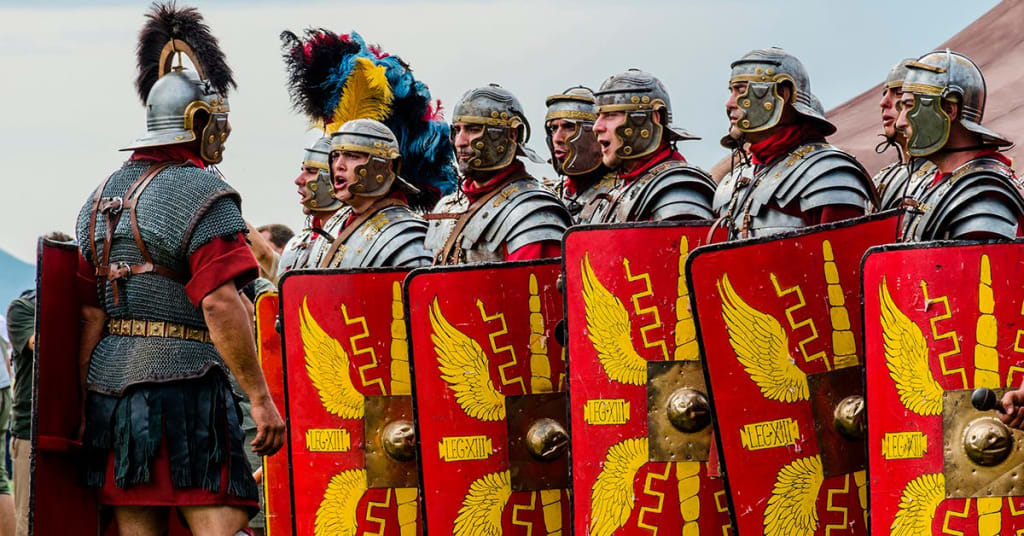
The year is 410 A.D. The Visigoths, led by Alaric I, have breached the walls of Rome. The tribe has pillaged, looted, and burned its way through the Eternal City, leaving devastation in its wake. This first sacking of Rome in 800 years severely weakened the Roman Empire, which once seemed unstoppable. With the Roman military scattered, corruption rampant, and the deposition of Romulus Augustulus, the Roman Empire was on the road to collapse, ultimately crumbling 60 years later.
But what if all of this had never happened? Not just the Sacking of Rome, but all the internal strife and political corruption that plagued the Roman Empire, causing it to fall in 476 A.D. What would the world—and the Empire itself—look like if the Roman Empire never fell? Historians and scholars have long pondered this intriguing hypothetical, exploring what might have transpired if the mighty Roman Empire had endured beyond the fifth century.
Unsurprisingly, there are countless speculations about the alternate fate of the Roman Empire, given the numerous times—and ways—it could have turned itself around. Theories abound on what led to Rome’s collapse in the first place. However, examining this vast array of theories in a single discussion would be overwhelming. Instead, we'll focus on a single course of alternate history where the Roman Empire resolves its internal issues before its downfall, exploring the broader implications and potential ripple effects of such a scenario.
One thing is certain: the course of history would have been dramatically different if the Roman Empire had not fallen. If this Empire were still standing, it would undoubtedly shape the future of Europe and the rest of the world in numerous ways. To explore this, we must first understand why the Roman Empire fell.
The fall of the Roman Empire is a multifaceted tale shaped by economic decline, military challenges, political turbulence, and social transformations. Specific moves made by inept emperors also played a crucial role. For instance, Tiberius, the second Roman Emperor, ruling from 14 to 37 A.D., failed to crush and subjugate the Germanic tribes to the north. During his rule, the Empire also witnessed the emergence of major conspiracies, particularly under the Prefect of the Praetorian Guard, Sejanus. Initially meant to serve as the Emperor’s elite protectors, the Praetorian Guard evolved into a potent political force, often undermining the stability of the Roman Empire by interfering with imperial succession.
Another significant figure was Nero, whose actions during his 14-year rule exemplified the destructive impact of unchecked power. Nero wasted extravagant amounts of money on useless mega-projects, and when the Great Fire of Rome broke out in 64 A.D., the city's treasury was ill-prepared to handle the crisis. His solution to mint more coins ultimately ruined the Roman Empire’s currency, creating an endless cycle of inflation that contributed to the Crisis of the Third Century, when the Empire nearly collapsed for the first time.
Caracalla, ruling from 198 to 217 A.D., further destabilized the Empire by granting Roman citizenship to all free men within its borders, aiming to increase taxable population and boost the economy. However, this move limited the size of the Roman military, as people no longer needed to serve to gain citizenship, leading to a less powerful military force.
By the time of Constantine I in the fourth century A.D., the Roman military had significantly dwindled in comparison to its earlier might. The Battle of the Catalaunian Plains in 451 A.D. highlighted this decline, as the Empire could barely muster an army of around 30,000 soldiers, underscoring its reduced capacity to defend itself.
Understanding the reasons behind the fall of the Roman Empire allows us to imagine how it could have been saved. Scholars offer various what-if scenarios, such as if Emperor Valentinian I hadn’t died suddenly in 375 A.D., he might have prevented the Goths from entering the Empire, or if Emperor Majorian’s expedition to North Africa hadn’t been sabotaged, Rome might have rebounded economically. Instead of focusing on single events, we’ll explore what might have happened if the Empire had resolved its primary issues before its decline.
In our alternate history, Germanicus continues his conquest of Germania, eventually assimilating it into the Roman Empire, shortening its border and alleviating external pressures. Sejanus never comes to power, and the Praetorian Guard remains loyal to the Emperor, allowing for stable succession and avoiding political turmoil. Joint rule is established early on, with two Emperors sharing governance responsibilities, ensuring that decisions are made collaboratively and wisely.
These changes lead to a more stable and powerful Roman Empire, capable of expanding its influence. The Empire establishes a presence in Britannia sooner, enhancing its economic strength and strategic influence. The successful conquest of Germania and Britannia paves the way for further expansion into Dacia and Parthia, establishing greater trade connections with the East.
However, the Empire faces new challenges, such as potential routes for Eastern plagues. The Antonine Plague might have encouraged the Empire to tighten its Eastern borders, leading to fortified defenses that keep various raiders at bay. The Roman Empire’s survival also affects the spread of religions, potentially limiting the spread of Islam and accelerating the dominance of Christianity, creating a more unified Europe.
The continued existence of the Roman Empire would prevent Europe from splintering into smaller kingdoms, creating a more centralized continent. This centralized Europe would adopt Roman institutions, legal systems, and cultural norms. The Roman Empire’s expansion might even reach North America, potentially leading to a Romanized continent rich in resources.
While the Roman Empire might eventually split into Eastern and Western halves, these parts would remain allied, shaping the entire world with their combined influence. The Roman Empire’s enduring power would foster a gradual evolution of technology influenced by cultural exchange, leading to a vastly different world than the one we know today.
So, where do you stand? Do you believe that the world would have been a vastly different place had the Roman Empire never fallen?
About the Creator
Keep reading
More stories from Shinzou Wo sasageyo and writers in History and other communities.
A day in a nazi camp
You’re jolted awake in the middle of the night by the sound of the attic hatch being shattered. Your family’s screams fill the air as men in long, black coats burst into the cramped space, shouting orders in German and waving their pistols threateningly. The chilling double lightning bolts of the SS gleam on their lapels in the light of their flashlights.
By Shinzou Wo sasageyo2 years ago in History
Early March 2026: 4 Goals Accomplished
It's early March and I've now accomplished my 4th writing goal for the year of 2026. Before diving into the behind-the-scenes of it... why not tell you up front what that accomplishment was? I was published in a 2nd publication for this year. Published in Helix Literary Magazine out of Central Connecticut State University. You can read it for free right now!
By Stephen Kramer Avitabile3 days ago in Writers



Comments