
You’re jolted awake in the middle of the night by the sound of the attic hatch being shattered. Your family’s screams fill the air as men in long, black coats burst into the cramped space, shouting orders in German and waving their pistols threateningly. The chilling double lightning bolts of the SS gleam on their lapels in the light of their flashlights.
This SS unit, tasked with hunting "undesirables" in Nazi-occupied territory, has finally found you after years of hiding. You and your family are roughly dragged from the attic, kicked and screaming, before being thrown into the back of a military vehicle at gunpoint. Any attempt to escape would mean certain death, though that might seem merciful compared to the horrors awaiting you in a Nazi concentration camp.
As a Jew, or part of another persecuted group in Nazi-occupied Europe, capture by the SS or Gestapo typically meant persecution, beatings, and eventual deportation to a concentration camp. The constant fear of being snatched off the streets, simply for existing, looms large. The path to a concentration camp is never straightforward; it twists based on your background and the whims of the Nazi regime.
Maybe you're here because of your ties to opposition groups like communists, socialists, or trade unionists. Perhaps you were deemed undesirable—homeless, homosexual, mentally ill, a petty criminal, or simply unproductive. Some were caught in random mass arrests, while others, like Jehovah's Witnesses, faced imprisonment for their beliefs. Or you might be one of Hitler’s primary targets—a Jew, considered worthless by the Nazi regime.
The journey to the camp strips you of humanity, instilling fear and shame. The transport, often in overcrowded freight cars or trucks, denies you food, water, and basic facilities. The airless vehicles reek of vomit and excrement. Many die en route from starvation, dehydration, or illness, while others endure the agonizing uncertainty of their destination.
Upon arrival, you are shoved off the vehicle and split into groups by gender and age. An SS guard in tan uniform barks questions—your age, occupation, and health condition. Your answers determine your fate: work or immediate execution. The thumb of the SS officer can seal your doom with a simple gesture.
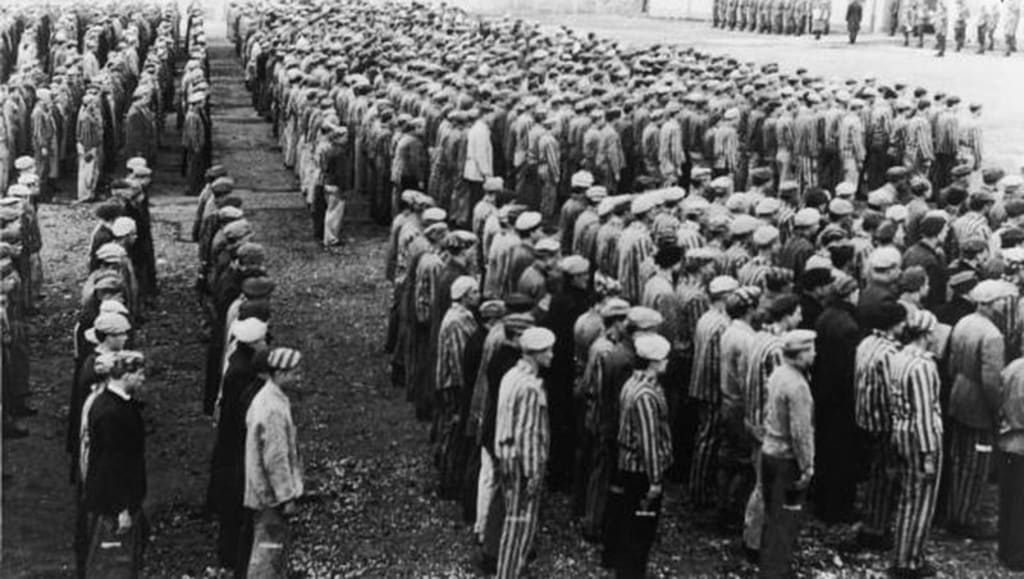
Surviving this initial sorting only leads to further dehumanization. Stripped of your belongings, you are assigned a prison number that replaces your name. This number is either stitched onto your uniform or tattooed on your arm. You are forced to undress, your head shaved, and shower in groups under the watchful eyes of SS guards before being issued a striped prison uniform.
Life in the camp is a constant struggle for survival. The barracks are overcrowded and unsanitary, with straw mattresses fouled by lice and vermin. Disease spreads rapidly in these conditions, compounded by inadequate sanitation and insufficient heating. Food rations are meager, consisting of watery soup, stale bread, and occasionally a small piece of sausage or cheese. Hunger becomes a relentless companion, weakening your body and spirit.
Daily roll calls, or "Appel," are brutal. You stand for hours in harsh weather conditions, counted repeatedly by Kapos under the watchful eyes of SS guards. Any movement or attempt to evade roll call is met with severe punishment. The workday is grueling, often lasting up to 14 hours, with tasks ranging from heavy construction to factory work. Failure to keep up or stepping out of line results in beatings or worse.
Sickness is rampant, and medical facilities are virtually nonexistent. Minor injuries fester untreated, while diseases like typhus, dysentery, and tuberculosis claim many lives. The constant fear of death and the loss of loved ones take a devastating toll on your mental state, leading to widespread depression and despair.
Despite the relentless brutality, you find small ways to hold onto hope and humanity. Cultural and religious activities, journals, artwork, and even crafting jewelry from scraps become acts of defiance. These small acts of resistance help keep your spirit alive amidst the dehumanizing conditions.
Life in the camp is a daily nightmare. Stripped of basic rights and reduced to mere survival, you endure the relentless brutality of the SS guards and the dehumanizing routines. Yet, despite the pervasive darkness, you display remarkable strength and resilience. Through your writings and artworks, you maintain a semblance of identity and humanity, even as the Nazi regime tries to extinguish it.
The liberation of the camps by Allied forces marks the end of this chapter of unimaginable horror. The stories of those who survived serve as poignant reminders of the indomitable human spirit and the capacity for hope and endurance in the face of extreme adversity.
About the Creator
Keep reading
More stories from Shinzou Wo sasageyo and writers in History and other communities.
why the dark ages were the wrong time to be alive
The Dark Ages were a brutal period, marked by marauding knights, scholarly killers from Oxford, staggering homicide rates, Viking savagery, and impoverished peasants driven to madness, sometimes literally dancing to their deaths. In this harsh era, even hairdressers doubled as amateur surgeons, performing grisly amputations.
By Shinzou Wo sasageyo2 years ago in History
18,000-Year-Old ‘Dog’ Discovered in Siberia, Scientists Left in Awe
A remarkable archaeological discovery in Siberia has stunned the scientific community: the remains of an 18,000-year-old animal believed to be an early form of a domesticated dog. Preserved in the region’s frozen soil, this ancient find is being described as one of the most important discoveries in understanding the origins of the human–dog relationship.
By Irshad Abbasi 6 days ago in History


Comments