
WHAT HAPPENED TO THE TITANIC
The truth about the titanic has been revealed
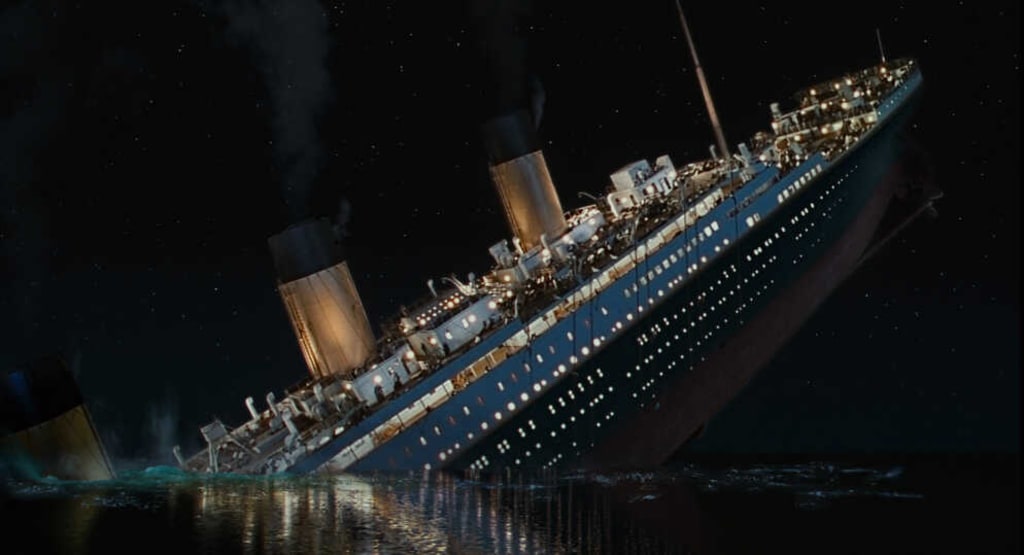
The Titanic sank on April 15, 1912, three hours after a terrible accident at 11:40 p.m. The ship disappeared under the Atlantic Ocean at 2:20 a.m., taking over 1500 lives. The cause of the disaster was believed to be an iceberg, but recent scientific findings debunk this theory. The Titanic was a massive ship, measuring 882 feet 9 inches long, 92 feet wide, and 175 feet tall. It had four smokestacks weighing 60 tons each. The ship was considered indestructible, with numerous passages and decks that took weeks to navigate.
The smokestacks were placed at a 30-degree angle. They extended 81.5 feet above the deck. This height was necessary to avoid covering the passengers in 100 tons of soot blown off daily. The ship's construction cost 7.5 million dollars. In 2016, adjusting for inflation, it would be equivalent to 166 million dollars. Surprisingly, it was cheaper than the production cost of the movie Titanic in 1997, which was 200 million dollars. Harland and Wolff shipyard employed 3,000 men to build the ship. Despite the large labour force working six days a week from 6:00 in the morning, it still took 26 months to complete the task. The work was difficult and dangerous, with no safety ropes at the height of a 20-story building. Unfortunately, 8 people died and 246 were injured during the building process. The builders received 2 pounds a week, which was a competitive wage at that time. They needed the money to support their families.
The sinking of the Titanic was believed to be caused by hitting an iceberg. However, new findings suggest that a fire may have been the original cause. Journalist Sonam Maloney discovered a large black spot on the ship's hull, indicating a fire. The fire was likely burning for three weeks at a high temperature before being noticed. Experts believe that the fire weakened the metal of the ship, reducing its strength significantly. The fire could have weakened the metal by up to 75 percent.
The iceberg easily tore a hole in the ship due to the compromised metal. The fire made it even more possible. The Titanic's management knew about the fire and the risks of setting sail, but chose to go anyway to avoid bankruptcy. Miners were on strike, so there was no coal to sustain the ship. However, tickets were already sold out and other ships were cancelled, as everyone wanted to be on the largest ship. The owners of the Titanic bought all the available coal and ignored calls to cancel the trip.
The ship was turned to hide the marks from the fire. They faced away from the docks towards the sea. This way, the passengers couldn't see them. The journey began. The interior of the Titanic was modelled after the Ritz Hotel in London. The grand staircase went down seven out of the ten decks. It was adorned with paintings, bronze cherubs, and oak panelling. First-class passengers had access to a swimming pool with heated water.
The ship offered a Turkish bath, gym, squash court, and beauty salon. Ladies could request a stylist to help them prepare for dinner. There was an onboard newspaper called the Atlantic daily bulletin. First-class passengers could bring their dogs and they were well taken care of. The meals for first-class included 13 courses, each paired with its own wine. These meals were a grand affair, lasting about five hours. The ship had an impressive selection of 1,500 bottles of wine, 20,000 bottles of beer, and 8,000 cigars. However, binoculars were not provided.
The fact is worth mentioning because having binoculars could have potentially saved the Titanic. Unfortunately, there were no sonar systems at that time, so people relied on binoculars to detect threats ahead of the liner. However, on the Titanic, the binoculars were locked away in a compartment. The only person with the key, second officer David Blair, was replaced at the last minute and forgot to hand over the key before leaving the ship in a hurry. This was a tragic coincidence in a series of unfortunate events.
The forgetfulness was discovered three days later. The ship was already at sea. The crew lacked binoculars. They would have noticed the iceberg earlier. They could have avoided the crash. The crash could have been avoided. The ship was breaking the speed limit. They were falling behind schedule. This was unacceptable. It could ruin the Titanic's reputation. The ship was moving at a high speed. It was not designed for this speed.
There was another criminal negligence regarding the lifeboats on the Titanic. Around sixty lifeboats were needed to accommodate all the people on board. However, the chief designer, Alexander Carlyle, only planned to have 48 boats. Eventually, this number was further reduced to 20. The decision to reduce the number was purely for cosmetic reasons, as the deck appeared too cluttered with 48 lifeboats. Unfortunately, these 20 boats could only seat 1/3 of all the people on the ship.
It's shocking, but the laws at that time allowed for a very small number of lifeboats on the Titanic. The number of lifeboats was determined by the ship's tonnage, not the number of passengers. Even though lifeboat drills were common on other ocean liners, they were never conducted on the Titanic. Captain Edward John Smith inexplicably cancelled the drill scheduled for the day the Titanic sank, despite warnings from other ships about ice in the water. The reasons for his decision remain unknown.
The crew took over half an hour to launch the lifeboats, instead of the standard 10 minutes. Some blame Captain Smith for allowing the first batch of lifeboats to leave half empty. The first boat had 65 seats but only 27 passengers. People were reluctant to leave the ship and didn't realize the danger they were in. In 2012, researchers discovered that Captain Smith had failed his first navigation exam. Maybe this also played a role in the disaster. As the Titanic sank, the crew sent distress signals.
A ship sailing near California ignored the emergency flare. The captain of the Californian lost his job after this fact came out. Modern researchers have proven his innocence. Better late than never. The signals from the Titanic went unnoticed. Light refraction may be the reason. Thermal inversion causes layers of cold air below warmer air. This phenomenon can lead to the light being distorted.
Light refraction created mirages, which had been recorded by other ships in the area. Historian Tim Moulton believes this may have caused the lookouts to miss the iceberg. It was a tragic chain of coincidences, possibly due to criminal negligence. Whether it was fire or ice, hundreds of lives were lost and scientists continue to study the catastrophe.
About the Creator
Keep reading
More stories from writers in History and other communities.
If America Walks Away from NATO, the World Will Feel the Shock
If America Walks Away from NATO, the World Will Feel the Shock For more than seventy years, NATO has stood as a symbol of collective security and shared responsibility. It was never a perfect alliance, but it worked because it was built on a simple idea: when nations stand together, wars are less likely to happen. Today, however, that foundation is being shaken—not by foreign enemies, but by growing voices inside the United States questioning whether NATO is still worth it.
By Wings of Time 7 days ago in History
3 Harmless Habits That Once Caused Absolute Chaos
Most habits are comfortingly dull. You chew gum. You clap at events. You check your phone. You assume—reasonably—that these actions will not destabilize governments, bankrupt industries, or end lives. Society depends on this assumption. If every small habit carried catastrophic potential, we would never leave the house.
By Enoch Sagini3 days ago in History
Wild Card Weekend Recap: What Happens Now?
I think I figured out why I love Wild Card Weekend so much. It's because it's the first playoff anything of the calendar year. The NFL season starts in the fall, and once upon a time, the champion was crowned either on or slightly before New Year's. The evolution of the NFL schedule has resulted in the playoffs starting just into the New Year, and currently, the final week of the season falls on the first weekend of the New Year, with Wild Card Weekend coming a week after that. So yes, chronologically, the NFL's Wild Card Weekend serves as the first playoff anything of the calendar year.
By Clyde E. Dawkins6 days ago in Unbalanced



Comments
There are no comments for this story
Be the first to respond and start the conversation.