
Was Leonardo da Vinci’s mother a kidnapped Arab slave?
Leonardo da Vinci: The genius with hidden Arab roots

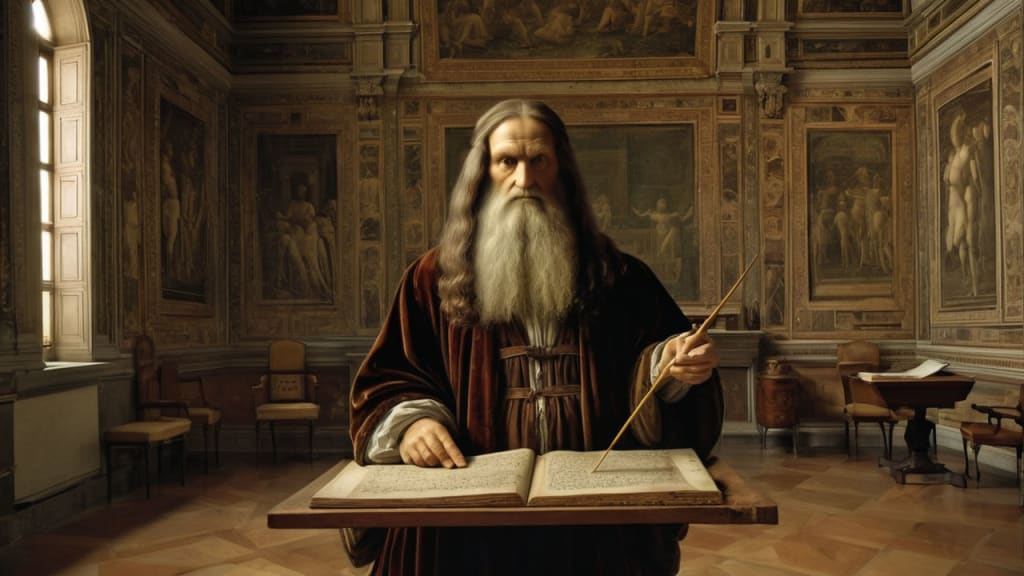
Leonardo da Vinci, one of history's greatest geniuses, is widely known as a painter, inventor, and scientist, but few know the details of his mysterious origins. Over the centuries, various theories and speculations have emerged, but one of the most fascinating and lesser-known is the idea that his mother, Caterina, might have been a slave of Arab origin, kidnapped by pirates from North Africa and brought to Italy. During a time when the slave trade was a brutal reality, this possibility offers a new perspective on Leonardo's life and heritage. Let's explore this theory step by step to see how plausible it might be.
Leonardo was born in 1452 in the town of Vinci, in Tuscany, Italy, as the illegitimate son of Ser Piero da Vinci, a notary and minor nobleman. His mother, Caterina, has long been described as a simple woman, likely a servant or cook. However, in recent years, researchers have begun questioning this portrayal, suggesting that her story could be far more complex than previously believed. There is a hypothesis that Caterina was not just a simple Italian woman but rather a slave of Arab descent, kidnapped by Berber pirates and brought to Italy. If this were true, it could change the way we perceive Leonardo da Vinci, both as a person and as an artist.
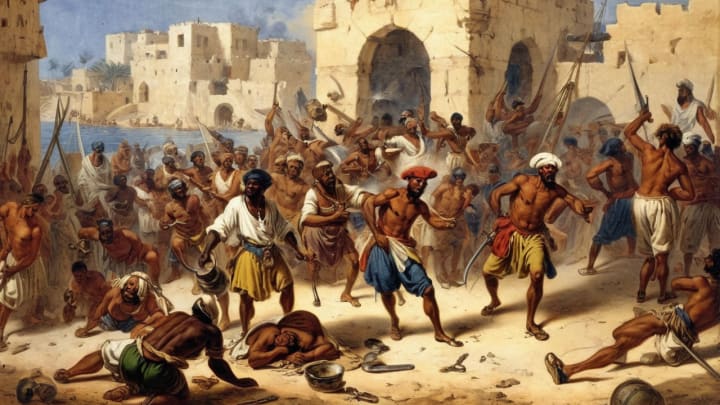
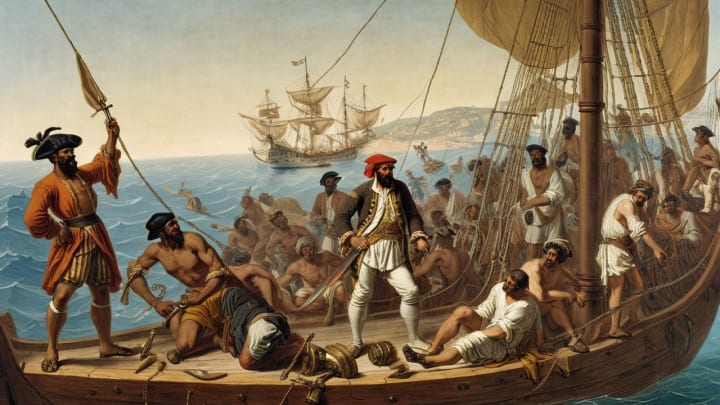
In the 15th century, kidnappings and the slave trade were common phenomena throughout the Mediterranean region. Berber pirates, originating from North Africa, were infamous for raiding the coasts of Africa and Europe, capturing men, women, and children, and selling them in slave markets across Europe. Many of these captives ended up in Italy, where they were sold as slaves to work in noble households. It is believed that Leonardo's mother may have been one such victim, taken from a village in North Africa and brought to Italy, where she ended up in the service of the da Vinci family.
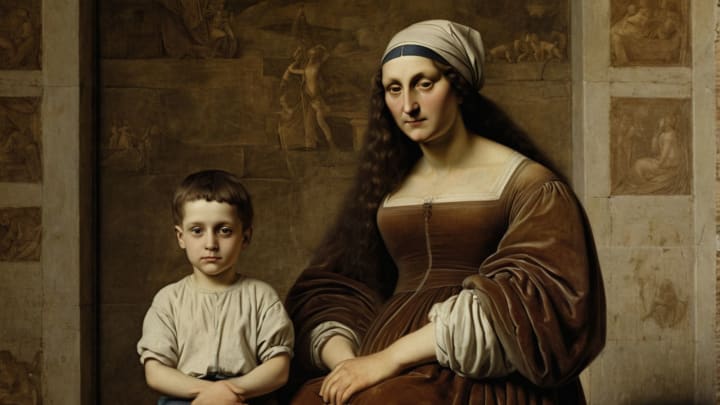
Although there is no concrete evidence to support this theory, the commercial and cultural ties between Italy and North Africa during that period were much stronger than one might think. The Mediterranean has always been a meeting point for different civilizations, and the slave trade facilitated the movement of people across continents. If Caterina were indeed of Arab descent, it could explain certain aspects of Leonardo's life, as well as his unusual curiosity for diverse cultures and civilizations. In an era when most artists and scholars focused on Christian Europe, Leonardo showed a keen interest in other cultures, exploring ideas and concepts originating from the Middle East and North Africa.
Another intriguing aspect is the possible influence his mother's origins might have had on Leonardo as a scientist and artist. If Leonardo were half Arab, this cultural blend might have shaped his perspectives and provided him with a unique worldview. It is well known that Leonardo was always an innovator, a man who was never satisfied with what was known and accepted at his time. Perhaps this openness to other cultures and new ideas was rooted in a cultural heritage that spanned both sides of the Mediterranean.
Leonardo's physical traits have also been a subject of speculation. In most portraits of him, Leonardo appears with dark hair and olive-toned skin, features that were not uncommon in Italy but could suggest a genetic influence from outside Europe. It is also interesting to note that Leonardo showed a particular interest in the study of human proportions and the diversity of physical traits, which could be linked to a personal sense of diversity and his multicultural heritage. Throughout his career, Leonardo drew hundreds of detailed sketches of the human body, many of which reflect a variety of features that were not necessarily common in Renaissance Europe.
If this theory about Caterina's origins were true, it could add a whole new dimension to Leonardo's work. His art, which has always been characterized by a combination of scientific precision and aesthetic beauty, could be seen as a reflection of this cultural fusion. Some of his most famous works, such as the "Mona Lisa" or "The Last Supper," could be interpreted through the lens of this multicultural influence. For example, the enigmatic expression of the Mona Lisa has sparked debates for centuries, and some art critics suggest that this mystery might be tied to her origins. If Leonardo indeed had a mixed heritage, this could explain why he was so drawn to subjects that explored identity and human mystery.
However, despite these speculations, we must acknowledge that there is no definitive evidence to support this theory. Despite research and new discoveries, the truth about Leonardo da Vinci's origins remains shrouded in mystery. What is certain is that Leonardo was a man of exceptional curiosity and intelligence, who managed to transcend the limits of his time. Whether or not his genetic heritage included Arab blood, it does not diminish the greatness of his work.
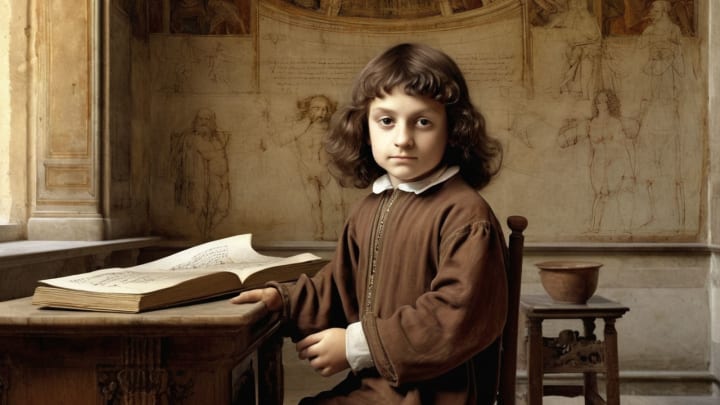
Throughout his life, Leonardo demonstrated a remarkable ability to absorb knowledge from various fields and cultures, and this could be seen as a result of a personal and cultural openness. His genetic heritage may not have had a direct impact on his achievements, but his openness to the world around him and his endless curiosity were undoubtedly influenced by the multicultural environment in which he lived. Renaissance Italy was a center of cultural and intellectual exchange, and Leonardo was clearly a product of this vibrant environment.
In the end, the story of Leonardo da Vinci is one of complexity and mystery. The hypothesis that his mother was an Arab slave kidnapped from North Africa is just one of many theories trying to explain the life and achievements of this genius. Even if we never know the full truth about his origins, this theory offers a fascinating perspective on a figure who has continued to captivate generations. Questions about his genetic and cultural heritage help us better understand how complex his life was and how many different influences contributed to creating one of the greatest artists and inventors of all time.
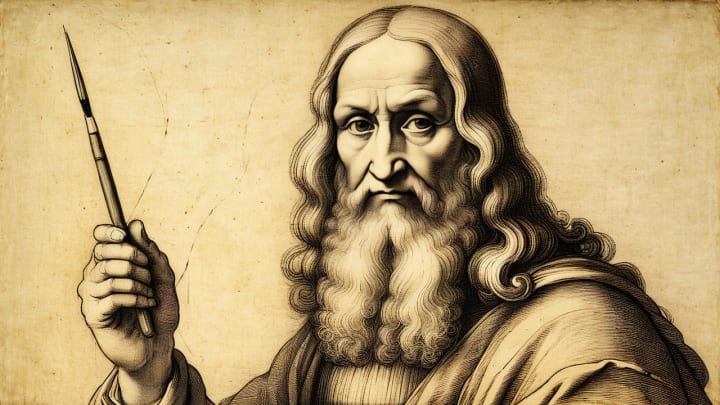
The truth about Leonardo da Vinci’s origins remains, in essence, a mystery. Nevertheless, it is important to remember that history is full of such enigmas, and some of the most interesting figures from the past are those we know the least about. Leonardo da Vinci is undoubtedly one of these figures, and the possibility that he may have had a multicultural heritage makes us view his work through new eyes. Regardless of his origins, Leonardo left behind a legacy that will continue to inspire and amaze future generations.
About the Creator
Algieba
Curious observer of the world, exploring the latest ideas, trends, and stories that shape our lives. A thoughtful writer who seeks to make sense of complex topics and share insights that inform, inspire, and engage readers.
The Year 1963 in Review: Facts, Trivia, and Historic Highlights
This quick read is a collection of fun facts, trivia, and historical events from the year 1963. Discover the year’s top news stories, most influential people, sports facts, grocery and other retail prices, entertainment trivia, and much more.
By Gregory DeVictora day ago in History
Why Didn't Anyone Tell Us
Men, move along. This is not for you. This is for the women. I was forty-five when I began menopause. It is pretty young for that to be going on in a woman’s life, but I had undiagnosed PCOS, my entire life. Thank you to all the gynecologists I had seen my entire life. That in itself should encourage women to keep seeking second opinions, especially when you are not getting correct answers or any at all.
By Alexandra Grant2 days ago in Humans


Comments
There are no comments for this story
Be the first to respond and start the conversation.