
visited a hostorical place in Taj Mahal
visit Taj Mahal
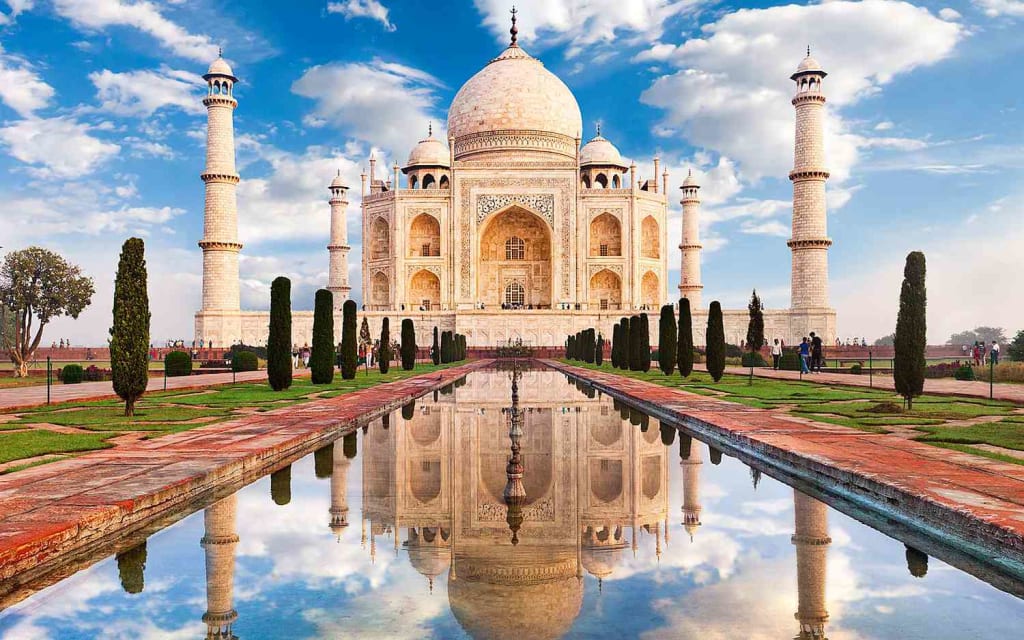
**A Visit to the Taj Mahal**
Visiting the Taj Mahal was a dream come true. As one of the most iconic historical monuments in the world, the Taj Mahal stands as a symbol of love, beauty, and architectural brilliance. Located in Agra, India, this magnificent white marble mausoleum attracts millions of tourists every year. I had read about it in history books and seen countless photographs, but nothing could compare to the awe of seeing it in person.
I visited the Taj Mahal on a clear, sunny day. As I approached the entrance, I felt a mix of excitement and curiosity. The long queues, the chatter of tourists from around the world, and the well-maintained gardens created an atmosphere of anticipation. Once I entered the main gate, the first glimpse of the Taj Mahal took my breath away. It stood tall and serene, shimmering under the sunlight with its white marble reflecting the blue sky.
The Taj Mahal was built by the Mughal Emperor Shah Jahan in memory of his beloved wife, Mumtaz Mahal, who died in 1631. Construction began in 1632 and took over 20 years to complete, involving thousands of artisans and craftsmen. The structure is a perfect example of Mughal architecture, combining elements of Islamic, Persian, and Indian design. What fascinated me the most was the symmetry of the entire complex—the gardens, water channels, and even the minarets are designed with incredible precision.
Walking closer to the monument, I noticed the intricate carvings and delicate floral designs on the marble walls. Precious stones were inlaid into the marble to create detailed patterns, a technique known as *pietra dura*. Verses from the Quran were inscribed in calligraphy around the arched entrances. Every detail spoke of the immense love and care that went into building this monument.
Inside the mausoleum, the atmosphere was quiet and reverent. The central chamber contains the symbolic tombs of Shah Jahan and Mumtaz Mahal, though the actual graves lie below in a lower chamber. The interior is dimly lit, with sunlight filtering in through finely carved marble screens. There was a certain peacefulness and solemnity in the air, reminding everyone that this is not just a monument, but a tomb—a place of remembrance and love.
After exploring the main structure, I walked through the gardens, which are laid out in the classic Persian *charbagh* (four-part) style. The symmetry and balance of the gardens added to the monument’s sense of harmony. From every angle, the Taj Mahal looked majestic. I took many photographs, but no image could capture the grandeur and emotion that the place evokes in person.
What made the visit even more meaningful was learning about the history and stories behind the monument. The love story of Shah Jahan and Mumtaz Mahal, the tragic end of the emperor who was later imprisoned by his own son and spent his last years gazing at the Taj Mahal from the Agra Fort—it all added layers of emotion and depth to the visit.
In the evening, as the sun began to set, the color of the Taj Mahal subtly changed from white to soft golden hues. It looked ethereal, almost magical. I sat on a bench for a while, just taking in the view and reflecting on the experience.
Visiting the Taj Mahal was not just a journey to a historical place, but an emotional and educational experience. It reminded me of the power of love, the beauty of art and architecture, and the legacy of history. It is truly a wonder of the world and deserves every bit of admiration it receives.
Would you like me to format this as a report, travel journal, or school assignment?
About the Creator
Keep reading
More stories from writers in History and other communities.
Chandragupta Maurya vs the Greek Empire: The Clash That Reshaped Ancient India
Background: Alexander’s Invasion and Its Aftermath The roots of the conflict trace back to Alexander the Great’s invasion of India in 326 BCE. Although Alexander defeated King Porus at the Battle of Hydaspes, his army refused to advance further east. Upon his return westward and his death in 323 BCE, Alexander’s vast empire fractured among his generals, known as the Diadochi.
By Say the truth a day ago in History
10 Times Rotten Tomatoes and I Disagreed
***Disclaimer*** I will be ranking these movies in the following manner: The greater the divide between Rotten Tomatoes and I, the higher up on the list (and I am referring to the critic's score, not the audience score). I will also show Rotten Tomatoes' score on each one in addition to my score. I am curious to know what everyone thinks, please let me know in the comments below!
By Madison "Maddy" Newtona day ago in Geeks




Comments
There are no comments for this story
Be the first to respond and start the conversation.