
Virgil's Aeneid: The Revolutionary Epic that Shaped an Empire
Exploring the Literary, Cultural, and Political Significance of Virgil's Masterpiece

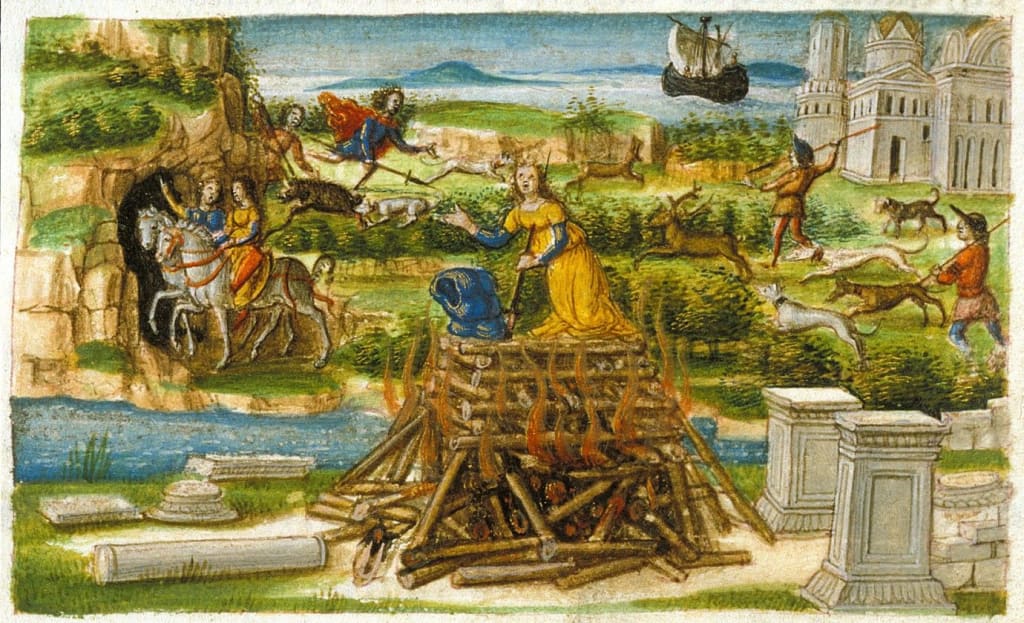
In the rich tapestry of literary history, certain works stand out as revolutionary masterpieces that transcend their time and place. Virgil's "Aeneid" is one such work. With its ambitious scope, political allegory, and poetic brilliance, the "Aeneid" revolutionized Roman literature, reshaped cultural identity, and left an indelible mark on Western literature. In this article, we will delve into the multifaceted ways in which Virgil's epic poem was truly revolutionary, both in its historical context and in its enduring legacy.
I. The Epic as a Political Tool
The "Aeneid" emerged during a critical period in Roman history—the transition from the Roman Republic to the Roman Empire under Augustus Caesar. Virgil's epic served as a powerful political tool, consolidating the legitimacy of Augustus's rule. By intertwining political allegory within the narrative, Virgil crafted a tale that not only celebrated Rome's origins but also reinforced the ideals of the Augustan regime. We will explore how the story of Aeneas's journey mirrored the political turmoil of the time and how it functioned as a tool for propaganda, promoting the virtues of the empire and the rule of Augustus.
II. Crafting Roman Identity
The "Aeneid" played a pivotal role in shaping Roman cultural identity. By drawing from both Greek mythology and Rome's foundation myth, Virgil elevated Rome's status as a civilization destined for greatness. We will examine how Virgil skilfully wove Roman virtues, such as piety, courage, and devotion to duty, into the character of Aeneas. Through Aeneas, Virgil presented an idealized hero whose actions reflected the values that defined Rome. The epic served as a unifying force, connecting the Roman people to their legendary past and establishing a sense of shared identity.
III. Literary Excellence and Poetic Innovation
Virgil's poetic craftsmanship in the "Aeneid" set new standards for Latin literature. We will explore the technical brilliance of Virgil's verse, his use of vivid imagery, and the masterful construction of the narrative. From his skilful employment of meter and rhyme to his evocative descriptions of battles, love, and sacrifice, Virgil captivated readers and demonstrated the expressive power of the Latin language. We will delve into specific examples that showcase Virgil's literary excellence and examine the impact of his stylistic choices on subsequent generations of poets and writers.
IV. Influence and Legacy
The impact of the "Aeneid" extended far beyond Virgil's time. We will trace the legacy of the epic in Western literature, exploring its influence on prominent writers such as Dante, Milton, and Tasso. The themes, characters, and literary techniques of the "Aeneid" resonated throughout the centuries, shaping the development of narrative forms and inspiring countless authors. We will also discuss the enduring cultural significance of the "Aeneid" and its continued relevance as a work that explores universal human experiences, such as love, loss, heroism, and the search for identity.
V. The Synthesis of Greek and Roman Traditions
The revolutionary nature of Virgil's "Aeneid" lies in its ability to merge the epic tradition of the Greeks with the emerging Roman identity. By incorporating elements from Homer's "Iliad" and "Odyssey," Virgil forged a connection between the two great civilizations and established Rome as a worthy successor to the Greek cultural heritage. This synthesis of Greek and Roman traditions not only celebrated the achievements of both civilizations but also paved the way for the development of a distinct Roman literary and cultural tradition. The "Aeneid" became a testament to the creative ingenuity of Virgil, who took inspiration from the past while crafting a work that resonated deeply with his contemporary audience. This synthesis of influences and the subsequent establishment of a uniquely Roman literary tradition further solidified the revolutionary impact of the "Aeneid" on the literary landscape.
Virgil's "Aeneid" stands as a revolutionary work that forever altered the literary and cultural landscape. Its political allegory, its role in shaping Roman identity, its poetic brilliance, and its enduring legacy all contribute to its revolutionary status. As we reflect on the impact of the Aeneid, we are reminded of the power of literature to shape societies, inspire generations, and transcend the boundaries of time and place.
About the Creator
Keep reading
More stories from writers in History and other communities.
Can the United States Leave NATO?
Can the United States Leave NATO? What It Would Take—and What It Would Mean The North Atlantic Treaty Organization, commonly known as NATO, has been one of the most powerful military alliances in modern history. Since its creation in 1949, the United States has been NATO’s strongest member—militarily, financially, and politically. But in recent years, debates have grown louder about whether the U.S. should remain in the alliance. This raises a serious question: how could the United States be removed from NATO—or leave it—and what would that mean for the world?
By Wings of Time 5 days ago in History




Comments
There are no comments for this story
Be the first to respond and start the conversation.