
Vikings: Brutal Raiders or Skilled Explorers?
Were the Vikings just ruthless raiders, or were they also skilled explorers and traders? This in-depth historical analysis explores their dual legacy, from brutal pillaging to groundbreaking discoveries.

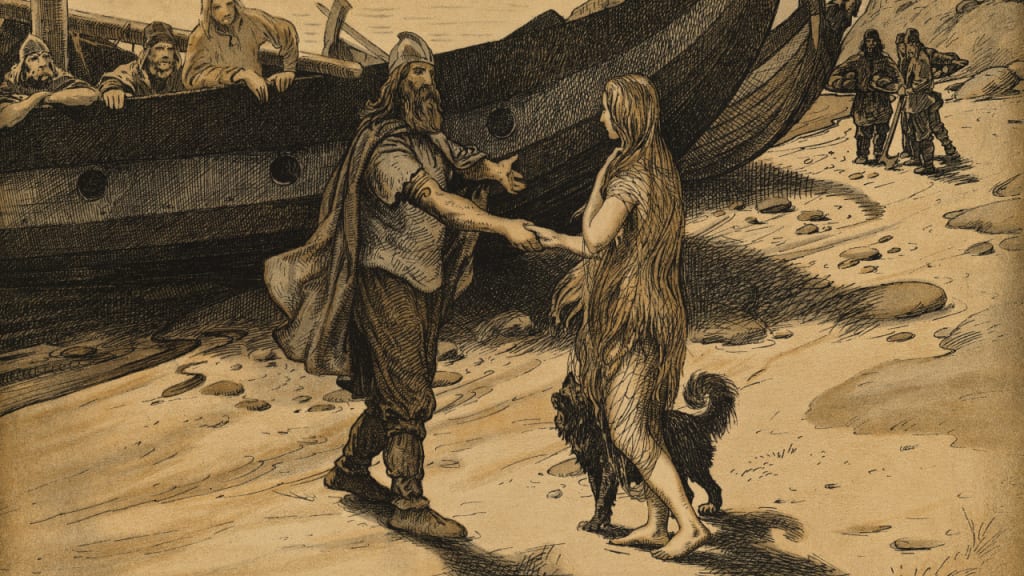
The Vikings, often depicted as horn-helmeted barbarians, have long been subjects of fascination and debate. Popular culture portrays them as ruthless warriors who terrorized Europe, but historical evidence reveals a far more complex narrative.
Were the Vikings merely brutal raiders, or were they also skilled explorers, traders, and settlers who shaped the medieval world?
This article delves into the dual identity of the Vikings, examining their infamous raids alongside their remarkable achievements in exploration, trade, and cultural exchange.
By analyzing archaeological findings, historical accounts, and recent scholarship, we uncover the truth behind the Viking legacy.
The Viking Age: Timeline and Origins
The Viking Age traditionally spans from 793 CE to 1066 CE, beginning with the raid on Lindisfarne and ending with the Norman Conquest of England.
The harsh climate and lack of agricultural resources in Scandinavia (modern-day Denmark, Norway, and Sweden) compelled the Vikings to look for money and land abroad.
Key Phases of the Viking Age
- Early Raids (793–850 CE) – Small-scale coastal attacks on monasteries and towns.
- Expansion and Settlement (850–950 CE) – Larger invasions, establishment of Viking territories in England, Ireland, and Francia.
- Exploration and Trade (950–1066 CE) – Voyages to Iceland, Greenland, and North America; extensive trade networks reaching Byzantium and the Middle East.
The Brutal Raiders: Pillage and Conquest
1. The Infamous Lindisfarne Raid (793 CE)
The Viking Age began with the sack of Lindisfarne Monastery in Northumbria, England. Monks recorded the attack as a sudden, violent assault by "heathen men," marking the Vikings’ terrifying reputation.
Why Did Vikings Raid?
- Economic Motives – Due to the scarcity of resources in Scandinavia, Vikings sought fortune abroad.
- Political Factors – Disunity among European kingdoms made them easy targets.
- Cultural Beliefs – Norse religion glorified warriors, and raiding was a path to honor.
2. The Great Heathen Army (865 CE)
A massive Viking force invaded England, conquering kingdoms like Northumbria, Mercia, and East Anglia. Led by Ivar the Boneless, Halfdan Ragnarsson, and Guthrum, they established the Danelaw, a Viking-ruled territory.
3. The Siege of Paris (845 CE)
Vikings, under Ragnar Lothbrok (possibly legendary), sailed up the Seine and besieged Paris, forcing King Charles the Bald to pay a ransom of 7,000 pounds of silver—an early example of the Danegeld (protection money).
Violence and Psychological Warfare
Vikings used shock tactics—burning villages, slaughtering captives, and desecrating religious sites—to instill fear. Their longships, capable of navigating shallow rivers, allowed surprise attacks deep inland.
The Skilled Explorers: Voyages Beyond Europe
While their raids dominate historical memory, Vikings were also master navigators, traders, and settlers who reached farther than any Europeans before them.
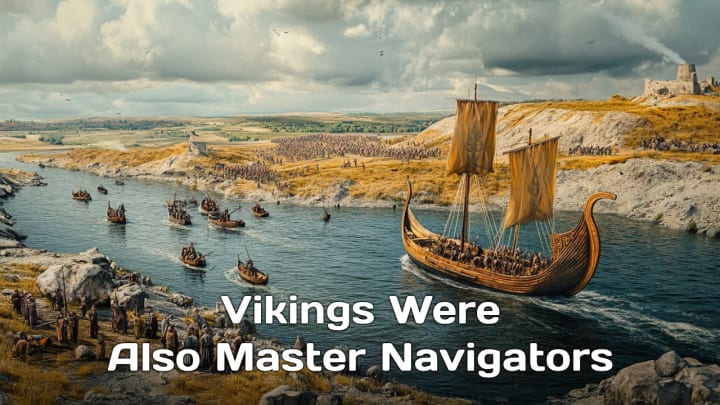
1. Discovery of Iceland (870 CE)
- Ingólfr Arnarson, a Norse chieftain, established Reykjavík after fleeing Norwegian king Harald Fairhair’s unification wars.
- Iceland became a thriving settlement, with a unique democratic assembly (the Althing) founded in 930 CE.
2. Erik the Red and Greenland (982 CE)
- Erik the Red, who had been exiled for murder, named Greenland to entice settlement.
- Norse Greenland lasted nearly 500 years, with farms, churches, and trade links to Europe.
3. Leif Erikson and Vinland (1000 CE)
- Leif Erikson, Erik’s son, sailed west and discovered Vinland (modern-day Newfoundland, Canada).
- Archaeological proof came in 1960 with the L’Anse aux Meadows excavation, confirming Viking presence in North America 500 years before Columbus.
4. Trade Networks: From Baghdad to Byzantium
The Vikings were successful traders in addition to raiders:
- Eastern Routes (Volga Trade) – Swedish Vikings (Varangians) traded furs, slaves, and amber with the Byzantine Empire and Islamic Caliphates.
- Silk Road Connections – Arabic coins found in Scandinavia prove long-distance trade.
- Dublin and York – Key Viking commercial hubs were England and Ireland.
Debunking Viking Myths
Myth 1: Vikings Wore Horned Helmets
- False – No archaeological evidence supports this. Helmets were conical or rounded, with horns being a 19th-century Romantic invention.
Myth 2: Vikings Were Uncivilized
- Reality – They had laws, art (Oseberg carvings), poetry (skaldic verse), and advanced shipbuilding.
Myth 3: All Vikings Were Raiders
- Truth – Most were farmers, fishermen, and craftsmen. Raiding was a seasonal activity.
Conclusion: A Dual Legacy
The Vikings were expert explorers as well as vicious raiders.Their raids reshaped Europe, leading to fortified cities and feudal systems. Yet, their explorations expanded the known world, reaching North America long before Columbus.
Their legacy is not one-dimensional—they were warriors, traders, settlers, and innovators. The Viking Age was a time of violence and discovery, leaving an indelible mark on history.
Were the Vikings mere barbarians? No—they were a complex society whose actions, whether through the sword or the sail, forever altered the course of history.
About the Creator
Himadri Niloy
Who explores forgotten histories, cultural echoes, and the silent revolutions of time.
Keep reading
More stories from Himadri Niloy and writers in History and other communities.
Lost Cities of the World That Might Still Exist
Throughout history, tales of lost cities have captivated explorers, historians, and dreamers alike. These legendary metropolises—whether swallowed by the sea, buried beneath jungles, or hidden in remote mountains—continue to spark intrigue and debate.
By Himadri Niloy8 months ago in History
Maya Angelou – A Voice That Rose Like a Song
In the spring of 1928, in St. Louis, Missouri, a baby girl was born and named Marguerite Annie Johnson. The world would later know her as Maya Angelou—a poet, performer, activist, and one of the most powerful voices of the twentieth century. But her journey to greatness was not simple or smooth. It was a road marked by pain, silence, courage, and finally, a voice that would echo across generations. When Maya was very young, her parents separated. She and her older brother, Bailey, were sent to live with their grandmother in Stamps, Arkansas, a small Southern town divided by racial segregation. Life in Stamps was shaped by strict rules and deep prejudice. Black families lived with limited opportunities, and injustice was a daily reality. Yet, within her grandmother’s small store, Maya found a world of dignity and strength. Her grandmother, Annie Henderson, was a respected woman in the community—firm, faithful, and hardworking. From her, Maya learned resilience. As a child, Maya loved words. She listened carefully to the rhythms of speech and the music of stories told in church. But at the age of eight, her life changed in a traumatic way. After returning briefly to live with her mother, she was harmed by her mother’s boyfriend. When he was later killed, young Maya believed her own words had caused his death because she had testified against him. Overcome with guilt and fear, she stopped speaking. For nearly five years, she lived in silence. Many thought the quiet girl would remain lost in her muteness. But her silence became a time of deep listening and learning. Back in Stamps, a kind teacher named Mrs. Bertha Flowers recognized Maya’s intelligence. She introduced her to literature—Charles Dickens, William Shakespeare, Paul Laurence Dunbar. Mrs. Flowers gently encouraged her to read aloud, explaining that poetry must be spoken to be truly understood. Slowly, word by word, Maya found her voice again. Literature became her refuge and her strength. As a teenager, Maya moved to San Francisco with her mother. Determined and independent, she became the first Black female streetcar conductor in the city at just sixteen years old. It was a small job in the eyes of many, but for Maya, it was proof that barriers could be broken. Around this time, she also became a young mother, giving birth to her son, Guy. Raising him while building her own life required courage and sacrifice. In her early adulthood, Maya explored many paths. She worked as a dancer, singer, and actress. She toured Europe in an opera production and later recorded music. During these years, she adopted the name “Maya Angelou,” combining her childhood nickname with a version of her former husband’s surname. The name would become legendary. The 1950s and 1960s were years of transformation in America. The Civil Rights Movement was rising, and Maya felt called to be part of it. She met and worked with influential leaders such as Dr. Martin Luther King Jr. and Malcolm X. In Ghana, where she lived for a time, she worked as a journalist and educator. Africa deepened her sense of identity and connection to her roots. Yet no matter where she lived—America, Europe, or Africa—she carried with her the memories of Stamps and the lessons of survival. In 1968, tragedy struck again when Dr. King was assassinated on Maya’s birthday. Grief overwhelmed her. For a time, she withdrew once more. But friends encouraged her to write about her life. The result was a groundbreaking memoir published in 1969: I Know Why the Caged Bird Sings. The book was unlike anything many readers had seen before. With honesty and poetic beauty, Maya described her childhood in the segregated South, her trauma, her silence, and her awakening. The title symbolized her own life—the caged bird representing oppression, yet still daring to sing. The memoir gave voice to countless people who had suffered in silence. It became an international success and established Maya Angelou as a major literary figure. She continued writing memoirs, essays, and poetry. Her poems carried rhythm like music and truth like lightning. One of her most famous poems, Still I Rise, became an anthem of strength and dignity: “You may write me down in history With your bitter, twisted lies… But still, like dust, I’ll rise.” Her words were not only about race, but about the human spirit—the ability to stand up again after being pushed down. She wrote about love, loss, motherhood, and hope. She believed that words could heal and that stories could change hearts. In 1993, Maya Angelou stood before millions at the inauguration of President Bill Clinton and recited her poem On the Pulse of Morning. Her voice, calm and powerful, carried across the nation. It was a historic moment—she became the first Black woman to recite a poem at a U.S. presidential inauguration. For many watching, it was more than poetry; it was history speaking. Throughout her life, Maya received numerous awards and honors, including the Presidential Medal of Freedom. Universities invited her to teach and speak. Students admired her wisdom and warmth. Yet despite fame and recognition, she remained deeply connected to her roots. She often said that courage was the most important virtue because without courage, you cannot practice any other virtue consistently. Maya Angelou did not pretend her life was free from pain. Instead, she showed that pain can be transformed into purpose. She believed that people should not only survive but thrive. “We may encounter many defeats,” she once wrote, “but we must not be defeated.” In her later years, she lived in North Carolina, continuing to write and inspire. Even as her hair turned silver and her steps slowed, her voice never lost its strength. She spoke about kindness, reminding people that “people will forget what you said, people will forget what you did, but people will never forget how you made them feel.” When Maya Angelou passed away in 2014, the world mourned not only a writer, but a guiding light. Tributes poured in from presidents, poets, and ordinary readers whose lives had been touched by her words. Yet her voice did not fade. It lives on in classrooms, libraries, and hearts around the world. Her story is not just about fame or success. It is about a little girl who once stopped speaking because she believed her voice had caused harm—and who later used that same voice to bring hope to millions. It is about rising after every fall. It is about turning silence into song. Maya Angelou once compared herself to a caged bird who sings of freedom. And through her courage, her poetry, and her unbreakable spirit, she proved that even the most wounded voice can become a melody of strength. Her life reminds us that no matter where we begin—no matter how small the town or how heavy the burden—we carry within us the power to rise. And like dust, like air, like the morning sun— Maya Angelou rose.
By The best writer about 3 hours ago in History
Sylvia Plath
Sylvia Plath was born on October 27, 1932, in Boston, Massachusetts, into a world that would both inspire and wound her deeply. From the beginning, she seemed marked by intensity. Her father, Otto Plath, was a German immigrant and a professor of biology, a strict and intellectual man who studied bees. Her mother, Aurelia, was a devoted parent who valued education and discipline. Sylvia grew up near the sea, and the rhythms of the ocean would later echo in her poetry. When Sylvia was eight years old, her father died from complications related to diabetes. His death left a deep scar on her young heart. She felt both abandoned and haunted by his memory. This early loss shaped much of her later writing, especially her famous poem “Daddy,” in which she explored feelings of grief, anger, and longing. For Sylvia, words became a way to wrestle with emotions too powerful to hold inside. Even as a child, she was brilliant. She published her first poem at the age of eight. In school, she excelled in everything—writing, drawing, academics. She kept journals filled with detailed observations and ambitious dreams. Sylvia did not just want to be a writer; she wanted to be a great one. She worked tirelessly, often pushing herself beyond her limits. Success came early. By the time she entered Smith College on a scholarship, she had already published in national magazines. Yet behind her achievements was a storm of self-doubt. Sylvia often felt she had to be perfect. Anything less felt like failure. In her college years, the pressure intensified. She won prizes and praise, but internally she struggled with depression. In 1953, after a particularly difficult period, she attempted to take her own life. She survived and later received psychiatric treatment, including electroconvulsive therapy, which at the time was a common method for severe depression. After recovering, Sylvia returned to Smith College and graduated with highest honors. Her resilience was remarkable. She then received a Fulbright scholarship to study at Cambridge University in England. It was there, in 1956, that she met the English poet Ted Hughes. Their meeting was passionate and electric. They married just a few months later. Sylvia and Ted shared a deep love for poetry. They encouraged each other’s writing and traveled between England and America. For a time, their life seemed filled with promise. Sylvia published her first poetry collection, The Colossus, in 1960. Though it received respectful reviews, it did not bring her the fame she longed for. She also published a novel in 1963 under the pseudonym Victoria Lucas. The novel, The Bell Jar, was semi-autobiographical and told the story of a young woman struggling with mental illness and societal expectations. The book captured the suffocating feeling of being trapped under an invisible glass bell jar—a powerful metaphor for depression. Motherhood brought both joy and challenge. Sylvia gave birth to two children, Frieda and Nicholas. She loved them deeply, yet she struggled to balance her identity as a mother and as a writer. Meanwhile, her marriage to Ted Hughes began to fracture. In 1962, she discovered that he was having an affair. The betrayal devastated her. The couple separated, and Sylvia found herself alone in London with two young children during one of the coldest winters in years. But it was during this painful period that Sylvia’s most extraordinary poetry emerged. In the early mornings, before her children awoke, she wrote with fierce concentration. The poems she produced would later be collected in Ariel. These works were bold, sharp, and emotionally raw. Poems like “Lady Lazarus,” “Ariel,” and “Daddy” explored themes of death, rebirth, anger, identity, and power. Her language was vivid and intense, filled with striking images and fearless honesty. Sylvia’s style is often described as “confessional poetry,” a movement in which poets wrote openly about personal experiences, including mental illness, trauma, and private emotions. Yet her work was more than confession. It transformed personal pain into art of universal resonance. Readers around the world recognized their own fears and struggles in her words. Despite her creative triumph, Sylvia’s mental health continued to decline. The isolation, harsh winter, and lingering heartbreak weighed heavily on her. On February 11, 1963, at the age of thirty, Sylvia Plath died in London. Her death shocked the literary world. She left behind two young children and a body of work that would soon gain international recognition. After her passing, Ariel was published and received widespread acclaim. Critics hailed it as a masterpiece of modern poetry. In 1982, Sylvia Plath became the first poet to win a Pulitzer Prize posthumously for her Collected Poems. Her voice, once fragile and doubting, had become immortal. Today, Sylvia Plath is remembered as one of the most influential poets of the twentieth century. Her writing continues to be studied in classrooms and read by those searching for understanding in their own struggles. She wrote with a rare intensity, refusing to soften her truths. Her poems do not look away from darkness; instead, they walk straight into it, carrying a small but powerful flame. Her life was not an easy one. It was marked by ambition, brilliance, love, loss, and deep emotional battles. But through it all, she remained devoted to her craft. She once wrote in her journal about wanting to live “deeply and suck out all the marrow of life.” In many ways, she did exactly that—experiencing life in its brightest highs and darkest lows. Sylvia Plath’s story is not only a story of tragedy. It is also a story of courage—the courage to speak honestly, to create boldly, and to transform pain into something beautiful and lasting. Her words continue to breathe, reminding readers that even in silence, even in despair, the human voice can rise and be heard. In the end, Sylvia Plath’s greatest legacy is her poetry. It remains fierce, luminous, and unforgettable—a testament to the power of language and the complexity of the human heart.
By The best writer about 12 hours ago in History


Comments (1)
The article makes the Vikings seem way more than just raiders. I remember learning about their exploration of Iceland and Greenland in school. It's cool how they had such a wide reach. But I wonder, did their cultural beliefs really play that big a part in their raiding? And how did they manage to set up those trade networks all the way to Byzantium?