
Maya Angelou – A Voice That Rose Like a Song
From Silence to Strength

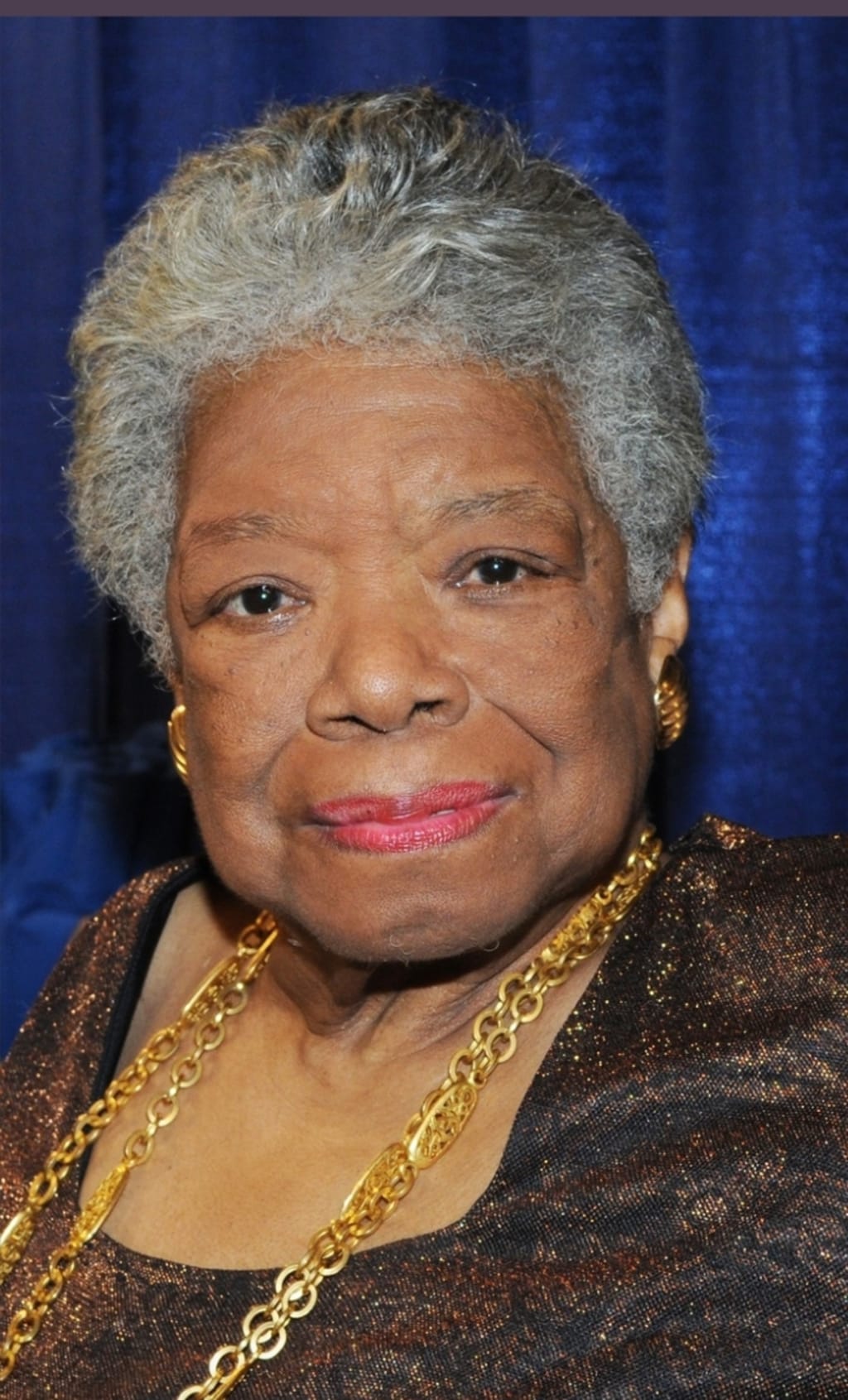
In the spring of 1928, in St. Louis, Missouri, a baby girl was born and named Marguerite Annie Johnson. The world would later know her as Maya Angelou—a poet, performer, activist, and one of the most powerful voices of the twentieth century. But her journey to greatness was not simple or smooth. It was a road marked by pain, silence, courage, and finally, a voice that would echo across generations.
When Maya was very young, her parents separated. She and her older brother, Bailey, were sent to live with their grandmother in Stamps, Arkansas, a small Southern town divided by racial segregation. Life in Stamps was shaped by strict rules and deep prejudice. Black families lived with limited opportunities, and injustice was a daily reality. Yet, within her grandmother’s small store, Maya found a world of dignity and strength. Her grandmother, Annie Henderson, was a respected woman in the community—firm, faithful, and hardworking. From her, Maya learned resilience.
As a child, Maya loved words. She listened carefully to the rhythms of speech and the music of stories told in church. But at the age of eight, her life changed in a traumatic way. After returning briefly to live with her mother, she was harmed by her mother’s boyfriend. When he was later killed, young Maya believed her own words had caused his death because she had testified against him. Overcome with guilt and fear, she stopped speaking. For nearly five years, she lived in silence.
Many thought the quiet girl would remain lost in her muteness. But her silence became a time of deep listening and learning. Back in Stamps, a kind teacher named Mrs. Bertha Flowers recognized Maya’s intelligence. She introduced her to literature—Charles Dickens, William Shakespeare, Paul Laurence Dunbar. Mrs. Flowers gently encouraged her to read aloud, explaining that poetry must be spoken to be truly understood. Slowly, word by word, Maya found her voice again. Literature became her refuge and her strength.
As a teenager, Maya moved to San Francisco with her mother. Determined and independent, she became the first Black female streetcar conductor in the city at just sixteen years old. It was a small job in the eyes of many, but for Maya, it was proof that barriers could be broken. Around this time, she also became a young mother, giving birth to her son, Guy. Raising him while building her own life required courage and sacrifice.
In her early adulthood, Maya explored many paths. She worked as a dancer, singer, and actress. She toured Europe in an opera production and later recorded music. During these years, she adopted the name “Maya Angelou,” combining her childhood nickname with a version of her former husband’s surname. The name would become legendary.
The 1950s and 1960s were years of transformation in America. The Civil Rights Movement was rising, and Maya felt called to be part of it. She met and worked with influential leaders such as Dr. Martin Luther King Jr. and Malcolm X. In Ghana, where she lived for a time, she worked as a journalist and educator. Africa deepened her sense of identity and connection to her roots. Yet no matter where she lived—America, Europe, or Africa—she carried with her the memories of Stamps and the lessons of survival.
In 1968, tragedy struck again when Dr. King was assassinated on Maya’s birthday. Grief overwhelmed her. For a time, she withdrew once more. But friends encouraged her to write about her life. The result was a groundbreaking memoir published in 1969: I Know Why the Caged Bird Sings.
The book was unlike anything many readers had seen before. With honesty and poetic beauty, Maya described her childhood in the segregated South, her trauma, her silence, and her awakening. The title symbolized her own life—the caged bird representing oppression, yet still daring to sing. The memoir gave voice to countless people who had suffered in silence. It became an international success and established Maya Angelou as a major literary figure.
She continued writing memoirs, essays, and poetry. Her poems carried rhythm like music and truth like lightning. One of her most famous poems, Still I Rise, became an anthem of strength and dignity:
“You may write me down in history
With your bitter, twisted lies…
But still, like dust, I’ll rise.”
Her words were not only about race, but about the human spirit—the ability to stand up again after being pushed down. She wrote about love, loss, motherhood, and hope. She believed that words could heal and that stories could change hearts.
In 1993, Maya Angelou stood before millions at the inauguration of President Bill Clinton and recited her poem On the Pulse of Morning. Her voice, calm and powerful, carried across the nation. It was a historic moment—she became the first Black woman to recite a poem at a U.S. presidential inauguration. For many watching, it was more than poetry; it was history speaking.
Throughout her life, Maya received numerous awards and honors, including the Presidential Medal of Freedom. Universities invited her to teach and speak. Students admired her wisdom and warmth. Yet despite fame and recognition, she remained deeply connected to her roots. She often said that courage was the most important virtue because without courage, you cannot practice any other virtue consistently.
Maya Angelou did not pretend her life was free from pain. Instead, she showed that pain can be transformed into purpose. She believed that people should not only survive but thrive. “We may encounter many defeats,” she once wrote, “but we must not be defeated.”
In her later years, she lived in North Carolina, continuing to write and inspire. Even as her hair turned silver and her steps slowed, her voice never lost its strength. She spoke about kindness, reminding people that “people will forget what you said, people will forget what you did, but people will never forget how you made them feel.”
When Maya Angelou passed away in 2014, the world mourned not only a writer, but a guiding light. Tributes poured in from presidents, poets, and ordinary readers whose lives had been touched by her words. Yet her voice did not fade. It lives on in classrooms, libraries, and hearts around the world.
Her story is not just about fame or success. It is about a little girl who once stopped speaking because she believed her voice had caused harm—and who later used that same voice to bring hope to millions. It is about rising after every fall. It is about turning silence into song.
Maya Angelou once compared herself to a caged bird who sings of freedom. And through her courage, her poetry, and her unbreakable spirit, she proved that even the most wounded voice can become a melody of strength.
Her life reminds us that no matter where we begin—no matter how small the town or how heavy the burden—we carry within us the power to rise.
And like dust, like air, like the morning sun—
Maya Angelou rose.
About the Creator
The best writer
I’m a passionate writer who believes words have the power to inspire, heal, and challenge perspectives. On Vocal, I share stories, reflections, and creative pieces that explore real emotions, human experiences, and meaningful ideas.
Keep reading
More stories from The best writer and writers in History and other communities.
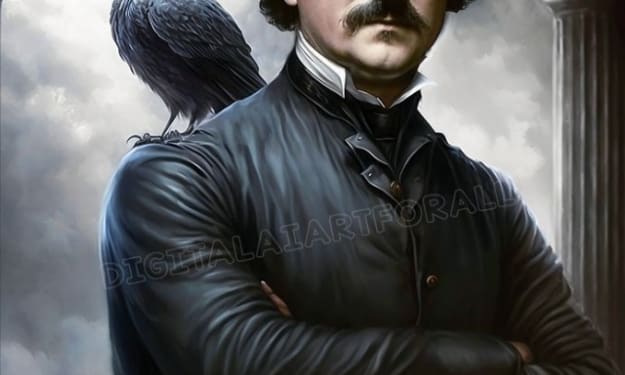
Edgar Allan Poe – The Master of Shadows
On a cold January night in 1809, in the city of Boston, a child was born who would one day change the world of literature. His name was Edgar Allan Poe. His life would be filled with sorrow, mystery, brilliance, and tragedy—much like the haunting stories and poems he later wrote. Edgar’s parents were traveling actors, but his childhood was marked by loss almost from the beginning. His father abandoned the family when Edgar was very young, and soon after, his mother died of illness. Edgar was only three years old. Orphaned and alone, he was taken in by a wealthy merchant named John Allan and his wife, Frances, in Richmond, Virginia. Though they never formally adopted him, Edgar carried the name “Allan” as his middle name. As a boy, Edgar was intelligent and imaginative. He loved reading poetry and writing stories. He also excelled in languages and academics. However, his relationship with John Allan was troubled. John wanted Edgar to become a successful businessman, but Edgar dreamed of becoming a writer. Their disagreements grew stronger as Edgar grew older. In 1826, Edgar attended the University of Virginia. He was a talented student but struggled financially. John Allan did not give him enough money to cover his expenses, and Edgar fell into gambling debt. Ashamed and frustrated, he left the university after only one year. With nowhere to go and no financial support, Edgar made a bold decision. In 1827, he enlisted in the United States Army under a false name. During this time, he published his first small book of poems, though it received little attention. After two years, he left the army and entered the United States Military Academy at West Point. However, his heart was not in military life. He purposely neglected his duties and was eventually dismissed from the academy. Now fully committed to writing, Edgar faced years of struggle. The world did not easily accept his dark and unusual style. He worked as an editor for several magazines and newspapers, gaining a reputation as a sharp literary critic. His reviews were honest and often harsh, which earned him both respect and enemies. In 1836, Edgar married his young cousin, Virginia Clemm. She was only thirteen at the time, and Edgar was twenty-seven. Though their marriage may seem unusual today, they were devoted to each other. Virginia became his source of comfort and inspiration. However, happiness did not last long. Edgar’s life was shadowed by illness and poverty. Virginia became sick with tuberculosis, the same disease that had killed Edgar’s mother. For years, Edgar watched helplessly as her health declined. The fear of losing her haunted him deeply, and this sorrow found its way into his writing. In 1845, Edgar published the poem that would make him famous—The Raven. The poem tells the story of a grieving man visited by a mysterious raven that repeats the word “Nevermore.” With its dark mood, musical rhythm, and themes of loss and madness, The Raven captured the public’s imagination. Edgar became an overnight literary sensation. Yet, despite the fame, he earned very little money from it. Edgar Allan Poe became known as the master of horror and mystery. His short stories such as The Tell-Tale Heart, The Fall of the House of Usher, and The Black Cat explored themes of guilt, fear, and the human mind’s darker side. He had a unique ability to enter the thoughts of troubled characters and reveal their hidden fears. His writing was not just about ghosts or monsters—it was about the psychological horrors within people. He also created something entirely new: the detective story. In 1841, Poe introduced the character C. Auguste Dupin in The Murders in the Rue Morgue. Dupin used logic and careful observation to solve crimes. This character would later inspire famous detectives like Sherlock Holmes. But even as his literary influence grew, Edgar’s personal life continued to fall apart. In 1847, Virginia died at the age of twenty-four. Edgar was devastated. Her death pushed him into deep depression. He struggled with loneliness and illness. Friends described him as fragile, brilliant, but troubled. In the years that followed, Edgar attempted to rebuild his life. He traveled, gave lectures, and even planned to marry again. However, his health and emotional state were unstable. His life was like one of his own stories—filled with uncertainty and mystery. Then came the strange and tragic end. On October 3, 1849, Edgar Allan Poe was found wandering the streets of Baltimore. He was confused, weak, and wearing clothes that did not belong to him. No one knew what had happened. He was taken to a hospital, where he drifted in and out of consciousness. He called out strange names and spoke incoherently. Four days later, on October 7, 1849, Edgar Allan Poe died at the age of forty. The exact cause of his death remains a mystery. Some believe he was ill. Others suggest foul play. The truth was never fully discovered, adding one final dark chapter to his life story. At the time of his death, Edgar Allan Poe was not wealthy or widely honored. But over time, the world began to recognize his genius. Today, he is considered one of the greatest American writers of all time. His influence can be seen in horror, detective fiction, and psychological storytelling. Writers, filmmakers, and poets still draw inspiration from his work. Poe once wrote, “All that we see or seem is but a dream within a dream.” These words reflect not only his poetic style but also his life—filled with dreams, sorrow, imagination, and mystery. Edgar Allan Poe’s life teaches us that greatness is not always accompanied by comfort or success. Sometimes, the brightest creative minds struggle in darkness. Yet from that darkness, Poe created stories that continue to echo through time, whispering like the raven itself— “Nevermore.”
By The best writer about 7 hours ago in History
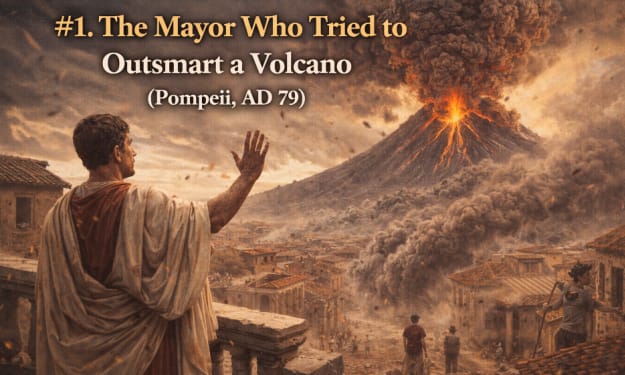
3 Times the Wrong Person Was in Charge at the Worst Possible Moment
Leadership matters most when things go wrong. In calm times, almost anyone can appear competent. Meetings happen. Papers get signed. Coffee is consumed with confidence. But crises are different. Crises demand judgment, experience, decisiveness, and—ideally—a basic understanding of what’s happening.
By Enoch Sagini4 days ago in History
Rage
Content Warning: Domestic Violence, Assault Rage D. A. Ratliff “Who did this?” My voice echoed through the house. All I wanted was a cup of tea, but one of the twins, running through the house like maniacs, knocked it over. My nerves tingled, and every muscle in my body felt coiled like a spring. Survival seemed out of reach.
By D. A. Ratliff6 days ago in Fiction


Comments
There are no comments for this story
Be the first to respond and start the conversation.