
Venezuela: “From Economic Blockade to Recovery” with William Castillo. In Rome, the Voice of Bolivarian Resistance
In a geopolitical phase marked by rising tensions and new forms of economic domination, the Bolivarian Republic of Venezuela sent a strong message to the international community: the Venezuelan people will not surrender. On Wednesday, July 2, 2025, a press conference was held at the Venezuelan Embassy in Rome, in preparation for the public event “From Economic Blockade to Recovery: The Heroic Struggle of the Venezuelan People”, which took place on Friday, July 4, at 6:00 PM at the Villa Lazzaroni Theater, under the patronage of the 7th Municipality of the City of Rome.
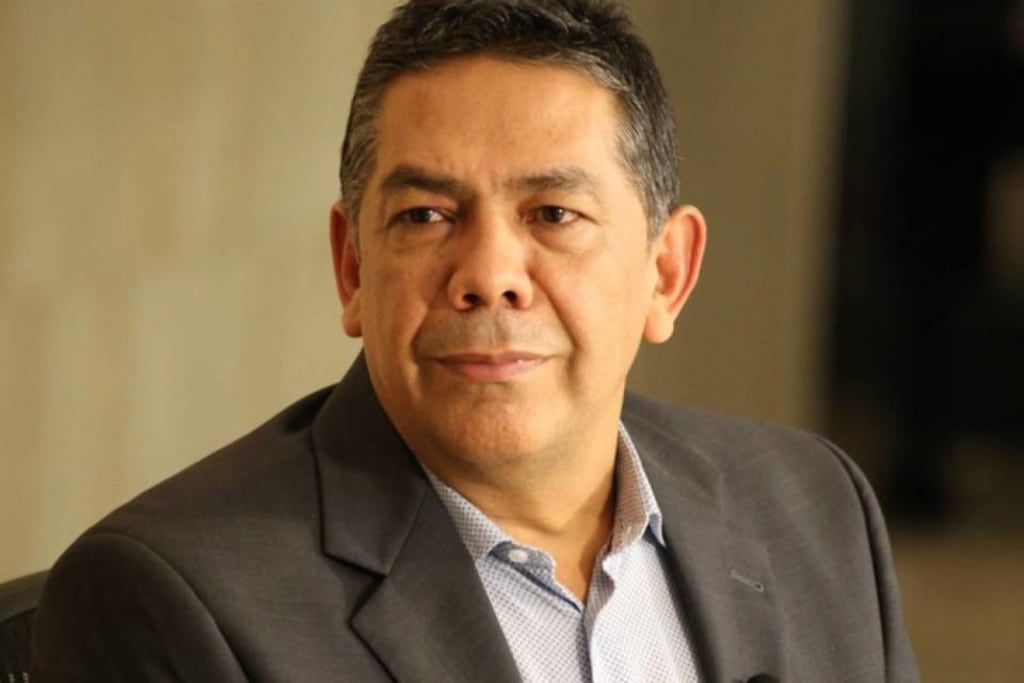
The event was chaired by H.E. María Elena Uzzo, Ambassador of Venezuela to Italy, accompanied by key figures of the Bolivarian government: William Castillo, Vice Minister for Anti-Blockade Policies; Saúl Osío, Vice Minister of Communal Economy; and Johander Pineda, spokesperson for the “El Maizal” Commune. Among the accredited journalists was Geraldina Colotti for Resumen Latinoamericano.
The Political Significance of the Conference
In her speech, Ambassador Uzzo denounced the more than 930 unilateral coercive measures imposed on Venezuela since 2014 by the United States, the European Union, and allied countries, without any legal basis in international law. These measures — which include the freezing of foreign bank accounts, the oil embargo, the illegal seizure of state assets, and the blockade of medical and food supplies — constitute a form of hybrid economic warfare, aimed at bending the country and provoking regime change.
Uzzo also stressed the need to challenge the dominant narrative spread by many Western media, which depict Venezuela as a “socialist failure” while deliberately omitting the destructive role of external sanctions.
William Castillo: Communication, Resistance, and Self-Determination
William Castillo, a graduate in Social Communication, is a leading figure in articulating contemporary Bolivarian thought. With a long career in public media and institutional communication management, he now serves as Vice Minister for Anti-Blockade Policies and Director General of the Venezuelan Anti-Blockade Observatory, an institution created to collect, analyze, and denounce the real consequences of the economic blockade on Venezuela’s social and productive fabric.
"Sanctions do not target governments: they target children, women, the elderly, the sick. They are a slow and silent weapon of mass destruction," stated Castillo.
According to data from the Observatory, published in collaboration with international academic centers, U.S. sanctions caused over 40,000 deaths between 2017 and 2021 due to lack of access to healthcare. Nevertheless, Venezuela has managed to reorganize its economy by focusing on:
Productive diversification (exports of cocoa, rum, crabs, shrimp, coffee)
Popular Communes system for self-management of resources
De-dollarization policies and use of alternative currencies (such as the Petro and the Sucre)
Strategic bilateral agreements with countries like Russia, China, Iran, Turkey, and South Africa
"Our strategy is based on ‘mandar obedeciendo’ — to lead by obeying the people, as Commander Chávez taught us. Only by listening to the popular will can we build effective and legitimate resistance," Castillo added.
The Communes and the New Popular Sovereignty
At the heart of Venezuela’s recovery lies the concept of the Commune: not simply a cooperative, but a form of participatory self-government. Vice Minister Saúl Osío, an agronomist and urban agriculture activist, explained how these territorial units have ensured food security even at the peak of sanctions. Today, there are over 3,000 Communes across the country, managing production activities, goods distribution, popular education, and community healthcare.
Johander Pineda, from the “El Maizal” Commune, shared the story of this community founded in 2009 by Chávez: 4,500 families organized for the production of corn, legumes, cereals, coffee, and gas.
"Our response to the blockade was not weeping, but organization," said Pineda proudly. "We have built a new kind of economy that places human dignity at its center."
Memory and Internationalism: A Tribute to Simón Bolívar
On the morning of July 4, 2025, at 9:30 AM, a floral ceremony was held at the Simón Bolívar Monument in Piazza Bolívar, Rome, attended by Ambassador Uzzo, Vice Minister William Castillo, representatives of Latin American embassies, and Italian solidarity delegations.
A solemn moment to honor the revolutionary legacy of the Libertador, father of South American independence and a source of inspiration for today’s anti-imperialist struggles. A clear message: Venezuela is not alone, and it is not isolated. It resists, it produces, it engages in dialogue. And it denounces to the world the criminality of those who try to starve it.
About the Creator
Keep reading
More stories from Maddalena Celano and writers in History and other communities.
Nicaragua: The Rebel Mother, Pillar of the Revolution and Architect of the Future
By Maddalena Celano The Origin: Somoto, 1970 The official celebration of “Mother’s Day” in Nicaragua dates back to May 30, 1940, by governmental decree of President Anastasio Somoza García, during the height of the Somoza dynasty. It was a date imposed from above, lacking real roots among the popular masses. At first, the occasion adhered to a bourgeois and conservative cult of motherhood, portraying the mother as the angel of the hearth, the silent guardian of tradition.
By Maddalena Celano8 months ago in History
Pablo Escobar: The Man Who Declared War on Colombia
Pablo Emilio Escobar Gaviria was born on December 1, 1949, in Rionegro, Colombia, and raised in the nearby city of Medellín. He grew up in a modest household, the son of a farmer and a schoolteacher. From an early age, Escobar showed ambition and defiance. He dreamed of power, wealth, and influence—dreams far larger than his surroundings. In a country struggling with inequality and limited opportunity, Escobar believed the rules were written to keep people like him down. Instead of trying to change the system, he chose to dominate it.
By The best writer 3 days ago in History
How Early Aircraft Failures Created Modern Flight Safety
When we look at modern aviation today with its redundant systems, strict regulations, and impressive safety record it’s easy to forget how fragile flight once was. Early aviation wasn’t built on confidence or certainty. It was built on risk. Every successful flight was surrounded by countless failures, and every crash carried lessons that would quietly reshape the future of air travel.
By Beckett Dowhan5 days ago in History




Comments
There are no comments for this story
Be the first to respond and start the conversation.