
Nicaragua: The Rebel Mother, Pillar of the Revolution and Architect of the Future
In Nicaragua, May 30 is not just another commemorative date. It is not a holiday sweetened by flowers and advertising slogans as it is in other parts of the world. It is a day etched in blood and collective memory, born from the deep pain of a mother and transformed into a national symbol of resistance and courage. It is the day on which the Nicaraguan people pay tribute to the mothers of martyrs—but, above all, to revolutionary mothers, direct protagonists of the social and political changes that have shaped the country.

By Maddalena Celano
The Origin: Somoto, 1970
The official celebration of “Mother’s Day” in Nicaragua dates back to May 30, 1940, by governmental decree of President Anastasio Somoza García, during the height of the Somoza dynasty. It was a date imposed from above, lacking real roots among the popular masses. At first, the occasion adhered to a bourgeois and conservative cult of motherhood, portraying the mother as the angel of the hearth, the silent guardian of tradition.
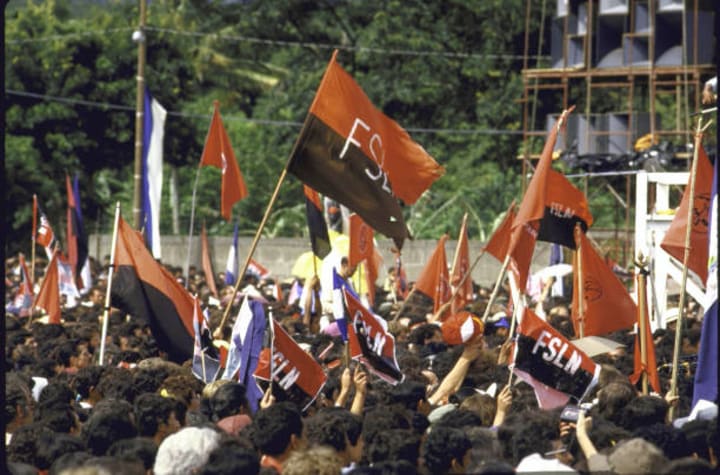
However, this date took on radically different meaning in the context of the revolutionary struggle of the 1970s. On May 30, 1979, during the final insurrection against the dictatorship of Anastasio Somoza Debayle, a mother from Matagalpa, Doña Cruz Centeno, lost seven of her children—all members of the Sandinista National Liberation Front (FSLN)—in combat against the National Guard.
That day, a massacre pierced the heart of Nicaragua. In various cities—Managua, Estelí, León—mothers wept for their sons and daughters fallen in combat. But they did not break. Their mourning became militancy, living memory, collective consciousness. From that moment on, May 30 became the Day of the Mothers of the Martyrs, transforming a formal celebration into a political and revolutionary act.
From Private Grief to Public Memory
In Sandinista Nicaragua, the mother is no longer the passive icon of sacrifice: she is an active witness to history, someone who transforms pain into determination, loss into meaning. The Madres de los Héroes y Mártires did not retreat into despair: they formed committees, told their stories, and passed them on. They carried forward the legacy of their children's struggle, opposing any form of oblivion or historical revisionism.
With the triumph of the Sandinista Revolution in July 1979, May 30 was definitively reclaimed by the people. Each year, Nicaragua honors its warrior mothers with cultural events, public rallies, and gatherings in schools and neighborhoods. It is not a matter of hollow rhetoric but a continuous exercise in historical memory and revolutionary pedagogy.
Mother and Revolutionary: An Indissoluble Pairing
Today, Nicaraguan mothers are no longer represented solely as caretakers of the home but as agents of change. Many have embraced political activism, lead feminist and social collectives, and fight for economic, ecological, and cultural rights. In schools, public health, the countryside, and the barrios, the mother is also an organizer, leader, and educator.
Following the path laid out by Simone de Beauvoir, motherhood in Nicaragua is freed from patriarchy to become a conscious and transformative social function. Women are no longer "condemned to be mothers": they choose whether to be, and if they are, they reject submission as the price to pay for motherhood. In fact, motherhood becomes the platform from which to claim dignity, justice, and active participation in public life.
An Example for Latin America
In the Latin American landscape, Nicaragua stands out as a unique experience: it is one of the few countries where Mother's Day holds revolutionary, popular, and participatory meaning. Rather than succumbing to consumerism or sterile sentimentality, this date unites past and present, grief and hope, intimacy and militancy.
To remember the mothers of the martyrs today is to defend the Nicaraguan people's right to memory, sovereignty, and social justice. It also means denouncing every attempt to discredit popular achievements and asserting the role of women—mothers, workers, fighters—in shaping a different Latin America.
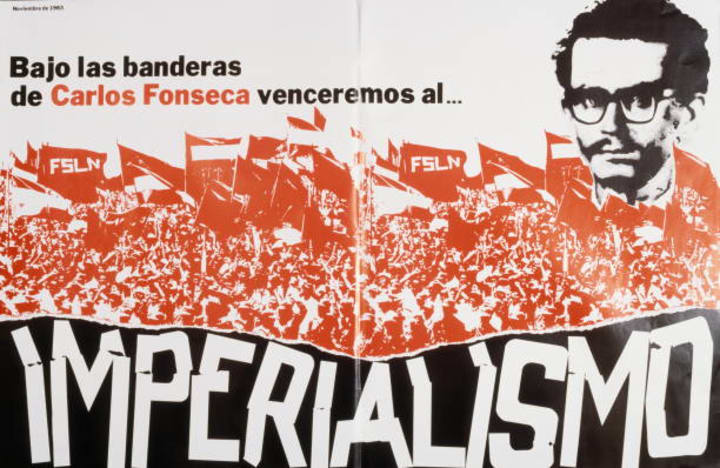
May 30 in Nicaragua is a day of active memory, political recognition, and historical vindication. Throughout the long struggle against colonialism, the Somoza dictatorship, and economic imperialism, women—and especially mothers—have played a central role. Many saw their sons and daughters leave for the mountains with rifles in hand, embracing the revolutionary cause of the FSLN. Others fought on the front lines, ready to face death to deliver a future free from oppression to their children.
These mothers do not ask for pity; they demand justice. They do not represent weakness, but resistance. Their lives weave together the sorrow of loss and the pride of belonging to a people in struggle. The Madres de los Héroes y Mártires are not relics of the past: they are a living political subject, a human archive of revolutionary memory, and an organizational force still active today.
In Simone de Beauvoir’s thinking, imposed motherhood is a form of women’s alienation. But when motherhood is chosen, shared, and politicized, it becomes a revolutionary act. In Nicaragua, this philosophy finds concrete expression. Nicaraguan women do not wait to be emancipated—they emancipate themselves every day, in practice, by building popular power, creating solidarity networks, and promoting literacy, community health, and food sovereignty.
According to data provided by the government and social organizations, Nicaragua is one of the Latin American countries with the highest female participation in politics. Women make up 51% of the National Assembly. Women lead ministries, municipalities, youth movements, and agricultural cooperatives. They are mothers, but also ministers, nurses, artisans, activists, poets. They are present both where decisions are made and where corn is planted.
This female protagonism is not a “feather in the cap” but the fruit of a revolutionary process decades in the making. A process that saw in women—and in mothers—a central subject of change. The new generations of Nicaraguan women inherit not only the blood of martyrs but also the critical tools to analyze and transform reality. They organize literacy brigades, lead campaigns against gender violence, advocate for sexual and reproductive rights, and denounce predatory neoliberalism.
In this context, motherhood takes on a new meaning: it is not blind sacrifice, but conscious action; not domestic isolation, but collective construction; not a debt to society, but a power to regenerate it.
In the weathered face of a peasant mother who walks her children to school before attending a cooperative assembly, in the smile of a young university mother studying medicine to serve her barrio, in the raised fist of a mother marching for human rights: there lies the true revolution.
May 30 is not a commercial ritual—it is a cry of dignity. It is the day when Nicaragua honors its rebel mothers, invisible columns of history and solid foundations of the future.
May 30: Between Grief and Dignity
This date is marked by one of the most painful and symbolic events in recent Nicaraguan history: the Masaya massacre of 1978, in which the Somozista National Guard opened fire on a popular demonstration, killing dozens of young people. Many of them were the children of women who, from that day on, became "mothers of the martyrs," transforming their pain into political force. Some joined the FSLN, others continued the struggle through memory, speech, and presence. Since then, Mother’s Day has taken on profound meaning: not just a day of love, but also one of historical memory and denunciation.
Heroines of the Revolution: Faces, Names, Stories
Arlen Siu (1955–1975)
She is perhaps the most beloved and legendary figure of the Sandinista revolution. The daughter of a Chinese father and Nicaraguan mother, Arlen was a poet, singer-songwriter, and guerrilla fighter. She wrote love poems and political essays, but did not hesitate to take up arms. She died at just 20 in an ambush in El Sauce, becoming the first woman to fall in combat for the FSLN. Arlen is a symbol of rebellious and conscious youth, able to fuse culture and revolution, gentleness and resolve. Today, her face appears in murals throughout the country, and her songs continue to be sung in schools and public squares.
Nora Astorga (1949–1988)
One of the most complex and fascinating figures of the Sandinista struggle. A law graduate, Nora was elegant, educated, and determined. She used her social status to carry out clandestine operations. She is remembered in history for having seduced and then had a National Guard officer kidnapped.
One of the most complex and fascinating figures of the Sandinista struggle. A law graduate, Nora was an elegant, educated, and determined woman who used her social position to carry out clandestine operations. She made history by seducing and orchestrating the capture of a high-ranking officer of Somoza’s National Guard, who had been responsible for numerous acts of torture and repression. The operation, which cost her dearly in personal terms, earned her the respect of the revolutionary ranks and the hatred of the dictatorship.
After the victory of the Revolution in 1979, Nora became Nicaragua’s ambassador to the United Nations. In that role, she defended the Sandinista cause with intelligence and passion, becoming a respected figure in international diplomacy. She died prematurely of cancer in 1988, but remains a symbol of the intersection between female strength, strategic intelligence, and revolutionary commitment.
Sofía Montenegro (1954–)
A journalist, sociologist, and feminist activist, Montenegro has been one of the most lucid and controversial voices in the Nicaraguan political landscape. She began as a Sandinista militant and member of the FSLN’s communication structures but later distanced herself from the party to pursue an autonomous feminist path.
Founder of the Centro de Investigaciones de la Comunicación (CINCO), she denounced both neoliberal abuses and patriarchal authoritarianism within the revolutionary ranks. Her story demonstrates that female protagonism is not uncritical militancy but a continuous exercise of dissent, analysis, and proposal. Mother of two daughters, Sofía has always combined political militancy with motherhood, refusing to accept any contradiction between the two.
May 30, a Universal Date?
The experience of May 30 in Nicaragua raises a question: could motherhood be re-signified in other countries as well, moving away from commercial trivialization to reclaim its subversive and historical value? Could the figure of the mother, instead of being confined to emotionalism, become a political actor in struggles for memory, justice, and peace?
In Nicaragua, this transformation has already taken place. The rebel mother is not an exception: she is a recurring figure in neighborhoods, rural communities, cooperatives, and classrooms. She is the woman who raises her voice when a right is denied to her child, who organizes a collective kitchen in times of economic crisis, who teaches others to read, who takes to the streets, who writes poems or denounces violence.
She is, ultimately, the architect of the future.
About the Creator
Keep reading
More stories from Maddalena Celano and writers in History and other communities.
The Fall of Tibet to a Communist State: History, Causes, and Consequences
The incorporation of Tibet into the People’s Republic of China (PRC) after 1950 was not a single event but a complex process involving military force, political negotiation, ideological conflict, and long-lasting resistance. Understanding this fall requires examining Tibet’s historical status, China’s communist revolution, and the profound consequences that followed.
By Say the truth about 23 hours ago in History
Are Banks Open on Martin Luther King Jr. Day?
Introduction Martin Luther King Jr. Day, also called MLK Day, is a national holiday in the United States. Many people enjoy a day off from work or school on this day. However, a common question people ask is: Are banks open on MLK Day?
By Farhan Sayedabout 11 hours ago in History



Comments (1)
This article is really interesting. It shows how a date can change its meaning completely. I can't help but think about how similar events elsewhere have shaped people's identities. Like, how do other countries' commemorations of such days compare? Do they also have moments where a simple celebration turns into something much more profound? It makes you realize how powerful the stories of ordinary people can be in changing the narrative.