
Valentine’s Day A Not So Romantic Journey Going Back to Ancient Greece
Valentine's Day

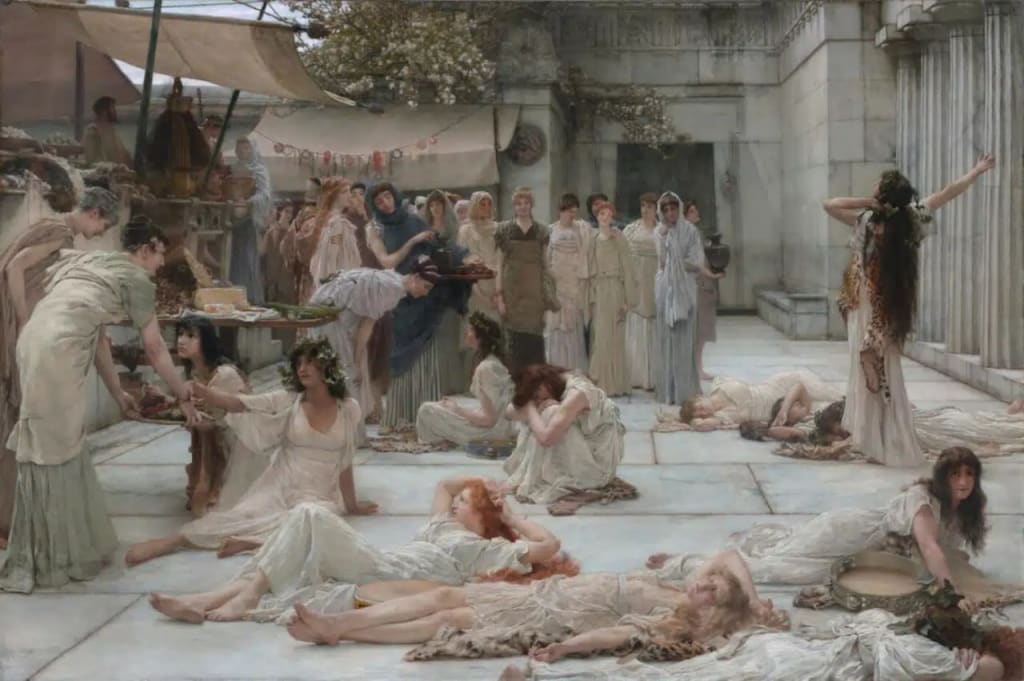
Valentine’s Day A Not So Romantic Journey Going Back to Ancient Greece
Valentine’s Day now a global celebration of love romance and affection is often associated with heart shaped chocolates flowers jewelry and grand romantic gestures. The history of this holiday is far darker and more complex than its modern commercialized version. While many trace its roots to ancient Rome and the pagan festival of Lupercalia some historians believe its origins go even further back to ancient Greece where the Arcadian Lykaia festival was held. This mysterious and archaic celebration along with its Roman counterpart played a crucial role in shaping what eventually became Valentine’s Day. The Arcadian Lykaia festival held in the lush green meadows of Arcadia in the Peloponnese was an ancient ritual dedicated to the god Pan. Pan the rustic deity of the wild nature and fertility was worshipped in natural settings rather than temples usually in caves and grottos. He was often depicted as a half goat half man figure playing his magical flute and seducing nymphs. According to mythology Arcadia was a land of divine beauty home to nymphs dryads and naiads who roamed its forests and streams. The festival which took place on the slopes of Mount Lykaion Wolf Mountain included secret sacrificial rituals and rites of passage that involved elements of both fertility and savagery.
The connection between Arcadian Lykaia and Rome’s Lupercalia festival is largely attributed to the legendary figure Evander a Greek hero from Arcadia and the son of Hermes. According to Roman mythology Evander traveled with a group of Greek settlers to Italy where they established a colony on the banks of the Tiber River. He is said to have introduced Greek religious customs laws and even the alphabet to the Romans. Among these traditions was the festival of Lupercalia which bore striking similarities to the Arcadian Lykaia and may have been directly inspired by it. Lupercalia was celebrated annually from February 13 to 15 in ancient Rome. It was a fertility festival that took place in the Lupercal a cave at the base of the Palatine Hill where legend says Romulus and Remus the twin founders of Rome were nursed by a she wolf. The festival’s name likely derives from lupus the Latin word for wolf though its exact meaning remains debated. Lupercalia was deeply rooted in Roman tradition and marked by violent chaotic and primitive rituals.
The celebrations began with the sacrifice of goats and dogs symbols of virility and protection. The sacrificed animals' hides were then cut into strips which the Luperci priests of the festival used to whip women who lined up to be struck. This act was believed to enhance fertility and ensure safe childbirth. The festival also featured a matchmaking lottery in which young men drew the names of women from a jar pairing them together for the duration of the festival or in some cases leading to longer term relationships. Lupercalia was a festival of indulgence excess, and debauchery often involving heavy drinking and nudity. According to Yale University professor Noel Lenski the Roman men who participated in Lupercalia were drunk and naked engaging in rituals that to modern sensibilities would seem extreme and even barbaric. Despite its crude nature the festival persisted for centuries even after the rise of Christianity in Rome. It was only in the late 5th century that Pope Gelasius I abolished Lupercalia and replaced it with the Feast of Saint Valentine on February 14th.
The origins of Saint Valentine’s association with love remain uncertain as multiple Christian martyrs named Valentine were executed by the Romans. The most widely accepted story involves a priest named Valentine who was executed by Emperor Claudius II for performing secret marriages for soldiers defying a decree that forbade them from marrying. Another legend suggests that Valentine was imprisoned for helping persecuted Christians and fell in love with the jailer’s daughter sending her a note signed From your Valentine before his execution. Over time, these legends transformed Saint Valentine into a symbol of love and devotion. With the decline of Lupercalia and the establishment of Valentine’s Day by the Church the holiday slowly evolved into a more refined and romantic occasion. By the Middle Ages people in Europe had come to believe that February 14th was the day birds chose their mates. This idea was famously captured by Geoffrey Chaucer in his poem Parliament of Fowls in which he wrote about birds pairing off on Seint Valentynes day. Chaucer’s writings helped solidify the connection between Valentine’s Day and romantic love a theme that later writers, including William Shakespeare embraced.
During the Renaissance and beyond the celebration of Valentine’s Day became more sentimental. People began exchanging handmade love notes and poems a tradition that flourished throughout Europe. By the 18th and 19th centuries Valentine’s Day had become a widely recognized holiday in England France and other parts of the Western world. The industrial revolution and the rise of mass production further transformed the holiday. In 1913 Hallmark Cards in Kansas City Missouri began mass producing Valentine’s Day cards commercializing the holiday and setting the stage for its modern form. Today Valentine’s Day is celebrated globally though its traditions vary from country to country. In Western nations it is a major commercial event marked by romantic dinners gift giving and elaborate gestures of love. In Japan women traditionally give chocolates to men while men return the favor on White Day celebrated on March 14th. In South Korea the holiday has extended to include additional romantic observances such as Black Day on April 14th when singles gather to eat black bean noodles and lament their single status.
Despite its romanticized image Valentine’s Day remains rooted in its ancient past carrying echoes of the primal rituals of Arcadian Lykaia and Lupercalia. What was once a festival of sacrifice fertility and chaotic revelry has been transformed into a day of affection and devotion a testament to the way human traditions evolve over time. While some embrace the holiday wholeheartedly others criticize its commercialization arguing that love should be celebrated every day rather than confined to a single date. Regardless of personal perspectives the story of Valentine’s Day is a fascinating journey through history from the wild celebrations of ancient Greece and Rome to the sentimental and commercialized event it is today.
About the Creator
Adnan Rasheed
Author & Creator | Writing News , Science Fiction, and Worldwide Update| Digital Product Designer | Sharing life-changing strategies for success.
Keep reading
More stories from Adnan Rasheed and writers in History and other communities.
GPS Tracker Found on a Dead Eagle A Mysterious Discovery
GPS Tracker Found on a Dead Eagle A Mysterious Discovery Eagles are often regarded as symbols of power freedom and guardians of the natural world. Their majestic flight sharp vision and predatory instincts make them one of the most fascinating birds in the wild. However when a GPS tracker is discovered on the body of a dead eagle it raises a series of questions and mysteries. Recently such an incident came to light when researchers found a GPS tracker attached to a deceased eagle leading to speculations about its purpose the bird's fate and the broader implications for wildlife conservation. In this article we will explore the significance of GPS tracking in wildlife research the possible reasons behind the eagle’s death and how such technology helps in the conservation of endangered species.
By Adnan Rasheedabout a year ago in History
The Year 2015 in Review: Facts, Trivia, and Historic Highlights
This quick read is a collection of fun facts, trivia, and historical events from the year 2015. Discover the year’s top news stories, most influential people, sports facts, grocery prices, computer and Internet news, entertainment trivia, and much more.
By Gregory DeVictora day ago in History



Comments
There are no comments for this story
Be the first to respond and start the conversation.